A Retreat That Delivered More Than Expected
TL;DR — The Business Talks
Phil — Make Your Spending Work For You. Most people earn points and redeem them incorrectly, getting about 1% value. Phil showed how switching to 2X unlimited spend cards, avoiding airline portals, transferring points to partners at the right moment, and even running payroll through rewards cards can turn a million points into $50,000+ in travel instead of $10,000. The mindset shift: points aren’t perks, they’re assets. Entrepreneurs don’t just spend money — they leverage it.
Enrique — Remove the Friction. The organization is rebuilding its entire tech stack from scratch. New billing system, member profiles, a centralized knowledge base replacing scattered Google Docs, and a two-channel WhatsApp setup separating official business from the chaos. Leaders get automated RSVP campaigns and attendance tracking. A topic archive is being built, potentially powered by an AI agent that suggests meeting topics based on history. The goal: less time managing logistics, more time actually connecting.
Bryan & Carlos — Know How Banks See You Banks lend on structure, not dreams. The Five C’s: Capacity (can you repay?), Collateral (what secures it?), Character (who are you?), Capital (do you have skin in the game?), and Conditions (where is your industry headed?). Bottom line over top line — always. Build your banking relationship before you need the money, align your tax strategy with your borrowing goals, and understand the difference between debt and equity financing before you’re forced to choose under pressure.
TL;DR — The Music
Last year’s Key West retreat, Mitch hijacked the aux cord on the four-hour drive home and gave me an unsolicited but unforgettable education in 2000’s hip hop — Tupac included. I survived it. I appreciated it. But I filed it away and moved on.
Fast forward to this retreat. I’m playing 80s music during dinner. Someone switches it to Tupac. And forty men, not just Mitch — instantly, all at once — erupt. Singing, dancing, fully alive. I’m the only one standing still.
That’s when I realized: this wasn’t just a music preference. This was a generational anthem for every man in that room. What Journey and U2 are to me, Tupac is to them. Mitch gave me the private lesson. Forty guys just handed me the diploma.
I’m turning 60. They reminded me. And I wouldn’t trade that moment for anything.
There are moments when you realize something about yourself—not because someone told you, but because life sets the stage and lets you figure it out on your own.
I found myself standing in a room full of energy. Music was blasting. Forty men—singing, dancing, completely locked into the moment. And for a split second, I wasn’t.
Not disconnected. Not uncomfortable. Just… out of rhythm.
And that’s when it hit me.
It wasn’t about the music. It wasn’t even about the moment. It was about something much deeper—awareness, generation, and the kind of growth that only happens when you’re honest enough to recognize where you stand.
But before I get to that moment, let me take you back to where it all began.
The Setting: Growth by Design
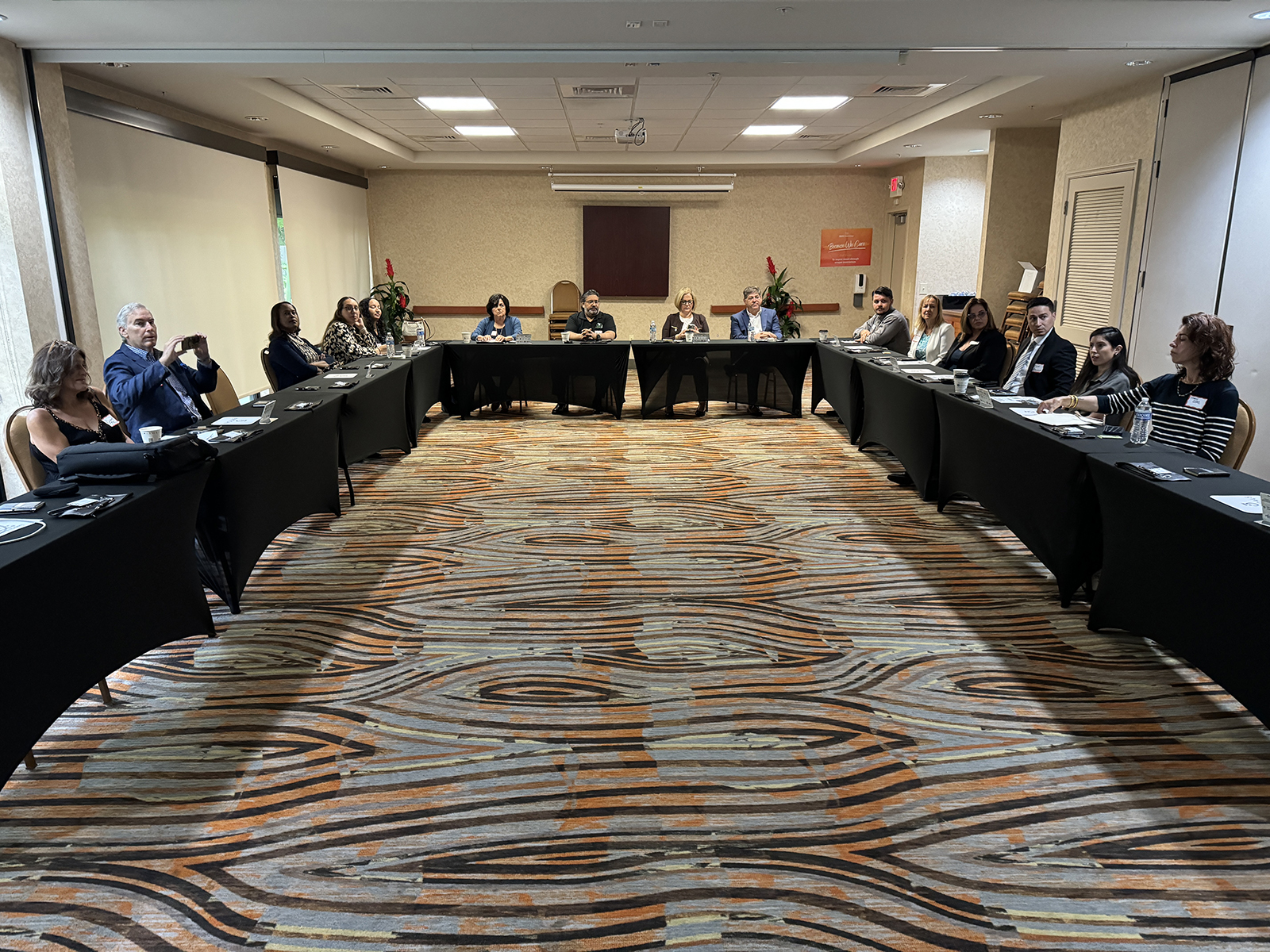
About 40 men gathered for a weekend retreat with a shared purpose—to grow. Not just in business, though that was certainly part of it. But to grow as men. As leaders, husbands, fathers, and professionals who hold each other accountable to something higher than comfort.
Looking around the room, it was clear that most of the men were in a different season of life—primarily in their mid-30s through early 50s, right in the thick of it. Building businesses. Raising families. Scaling teams. Managing cash flow, relationships, and the constant pressure of becoming better every single day. The energy in that room was unmistakable—driven, grounded, and full of intention.
The structure was intentional. Three business presentations. A shared dinner. And time deliberately carved out for the kind of connection you can’t manufacture—you can only create the conditions for it.
What made this retreat powerful wasn’t just the schedule. It was the alignment of purpose that showed up in everything—from the speakers chosen, to the conversations that followed, to the unexpected moments that nobody planned but everybody needed.
Phil: Stop Collecting Miles and Start Leveraging Them
Phil opened the business session, and within the first few minutes, he had the room’s full attention.
His topic was credit card points and miles, which, on the surface, sounds like something you discuss over cocktails, not in a room full of serious business owners. But Phil reframed the entire conversation from the first sentence, and what followed was one of the most practical and eye-opening presentations of the weekend.
Phil came with credibility that most people in the room didn’t know about. At 18 years old, he started working at Delta Airlines in their reservation center in Coral Gables. For seven years, he worked in special member services and international booking—back when you couldn’t find anything online. You called. You gave your number. And someone like Phil walked you through every option, every route, every opportunity. He built a deep, intuitive understanding of how airline miles, partner programs, and reward systems actually work—long before the internet made it accessible to everyone.
After leaving Delta, he kept doing it—for himself. Singapore. Japan. Barcelona. Safari in the Okavango Delta in Botswana. Business class. First class. And in most cases, free.
But here was the bombshell: even with all that experience, Phil admitted to the room that he had been doing it wrong—or at least, not doing it at its full potential. And if someone with his background had been leaving value on the table, the rest of the room almost certainly was too.
The standard approach most people take is to use airline-branded credit cards, chase elite status, and redeem points directly through the airline portal. The typical return? About one percent. In real terms, that means a million points equals roughly ten thousand dollars in travel value. That sounds decent—until Phil showed the room what was actually possible.
The strategy shift starts with moving away from airline-branded cards and toward cards that offer two points for every dollar spent, with no cap. Cards like the Capital One Venture X Business or the Chase Sapphire Reserve. The difference sounds simple, but the math is staggering.
Here’s how Phil broke it down: if you’re spending money on a credit card and paying a processing fee of 2.9%—which many vendors now charge—you’re spending 2.9 cents per dollar just to use the card. But if you’re earning two points per dollar, and each point is worth more than two cents when redeemed correctly, you’re actually profiting on the transaction. The key is not how you earn the points. The key is how you redeem them.
This is where most people go completely wrong. They log into the airline portal, search for flights, and book directly. That is, according to Phil, one of the worst things you can do. Portal redemptions cap your value at roughly one percent—you might as well be using a cash-back card. The real power comes from transferring your points to airline partners at the right moment, when premium availability opens up, and booking directly through the airline.
He gave real examples. A first-class flight to Japan that would cost thousands in cash—redeemed for a fraction of that value in miles, with a calculated point value of 4.6% or higher. A business class seat to the Maldives on Etihad—70,000 points each way—with a redemption value pushing toward 9.46% on the right travel dates. His wife in a lay-flat seat to Europe, booked through British Airways after a transfer bonus from Chase that brought the cost down to 72,000 points. These weren’t hypotheticals. These were trips Phil had actually booked, verified with screenshots and real data pulled from sites like Points.me and Seats.aero.
He also walked through a concept that made several business owners in the room sit up straight: processing payroll and vendor payments through a rewards card using platforms like Plastiq or Zill Money. If you’re already spending $20,000 a month on payroll, why not earn two points per dollar on it? That’s 40,000 points per month. Half a million per year—just from payroll alone, on top of normal business spend. Add it together and, depending on how you redeem, a million points earned at an effective cost of less than one and a half percent can be deployed for travel worth four, five, or even nine times that amount.
He also raised the concept of a concierge service—something he’s launching personally—where he does all the work for clients who want the benefit of the strategy without spending their Saturdays hunting down flash sales and transfer bonuses. For anyone who doesn’t have the time or interest to dig into the details, the value of having someone who lives and breathes this world doing it for you is obvious.
By the end, Phil had reframed the entire conversation. This wasn’t about travel hacking. This was about leverage—the same lever every smart entrepreneur uses in every other area of their business. You are already spending the money. The question is whether you’re letting that money work for you, or leaving value on the table every single month.
Enrique: The Technology That Sets Brotherhood Free
The second speaker, Enrique, took a different angle—but the underlying philosophy was the same: remove friction so that what matters most can rise to the surface.
Enrique’s role within the organization is clear. He, along with Julian and Brett, has been meeting weekly with a dedicated focus on building the technology infrastructure that will allow the brotherhood to operate more efficiently, grow more intentionally, and spend less time managing logistics and more time actually connecting with one another. He’s backed by a real team—dedicated developers, a project manager, and a process specialist—all working toward a shared goal.
That goal, as he put it, is simple: limit friction.
He organized his presentation around three experiences—the ones that matter most to how the organization functions day to day.
The Member Journey
The first area of focus is the member experience, and it starts with something that has caused more frustration than almost anything else: billing.
The current billing structure is being completely scrapped and rebuilt from the ground up. The new system—likely built on Stripe or a similar platform—will give every member a centralized account where they can manage their billing information, update contact details, view their payment history, and handle recurring fees automatically. No more tracking down different links. No more confusion about whether a charge went through. No more manual follow-ups. When dues are due, they come out. When a ticket for an event like the retreat needs to be purchased, it’s handled through the same account. Clean, centralized, and transparent.
Beyond billing, the new system will give members access to a personalized profile—complete with a photo, bio, and directory listing so that members can actually see and connect with one another through the platform. It’s a small detail with a large impact. When people can see each other’s information, they naturally start reaching out. That’s what brotherhood runs on.
Communication is also getting a major overhaul. Anyone who has been part of a large group chat knows the pain—you step away for twelve hours and come back to 1,700 unread messages, and buried somewhere in the middle is the one piece of information you actually needed. Enrique’s solution is to move to WhatsApp Communities with two distinct channels: one for official business—meeting updates, RSVPs, important announcements—and one for everything else, the after-hours banter, the jokes, the connection that happens when the agenda is set aside. You’ll know exactly which one needs your attention and which one can wait.
The Leadership Journey
For leaders, the new system is designed to do something simple but powerful: give them their time back.
Everything already described for members applies to leaders as well—because leaders are members first. But on top of that, the new platform will include tools specifically built for those running chapters: member management, attendance tracking, and automated RSVP campaigns.
That last one is significant. Right now, a chapter leader has to manually reach out, remind members of the topic, prompt RSVPs, and follow up. The new system will handle that automatically. Once a leader inputs the topic, the system takes over—sending reminders, collecting RSVPs, and keeping members informed without anyone having to chase anyone down.
There’s also a topic archive being built from the ground up. Every topic discussed across every chapter will be captured in a database—searchable, categorized, and growing over time. This alone solves a problem that has existed since the beginning: how do you know if a topic has already been covered? And what makes a good topic this month?
Enrique’s answer goes further than most people expected: an AI agent trained specifically on the organization—its values, its history, its meeting culture, and its archive of past topics. A leader who’s struggling to choose a topic for next month could simply ask the agent: “What would work well for our chapter right now?” The AI would look at what’s been covered, consider the themes of recent discussions, and offer a recommendation grounded in institutional knowledge. It’s not a replacement for leadership—it’s a tool that makes leadership sharper.
The Guest Experience
Finally, and perhaps most importantly, Enrique spoke about the guest experience—the beginning of every member’s journey.
The new process is designed to make bringing a guest feel intentional rather than administrative. When a member invites someone, they’ll be asked to enter that guest’s information into the system. This triggers a marketing campaign that automatically follows up with the guest—reminding them of the topic, keeping them engaged between meetings, and guiding them through the process of attending their first, and then their second meeting.
The guest fee is also being standardized. Enrique made the point clearly: if you’re inviting someone into this brotherhood, be a gentleman about it. Don’t make them scramble for payment links or feel awkward about money. The member who extends the invitation handles the fee—whether they collect it from the guest in cash, charge it to a card, or simply cover it themselves. Once the guest attends their first meeting, they’re in the system. After a second meeting, the conversation about membership begins naturally—and because they’re already in the platform, already have an account, and already have billing information captured, the onboarding process becomes seamless.
The goal, from start to finish, is the same as everything else Enrique described: remove the friction between the intention and the action, so that the focus can return to what actually matters—people.
Bryan & Carlos: The Capital Conversation Every Business Owner Needs to Have
The final business presentation of the day came from Bryan and Carlos, both bankers with City National Bank and a combined 40 years of experience working with businesses of every size and complexity.
Their message was grounded, direct, and necessary. Because at some point, every business owner hits the same wall: you’ve used your own cash, you’ve stretched your credit, and now you need something more. Access to capital—how you get it, how you qualify for it, and how you structure it—can be the difference between scaling and stalling.
They introduced the framework that every lender uses, whether you know it or not: the Five C’s of Credit.
Capacity is the first and most important. It simply means: can you pay us back? This is what banks look at before anything else. They’re not investors. They’re not betting on your vision. They’re asking a very specific question—does this business generate enough cash flow to service this loan? And the answer doesn’t come from projections or pitch decks. It comes from historical financials. Your last 12 months of bank statements. Two to three years of tax returns. They’re looking at trailing performance, not forward-looking optimism.
One line from the presentation cut through everything: “It’s not how much you make. It’s how much you keep.”
Revenue is the headline. Profit is the story. A company doing $50 million in revenue with $51 million in expenses is not a borrowing candidate, no matter how impressive the top line sounds. Banks lend on the bottom line—and they need to see that the bottom line can absorb the cost of repayment.
They also made an important point that touched several people in the room: tax strategy matters. Many business owners work hard to minimize taxable income—maximizing deductions, contributing to retirement accounts, running expenses through the business. All of that is smart. But it can also reduce the reported profit that a bank uses to determine lending capacity. This is why the relationship between your banker, your accountant, and your CFO or financial advisor needs to happen long before you ever need a loan. The best time to have that conversation is when there’s no urgency. When you can plan, structure, and position your business so that when the moment comes, you’re ready.
Collateral is the second C—what secures the loan in the event things go sideways. Real estate, equipment, receivables—whatever can back the request. Banks don’t want to become landlords or liquidators. They mention it because they have to. But it is absolutely part of the equation.
Character goes beyond personality. It includes your professional history, your industry experience, how long you’ve been in business, and whether your business has survived economic disruptions—2008, COVID, rate cycles. Lenders notice resilience. A business that has navigated difficult seasons and come out the other side says something. It also includes financial integrity—nothing disqualifies a borrower faster than a history of financial misconduct.
Bryan shared a real-world example of an organization seeking financing that, from a financial standpoint, appeared to qualify. However, during due diligence, concerns about reputation arose, leading to the request being declined.
The takeaway was simple: no matter the size of the opportunity, in banking, reputation and trust can carry just as much weight as the numbers themselves.
Capital reflects how much the business owner has invested in their own business. If a business owner has taken out every distribution possible and left nothing in the company, it sends a signal: you’re not all in. Banks want to see that you believe in what you’re building enough to have skin in the game. This doesn’t mean you can’t take distributions—but it does mean the equity position of your business is something lenders pay close attention to, especially as loan sizes grow.
Conditions is the broadest of the Five C’s, and according to both Bryan and Carlos, it’s become increasingly important. It simply asks: where is your industry going? The example they gave was striking—a software company came to them with solid financials, and just six months earlier would have received a clean approval. But the review team flagged it. The concern wasn’t the company’s past performance—it was AI and the disruption it could have on their business model and revenue streams. The bank ended up right-sizing the loan rather than declining it entirely, but the message was clear: even a thriving business can be affected by what’s happening in the broader market, and banks are watching that landscape carefully.
They also covered the difference between debt and equity financing—two paths that serve very different purposes. Debt keeps ownership intact and provides predictable repayment terms. It’s the right structure when cash flow can support it and the capital is being used for something with a defined return. Equity brings in outside investors or partners, which means you’re giving up a piece of the business. There’s more flexibility—no monthly payments, no collateral requirements—but the cost is ownership and, often, governance. Both have their place, but understanding which one fits your current situation is critical.
The closing message from Bryan and Carlos wasn’t about loan products or credit analysis. It was about relationships. The best financial outcomes come from the clients who plan ahead—who sit down with their banker before they need money, lay out their goals for the next one to three years, and build a roadmap together. Strategic structuring. Strong relationships. Long-term focus. Those were their final words—and they were exactly right.
The Transition: From Structure to Connection
After the presentations wrapped, the room exhaled.
Dinner was served—and it was exactly what the moment called for. Good food, good wine, and the kind of atmosphere that makes people slow down without even realizing it.
What followed was what the Spanish call la sobremesa—a concept that doesn’t translate perfectly into English, because in English, we tend to think dinner ends when the plates are cleared. In Spain, la sobremesa is the sacred time after the meal. Nobody rushes. Conversations deepen. Laughter comes easier. Walls that are still up at the beginning of a meal tend to come down by the second hour of la sobremesa.
This is where the best moments of any gathering happen. Not in the formal structure—but in the space that follows it.
I decided to play some music in the background. Nothing dramatic—just ambient, familiar. I grew up in the 70s and 80s, and for me, music from that era isn’t just background noise. It’s memory. It’s identity. U2. Journey. The classics that feel less like songs and more like emotional landmarks.
And that’s when the backstory matters.
The Education That Started on a Highway in Key West
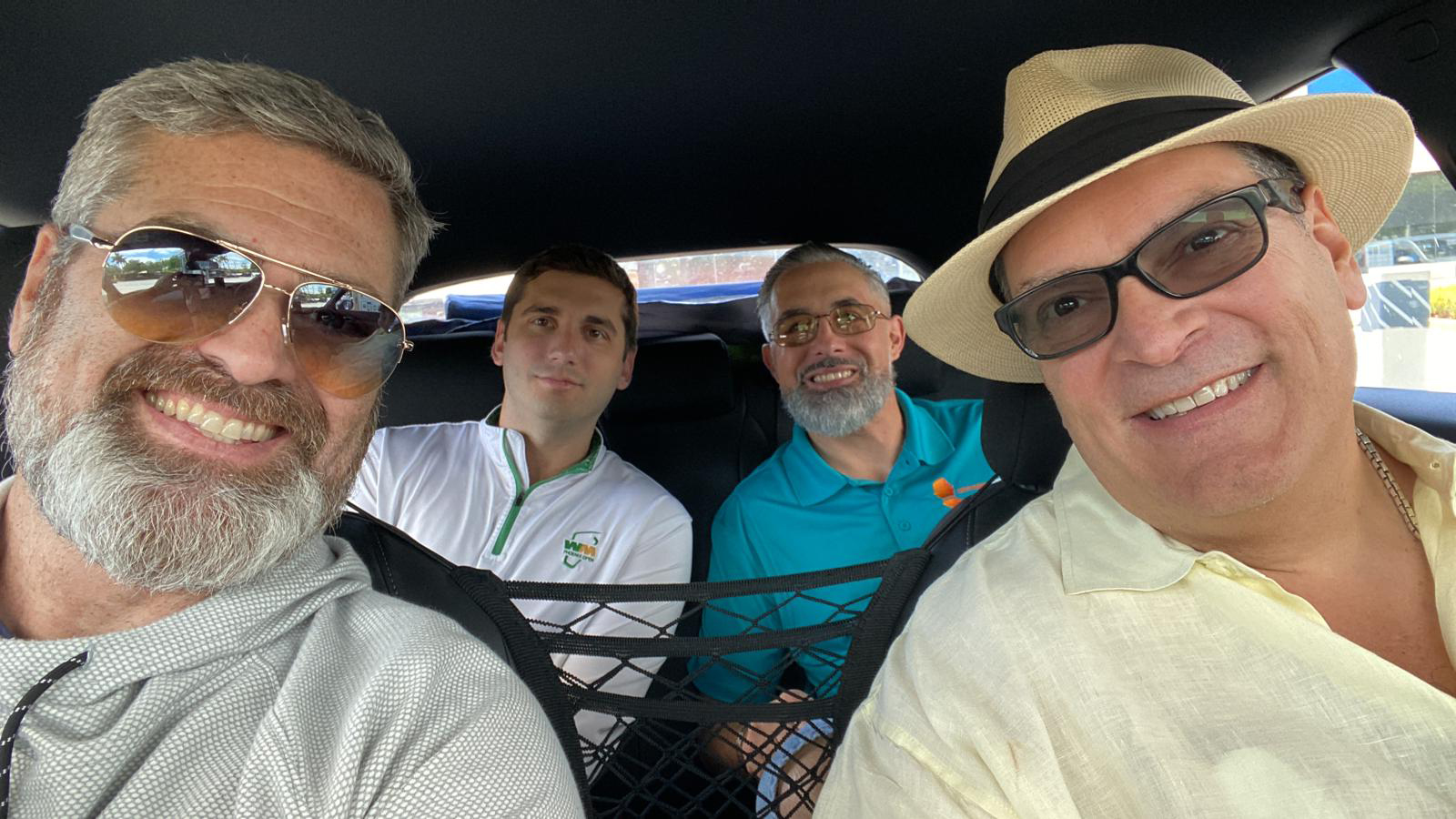
About a year earlier, at the previous retreat held in Key West, I found myself in a car for the ride back with three of the brothers—Mitch, Ryan, and Kevini behind the wheel.
I had the music going. My music. 70s and 80s rock—the stuff that makes a four-hour drive feel like a concert. And for a while, it was perfect.
Then Mitch said something simple: “Hey, let me take over the music for a little bit.”
I handed over control, not fully understanding what I was agreeing to.
What followed was four straight hours of 2000s hip hop and rap. Tupac. Nas. Jay-Z. The whole landscape of a genre I had largely experienced from a distance. I sat there, processing all of it—the beats, the lyrics, the cadence. It wasn’t bad. Not even close. But four uninterrupted hours of it when you grew up on Journey and U2? It was an education. A full, generous, overwhelming education.
I survived. I learned. I even started to appreciate it.
But I filed that experience away, not fully realizing what it was preparing me for.
The Graduation
Back to the present retreat.
I had the music going—back in my lane, back in my element. The ambient sound of a familiar era floating through a room full of men unwinding after a powerful day.
Then, like clockwork, someone walked over to the speakers. The music stopped. And in came Tupac.
What happened next was something I genuinely was not prepared for.
The entire room erupted.
Not gradually. Not politely. Immediately.
Men who had been sitting in quiet conversation were suddenly on their feet. Voices got louder. Hands went up. People were singing every word—not humming along, not nodding their heads, but performing. Dancing. Fully, unapologetically immersed in the moment.
The second song hit, and it got louder.
I stood there, watching all of it unfold.
And I understood something in that moment that I couldn’t have understood a year earlier, before Mitch’s four-hour mobile concert somewhere on the highway between Key West and Miami:
This wasn’t just music. This was a generational anthem.
For these men—most of them in their mid-30s to early 50s—Tupac wasn’t background noise. He was the soundtrack of their formative years. The music of high school hallways and college dorm rooms. Of first cars and late nights and all the moments that shape who you become. This was their version of what U2 and Journey were to me.
And looking around that room, I wasn’t an outsider. I was a witness.
A year ago, I had been given a private tutorial. And now, forty men were confirming everything Mitch had tried to show me—not with an explanation, but with pure, unfiltered joy.
This wasn’t just Mitch educating me anymore.
This was graduation.
The Realization: It’s Not Age—It’s Awareness
And standing in the middle of all that energy, something became very clear to me.
I am 60 years old.
People tell me I don’t look it. I appreciate that more than they know. And in terms of attitude, energy, and the way I approach life—I genuinely don’t feel it. I gel with these men because my perspective doesn’t sit inside the walls that most 60-year-olds build around themselves. I’ve never believed that age defines the ceiling.
But in that moment, the number was real.
There was a generational gap in that room. Not a divide—a gap. A difference in the music that shaped each of us, the eras that formed our instincts, the rhythms that live in us without us even knowing it.
If someone had switched it back to the 80s—to U2, to Journey, to the songs I grew up with—I would have been right there with them. Same energy. Same joy. Same complete abandonment of self-consciousness.
The difference wasn’t passion. It was timing.
And instead of resisting that truth, I let it wash over me. I embraced the room. I embraced the noise. I embraced the fact that watching forty men completely alive in a shared moment is its own kind of joy—even if the song isn’t yours.
Because joy that authentic is contagious. And belonging doesn’t require you to know every word. It only requires you to show up, stay present, and appreciate what’s real.
The Takeaway: Brotherhood Transcends Everything
That night was not about music.
It was not about software platforms, credit card strategies, or the Five C’s of Credit.
It was about something that runs underneath all of it—the invisible thread that makes a room full of men feel like more than a gathering.
It’s called brotherhood. And it doesn’t require sameness. It requires presence.
Enrique is building systems that will make the organization smoother so that the brotherhood can breathe more freely. Phil is teaching men to leverage what they already have so they can create experiences they thought were out of reach. Bryan and Carlos are equipping business owners with the framework to grow with intention and structure. And forty men singing hip hop after dinner are reminding a sixty-year-old that growth has no age limit—and that being in the room, fully present, is enough.
Final Thought
In the end, the retreat wasn’t defined by the presentations, the dinner, or even the music—it was defined by the growth that happened in between. It was a reminder that no matter where we are in life, there is always room to learn, to adapt, and to connect on a deeper level. The rhythm may change, the seasons may shift, but the purpose remains the same: to keep showing up, to keep growing, and to keep pouring into one another. Because when you surround yourself with the right people, you don’t just find your place—you realize you’ve been exactly where you need to be all along.
“You don’t grow by staying comfortable. You grow by staying present.”