Recognizing the Signs That Extra Support Can Improve Safety, Independence, and Quality of Life
“The goal isn’t simply helping someone stay at home—it’s helping them continue living with dignity, confidence, and connection.”
— Elienay Miles, LCSW
TL;DR
Many families wait until a crisis occurs before exploring home care. However, subtle changes in memory, mobility, personal hygiene, nutrition, or social engagement may indicate that additional support could improve a loved one’s safety, independence, and overall well-being.
When Should You Consider Home Care for an Aging Parent?
If your aging parent is struggling with daily activities, experiencing memory issues, becoming isolated, or showing signs of declining health, it may be time to explore professional home care services. Early support can often help seniors maintain their independence while providing families with greater peace of mind.
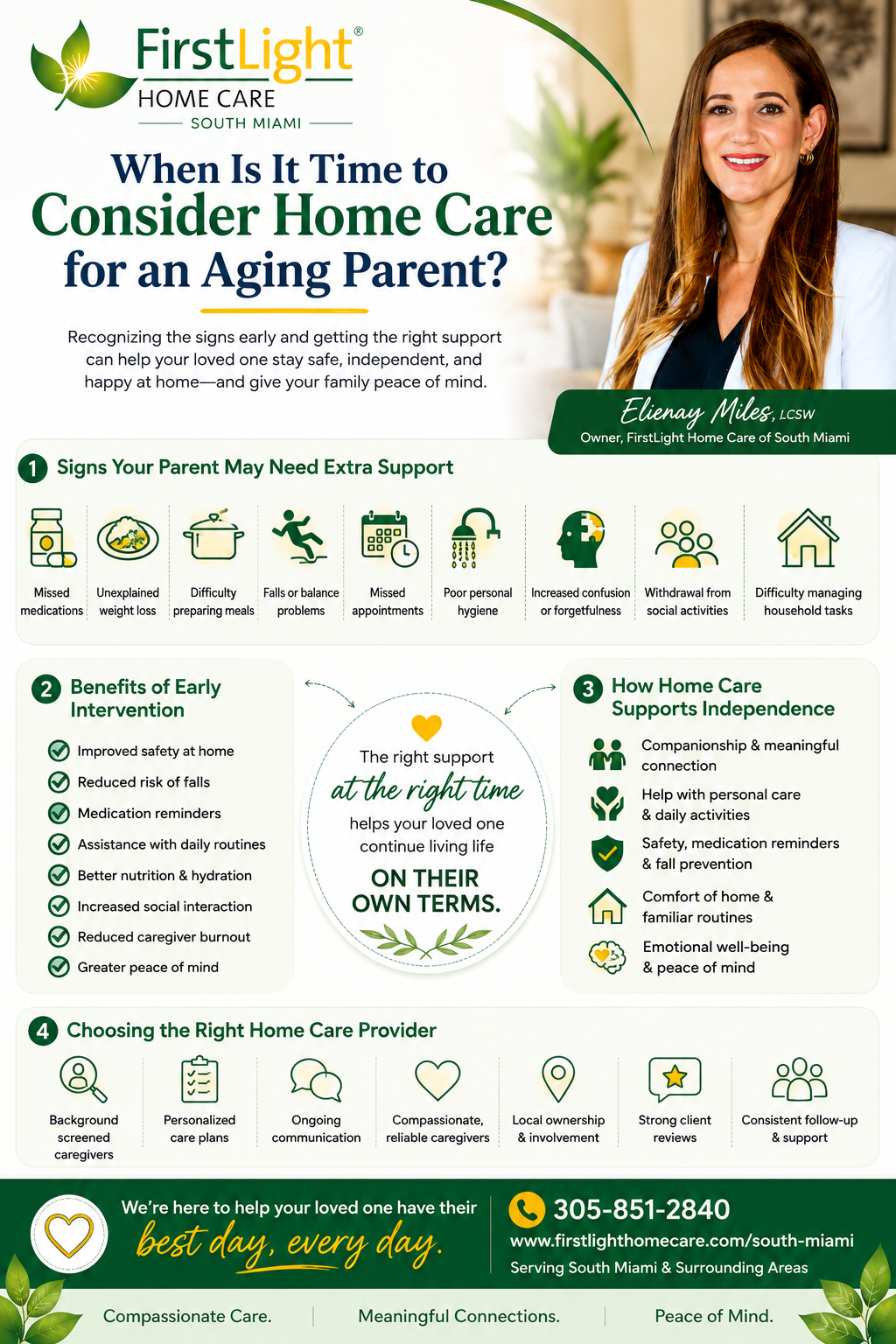
Signs Your Parent May Need Home Care
Many adult children notice gradual changes before they realize additional support may be needed. While occasional forgetfulness or fatigue can be normal, consistent patterns deserve attention.
Common warning signs include:
- Missed medications
- Unexplained weight loss
- Difficulty preparing meals
- Frequent falls or balance issues
- Missed appointments
- Poor personal hygiene
- Increased confusion or forgetfulness
- Withdrawal from social activities
- Difficulty managing household responsibilities
These signs do not automatically mean a loved one can no longer live independently. Instead, they often indicate that additional support may help them continue aging safely at home.
Why Families Often Wait Too Long
Many families hesitate to discuss home care because they worry it will feel like a loss of independence. Others believe accepting help means giving up control.
In reality, home care is often the opposite.
Professional caregivers help older adults maintain their routines, stay connected to their communities, and continue living in familiar surroundings. Early intervention can reduce stress for both seniors and their families while helping prevent emergencies that may lead to hospitalization or long-term facility placement.
The Benefits of Early Intervention
When care begins before a crisis occurs, families often have more options available to them.
Benefits may include:
- Improved safety at home
- Reduced risk of falls
- Medication reminders
- Assistance with daily routines
- Better nutrition and hydration
- Increased social interaction
- Reduced caregiver burnout
- Greater peace of mind for family members
The earlier support is introduced, the easier it often becomes for seniors to adapt comfortably to receiving assistance.
How Personalized Home Care Supports Independence
One of the biggest misconceptions about home care is that it reduces independence.
Personalized home care is designed to do exactly the opposite.
At FirstLight Home Care of South Miami, care plans are tailored to the unique needs of each individual. Whether someone requires a few hours of companionship each week or more comprehensive personal care services, the goal remains the same: helping clients maintain dignity, comfort, and independence in the place they call home.
Services may include:
- Companion Care
- Personal Care
- Dementia Care
- Respite Care
- Veteran Care
- Specialty Care Services
Every caregiving situation is different, which is why personalized support plays such an important role in achieving positive outcomes.
Choosing the Right Home Care Provider
Selecting a home care provider is one of the most important decisions a family can make.
Look for a provider that offers:
- Caregiver background screenings
- Personalized care plans
- Ongoing communication
- Compassionate caregivers
- Local ownership and involvement
- Strong client reviews
- Consistent follow-up and support
Families should feel comfortable asking questions and discussing concerns. Trust, transparency, and communication are essential components of quality home care.
Featured Snippet Answer
The best time to consider home care for an aging parent is when daily tasks, mobility, memory, or social engagement begin to decline. Early home care support can improve safety, maintain independence, reduce family stress, and help seniors continue living comfortably in their own homes.
Frequently Asked Questions
What are the first signs that an elderly parent may need home care?
Early signs often include missed medications, difficulty preparing meals, forgetfulness, falls, poor housekeeping, social withdrawal, or challenges with personal hygiene.
Can home care help someone remain independent longer?
Yes. Home care is designed to support independence by assisting with tasks that may become difficult while allowing seniors to remain in familiar surroundings.
How many hours of home care are typically needed?
Needs vary greatly. Some clients require only a few hours per week, while others benefit from daily or around-the-clock support.
Is home care only for seniors?
No. Home care services may also benefit adults recovering from surgery, individuals with disabilities, veterans, and those managing chronic health conditions.
How do families know which services are appropriate?
A professional assessment can help identify the level of support needed and create a personalized care plan based on the individual’s goals and circumstances.
“The greatest wealth is health.” — Virgil
Although written centuries ago, this quote remains relevant today. Maintaining health, safety, and quality of life becomes increasingly important as we age. Home care provides the support many individuals need to preserve those qualities while remaining in the comfort of home.
The most important takeaway is that home care is not about taking away independence. It is about providing the right support at the right time so that older adults can continue living life on their own terms.
If you are concerned about an aging parent or loved one, the team at FirstLight Home Care of South Miami is available to answer your questions and discuss personalized care options. Call 305-851-2840 to learn how compassionate home care can help your loved one have their best day, every day.
Medical Disclaimer:
The information provided in this article is for educational and informational purposes only and is not intended as medical advice, diagnosis, or treatment. Always seek the advice of a qualified physician, healthcare provider, or other licensed medical professional regarding any medical condition or healthcare decision. Never disregard professional medical advice or delay seeking treatment because of something you have read on this website.
FirstLight Home Care of South Miami provides non-medical home care services and does not provide medical diagnosis, treatment, or healthcare services. If you are experiencing a medical emergency, call 911 immediately.