A Conversation With Michael Miller: Community, Purpose, and the Power of Local Voices
What decades of community journalism taught him about unity, business, and chasing what matters
TL;DR
For the past few years, Michael Miller and I have shared Saturday breakfasts in South Miami. Those conversations recently came full circle when I attended his keynote and realized that the same wisdom he shares across the breakfast table is the same wisdom he shares from the stage.
Breakfast at Casa Cuba
Since COVID, Michael and I have been meeting every other Saturday morning at Casa Cuba in South Miami.
What began as casual breakfast conversations quietly evolved into something far more meaningful. Over café con leche for me and decaf coffee for him, we’ve talked about business, community, life, family, marketing, purpose — and recently, a healthy amount of AI.
The beautiful thing about those mornings is simple: wisdom is always shared.
Sometimes it’s mine.
But if I’m being honest, most of it comes from him — something I deeply appreciate.
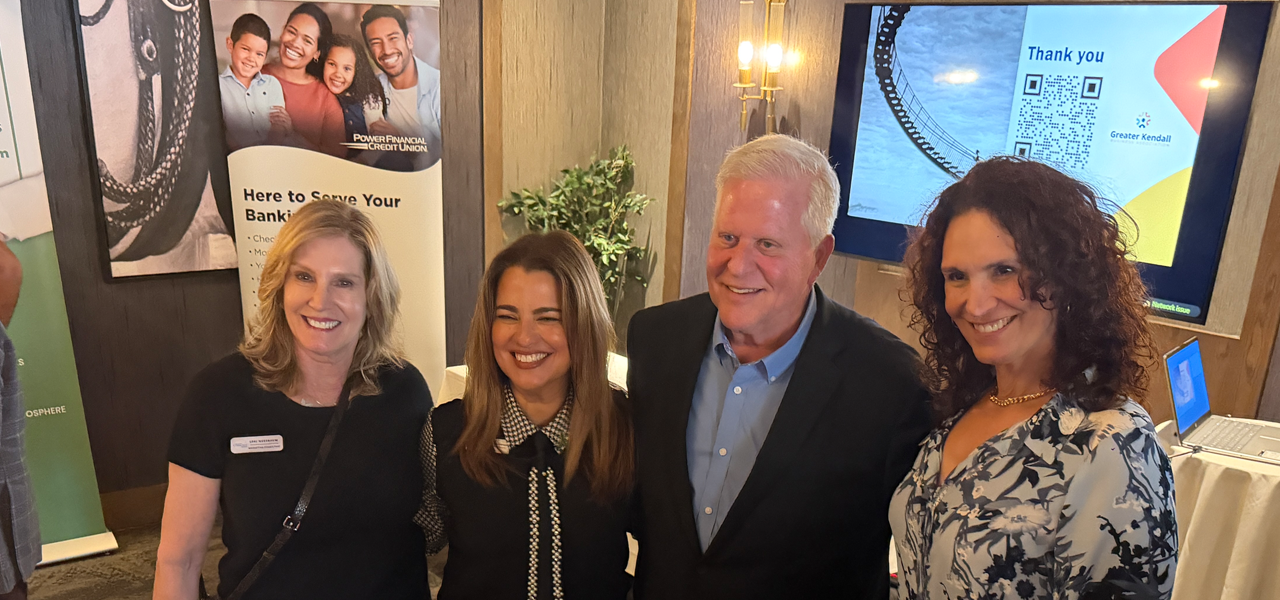
So when I attended his keynote at the Greater Kendall Business Association, it didn’t feel like listening to a speaker.
It felt like one of our Saturday breakfasts — just amplified.
What follows isn’t simply a recap of a speech.
It’s a continuation of those conversations.
Why Local Newspapers Were Created in the First Place
One of the strongest themes Michael shared was the original purpose behind launching community newspapers across Miami.
People needed a place to talk about their lives.
Not global politics.
Not national headlines.
Local life.
The potholes down the street.
The traffic getting worse.
The oversized signs.
The apartment buildings going up.
He explained how he helped launch newspapers across multiple communities as part of a team of about 50 people who believed in something simple but powerful:
Local voices matter.
These newspapers were pro-incorporation because the belief was that communities should have the opportunity to decide their own future.
Many areas went on to become thriving cities — Pinecrest, Palmetto Bay, and Cutler Bay among them.
Then he paused and said something that caught the room’s attention:
Kendall never incorporated.
In his view, voters should have been allowed to decide. The lesson wasn’t political — it was civic.
Communities thrive when people are given a voice.
How Business Associations Were Born
As these cities began to form, Michael recognized another need: local business communities.
He shared the story of sponsoring lunches in Pinecrest and encouraging local leaders to create their own business associations.
Eventually, he told them:
“I’m done paying for the lunches. Here’s the charter. You start the organization.”
They wanted him to run it.
He refused.
Because real community must be built by the community.
That mindset helped spark business associations that continue to serve their cities today.
The Wake-Up Call About Diversity
One of the most honest moments in the keynote came from a simple breakfast gathering.
Michael used to host a weekly pastry group. One day, 40 people showed up. The mayor looked around the room and said:
“Michael, only three people here live in this city.”
That moment became a turning point.
He realized that our default setting is to surround ourselves with people who look like us, think like us, and live like us.
If we don’t intentionally expand our circle, we don’t build community — we build bubbles.
So he made a decision: their shows, their office, and their work would reflect Miami as it truly is — diverse, vibrant, and representative.
Today, he says the people walking into their office come from everywhere. And that diversity is one of the greatest joys of his work.
A Lesson From Rabbi Manis Friedman
During a video interview with Rabbi Manis Friedman, Michael asked a question many people secretly ask:
“How can I get more intimacy in my marriage?”
The Rabbi’s answer was simple:
“Remember — it’s about them, not about you.”
Michael admitted he had it backwards. He was focused on getting more instead of giving more.
That lesson extends far beyond marriage.
It applies to business.
It applies to marketing.
It applies to leadership.
When we focus on giving value first, everything changes.
The Truth About Advertising
Michael referenced one of the most famous marketing quotes of all time from John Wanamaker:
“Half the money I spend on advertising is wasted; the trouble is I don’t know which half.”
It was a reminder that marketing requires faith and commitment.
And the same principle applies to giving back.
When you donate time, energy, or resources, you may never see the full impact.
But you are making a difference.
The Story That Explains Why This Work Matters
One of the most emotional moments came from a guest he interviewed who shared her story of childhood abuse, running away, and eventually finding mentors who helped her attend Miami-Dade College and later earn a master’s degree from Case Western.
She went on to start a nonprofit and received a million-dollar grant.
At the end of the interview, she looked directly into the camera and said:
“If you’ve been sexually abused, it’s not your fault. You’re not alone. Call me.”
Michael explained that moments like that are why this work matters.
When you give people a voice, you give them power.
The One-Dollar Finch Story
He closed the keynote with a story that made everyone laugh — and then reflect.
A finch escaped from a large bird cage and perched seven feet up on chicken wire. Determined not to lose a one-dollar bird, Michael tried everything: reaching, climbing a ladder, even spraying it with a hose while holding a net.
Standing on a ladder, hose in one hand and net in the other — the ladder slipped.
He fell.
And as he hit the ground, one thought crossed his mind:
“Make sure the things you chase in life are worthwhile.”
That line perfectly summarized the entire keynote.
Final Thoughts
This wasn’t a talk about newspapers.
It was a talk about:
• Building community
• Expanding inclusion
• Giving people a voice
• Showing up consistently
• Chasing the right things
And maybe the biggest lesson of all:
When you love what you do, it stops feeling like work — and starts feeling like purpose.
Michael can be reached at michael@cnews.net