The Return of Relationship Banking in a Big Small City
A conversation with the founders of Bank Miami
By Wilson Alvarez
A Small Miami Moment That Became a Full-Circle Story
Sometimes Miami feels like a global capital.
Other times, it feels like a neighborhood.
While attending a Doral Chamber of Commerce presentation featuring the founders of Bank Miami, I experienced one of those quiet reminders that this city, for all its size, remains deeply connected.
During a conversation with Mary Usategui, CEO and Co-Founder of Bank Miami, she mentioned something that stopped me in my tracks.
Daniel R. Martinez’s father had worked at Bank of Miami decades ago in a senior leadership role.
So had my mother.
I never met his father personally, but I knew of him. In the early 1980s, his name carried weight and respect inside the institution. Years later, long after those early banking days, he unknowingly impacted my life in a profound way.
Through his recommendation, I was hired in my early twenties to supervise the Item Processing Department at an international bank in Brickell — a defining moment in my career.
Standing there in Doral, listening to Daniel speak about character, regulation, and relationship banking, I was finally able to thank him — even though his father is no longer with us — for the opportunity his father helped create decades ago.
Miami, as Daniel later described it, is truly a “big small city.”
And that moment led into a deeper conversation with the three founders of Bank Miami:
-
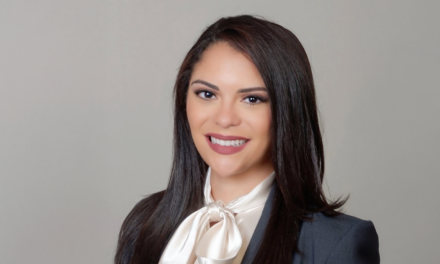
Mary Usategui — CEO & Co-Founder
-
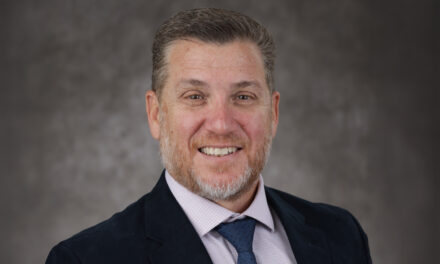
Daniel R. Martinez — Chief Banking Officer & Co-Founder
-
David Monter — EVP, CFO & COO & Co-Founder
Their story is more than the launch of a new bank.
It is the return of relationship banking to South Florida.
Building a Bank With a Simple Idea
Bank Miami was founded on a belief that feels almost old-fashioned in today’s financial landscape:
Banking should be personal.
The founders openly acknowledge that they offer the same core products as other banks. The difference is not in the product menu.
It is in the approach.
More creative.
More hands-on.
More human.
Clients are not account numbers. They are relationships.
Headquartered in South Miami, the bank was built to serve communities like Coral Gables, Downtown Miami, Doral, and South Miami itself — thoughtfully and deliberately.
The First New Bank in South Florida in 17 Years
The timing of Bank Miami’s arrival matters.
Over the past two decades, South Florida watched respected community banks gradually disappear through mergers and acquisitions. Institutions such as Gibraltar Private, Professional Bank, Marquis Bank, Apollo Bank, First National Bank of South Miami, and Biscayne Bank were absorbed into larger entities.
A void formed.
Bank Miami launched to help fill it.
In its first year, the bank has experienced significant growth and achieved the milestone of surpassing $200 million in assets — an impressive accomplishment for a de novo institution.
Daniel was careful to frame it correctly.
Assets fluctuate. Deposits move. Markets shift.
The exact number on any given day is less important than the momentum.
The message is clear: the community has responded.
A Culture Built on Experience, Not Transactions
Inside the bank, the philosophy is simple:
Leave your problems at the door.
Clients feel energy when they walk in. Whether positive or negative, it travels quickly.
The goal is not to sell a checking account.
It is to create an experience clients remember long after they forget interest rates or account features.
Because people rarely remember the product details.
They remember how they were treated.
How Do You Start a Bank Today?
Opening a bank in today’s regulatory environment is not for the faint of heart.
As a de novo institution, Bank Miami worked closely with the Florida Office of Financial Regulation and the FDIC to develop a detailed three-year business plan outlining growth projections, capital ratios, profitability targets, and risk management guardrails.
Most bank charters take 12 to 18 months to approve.
Bank Miami received approval in just four months — an extraordinary timeline made possible by a seasoned leadership team and a board composed of individuals from highly regulated industries.
Mary, a CPA by trade and former CFO, brings a discipline that resonates strongly with regulators.
The team’s philosophy toward oversight is refreshingly transparent.
“We call them for everything,” Daniel explained.
Rather than avoiding regulators, they embrace them as partners. In banking, silence is often the beginning of trouble. Open dialogue builds trust.
Built From Scratch — Every Product, Every Process
Unlike most startups, a bank opens with nothing ready.
Every deposit product, lending structure, compliance protocol, disclosure, audit framework, and technology integration had to be built from the ground up.
This infrastructure development took nearly a year before opening day.
And then, two weeks before launch, the team discovered they were not fully connected to the Federal Reserve settlement systems.
Without that connection, wires could not move.
In true entrepreneurial fashion, they pivoted.
Through a correspondent bank relationship, they temporarily routed transactions behind the scenes, allowing clients to open accounts, write checks, send wires, and use debit cards seamlessly while infrastructure was finalized.
Clients never saw the challenge.
They simply experienced a bank that worked.
Why Community Banks Matter for Small Businesses
One message the founders share repeatedly:
Small businesses should build relationships with community banks before they need them.
Large institutions rely heavily on automation and standardized decision-making models.
Community banks look at the person behind the business.
For Subchapter S owners and small business operators whose tax structures may not fit perfectly into a national bank’s template, that difference can be critical.
Community banking allows room for context.
Character Over Numbers
Daniel often jokes that he was terrible at math.
“I’m not in the math business,” he says. “I’m in the relationship business.”
Growing up as the son of a banker, he learned early that character outweighs spreadsheets.
A borrower with integrity who communicates when challenges arise is far more valuable than a perfect balance sheet without accountability.
And contrary to popular belief, banks do not want properties returned to them.
They are not contractors.
They are not property managers.
They are not builders.
They are partners.
When projects face difficulty, the objective is collaboration — extending terms, adjusting structures, stabilizing the relationship.
Long-term trust matters more than short-term enforcement.
Technology With a Human Purpose
Bank Miami embraces AI — but not as a replacement for people.
AI enhances compliance efficiency, particularly in business onboarding and Bank Secrecy Act due diligence. It assists with research and documentation, allowing the BSA officer and compliance team to review and finalize work more effectively.
Technology removes friction.
People create trust.
That balance defines the bank’s culture.
One Client at a Time
The founders speak about growth with discipline.
As a de novo bank, they operate under regulatory guardrails and examinations every six months. Measured expansion, strong capital ratios, and adherence to their approved business plan remain paramount.
The strategy is not rapid scaling.
It is steady momentum.
One client at a time.
One relationship at a time.
And sometimes, one full-circle Miami story at a time.
This feature appears on MiamiBankingNews.com and is also highlighted through SouthMiamiNews.com as part of the MiamiBusiness.com ecosystem, recognizing Bank Miami’s headquarters in South Miami and its growing presence across the region.
In a city that moves fast, there is still room for banking built on trust.