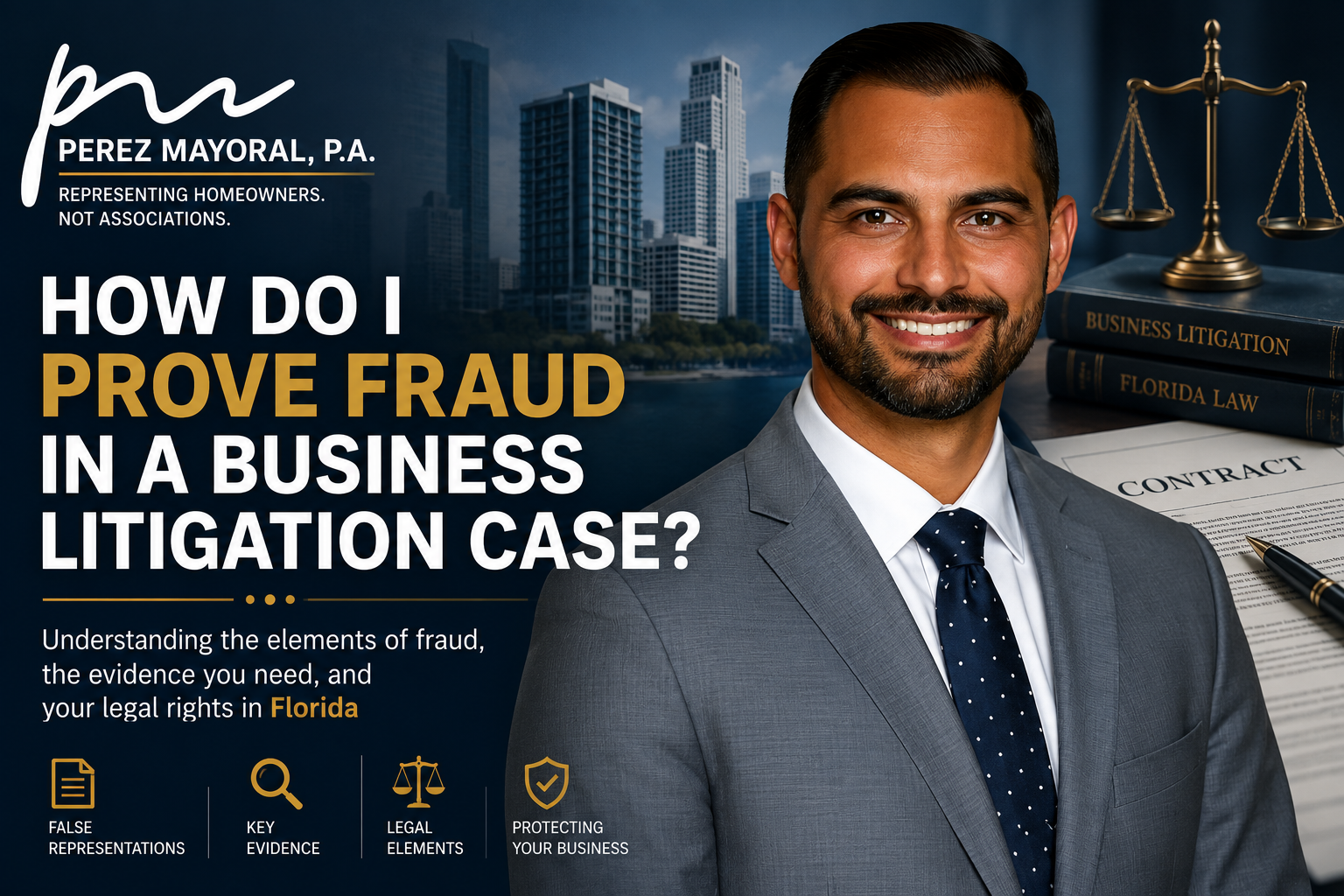
Understanding the Elements of Fraud and the Evidence That Can Help Protect Your Business
TL;DR
Proving fraud in a business litigation case requires more than showing that someone made a bad decision or failed to keep a promise. Florida law generally requires evidence that a false statement or material omission was made knowingly, with the intent that another person rely on it, resulting in damages. Emails, contracts, text messages, financial records, and witness testimony can all play an important role.
When a Business Transaction Goes Wrong
Not every failed business deal amounts to fraud. Sometimes agreements simply do not work out because of changing market conditions, misunderstandings, or poor business decisions.
Fraud, however, is different.
It generally involves allegations that one party intentionally made false statements or concealed important information to persuade another person or business to enter into a transaction or part with money or property.
Knowing the difference between a simple breach of contract and potential fraud is an important first step when evaluating your legal options.
What Must Generally Be Proven?
Although every case depends on its specific facts, a fraud claim generally requires evidence supporting several essential elements.
These typically include:
- A false statement concerning a material fact.
- Knowledge that the statement was false, or reckless disregard for the truth.
- An intent that another person rely on the statement.
- Reasonable reliance by the other party.
- Damages resulting from that reliance.
Because fraud is a serious legal claim, courts generally expect persuasive evidence supporting each element.
What Types of Evidence Can Help?
Strong documentation often becomes the foundation of a business fraud case.
Helpful evidence may include:
- Emails
- Text messages
- Letters
- Contracts
- Purchase agreements
- Financial records
- Invoices
- Bank records
- Marketing materials
- Internal business communications
These documents may help establish what was represented before an agreement was reached and whether those representations were accurate.
In some cases, witness testimony, expert analysis, or business records may also become important pieces of evidence.
Why Digital Communications Matter
Today’s business transactions often occur through email, text messaging, and electronic platforms.
These communications frequently create a timeline that can help explain:
- What representations were made.
- When they were made.
- Who received them.
- Whether information was intentionally withheld.
Preserving electronic evidence as early as possible can be extremely important, particularly if litigation becomes necessary.
Fraud Is Different From a Broken Promise
One common misconception is that every broken promise constitutes fraud.
That is not necessarily true.
A business dispute involving a contract may involve a breach of contractual obligations without involving intentional deception.
Determining whether conduct rises to the level of actionable fraud often requires a careful review of the facts, communications, and surrounding circumstances.
What Should You Do If You Suspect Fraud?
If you believe you were misled during a business transaction, consider taking several practical steps:
- Preserve all emails, text messages, and documents.
- Avoid deleting electronic communications.
- Organize contracts and financial records.
- Document important conversations while they are still fresh.
- Consult an attorney to discuss the specific facts of your situation.
Taking prompt action may help preserve evidence that could become important later.
“Integrity is doing the right thing, even when no one is watching.” — C.S. Lewis
Business relationships depend on honesty and transparency. When intentional deception enters a transaction, understanding your legal rights can help you make informed decisions about the next steps.
Takeaway
Fraud claims can involve complex legal and factual issues. While every dispute is different, maintaining thorough documentation and understanding the legal elements of fraud can help you evaluate whether a viable claim may exist. If you believe a business transaction involved intentional misrepresentation or concealment, obtaining legal guidance can help you better understand your options.
Watch the Video
Want a quick overview?
🎥 Watch: How Do I Prove Fraud in a Business Litigation Case?
https://www.youtube.com/watch?v=qZUzKU38Z2s
In this video, the attorneys at Perez Mayoral, P.A. discuss the basic elements of a fraud claim, the types of evidence that may support a case, and why preserving communications can be critical.
Contact Perez Mayoral, P.A.
If you believe you may have been the victim of fraud in a business transaction, the attorneys at Perez Mayoral, P.A. are available to discuss your situation and help you understand your legal rights.
📞 Phone: 305.928.1077
📧 Email: eperez@pmlawfla.com