What Homeowners and Business Owners Should Inspect Before Tropical Weather Arrives
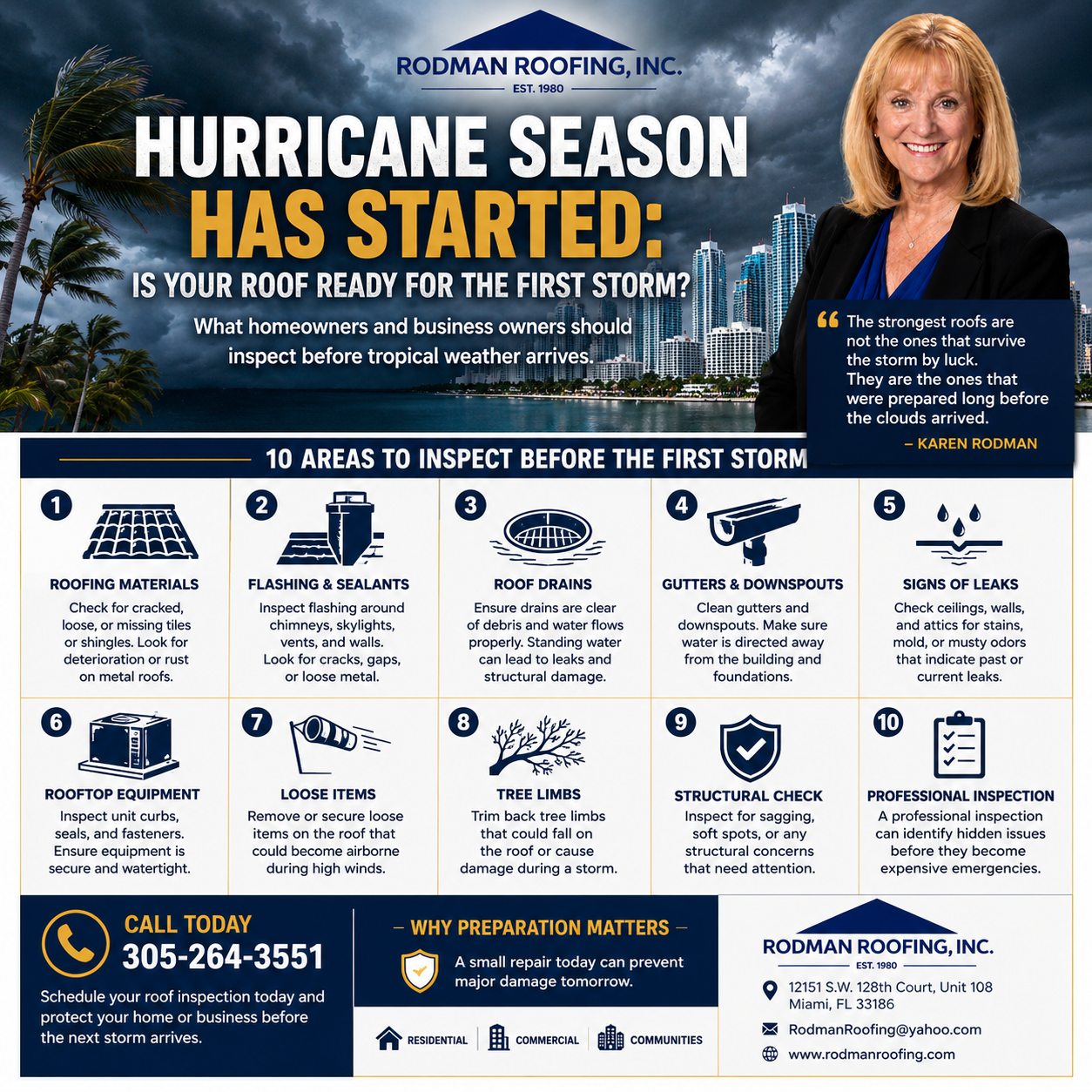
“The strongest roofs are not the ones that survive the storm by luck. They are the ones that were prepared long before the clouds arrived.”
— Karen Rodman
TL;DR
Hurricane season officially begins on June 1, and waiting until a storm is in the forecast is often too late. Homeowners and business owners should inspect roofing materials, flashing, sealants, roof drains, and signs of previous water intrusion before severe weather arrives. A professional roof inspection today can help prevent costly repairs, interior damage, and unexpected emergencies later in the season.
Quick Answer: Is Your Roof Ready for Hurricane Season?
Before the first tropical storm arrives, every property owner should inspect five critical areas:
✔ Roofing materials (tiles, shingles, metal panels)
✔ Flashing and sealants
✔ Roof drains and drainage systems
✔ Signs of previous leaks
✔ Loose rooftop components and attachments
Addressing these issues before hurricane season intensifies can significantly reduce the risk of water intrusion and storm-related damage.
Hurricane Season Is Here. Don’t Wait for the First Leak.
As someone who has spent decades in the roofing industry, I’ve learned that storms rarely create roofing problems. More often, they expose problems that already existed.
Every year, property owners call after a major storm and ask the same question:
“How did this happen?”
In many cases, the warning signs were there all along. A cracked sealant. A loose tile. A clogged roof drain. A flashing detail that had begun to separate.
These issues may seem minor during dry weather, but once wind-driven rain arrives, they can quickly become expensive problems.
That is why June is one of the most important months of the year for roof inspections.
What Should Homeowners Inspect Before Hurricane Season?
Inspect Roofing Materials for Damage
Your roofing materials serve as your property’s first line of defense.
Tile roofs should be checked for cracked, loose, or displaced tiles. Shingle roofs should be inspected for curling, lifting, missing shingles, and signs of deterioration. Metal roofing systems should be evaluated for loose fasteners, seam separation, and corrosion.
Even one compromised area can allow water to enter during a severe storm.
The goal is to identify vulnerabilities before hurricane-force winds find them.
Examine Flashing and Sealants
Flashing protects some of the most vulnerable areas of your roof.
This includes:
- Roof-to-wall transitions
- Chimneys
- Skylights
- Vent pipes
- Equipment curbs
- Valley areas
South Florida’s intense heat causes sealants to age and crack over time. Once those protective seals fail, water has an easy path into the structure.
Many of the leaks I investigate after storms begin at flashing locations that could have been repaired months earlier.
Check Roof Drains and Drainage Systems
One of the most overlooked parts of hurricane preparation is drainage.
For commercial buildings and flat roofing systems, roof drains must remain clear and operational. Debris buildup can cause water to pond on the roof surface, creating additional stress on seams and roofing materials.
For residential properties, gutters and downspouts should be cleaned and inspected before the rainy season reaches its peak.
Water that cannot properly drain will eventually find another path.
Unfortunately, that path is often inside the building.
Look for Signs of Previous Water Intrusion
The outside of the roof only tells part of the story.
Inside your property, look for:
- Ceiling stains
- Peeling paint
- Water discoloration
- Mold growth
- Damp insulation
- Musty odors
These warning signs often indicate an active roofing issue that may worsen significantly during hurricane season.
The earlier these issues are identified, the easier and less expensive they are to address.
What Should Business Owners Inspect Before Hurricane Season?
Commercial properties face unique challenges during hurricane season.
Beyond protecting the roof itself, business owners must consider:
- Inventory protection
- Tenant safety
- Business continuity
- Equipment protection
- Insurance claims prevention
A roof leak can interrupt operations, damage inventory, and create significant financial losses.
A proactive roof inspection is one of the most cost-effective investments a business owner can make before storm season intensifies.
Hurricane Season Roof Inspection Checklist
Before the first major storm arrives, inspect:
✅ Roof tiles, shingles, or metal panels
✅ Flashing around penetrations
✅ Sealants and caulking
✅ Roof drains and drainage systems
✅ Gutters and downspouts
✅ Rooftop equipment attachments
✅ Signs of previous water intrusion
✅ Loose debris on roof surfaces
✅ Tree limbs near the roof
✅ Attic or ceiling moisture concerns
Why Preparation Matters
Benjamin Franklin once said:
“An ounce of prevention is worth a pound of cure.”
Few industries demonstrate that truth better than roofing.
A small repair completed in June can prevent a major repair in August.
The cost difference is often substantial.
More importantly, preparation provides peace of mind when severe weather begins to develop.
Frequently Asked Questions
When should I inspect my roof for hurricane season?
Ideally, your roof should be inspected before hurricane season begins. However, the sooner an inspection is performed, the more time you have to address any concerns before a storm arrives.
What is the most common roofing problem found before hurricane season?
Cracked sealants, damaged flashing, loose roofing materials, and clogged roof drains are among the most common issues discovered during inspections.
Can a small roof issue become a major leak during a hurricane?
Yes. Wind-driven rain can exploit even small vulnerabilities and quickly create significant water intrusion.
How often should a roof be professionally inspected in South Florida?
Most roofing professionals recommend an inspection at least once per year and after any significant storm event.
Takeaway
Hurricane season has started.
The question is not whether South Florida will experience heavy rain, strong winds, and severe weather. The question is whether your roof will be ready when it does.
The best time to prepare is before the forecast becomes urgent.
Contact Karen Rodman Before the First Storm Arrives
If your roof has not been professionally inspected recently, now is the time to act.
At Rodman Roofing, Inc., my team and I help homeowners, business owners, property managers, condominium associations, and commercial property owners identify roofing concerns before they become costly emergencies.
We take pride in providing honest evaluations, quality workmanship, and practical solutions that help protect South Florida properties throughout hurricane season and beyond.
Don’t wait until water is coming through the ceiling or a tropical storm is approaching Miami.
Schedule your roof inspection today and gain the confidence that comes from knowing your roof is prepared for the months ahead.
Karen Rodman
President, Rodman Roofing, Inc.
📞 Phone: 305-264-3551
📧 Email: RodmanRoofing@yahoo.com
📍 Address: 12151 S.W. 128th Court, Unit 108, Miami, FL 33186