How Aging Systems Quietly Reduce Productivity and Efficiency
By Humberto Comellas
President & CEO, ulltium consulting®
Many Miami businesses continue operating with aging technology because the systems technically still function.
Applications eventually load.
Files eventually save.
Employees continue adapting to recurring delays and interruptions.
At first, the problems appear manageable.
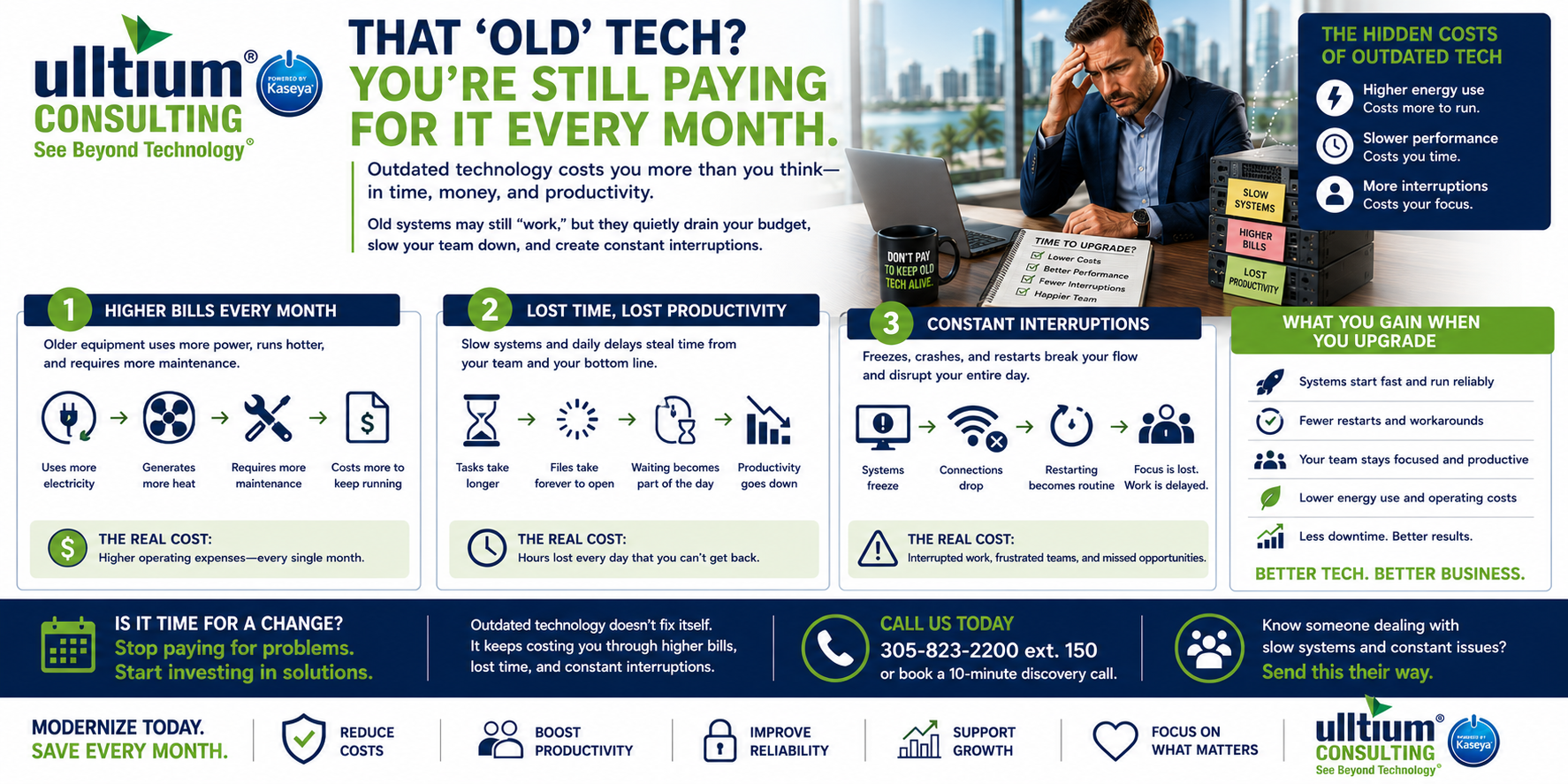
Direct Answer: Outdated technology increases business expenses by reducing productivity, increasing downtime, raising energy costs, and creating recurring workflow interruptions.
The challenge is that these costs rarely appear all at once.
They accumulate quietly across daily operations.
Why Aging Systems Create Hidden Operational Costs
Older systems often produce gradual inefficiency rather than immediate failure.
Businesses begin experiencing:
• Slower system response times
• More frequent freezing and restarting
• Delayed workflows
• Increased troubleshooting requests
Because teams adapt to these disruptions over time, organizations often underestimate how much productivity is being lost.
Why Lost Productivity Matters
Operational slowdowns affect more than technology performance.
They affect:
• Employee focus
• Team efficiency
• Customer responsiveness
• Daily workflow consistency
Repeated interruptions force employees to stop productive work and rebuild momentum throughout the day.
The cumulative impact becomes significant across the organization.
Why Older Equipment Costs More to Operate
Outdated hardware often consumes more energy while delivering lower performance.
Older systems typically:
• Use more electricity
• Generate additional heat
• Require more maintenance
• Increase operational strain during summer months
Modern infrastructure often improves efficiency while reducing long-term operational expense.
Why Temporary Fixes Become Long-Term Problems
Many organizations unintentionally normalize recurring technology frustrations.
Employees restart devices repeatedly.
Applications lag consistently.
Workarounds become standard operating behavior.
Over time, businesses begin operating around technology limitations instead of resolving them.
That operational friction reduces efficiency across the organization.
What Efficient Technology Environments Improve
Businesses that modernize aging systems often experience:
• Faster workflow performance
• Reduced interruptions
• Lower downtime
• Improved employee productivity
• Greater operational consistency
The objective is not replacing technology unnecessarily.
It is reducing operational inefficiency that continues increasing costs over time.
A Leadership Perspective
Technology should support operational momentum rather than quietly slowing it down every day.
Organizations that continue delaying infrastructure improvements often absorb larger hidden costs through lost productivity and ongoing inefficiency.
Reliable technology protects business efficiency.
Next Steps
If aging systems continue creating slowdowns, interruptions, or recurring workflow frustration within your organization, now may be the right time to evaluate which technology investments would create meaningful operational improvement.
At ulltium consulting®, we help Miami businesses modernize technology strategically while reducing operational disruption and long-term inefficiency.
Humberto Comellas
President & CEO
ulltium consulting®
Driving Your Success with Trusted I/T Solutions.