From Havana to Hialeah: Rachel A. Moreno, Esq. Explains Why Estate Planning Is One of the Most Important Gifts You Can Leave Your Family
Protecting Your Legacy Before a Crisis Happens
“Estate planning is not a transaction about death. It is the ultimate act of leadership to shield the people you love.”
— Rachel A. Moreno, Esq.
TL;DR
Rachel A. Moreno, Esq., founder of Ramp Law, P.A., recently spoke to BNI Hialeah members about estate planning, probate, guardianship, and elder law. Her message was clear: proper planning today can save families significant stress, expense, and uncertainty tomorrow. Through wills, trusts, powers of attorney, healthcare directives, and other planning tools, individuals can protect their assets, preserve their wishes, and avoid unnecessary court involvement.
What Happens If You Don’t Have an Estate Plan?
The short answer: Florida law will often make important decisions for you.
Without proper estate planning documents, your loved ones may face probate proceedings, guardianship litigation, delays, additional legal expenses, and uncertainty during already difficult times. Estate planning allows you—not the courts—to determine who manages your affairs, receives your assets, and makes decisions on your behalf if you become incapacitated.
Table of Contents
- Meet Rachel A. Moreno, Esq.
- What Is Elder Law?
- The Three Areas Rachel Focuses On
- Understanding Probate
- Why a Will Alone May Not Be Enough
- Understanding Guardianship
- The Cost of Waiting
- Estate Planning Tools That Can Help
- Trusts, Children, and Asset Protection
- Lady Bird Deeds and Florida Planning Strategies
- Business Owners Need Estate Plans Too
- Key Takeaways
- Frequently Asked Questions
Meet Rachel A. Moreno, Esq.
Born and raised in Havana, Cuba, Rachel A. Moreno understands the value of hard work and the importance of protecting what families spend a lifetime building.
When she arrived in the United States as a teenager, she recognized the opportunities available through education, perseverance, and professional achievement. That determination eventually led her to earn her Juris Doctor degree, cum laude, from St. Thomas University College of Law, along with a Certificate in Elder Law.
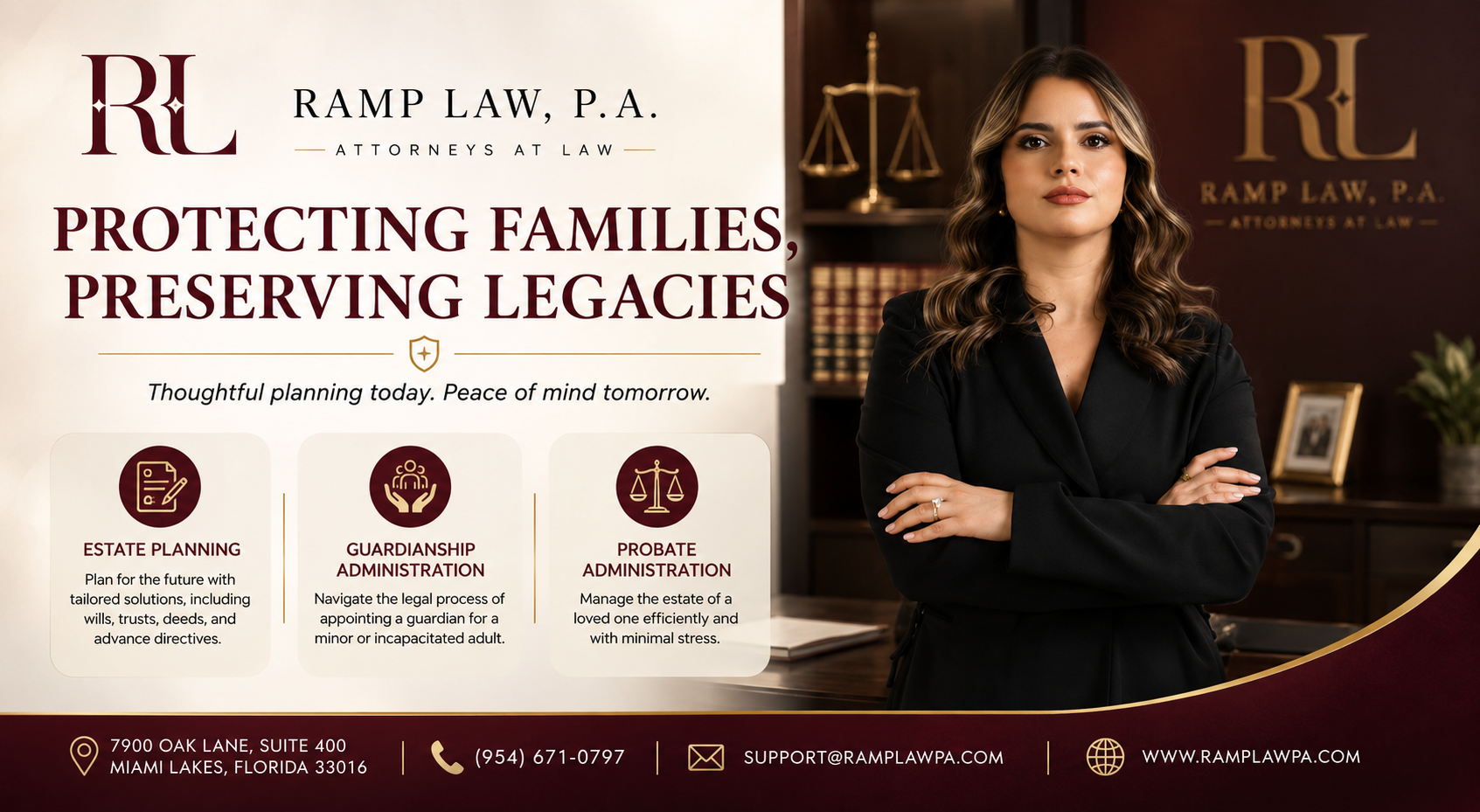
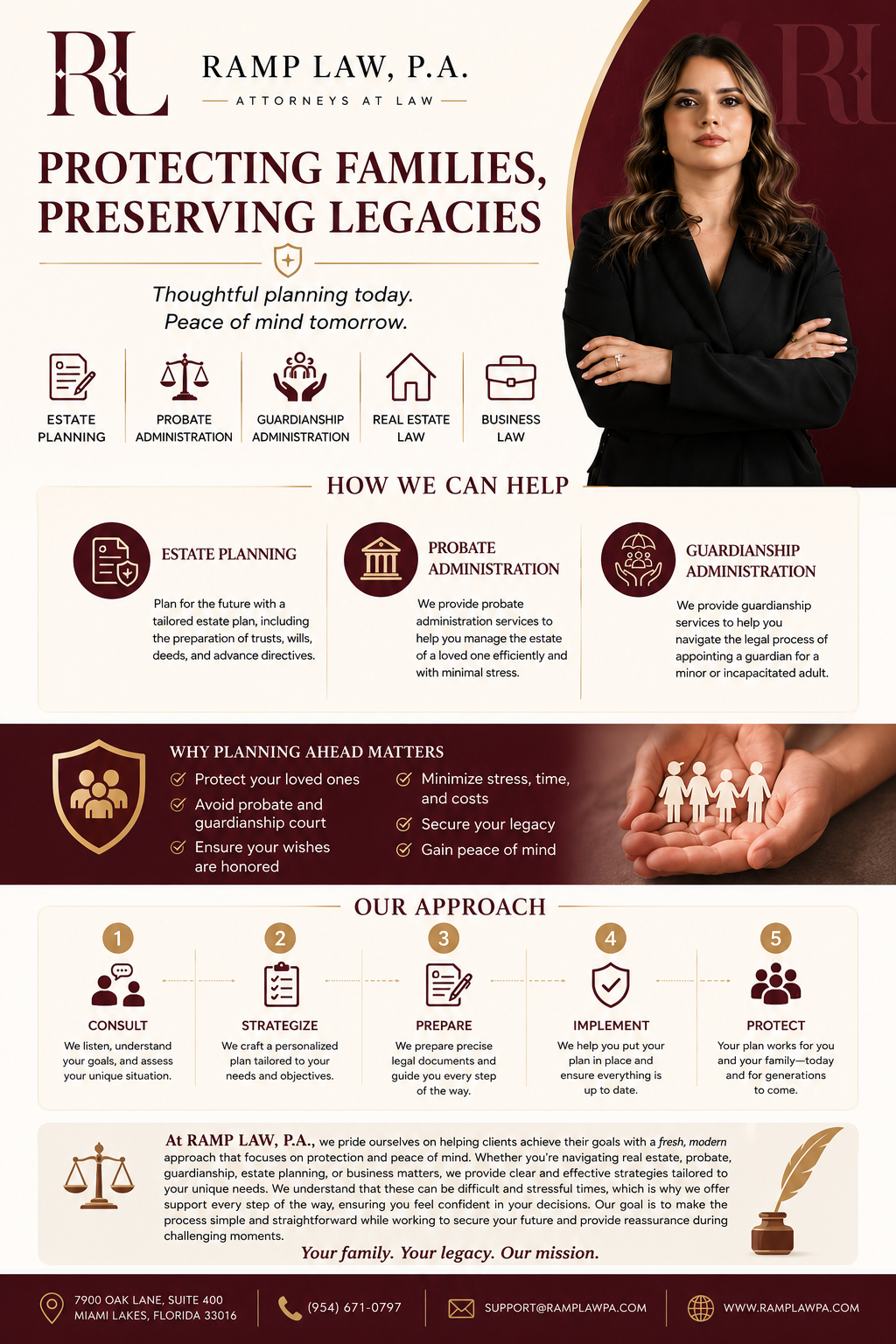
Today, Rachel focuses her practice on estate planning, probate administration, guardianship matters, real estate law, and business law.
She is a Director of the Miami Lakes Bar Association and serves as a member and Fellow of the Elder Law Section of The Florida Bar.
Her mission extends beyond legal documents. She is passionate about helping families navigate some of life’s most challenging transitions with empathy, education, and practical legal guidance.
When she is not serving clients, Rachel enjoys reading, traveling, exploring new cultures, and spending time with her beloved fur baby, KitKat.
What Is Elder Law?
Many people hear the term “elder law” and assume it only applies to senior citizens.
In reality, elder law encompasses a broad range of legal services designed to help individuals and families prepare for future healthcare, financial, and legal decisions.
It often includes:
- Estate Planning
- Probate Administration
- Guardianship
- Incapacity Planning
- Healthcare Directives
- Asset Protection Strategies
- Long-Term Care Planning
As Rachel explained, elder law is really about preparing for life’s transitions before they become emergencies.
The Three Areas Rachel Focuses On
During her presentation, Rachel highlighted three primary areas where she helps clients and referral partners.
Probate Administration
Helping families navigate the legal process following the death of a loved one.
Guardianship Administration
Assisting families when a loved one can no longer make personal, medical, or financial decisions independently.
Estate Planning
Creating customized legal plans that include trusts, wills, deeds, powers of attorney, and healthcare directives.
Her overall goal is simple:
Help families avoid unnecessary court involvement whenever possible.
Understanding Probate
Probate is the court-supervised process used to transfer assets from a deceased person’s name to their beneficiaries.
Many people mistakenly believe that having a will avoids probate.
Rachel explained that this is one of the most common misconceptions she encounters.
A will does not avoid probate.
Instead, a will provides instructions regarding how assets should be distributed. The estate may still need to pass through the probate process before distributions can occur.
Without a will, Florida law determines who receives the assets and how they are distributed.
Probate Can Be Time-Consuming
Florida probate often requires:
- Appointment of a personal representative
- Notice to beneficiaries
- Notice to creditors
- Asset identification
- Debt resolution
- Tax compliance
- Court oversight
In many situations, probate may take several months or longer before beneficiaries receive distributions.
This delay often occurs during a period when families are already grieving.
Why a Will Alone May Not Be Enough
A will remains an important estate planning tool.
However, Rachel explained that relying solely on a will often leaves opportunities for greater protection on the table.
A comprehensive estate plan may include:
- Revocable trusts
- Durable powers of attorney
- Healthcare surrogate designations
- Living wills
- Lady Bird Deeds
- Business succession planning
The right combination depends on each family’s circumstances.
No two plans should look exactly alike.
Understanding Guardianship
Guardianship becomes necessary when an individual can no longer make decisions for themselves due to incapacity.
Many people assume that spouses or adult children automatically gain authority when a loved one becomes incapacitated.
That is often not the case.
Without proper planning documents, family members may need court approval before making financial or medical decisions.
The Guardianship Process
Rachel outlined the basic guardianship process:
- Petition is filed.
- Medical evaluations occur.
- An examining committee reviews the individual.
- A court hearing is held.
- A guardian is appointed.
- Ongoing court supervision begins.
Once established, guardianships often require annual reports and continuing court oversight.
For that reason, Rachel emphasizes proactive incapacity planning whenever possible.
The Cost of Waiting
One of the most powerful points of Rachel’s presentation involved comparing the cost of planning versus the cost of reacting.
A thoughtfully prepared estate plan may help families avoid:
- Probate expenses
- Guardianship proceedings
- Delays in medical decision-making
- Family disputes
- Court intervention
- Unnecessary legal fees
More importantly, it can provide peace of mind.
As Rachel noted, planning is not about expecting tragedy. It is about being prepared.
Estate Planning Tools That Can Help
Durable Power of Attorney
Allows a trusted individual to manage financial matters if you become incapacitated.
Healthcare Surrogate Designation
Allows a designated person to make healthcare decisions on your behalf.
Living Will
Provides instructions regarding medical treatment preferences.
Last Will and Testament
Directs how assets should be distributed after death.
Revocable Trust
Provides flexibility, control, and potential probate avoidance strategies.
Trusts, Children, and Asset Protection
Trusts can be particularly valuable for families with minor children.
Rachel explained that trusts allow parents to:
- Control how assets are distributed
- Delay distributions until beneficiaries reach certain ages
- Protect inheritances
- Provide educational incentives
- Appoint trusted individuals to manage assets
Rather than handing a large inheritance directly to an eighteen-year-old, parents can create structured distributions that align with their goals and values.
This flexibility is one reason trusts remain a popular planning tool.
Lady Bird Deeds and Florida Planning Strategies
One of the Florida-specific tools Rachel discussed is the Enhanced Life Estate Deed, commonly known as a Lady Bird Deed.
For some homeowners, this strategy may allow real property to transfer automatically to beneficiaries upon death while allowing the owner to maintain control during life.
Depending on a person’s circumstances, Lady Bird Deeds may provide a simple and efficient planning option.
However, Rachel emphasized that every situation is different and should be evaluated individually.
Business Owners Need Estate Plans Too
Business owners often spend decades building successful companies.
Yet many fail to create plans for what happens if they become incapacitated or pass away unexpectedly.
Rachel encourages business owners to address:
- LLC membership interests
- Corporate ownership shares
- Succession planning
- Buy-sell agreements
- Authority during incapacity
Without proper planning, families may face significant challenges maintaining or transferring business ownership.
Why Clients Appreciate Rachel’s Approach
What stood out most during Rachel’s presentation was not simply her legal knowledge.
It was her compassion.
Having personally experienced many of the challenges her clients face, she understands that estate planning, probate, and guardianship are rarely just legal matters.
They are family matters.
Her focus on education, empathy, and practical guidance has helped her build a growing reputation throughout South Florida.
That commitment contributed to her recognition as a 2026 Rising Star and her firm’s recognition as a Best Rated Law Firm in Broward County for 2025.
Key Takeaways
Estate planning is not about preparing for death.
It is about protecting your family, preserving your wishes, and reducing future uncertainty.
By planning ahead, you can decide:
- Who manages your finances
- Who makes healthcare decisions
- Who receives your assets
- How your children are protected
- How your legacy is preserved
Those decisions should belong to you—not to a court.
Featured Snippet Answer
Why is estate planning important?
Estate planning helps individuals protect their assets, designate decision-makers, avoid unnecessary probate and guardianship proceedings, and ensure their wishes are honored. A comprehensive estate plan can reduce legal complications, save time and expense for loved ones, and provide peace of mind during life’s most challenging transitions.
Frequently Asked Questions
Does having a will avoid probate?
Not necessarily. A will provides instructions regarding asset distribution, but the estate may still need to go through probate. Additional planning strategies may be available depending on the circumstances.
What happens if I become incapacitated without planning documents?
Family members may need to seek court involvement through a guardianship proceeding before obtaining authority to make certain decisions on your behalf.
Do I need a trust?
Not everyone does. The appropriate planning strategy depends on your assets, family situation, goals, and circumstances. An attorney can help determine what tools may be appropriate.
What is a Lady Bird Deed?
A Lady Bird Deed is a Florida planning tool that may allow real property to transfer upon death while permitting the owner to retain significant control during life.
Should business owners have estate plans?
Yes. Business interests often require additional planning to address ownership, succession, incapacity, and continuity concerns.
“By failing to prepare, you are preparing to fail.”
— Benjamin Franklin
This famous quote remains relevant today. Estate planning is ultimately about preparation, organization, and protecting the people who matter most.
The most important takeaway from Rachel Moreno’s presentation is that estate planning is not reserved for the wealthy or elderly. Every adult should consider what would happen if they became incapacitated or passed away unexpectedly. Having a plan can make a difficult situation significantly easier for loved ones.
If you would like to learn more about estate planning, probate administration, guardianship matters, or elder law planning, contact Rachel A. Moreno, Esq., and the team at Ramp Law, P.A., to schedule a consultation and discuss your specific circumstances.
About Ramp Law, P.A.
Rachel A. Moreno, Esq.
Ramp Law, P.A.
7900 Oak Lane, Suite 400
Miami Lakes, Florida 33016
Phone: (954) 671-0797
Email: support@ramplawpa.com
Legal Disclaimer
This article is for informational purposes only and does not constitute legal advice. Reading this article does not create an attorney-client relationship. Laws change and every situation is unique. Individuals should consult a licensed attorney regarding their specific circumstances before making legal decisions. Past results and recognitions do not guarantee future outcomes.