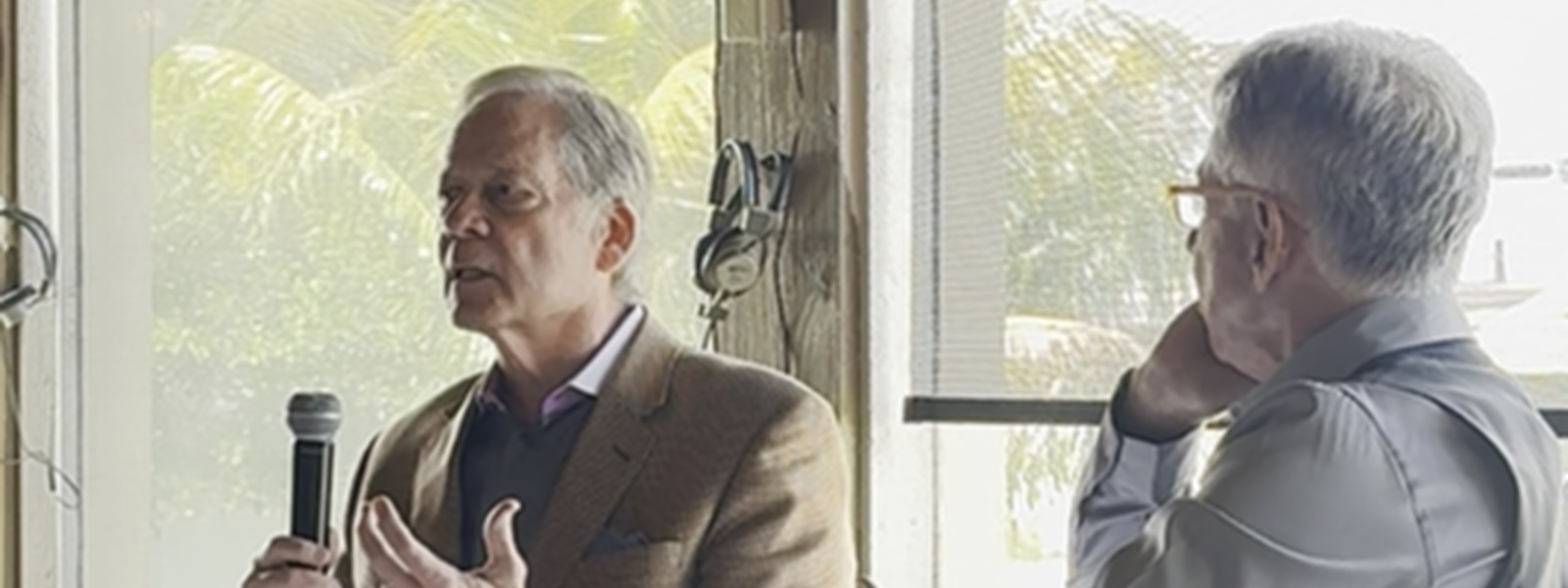
A Miami gathering where business, faith, and personal truth collided—and reshaped how leaders think about success
TL;DR – At a powerful CBMC South Florida gathering at the 94th Aero Squadron Restaurant, led by Steve Solomon, keynote speaker W. Allen Morris delivered more than a speech—he delivered a transformation. Through deeply personal stories of success, failure, burnout, and faith, Morris challenged high-performing professionals to rethink leadership, identity, and purpose. His message was clear: success without surrender leads to pressure, but purpose-driven leadership leads to peace. Attendees left with a renewed understanding that business can be more than profit—it can be ministry.
Table of Contents
A Morning at 94th Aero Squadron: Where Business Meets Purpose
Who Is W. Allen Morris? A Legacy Built in Miami
The Hidden Pressure of High Achievement
When Leaders Break: The Power of Pain and Awareness
Faith in the Marketplace: Practical Leadership Principles
From Success to Significance: Redefining the Mission
A Morning at 94th Aero Squadron: Where Business Meets Purpose
There are business events… and then there are moments that stay with you.
This gathering, hosted by CBMC South Florida under the leadership of Steve Solomon, was the latter.
Set at the iconic 94th Aero Squadron Restaurant, the backdrop alone set the tone. With planes taking off and landing from nearby Miami International Airport, the symbolism was hard to miss—movement, transition, elevation. It felt fitting for a message centered on transformation.
In attendance were respected professionals from across Miami’s business community, including Eddie Rivero of The Rivero Group, Business Broker Ralph Geronimo with Transworld, Oren Lambert, Wealth Manager Bryant Ruano, and Travel Expert Phillip Sherlock, among others.
These are individuals who operate daily at high levels—closing deals, managing clients, navigating complex industries. Yet on this morning, titles took a back seat to something deeper.
The keynote speaker, W. Allen Morris, didn’t deliver a traditional speech. He told stories.
And not surface-level stories—but raw, transparent, sometimes uncomfortable truths.
When questions were asked, he didn’t respond with polished answers. Instead, he leaned into storytelling—drawing from decades of experience in business, leadership, and personal struggle. That approach created something rare in professional settings:
Authenticity.
By the end of the session, it was clear—this wasn’t about networking.
It was about reflection.
Who Is W. Allen Morris? A Legacy Built in Miami
To understand the impact of the message, you first have to understand the man.
W. Allen Morris is not just a speaker—he is a cornerstone in Miami’s real estate and business landscape. As the Chairman and CEO of The Allen Morris Company, he has played a significant role in shaping South Florida’s development footprint, contributing to projects that have influenced how Miami lives, works, and grows.
Raised in Miami, Morris represents a legacy of entrepreneurship rooted in relationships, long-term vision, and disciplined execution. His family’s involvement in real estate dates back decades, and through that foundation, he built a reputation not only for business success but for leadership.
But what makes his story compelling is not just what he built…
It’s what he went through.
Morris shared openly about his journey—one that includes professional success paired with personal struggle. From leading large-scale operations to navigating family challenges and internal burnout, his story mirrors what many high-level professionals quietly endure.
He also revealed a pivotal turning point in his life—when he shifted from seeing himself as the “owner” of his success to a “steward” of what God entrusted to him. That mindset reframed everything.
It’s this combination—business authority and personal vulnerability—that makes him a dynamic speaker.
He doesn’t speak to audiences.
He connects with them.
The Hidden Pressure of High Achievement
One of the most powerful themes of the morning was this:
High achievers rarely feel like they’ve done enough.
In a competitive market like Miami, professionals are conditioned to perform at all times. More deals. More growth. More recognition.
But behind that drive is often a silent belief:
“I need to do more to prove my worth.”
Morris unpacked this reality through his own experience—running companies, managing teams, and constantly pushing forward. From the outside, everything looked successful.
Inside, it was different.
He described the pressure of leadership—the inability to admit uncertainty, the burden of decision-making, and the quiet fear of failure. These aren’t challenges taught in business school.
They are lived.
Many leaders, he explained, become “human doings” rather than “human beings”—valuing themselves based on output rather than identity.
That mindset creates a dangerous cycle:
Achievement leads to temporary validation
Validation fades
Pressure returns
And the cycle repeats.
The room was quiet during this part of the talk—not because it was complicated, but because it was familiar.
When Leaders Break: The Power of Pain and Awareness
Change rarely comes from comfort.
It comes from pain.
Morris shared deeply personal moments—family struggles, leadership challenges, and a season where everything seemed to converge at once. Professionally, he faced internal dysfunction within his organization. Personally, he navigated difficult decisions involving his family.
Then came the physical symptoms—constant headaches that led to medical evaluations and a moment where he was told he might have a serious condition.
The diagnosis turned out to be something else:
Stress.
Pressure.
Unresolved internal conflict.
What followed was one of the most defining decisions of his career:
He stepped away.
What began as a short sabbatical turned into a multi-year journey of reflection, coaching, counseling, and personal discovery.
During that time, he realized something profound:
He didn’t fully understand himself.
He had spent years achieving—but not processing.
Leading—but not feeling.
That awareness changed everything.
Faith in the Marketplace: Practical Leadership Principles
For many in the room, the question was simple:
How do you live your faith in business?
Morris didn’t offer theory—he offered practice.
He emphasized three principles:
1. Healthy Boundaries
Not every opportunity is worth pursuing. Saying “no” can protect long-term integrity.
2. No Good Deal with the Wrong People
Character matters more than contracts.
3. Let Love Be the Motivation
Not ego. Not pressure. Not profit.
These principles may sound simple—but applying them in a competitive business environment is anything but.
Yet Morris made it clear:
Faith in business isn’t about perfection.
It’s about alignment.
From Success to Significance: Redefining the Mission
After years of success, Morris reached an unexpected conclusion:
He no longer enjoyed his business.
Instead of walking away, he rebuilt it—starting with purpose.
He simplified his company’s mission into three words:
Inspire. Impress. Improve.
Inspire through vision and design
Impress through excellence in experience
Improve the lives of everyone touched by the business
That last point became the most impactful.
What if business wasn’t just about transactions…
…but transformation?
That idea resonated deeply with those in attendance.
Because in a city driven by growth and opportunity, purpose is what sustains long-term success.
Success alone is not the goal. Purpose, alignment, and authenticity define true leadership.