 Your Local Matchmaker to All Things for Seniors
Bilingual Healthcare Navigation in Miami-Dade: Clear Communication Can Change Outcomes
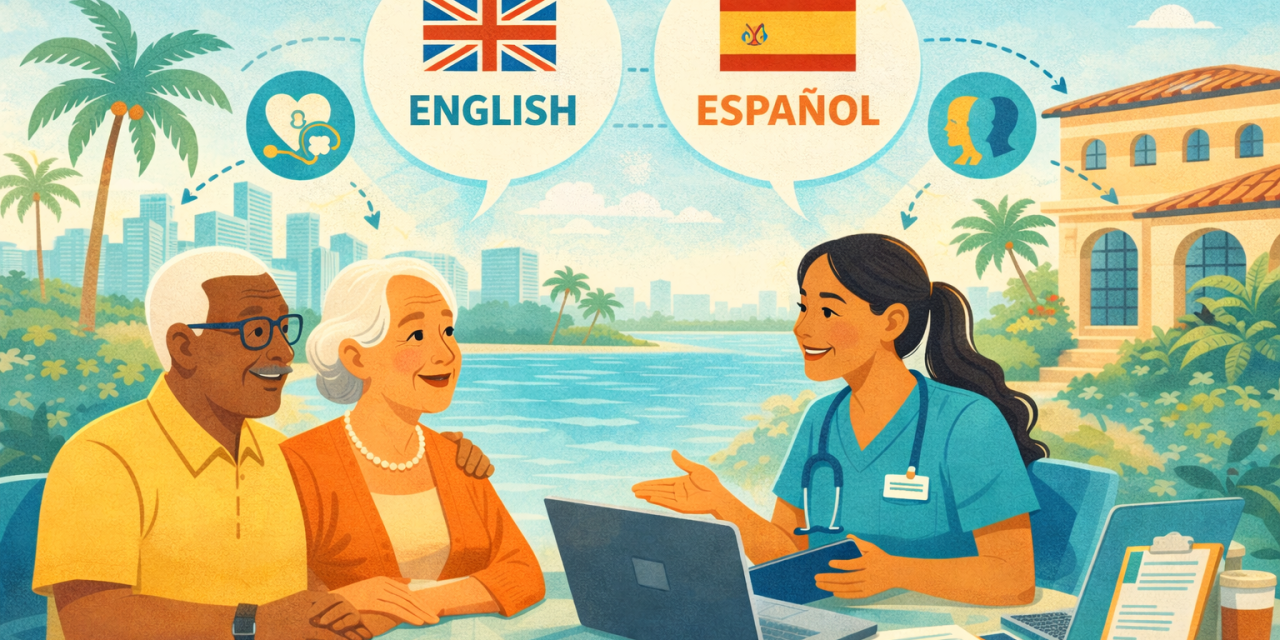
In Miami-Dade, navigating healthcare as a senior can be challenging—especially when language barriers exist. For many families, Spanish is spoken at home, yet medical forms and insurance documents are often in English. That’s why bilingual healthcare navigation is essential: it ensures seniors and families understand their options, make better decisions, and reduce risk.
The Reality of Miami’s Senior Demographic and the Need for Bilingual Healthcare Navigation
Miami-Dade County is one of the most culturally diverse regions in the United States. According to U.S. Census data, more than 70% of residents speak a language other than English at home.¹
For seniors, bilingual healthcare navigation directly affects:
-
Understanding discharge instructions
-
Reviewing legal and medical documents
-
Coordinating follow-up care
-
Interpreting Medicare or Medicaid options
When seniors don’t fully understand information, decisions suffer—which can lead to poor outcomes and family stress.
Why Cultural Awareness Is Key in Bilingual Healthcare Navigation
Bilingual healthcare navigation is more than translation. It involves:
-
Understanding family dynamics and caregiving roles
-
Respecting cultural expectations around elder care
-
Addressing comfort levels with assisted living options
-
Managing attitudes toward outside help
In many Miami households, caregiving decisions are made collectively by family members, so navigating healthcare requires cultural sensitivity.
How 305Senior Provides Bilingual Healthcare Navigation in Miami
305Senior, founded by Viviana Laboy, is an independent senior referral hub serving Miami-Dade County.
The platform does not provide medical advice, but it offers bilingual healthcare navigation by connecting seniors and families to vetted local providers. Families can ask questions in the language they’re most comfortable with, leading to confident and informed decisions.
Avoiding Miscommunication Mistakes With Bilingual Healthcare Navigation
Even small misunderstandings can become serious complications:
-
A missed follow-up appointment
-
A misunderstood medication instruction
-
A misinterpreted legal directive
Research from the National Institutes of Health shows that language barriers negatively affect patient safety.²
Clear communication through bilingual healthcare navigation reduces that risk.
Collaboration Between Providers and Bilingual Healthcare Navigation
Senior living communities, home health agencies, and legal professionals serving multilingual families benefit from structured bilingual healthcare navigation.
Collaboration improves alignment, reduces confusion, and ensures everyone involved—families and providers alike—are on the same page.
Transparency and Boundaries in Bilingual Healthcare Navigation
305Senior may receive referral fees from partner providers, but these do not increase costs for seniors. The platform’s role remains informational and connection-based—not clinical. Clear boundaries protect everyone involved.
In Miami-Dade, bilingual healthcare navigation is not a luxury—it’s a necessity.
Seniors who fully understand their options:
-
Make better healthcare decisions
-
Give families peace of mind
-
Enable providers to work with less confusion
Start the Conversation About Bilingual Healthcare Navigation. Clear communication builds confident decisions.
If your family needs bilingual healthcare navigation while making senior care decisions in Miami-Dade, reach out to Viviana Laboy:
 Viviana Laboy
vlaboy@305senior.com
786-326-0656
www.305Senior.com
Sometimes clarity begins with the right guidance.