New superintendent highlights academic excellence, workforce readiness, community partnerships, and the challenges shaping the future of education in Miami-Dade County.
October 22, 2026
Kendall, Miami-Dade County
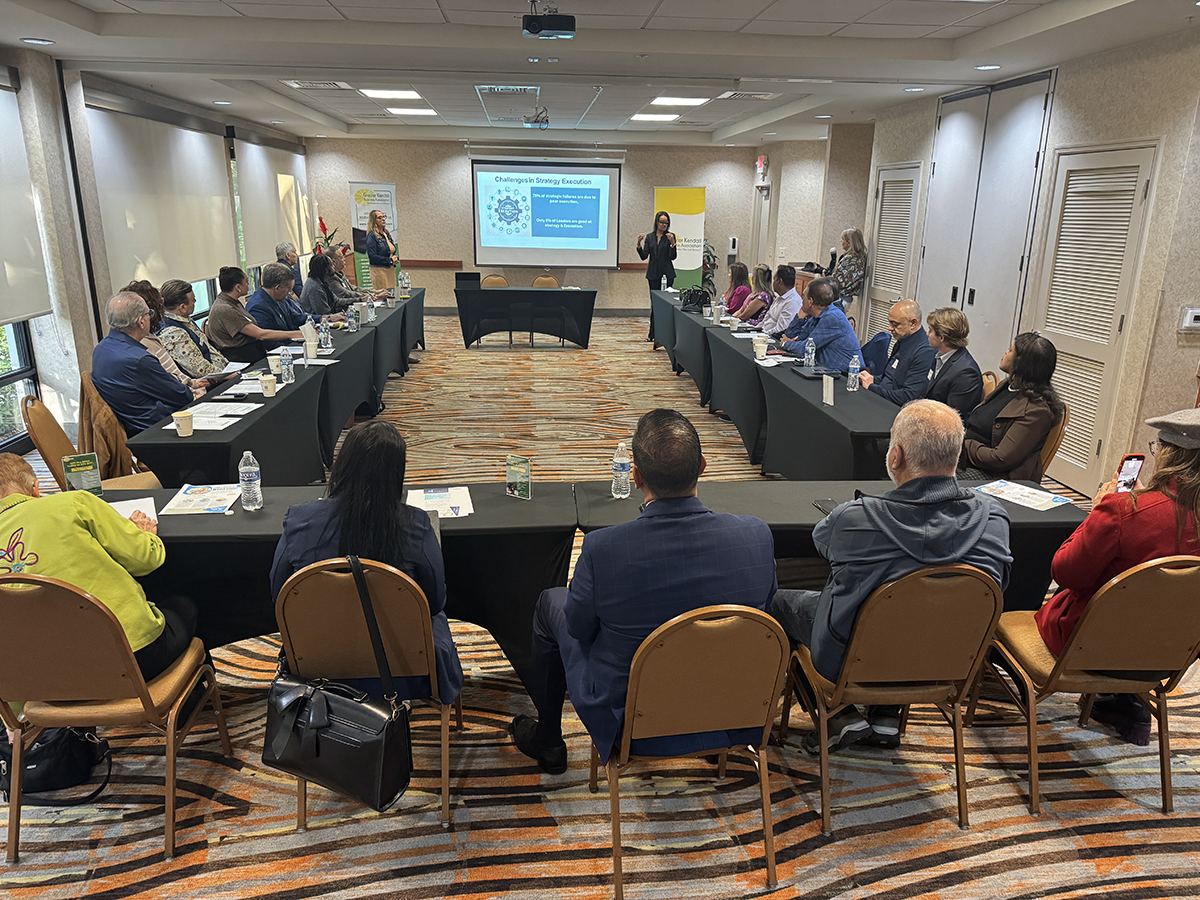
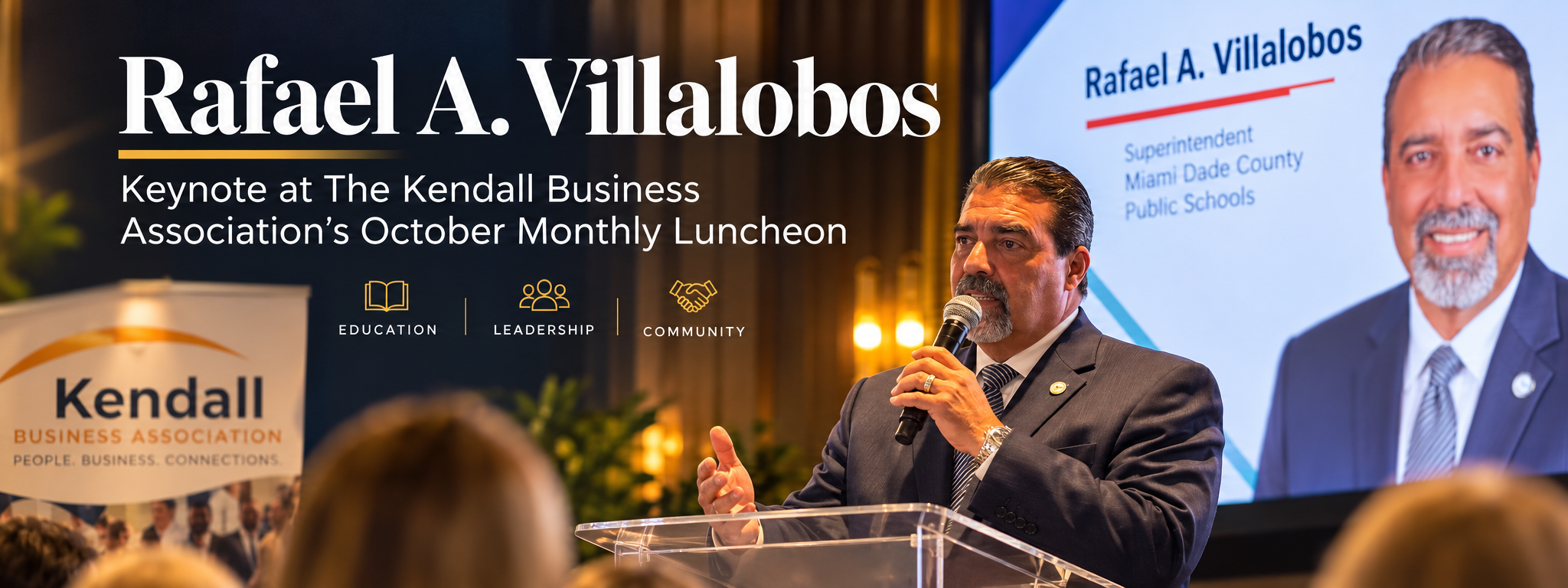
KENDALL, FL — Education, leadership, and the future of Miami-Dade County took center stage as Rafael A. Villalobos, Superintendent of Miami-Dade County Public Schools, delivered the keynote address at the Greater Kendall Business Association (GKBA) October Signature Luncheon on Thursday, October 22, 2026.
Held at Fogo de Chão Brazilian Steakhouse in Kendall, the gathering brought together business professionals and community leaders for a discussion extending well beyond the classroom.
Under the theme “The State of Miami-Dade County Public Schools: Navigating Change, Protecting Opportunity,” Villalobos shared his perspective on one of the nation’s largest public school districts, its accomplishments, and the decisions necessary to ensure that students continue receiving a quality education.
His message emphasized that strong public schools are not simply an educational priority. They are essential to Miami-Dade County’s economic vitality, workforce development, and long-term prosperity.
A Career Built on Education and Service
For Villalobos, leading Miami-Dade County Public Schools is personal.
A product of the district himself, he began his educational career in 1994 as a teacher at South Dade Senior High School. Over more than three decades, he advanced through teaching and administrative leadership positions, including serving as principal of several schools and South Region Superintendent.
In July 2026, the Miami-Dade County School Board unanimously selected him to lead the district. He officially assumed the position in September 2026.
During his keynote, Villalobos spoke with pride about the educators, administrators, support professionals, and school police officers whose contributions make student success possible.
He emphasized that the district’s accomplishments are the result of dedicated professionals who care deeply about children and understand the responsibility of preparing them for life beyond graduation.
Academic Excellence and Opportunities for Every Student
One of the most encouraging portions of Villalobos’s address centered on academic achievement.
He highlighted the district’s performance in graduation rates, advanced placement coursework, industry certifications, and dual enrollment opportunities.
Villalobos described an educational system offering students a wide range of pathways, whether their ambitions include attending college, entering a technical profession, or pursuing careers in emerging industries.
Students today can explore programs involving automotive technology, refrigeration, HVAC systems, drones, artificial intelligence, and many other specialized areas.
He also emphasized that dual enrollment programs allow qualifying high school students to earn college credits, and in some cases even an associate degree, before graduating from high school.
These opportunities, he explained, help families reduce educational costs while giving students a meaningful head start.
For the business professionals in attendance, his remarks underscored an important connection: Miami-Dade County Public Schools is developing the future talent that local employers will depend upon.
Addressing Declining Enrollment and Miami’s Cost of Living
While celebrating the district’s achievements, Villalobos was equally candid about the challenges confronting public education.
A central topic was declining student enrollment and the pressures created by Miami-Dade County’s rising cost of living.
He identified several contributing factors, including declining birth rates, fewer international student arrivals, and families relocating to more affordable communities outside South Florida.
As enrollment changes, the district must also reconsider how its facilities, staffing, and educational resources are allocated.
Villalobos explained that some underenrolled schools may eventually require consolidation or closure. However, he emphasized that those decisions must be approached carefully, with consideration for students, families, transportation, facility conditions, and access to academic programs.
He discussed his decision to pause the district’s proposed consolidation process upon becoming superintendent so that the plans could receive additional review and communities could be heard.
His central concern was educational equity: ensuring that students attending smaller schools have access to the same enriching opportunities available elsewhere in the district.
Investing in Teachers, Student Well-Being, and School Safety
Villalobos also addressed the importance of supporting the people responsible for educating and protecting students.
He spoke about teacher compensation in a community where housing and living expenses continue to place financial pressure on working families.
In addition, he discussed school safety and the importance of maintaining a strong school police presence.
His remarks extended beyond academics to the emotional and social needs of children, recognizing that students experiencing hunger, personal difficulties, or emotional distress may struggle to succeed in the classroom.
The district’s mental health counselors, support services, and school safety professionals, he emphasized, are essential components of a successful educational environment.
Preparing Students for an Artificial Intelligence Economy
Technology and artificial intelligence were another important part of the conversation.
Villalobos discussed the district’s adoption of tools such as Google Gemini and its efforts to introduce students to emerging technologies.
However, he also recognized a challenge facing educators everywhere: ensuring that artificial intelligence supports learning rather than replacing students’ ability to think independently.
The discussion reinforced the importance of critical thinking, responsible technology use, and preparing young people for careers that will continue evolving alongside artificial intelligence.
For Miami’s business community, these initiatives represent an important investment in the region’s future workforce.
Community Partnerships Are Essential to Student Success
Throughout his presentation, Villalobos returned to the importance of relationships between public education and the wider community.
He emphasized that successful schools require more than funding and academic programs. They also depend upon partnerships with business owners, civic organizations, community leaders, and families.
Miami-Dade County’s extraordinary cultural diversity adds another dimension to that responsibility, as its schools serve students from numerous nationalities, languages, and socioeconomic backgrounds.
Villalobos described his efforts to visit communities throughout Miami-Dade County, meet with local leaders, listen to concerns, and identify opportunities for improvement.
During the question-and-answer portion of the luncheon, an attendee raised concerns about differences in educational resources among schools across the county.
Villalobos acknowledged the importance of addressing those disparities and reiterated his commitment to visiting communities, listening to stakeholders, and pursuing improvements throughout the district.
A Shared Vision for Miami-Dade County’s Future
The October luncheon provided business leaders with an opportunity to hear directly from a superintendent who has spent his professional career serving the same school system he now leads.
His keynote balanced optimism about educational achievement with a practical recognition of the financial, demographic, and operational challenges ahead.
Most importantly, Villalobos reinforced the belief that every child deserves access to opportunities that can shape a successful future.
For the Greater Kendall Business Association and Miami’s broader business community, the message was particularly relevant.
Strong schools help attract families, support economic development, prepare future employees, and strengthen neighborhoods.
As Villalobos continues his leadership of Miami-Dade County Public Schools, his appearance at the October luncheon offered an important reminder that the future of Miami’s business community begins, in many ways, in its classrooms.