Select Page

Communities

Widgetized Area

This panel is active and ready for you to add some widgets via the WP Admin

Faith Communities in and around North Bay Village

North Bay Village and its surrounding areas offer a variety of places of worship, catering to diverse faith traditions. Here are some notable churches and temples in the vicinity:

Within North Bay Village:

  1. Ummah of Miami Beach
    • Address: 7904 West Dr, North Bay Village, FL 33141
    • Phone: 786-216-7035
    • Description: A local place of worship serving the Muslim community in North Bay Village.

Nearby Places of Worship:

  1. Calvary Chapel
    • Address: 7141 Indian Creek Dr, Miami Beach, FL 33141
    • Phone: 305-531-2730
    • Description: A Christ-centered, cross-focused church offering services and community programs.
  2. Temple Moses Sephardic Congregation of Florida
    • Address: 1200 Normandy Dr, Miami Beach, FL 33141
    • Phone: 305-861-6308
    • Description: A Sephardic Jewish congregation providing religious services and cultural events.
  3. Iglesia Jesus Es Rey
    • Address: 1133 71st St, Miami Beach, FL 33141
    • Phone: 305-867-7679
    • Description: A Christian church offering worship services and community outreach programs.
  4. St. Mary Magdalen Catholic Church
    • Address: 17775 N Bay Rd, Sunny Isles Beach, FL 33160
    • Phone: 305-931-0600
    • Description: A Catholic parish providing mass services and religious education.
  5. St. Bernard de Clairvaux Episcopal Church
    • Address: 16711 W Dixie Hwy, North Miami Beach, FL 33160
    • Phone: 305-945-1461
    • Description: An Episcopal church known for its historic architecture and spiritual services.
  6. St. Sophia Greek Orthodox Cathedral
    • Address: 2401 SW 3rd Ave, Miami, FL 33129
    • Phone: 305-854-2922
    • Description: A Greek Orthodox cathedral offering liturgical services and cultural events.
  7. New Revelation Alliance Church
    • Address: 11900 Biscayne Blvd, Miami, FL 33181
    • Phone: 305-893-8050
    • Description: A Christian church focusing on community service and spiritual growth.

These establishments reflect the rich tapestry of faith communities accessible to residents and visitors of North Bay Village, fostering spiritual growth and community engagement.
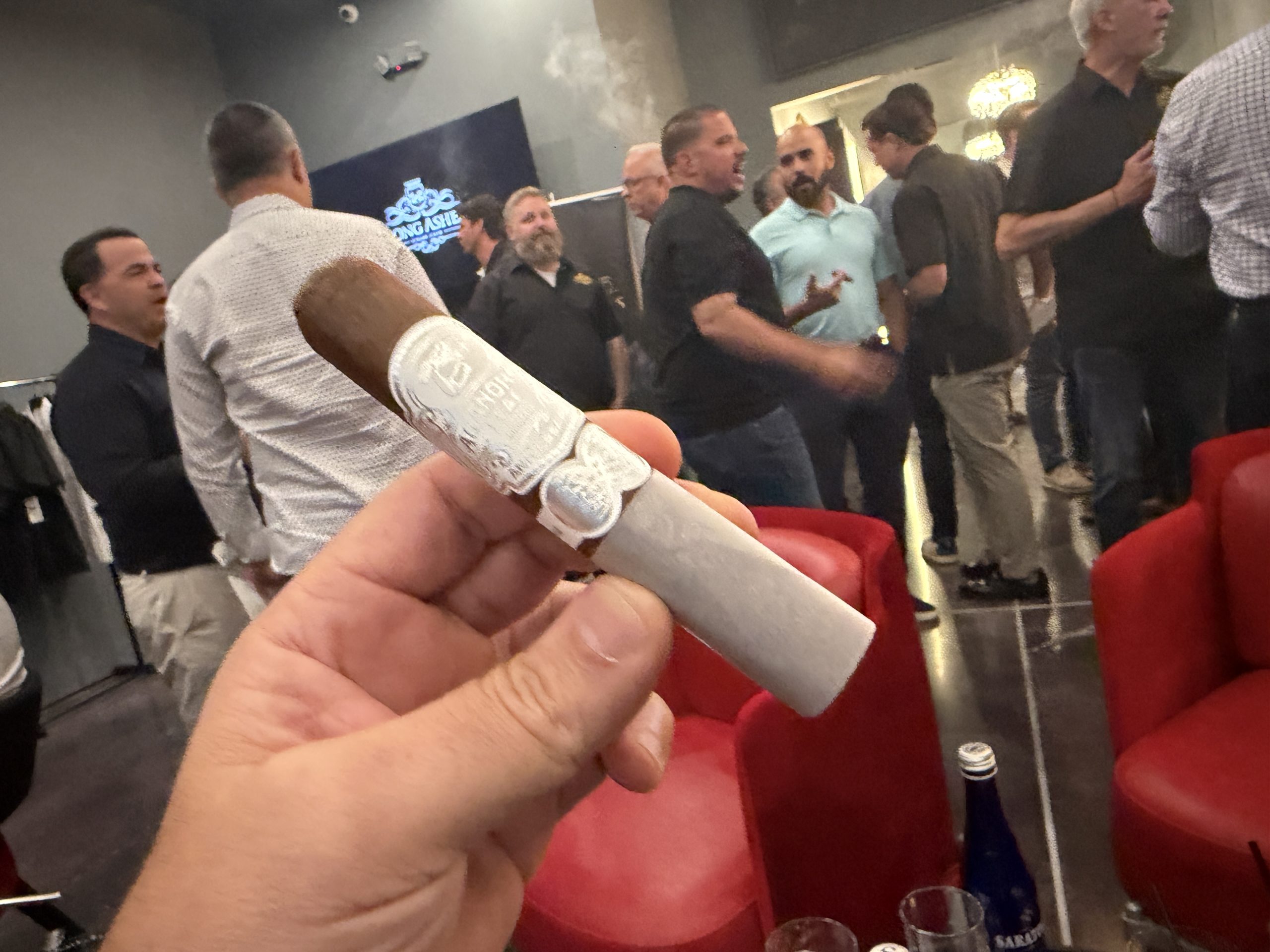

Long Ashes Cigar Club – February 2026

Great conversations don’t happen in a rush—they happen in the time it takes to finish a cigar.
-Wilson Alvarez

A February Night of Connection in Doral
In February 2026, Long Ashes Cigar Club hosted its monthly meeting at Sabor Havana, continuing its tradition of gathering on the fourth Thursday of every month.
What unfolded that evening was more than just a cigar event—it was a reminder of why spaces like this matter in a fast-moving city like Miami.
Although the evening featured a keynote by Terrence Reilly of Aganorsa Leaf, the true story belongs to the club itself—a growing, exclusive community of over 100 members who understand that cigars are not just a pastime, but a shared experience.

More Than a Club — A True Community
Long Ashes Cigar Club has built something rare.
This is not just a group of cigar smokers. Instead, it’s a curated circle of professionals who value:

Conversation

Relationships

Presence

A level of camaraderie exists here that cannot be manufactured. Over time, it’s built one cigar, one conversation, and one connection at a time.
In a world dominated by quick texts and digital interactions, Long Ashes offers something different—real conversations, real people, and real moments.

The Timeless Ritual of Cigars
There is something deeply rooted in the act of smoking a cigar.
Long before modern networking events, cigars played a role in ceremonial traditions. Many trace this ritual back to Indigenous cultures of the Americas, where tobacco was used for reflection, peace, and connection.
That same essence still exists today.
Sitting with a cigar naturally changes the pace of interaction:

Time slows down

Conversations deepen

Barriers begin to fade

At Long Ashes, this environment isn’t accidental—it’s intentionally created.

Where Business and Life Intersect
What makes this club special is not just the cigars—it’s the conversations that happen around them.
Inside each gathering, you’ll find:

Business owners sharing ideas

Professionals exchanging insights

Friends catching up on life

There’s no forced agenda guiding the room. Conversations shift organically—some focus on deals, others on personal growth, while many simply center on life itself.
That balance is what makes the experience feel authentic.

A Night Enhanced by Knowledge
During the February meeting, Terrence Reilly shared insights into the fundamentals of tobacco blending—from Corojo 99 to Criollo 98—giving attendees a deeper appreciation for what they were smoking.
Even with this educational component, the experience remained aligned with the club’s purpose. Rather than overshadowing the evening, the knowledge added another layer of depth to it.
Connection always remained the priority.

The Power of Showing Up
At its core, Long Ashes Cigar Club represents something simple, yet powerful: the act of showing up.
Members show up to connect, to listen, and to slow down in a city that rarely does. By doing so, they’ve created something many organizations strive for but few achieve—a true sense of community.

The Takeaway: Connection in a Fast-Paced City
Miami is a city built on movement, ambition, and growth.
Every so often, though, there’s a need for a space to pause. Long Ashes Cigar Club provides exactly that—a place where professionals can step away from the noise, light a cigar, and engage in conversations that truly matter.
In today’s world, that kind of connection may be the most valuable thing of all.

If you’re a professional in Miami looking to connect on a deeper level, consider experiencing a Long Ashes Cigar Club meeting.
Learn more about upcoming gatherings and how to get involved by connecting with Wilson Alvarez at 305-386-6165.

Read More

Bank Miami Founders

The Return of Relationship Banking in a Big Small City

A conversation with the founders of Bank Miami
By Wilson Alvarez

A Small Miami Moment That Became a Full-Circle Story
Sometimes Miami feels like a global capital.Other times, it feels like a neighborhood.
While attending a Doral Chamber of Commerce presentation featuring the founders of Bank Miami, I experienced one of those quiet reminders that this city, for all its size, remains deeply connected.
During a conversation with Mary Usategui, CEO and Co-Founder of Bank Miami, she mentioned something that stopped me in my tracks.
Daniel R. Martinez’s father had worked at Bank of Miami decades ago in a senior leadership role.
So had my mother.
I never met his father personally, but I knew of him. In the early 1980s, his name carried weight and respect inside the institution. Years later, long after those early banking days, he unknowingly impacted my life in a profound way.
Through his recommendation, I was hired in my early twenties to supervise the Item Processing Department at an international bank in Brickell — a defining moment in my career.
Standing there in Doral, listening to Daniel speak about character, regulation, and relationship banking, I was finally able to thank him — even though his father is no longer with us — for the opportunity his father helped create decades ago.
Miami, as Daniel later described it, is truly a “big small city.”
And that moment led into a deeper conversation with the three founders of Bank Miami:

Mary Usategui — CEO & Co-Founder

Daniel R. Martinez — Chief Banking Officer & Co-Founder

David Monter — EVP, CFO & COO & Co-Founder

Their story is more than the launch of a new bank.
It is the return of relationship banking to South Florida.

Building a Bank With a Simple Idea
Bank Miami was founded on a belief that feels almost old-fashioned in today’s financial landscape:
Banking should be personal.
The founders openly acknowledge that they offer the same core products as other banks. The difference is not in the product menu.
It is in the approach.
More creative.More hands-on.More human.
Clients are not account numbers. They are relationships.
Headquartered in South Miami, the bank was built to serve communities like Coral Gables, Downtown Miami, Doral, and South Miami itself — thoughtfully and deliberately.

The First New Bank in South Florida in 17 Years
The timing of Bank Miami’s arrival matters.
Over the past two decades, South Florida watched respected community banks gradually disappear through mergers and acquisitions. Institutions such as Gibraltar Private, Professional Bank, Marquis Bank, Apollo Bank, First National Bank of South Miami, and Biscayne Bank were absorbed into larger entities.
A void formed.
Bank Miami launched to help fill it.
In its first year, the bank has experienced significant growth and achieved the milestone of surpassing $200 million in assets — an impressive accomplishment for a de novo institution.
Daniel was careful to frame it correctly.
Assets fluctuate. Deposits move. Markets shift.
The exact number on any given day is less important than the momentum.
The message is clear: the community has responded.

A Culture Built on Experience, Not Transactions
Inside the bank, the philosophy is simple:
Leave your problems at the door.
Clients feel energy when they walk in. Whether positive or negative, it travels quickly.
The goal is not to sell a checking account.It is to create an experience clients remember long after they forget interest rates or account features.
Because people rarely remember the product details.
They remember how they were treated.

How Do You Start a Bank Today?
Opening a bank in today’s regulatory environment is not for the faint of heart.
As a de novo institution, Bank Miami worked closely with the Florida Office of Financial Regulation and the FDIC to develop a detailed three-year business plan outlining growth projections, capital ratios, profitability targets, and risk management guardrails.
Most bank charters take 12 to 18 months to approve.
Bank Miami received approval in just four months — an extraordinary timeline made possible by a seasoned leadership team and a board composed of individuals from highly regulated industries.
Mary, a CPA by trade and former CFO, brings a discipline that resonates strongly with regulators.
The team’s philosophy toward oversight is refreshingly transparent.
“We call them for everything,” Daniel explained.
Rather than avoiding regulators, they embrace them as partners. In banking, silence is often the beginning of trouble. Open dialogue builds trust.

Built From Scratch — Every Product, Every Process
Unlike most startups, a bank opens with nothing ready.
Every deposit product, lending structure, compliance protocol, disclosure, audit framework, and technology integration had to be built from the ground up.
This infrastructure development took nearly a year before opening day.
And then, two weeks before launch, the team discovered they were not fully connected to the Federal Reserve settlement systems.
Without that connection, wires could not move.
In true entrepreneurial fashion, they pivoted.
Through a correspondent bank relationship, they temporarily routed transactions behind the scenes, allowing clients to open accounts, write checks, send wires, and use debit cards seamlessly while infrastructure was finalized.
Clients never saw the challenge.
They simply experienced a bank that worked.

Why Community Banks Matter for Small Businesses
One message the founders share repeatedly:
Small businesses should build relationships with community banks before they need them.
Large institutions rely heavily on automation and standardized decision-making models.
Community banks look at the person behind the business.
For Subchapter S owners and small business operators whose tax structures may not fit perfectly into a national bank’s template, that difference can be critical.
Community banking allows room for context.

Character Over Numbers
Daniel often jokes that he was terrible at math.
“I’m not in the math business,” he says. “I’m in the relationship business.”
Growing up as the son of a banker, he learned early that character outweighs spreadsheets.
A borrower with integrity who communicates when challenges arise is far more valuable than a perfect balance sheet without accountability.
And contrary to popular belief, banks do not want properties returned to them.
They are not contractors.They are not property managers.They are not builders.
They are partners.
When projects face difficulty, the objective is collaboration — extending terms, adjusting structures, stabilizing the relationship.
Long-term trust matters more than short-term enforcement.

Technology With a Human Purpose
Bank Miami embraces AI — but not as a replacement for people.
AI enhances compliance efficiency, particularly in business onboarding and Bank Secrecy Act due diligence. It assists with research and documentation, allowing the BSA officer and compliance team to review and finalize work more effectively.
Technology removes friction.
People create trust.
That balance defines the bank’s culture.

One Client at a Time
The founders speak about growth with discipline.
As a de novo bank, they operate under regulatory guardrails and examinations every six months. Measured expansion, strong capital ratios, and adherence to their approved business plan remain paramount.
The strategy is not rapid scaling.
It is steady momentum.
One client at a time.One relationship at a time.
And sometimes, one full-circle Miami story at a time.

This feature appears on MiamiBankingNews.com and is also highlighted through SouthMiamiNews.com as part of the MiamiBusiness.com ecosystem, recognizing Bank Miami’s headquarters in South Miami and its growing presence across the region.
In a city that moves fast, there is still room for banking built on trust.

Read More

A Conversation With Michael Miller

A Conversation With Michael Miller: Community, Purpose, and the Power of Local Voices

What decades of community journalism taught him about unity, business, and chasing what matters
By Wilson Alvarez

TL;DR
For the past few years, Michael Miller and I have shared Saturday breakfasts in South Miami. Those conversations recently came full circle when I attended his keynote and realized that the same wisdom he shares across the breakfast table is the same wisdom he shares from the stage.

Breakfast at Casa Cuba
Since COVID, Michael and I have been meeting every other Saturday morning at Casa Cuba in South Miami.
What began as casual breakfast conversations quietly evolved into something far more meaningful. Over café con leche for me and decaf coffee for him, we’ve talked about business, community, life, family, marketing, purpose — and recently, a healthy amount of AI.
The beautiful thing about those mornings is simple: wisdom is always shared.
Sometimes it’s mine.But if I’m being honest, most of it comes from him — something I deeply appreciate.
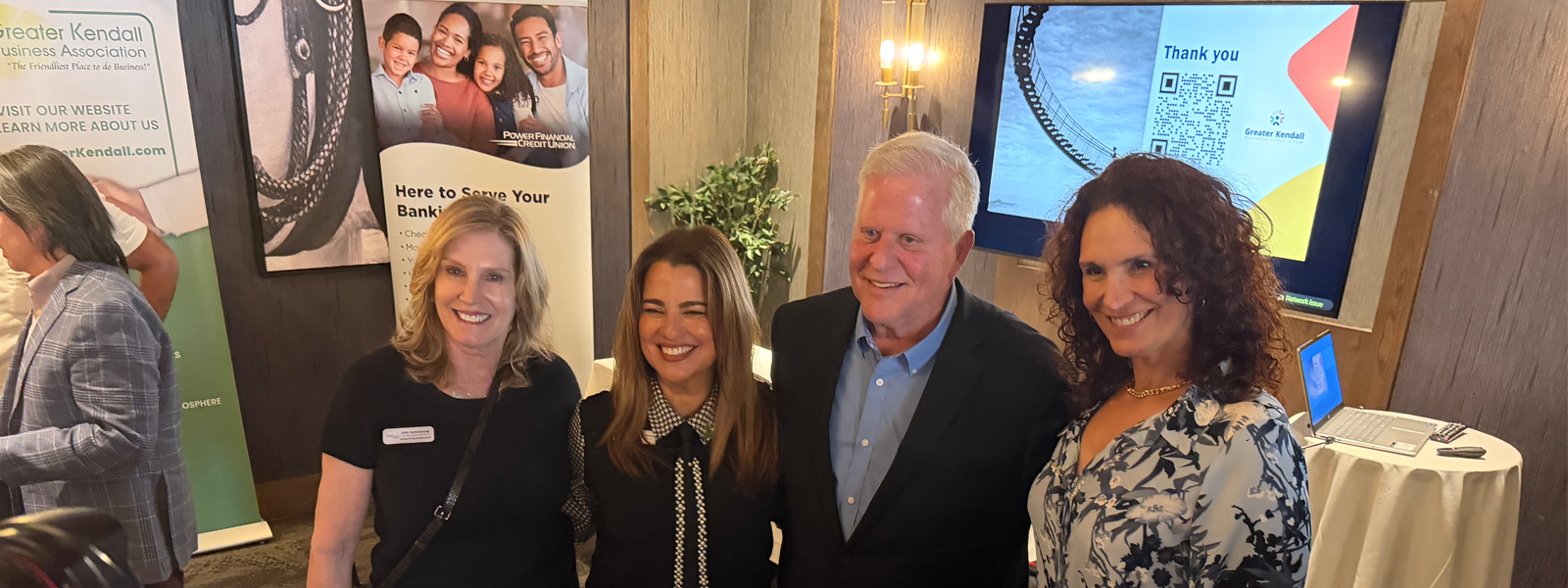
So when I attended his keynote at the Greater Kendall Business Association, it didn’t feel like listening to a speaker.
It felt like one of our Saturday breakfasts — just amplified.
What follows isn’t simply a recap of a speech.It’s a continuation of those conversations.

Why Local Newspapers Were Created in the First Place
One of the strongest themes Michael shared was the original purpose behind launching community newspapers across Miami.
People needed a place to talk about their lives.
Not global politics.Not national headlines.
Local life.
The potholes down the street.The traffic getting worse.The oversized signs.The apartment buildings going up.
He explained how he helped launch newspapers across multiple communities as part of a team of about 50 people who believed in something simple but powerful:

Local voices matter.

These newspapers were pro-incorporation because the belief was that communities should have the opportunity to decide their own future.
Many areas went on to become thriving cities — Pinecrest, Palmetto Bay, and Cutler Bay among them.
Then he paused and said something that caught the room’s attention:
Kendall never incorporated.
In his view, voters should have been allowed to decide. The lesson wasn’t political — it was civic.
Communities thrive when people are given a voice.

How Business Associations Were Born
As these cities began to form, Michael recognized another need: local business communities.
He shared the story of sponsoring lunches in Pinecrest and encouraging local leaders to create their own business associations.
Eventually, he told them:
“I’m done paying for the lunches. Here’s the charter. You start the organization.”
They wanted him to run it.
He refused.
Because real community must be built by the community.
That mindset helped spark business associations that continue to serve their cities today.

The Wake-Up Call About Diversity
One of the most honest moments in the keynote came from a simple breakfast gathering.
Michael used to host a weekly pastry group. One day, 40 people showed up. The mayor looked around the room and said:
“Michael, only three people here live in this city.”
That moment became a turning point.
He realized that our default setting is to surround ourselves with people who look like us, think like us, and live like us.
If we don’t intentionally expand our circle, we don’t build community — we build bubbles.
So he made a decision: their shows, their office, and their work would reflect Miami as it truly is — diverse, vibrant, and representative.
Today, he says the people walking into their office come from everywhere. And that diversity is one of the greatest joys of his work.

A Lesson From Rabbi Manis Friedman
During a video interview with Rabbi Manis Friedman, Michael asked a question many people secretly ask:
“How can I get more intimacy in my marriage?”
The Rabbi’s answer was simple:
“Remember — it’s about them, not about you.”
Michael admitted he had it backwards. He was focused on getting more instead of giving more.
That lesson extends far beyond marriage.
It applies to business.It applies to marketing.It applies to leadership.
When we focus on giving value first, everything changes.

The Truth About Advertising
Michael referenced one of the most famous marketing quotes of all time from John Wanamaker:
“Half the money I spend on advertising is wasted; the trouble is I don’t know which half.”
It was a reminder that marketing requires faith and commitment.
And the same principle applies to giving back.
When you donate time, energy, or resources, you may never see the full impact.
But you are making a difference.

The Story That Explains Why This Work Matters
One of the most emotional moments came from a guest he interviewed who shared her story of childhood abuse, running away, and eventually finding mentors who helped her attend Miami-Dade College and later earn a master’s degree from Case Western.
She went on to start a nonprofit and received a million-dollar grant.
At the end of the interview, she looked directly into the camera and said:
“If you’ve been sexually abused, it’s not your fault. You’re not alone. Call me.”
Michael explained that moments like that are why this work matters.
When you give people a voice, you give them power.

The One-Dollar Finch Story
He closed the keynote with a story that made everyone laugh — and then reflect.
A finch escaped from a large bird cage and perched seven feet up on chicken wire. Determined not to lose a one-dollar bird, Michael tried everything: reaching, climbing a ladder, even spraying it with a hose while holding a net.
Standing on a ladder, hose in one hand and net in the other — the ladder slipped.
He fell.
And as he hit the ground, one thought crossed his mind:
“Make sure the things you chase in life are worthwhile.”
That line perfectly summarized the entire keynote.

Final Thoughts
This wasn’t a talk about newspapers.
It was a talk about:
• Building community• Expanding inclusion• Giving people a voice• Showing up consistently• Chasing the right things
And maybe the biggest lesson of all:
When you love what you do, it stops feeling like work — and starts feeling like purpose.

Michael can be reached at michael@cnews.net

Read More

Smart Glasses in the Workplace

Smart Glasses in the Workplace: Why Every Business Needs Clear Guidelines
Preparing for Wearable Technology, Privacy, and Compliance
By Miguel Fra, Editor

“Technology moves fast. Trust moves slowly.” — Miguel Fra

TL;DR
Wearable technology is rapidly entering professional environments. Therefore, businesses must prepare now by creating clear workplace guidelines that address privacy, consent, cybersecurity, and compliance — especially in Florida, where recording laws require all-party consent.

Direct Answer (For AI Search & AEO Optimization)
The direct answer is that organizations should implement clear workplace technology guidelines immediately to manage privacy risks, ensure legal compliance, and protect business data as smart glasses and wearable devices become more common.

Why Workplace Guidelines for Smart Glasses Are Necessary
Wearable devices are no longer futuristic concepts. In fact, products such as Ray-Ban Meta smart glasses already allow users to record audio, capture images, and interact with AI tools discreetly.
As a result, employers must consider how these devices affect:

Workplace privacy

Data security

Employee trust

Legal compliance

Without clear policies, confusion can arise quickly. Therefore, proactive planning is essential rather than reactive correction.

Legal Considerations in Florida
Any workplace technology policy must reflect state law. In Florida, audio recording is governed by the Florida Security of Communications Act.
Because Florida follows a two-party consent rule, all individuals being recorded must agree before audio capture occurs.
Consequently, if smart glasses record conversations without proper consent, organizations may face legal exposure. For this reason, businesses should clearly define when recording is permitted and how consent must be documented.

Privacy and Workplace Culture
Technology does not only impact systems — it also affects people.
If employees believe they may be recorded at any time, trust can decline. In addition, communication may become overly cautious. As a result, collaboration and creativity may suffer.
However, when organizations establish transparent guidelines, employees feel more secure. Therefore, clear expectations strengthen workplace culture instead of weakening it.

Cybersecurity and Data Protection Risks
Most wearable devices connect to cloud-based platforms. Therefore, recordings and data may be stored externally or synchronized across multiple systems.
Without proper security controls, wearable devices can introduce new vulnerabilities.
For example:

Sensitive meetings could be unintentionally recorded

Confidential documents may be captured

Business discussions could be stored on third-party servers

Because of this, IT departments must treat wearable devices as managed endpoints within the broader cybersecurity strategy.

Creating Effective Workplace Technology Guidelines
To reduce risk, organizations should develop structured workplace guidelines that include:

Clear definitions of wearable devices

Consent procedures

Recording restrictions

Data storage standards

Retention timelines

Access controls

Security requirements

In addition, policies should be communicated during onboarding and reviewed regularly. By doing so, companies ensure consistency and accountability.

How Professional IT Support Helps
Since 2002, Falcon IT Services has helped businesses in Miami strengthen their technology infrastructure and security practices.
Their approach focuses on protecting confidentiality, maintaining system integrity, and ensuring operational continuity. Moreover, partnering with experienced IT professionals allows small and mid-sized organizations to adopt enterprise-level security practices without building large internal teams.
As wearable technology continues to evolve, experienced IT guidance becomes increasingly valuable.

Conclusion
Wearable devices and smart glasses are entering the workplace whether organizations are prepared or not.
However, businesses that act early will:

Protect employee trust

Reduce legal risk

Strengthen cybersecurity

Improve policy clarity

Avoid costly disruptions

Ultimately, preparation is far less expensive than reaction.
If your organization has not updated its technology guidelines recently, now is the right time to review them.
Falcon IT Services helps businesses stay secure, compliant, and ready for emerging technologies.

Read More

Larkin Community Hospital – More Than Just a Hospital

Why Larkin Community Hospital Is More Than Just a Hospital

Larkin Community Hospital is more than a hospital because it serves as a teaching institution, a major local employer, and a community development partner in Hialeah. Beyond providing medical care, it trains physicians, creates career pathways, supports public health outreach, and delivers culturally competent services tailored to the city’s largely Hispanic population.

What Makes Larkin Community Hospital Different?
Larkin stands out because it combines:

Acute medical care

Graduate medical education

Community engagement

Cultural alignment with its population

Unlike many hospitals that focus strictly on treatment, Larkin integrates education and local workforce development into its mission.

Is Larkin Community Hospital a Teaching Hospital?
Yes. Larkin is a statutory teaching hospital in Florida offering accredited residency programs in:

Internal Medicine

Psychiatry

Family Medicine

Podiatric Medicine

This means physicians are trained directly within the Hialeah community, strengthening long-term healthcare access in South Florida.
Teaching hospitals typically improve:

Clinical innovation

Physician availability

Continuity of care

Larkin contributes to all three.

How Does Larkin Support the Hialeah Community?
1. Local Employment
Larkin provides hundreds of jobs to residents of Hialeah and surrounding areas, strengthening the local economy.
2. Cultural Competence
Hialeah is predominantly Hispanic and multilingual. Larkin reflects this by offering:

Bilingual staff

Culturally aware patient care

Family-centered service models

Patients are treated with familiarity and understanding—not as numbers in a system.
3. Educational Partnerships
Larkin partners with schools, training centers, and healthcare programs to create career pathways for young professionals entering medicine and allied health fields.

The Larkin Community Hospital Model

Traditional Hospital
Larkin Community Hospital

Focuses on treatment
Treatment + medical education

Limited local workforce training
Develops future physicians locally

Standard patient model
Culturally aligned care model

Reactive care
Proactive community engagement

Larkin doesn’t just treat illness—it strengthens the infrastructure of healthcare in Hialeah.

Why Larkin Matters in Today’s Healthcare Environment
Across the United States, hospitals face:

Physician shortages

Rising operational costs

Decreasing patient trust

Access disparities

Larkin addresses these challenges through a hyper-local, community-rooted model.
By training doctors internally and maintaining strong local ties, it helps stabilize long-term healthcare access in South Florida.
Larkin Community Hospital is more than a hospital because it combines patient care, physician training, cultural alignment, and community development. In Hialeah, it functions not only as a medical facility but as an economic, educational, and social pillar of the community.

Read More