Select Page

Communities

Widgetized Area

This panel is active and ready for you to add some widgets via the WP Admin

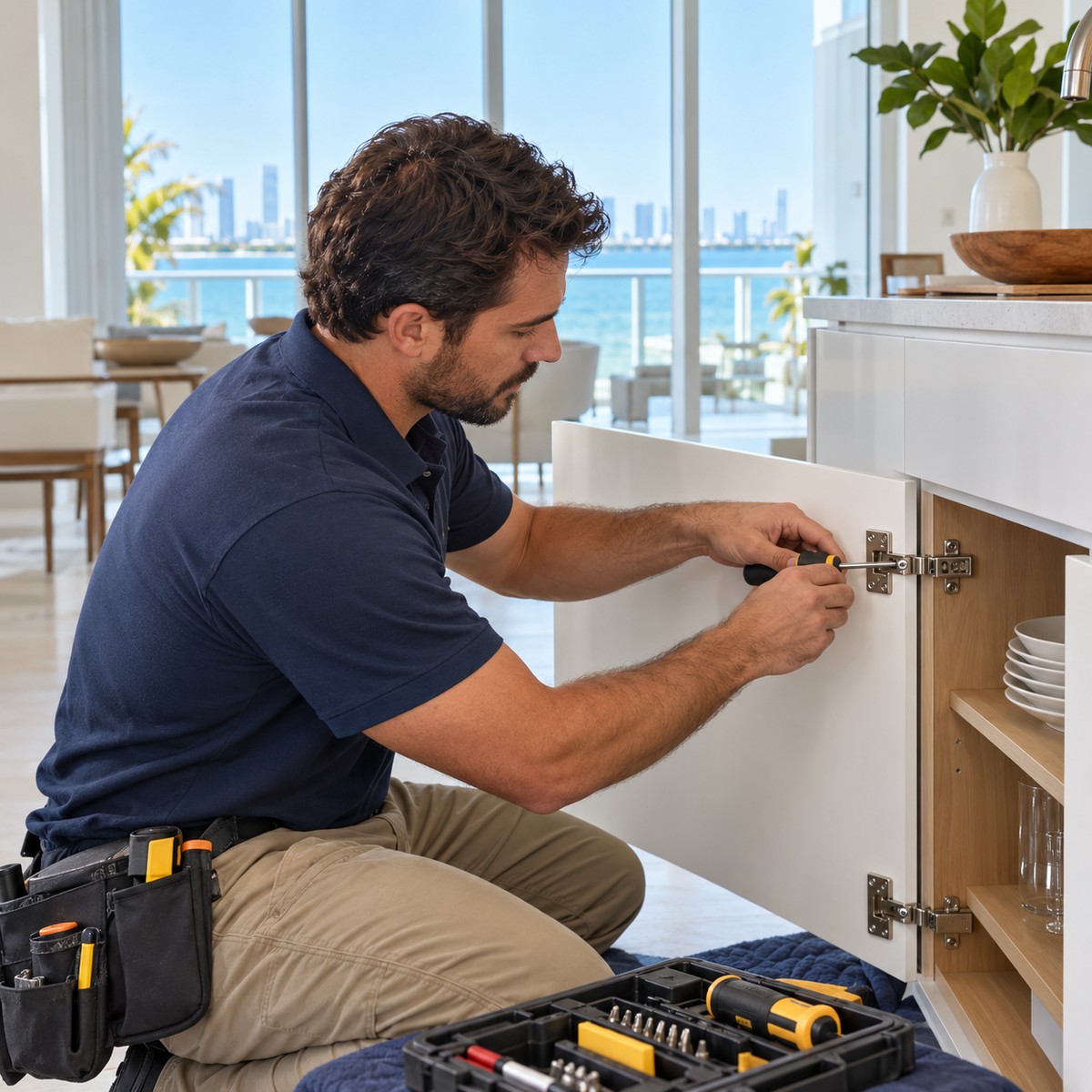
Home repairs in North Bay Village

Home repair work can range from a small fix to a larger project that affects several parts of a property. North Bay Village residents, property owners, and organizations can use this page to find and compare home repair providers in the area. Treat each listing as a starting point: contact the provider directly to confirm the current service area, availability, qualifications, and terms before choosing a service.

Home repairs services to explore

Depending on the provider, providers may handle general maintenance, carpentry, fixture replacement, drywall, painting, installation, or other repair requests. Some businesses focus on one specialty, while others offer several services through a single office. Ask which work is performed by the provider, what is handled by a partner, and whether the service is available for your particular project or situation. A clear description of the work helps you compare providers on similar terms.

How to compare home repairs providers

Start with the need, location, timing, and budget you have in mind. Request a written scope or explanation of what is included, how long the work may take, and what could affect the final cost. Compare experience with similar requests, communication practices, scheduling, payment terms, and the process for follow-up. If credentials, permits, insurance, or a written agreement apply to the service, ask for current details and verify them with the appropriate source.

Questions to ask before you decide

Ask what is included in the estimate, whether a site visit is needed, who supplies materials, how changes are approved, and what documentation or follow-up is provided. Review the answer alongside the provider’s listing and written terms. Ask for clarification if a service description is broad, a quote leaves out important work, or a timeline is uncertain. Confirm how to reach the business after the initial appointment and what steps are available if the service needs correction or further attention.

Find home repairs in North Bay Village

Browse the North Bay Village business directory to identify local listings and request current information. Compare providers using the same criteria so differences in scope, availability, and price are easier to understand. A directory listing is not an endorsement, and details should be verified directly with each business.

For municipal contacts and community information, visit the official North Bay Village website. Contact providers directly to confirm the details that matter for your needs and keep written estimates, policies, and agreements for reference.

How to Discuss Budget and Decision Making Before the Proposal

“A budget conversation is a sign of respect when it helps both sides decide whether a real solution is possible.”
By Wilson Alvarez
Quick answer: Discussing a client’s budget in sales should happen after you understand the business problem and before you invest in a detailed proposal. Ask what resources are available, what range the organization has considered, who approves spending, and what timeline applies. Share realistic price ranges when possible. The aim is mutual clarity, not extracting the highest amount the buyer can pay.

“People hate to be sold, but love to buy.” — Sandler Training

This line appears in a Sandler conversation about uncovering budget. Buyers value the freedom to weigh options and make a decision that fits their priorities. A transparent budget discussion supports that freedom. It lets a professional recommend the right scope, say when an engagement is not feasible, and avoid a presentation built on assumptions. Silence about money can feel polite at first and waste everyone’s time later.
Why discussing a client’s budget in sales matters
Consider a Miami business owner who asks for a comprehensive marketing plan. A firm could spend days preparing a package before learning the owner has funds for a small pilot, not a full campaign. Both parties may leave frustrated. An early conversation about the range of investment can reveal a better first step or show that the timing is wrong.
Budget is broader than a number. It includes time, internal staff, attention from decision makers, implementation capacity, and tolerance for risk. A buyer can afford a tool but not the personnel to use it. A company can authorize a project but cannot launch it this quarter. Ask about these constraints before promising an outcome.
Earn the right to ask
Start with the problem. What is happening today? What has the organization tried? What result would matter? When the buyer confirms the priority, you can say, “To recommend something responsible, it would help to understand the range you are comfortable considering. Have you set aside a budget or evaluated alternatives?” The question has a business purpose.
If the buyer has no number, offer a realistic range from comparable scopes and explain what changes the price. For example, a small diagnostic, a staged implementation, and a full deployment are different commitments. Presenting a range is more useful than promising an exact figure without enough information. Do not fabricate a cost or implied return to create urgency.
Ask how decisions are made
Who needs to approve the work? Is the person in the room the decision maker, a recommender, or an operational sponsor? What criteria will the team use? Is there a procurement process or a deadline tied to another initiative? These questions prevent a proposal from landing with the wrong audience or arriving after the decision window closes.
Be tactful. “Who else should be involved so we can address their concerns before a proposal?” invites collaboration. “Are you the real decision maker?” can sound adversarial. In a complex sale, there may be several legitimate perspectives: finance cares about cost, operations about capacity, and leadership about strategic fit. A good proposal speaks to each without pretending one conversation settled everything.
Discuss investment as choices and trade-offs
Budget discovery is not permission to fill every available dollar. If the buyer has a $50,000 ceiling but a $20,000 pilot can answer the central question, explain that option. Define what each scope includes, what it omits, and what evidence would justify a second phase. The buyer should see the trade-offs, not merely a price ladder designed to push the largest package.
If the available budget cannot support the requested outcome, say so. You can narrow the scope, change the timeline, suggest an internal step, or recommend another provider. Credibility often grows when a professional refuses to promise a result that the resources cannot support.
Agree on the next decision
Before leaving, confirm what happens next. Will you send a concise outline, a formal proposal, or a pilot plan? Who will review it and when? What information still needs validation? Summarize the range discussed so neither party is surprised later. A clear agreement helps avoid the vague “send something over” that produces an elaborate proposal and no answer.
Sandler describes an up-front agreement as confirming the problem, available budget, and decision process before a formal presentation. That is useful discipline even outside any branded sales methodology. Both sides know whether a next meeting has a purpose.
When budget is sensitive
Some buyers are reluctant to share a precise amount because they worry the price will rise to match it. Acknowledge that concern. Explain your pricing approach, give a range where possible, and describe how scope affects cost. Ask whether the proposed level of investment is feasible rather than demanding an exact ceiling. Transparency is reciprocal.
Record only the information needed to shape the recommendation and keep it confidential. The buyer’s constraints are not a negotiating weapon to broadcast to others. As with discovery of the underlying need, listening and clarity should come before persuasion.
Frequently asked questions
When should I ask about budget?
After you understand the problem and before preparing a detailed proposal. Explain why the information helps you recommend an appropriate scope, and be ready to share a realistic range yourself.
What if the prospect will not state a budget?
Offer ranges and ask whether they are feasible. Discuss the decision process and alternatives. If there is no way to establish whether an engagement is possible, consider a smaller diagnostic or pause the proposal.
Should I always present three packages?
No. Use options only when they clarify genuine trade-offs. A single well-scoped recommendation may be better when the client’s need and resources are clear.
Miami business owners who want to strengthen their leadership, visibility and growth strategy can connect with Wilson Alvarez at walvarez@miamibusiness.com or 305-386-6165.

Read More

What is a Loss Leader?

What is a Loss Leader?

In the competitive world of business, strategies are crucial for attracting customers and driving sales. One such strategy is the use of a loss leader. A loss leader is a pricing strategy where a product is sold at a price below its market cost to stimulate other profitable sales. Businesses often use loss leaders to draw customers into their stores or websites, hoping that once inside, they will purchase additional items at higher margins. This blog will explore the concept of a loss leader in business and provide three examples of its application.
A classic example of a loss leader is the use of discounted printers by technology companies. These companies sell printers at a very low price, sometimes even at a loss, to entice customers to purchase them. The real profit comes from the sales of printer ink and other accessories. This strategy ensures a steady stream of revenue long after the initial sale, as customers need to replenish their ink supplies regularly.
Another well-known example is the use of Black Friday deals by retailers. Stores offer significant discounts on popular items such as electronics, clothing, and toys, often at prices lower than their cost. The goal is to attract a large number of customers who will not only buy the discounted items but also other full-priced products. This tactic helps retailers boost their overall sales volume and clear out inventory before the end of the year.
Grocery stores also frequently use loss leaders to their advantage. Staple items like milk, bread, and eggs are often sold at very low prices to draw customers into the store. Once inside, customers are likely to purchase other higher-margin items, increasing the store’s overall sales. This strategy is particularly effective in creating loyal customers who associate the store with affordable prices.
As Henry Ford once said, “A business that makes nothing but money is a poor business.” This quote highlights the importance of customer satisfaction and value creation in business. The loss leader strategy aligns with this principle by focusing on attracting customers through value deals and then building a relationship that leads to further sales. By offering initial value, businesses can create a positive customer experience that translates into long-term loyalty and profitability.
The takeaway from this blog is that the loss leader strategy can be a powerful tool for businesses looking to attract customers and drive sales. By carefully selecting products to discount and understanding customer buying behavior, businesses can turn initial losses into long-term gains. However, it’s essential to balance this strategy with a strong product mix and excellent customer service to ensure sustained success.
If you’re a business owner looking to implement a loss leader strategy, start by identifying products that can draw customers in without severely impacting your bottom line. Monitor your sales data to see how this approach affects your overall revenue and make adjustments as needed. Remember, the key is to create value for your customers while driving profitability for your business.
#BusinessStrategy #LossLeader #SalesTactics #CustomerAttraction #RetailSuccess

Read More

Family Fun in the Grove

Family Fun in the Grove: Activities for All Ages
In Coconut Grove, every family outing becomes a cherished memory.
-Wilson Alvarez
Coconut Grove, often celebrated for its rich history and lush scenery, is also a fantastic playground for families. From waterfront parks to interactive museums, the neighborhood offers a plethora of activities that promise fun for all ages, making it an ideal spot for family outings.
One of the highlights for family fun is Peacock Park. With its expansive green spaces and well-equipped playgrounds, it’s a perfect spot for children to play and parents to relax. The park also hosts various community events throughout the year that cater to families, such as outdoor movie nights and children’s festivals, enhancing the communal spirit of the Grove.
For those seeking a mix of education and entertainment, the Vizcaya Museum and Gardens offer a fascinating glimpse into Miami’s past with family-friendly tours that engage children with history in an interactive manner. Additionally, the nearby Miami Science Museum features hands-on exhibits that spark curiosity about science and technology among young minds.
As author and speaker Simon Sinek wisely stated, “If you want to feel happy, do something for yourself. If you want to feel fulfilled, do something for someone else.” The community-focused activities in Coconut Grove not only provide fun but also opportunities for families to connect and create lasting memories.
Coconut Grove serves as a vibrant venue for family activities, where every visit can turn into an adventure. The neighborhood’s family-friendly attractions ensure that both kids and adults can enjoy their time together in enriching and enjoyable ways.
Gather your loved ones and explore the family-friendly side of Coconut Grove! Whether it’s a day at the park, a learning adventure, or a community event, there’s something here for everyone. Visit our website or call us at 305-386-6165 to discover all the exciting activities waiting for your family.

Read More

The Porsche 944: A Timeless Classic That Still Turns Heads

The Porsche 944 is proof that balance and precision are the true cornerstones of timeless engineering.
-Wilson Alvarez

The Porsche 944: A Timeless Classic That Defined the 80s
The Birth of the Porsche 944
The Porsche 944 first hit the roads in 1982, designed as a bold evolution of the Porsche 924. While the 924 was criticized for its lackluster performance, the 944 aimed to deliver a more powerful, refined, and exciting driving experience. With a focus on affordable luxury and brilliant engineering, the 944 bridged the gap between accessible sports cars and Porsche’s high-performance reputation.
“Design is not just what it looks like and feels like. Design is how it works.” – Steve Jobs
This philosophy captures the essence of the 944: a car that looks iconic and drives even better.

Production Timeline: 944 Through the Years
The Porsche 944 was produced from 1982 to 1991 and offered several notable variations:

1982: The base 944 launched with a naturally aspirated 2.5L inline-4 engine.
1985: The 944 Turbo (951) arrived, adding serious power and performance with a turbocharged 2.5L engine.
1987: The 944 S introduced a 16-valve engine, producing 190 hp.
1989: The 944 S2 featured a 3.0L engine, one of the largest 4-cylinder engines in production, producing 208 hp.
1991: Production ended, and the Porsche 968 debuted, carrying much of the 944’s DNA into a new era.

Design: Bold, Timeless, and Functional
The 944’s flared fenders, wide stance, and wedge-shaped profile made it a design icon of the 1980s. Its styling was heavily inspired by the Porsche 924 Carrera GT, with added muscularity for a sportier look. Turbo models received aerodynamic enhancements like a vented nose panel, a front air dam, and a rear spoiler, further enhancing their visual appeal.
Inside, the cabin prioritized functionality. The driver-focused layout was simple yet effective, though some may find the interior dated by today’s standards.

Performance and Variants
The Porsche 944 gained fame for its perfect 50/50 weight distribution and transaxle design, which made it one of the best-handling cars of its era. Enthusiasts often praise its sharp steering, responsive handling, and reliability on winding roads.

Base Models: Adequate for daily driving but lacked the raw power of later variants.
944 Turbo: With up to 250 hp in later models, the Turbo delivered blistering performance, rivaling more expensive sports cars.
944 S2: Offered the largest engine in the lineup with a refined balance of power and usability.

The Good, The Bad, and The Ugly
The Good:

Handling Masterpiece: The 944’s balanced chassis and precise steering make it a joy to drive.
Affordable Porsche Experience: Offers an entry point into Porsche ownership without the hefty price tag of a 911.
Practical Design: A spacious hatchback and comfortable interior make it suitable for daily use.
Turbocharged Performance: Turbo models deliver thrilling acceleration and speed.

The Bad:

Maintenance Costs: Regular maintenance (like timing belt replacements) is expensive, and neglected examples can drain your wallet.
Aging Components: Electrical systems and interior materials can be problematic in older models.
Underwhelming Base Models: Early non-turbo models can feel underpowered by modern standards.

The Ugly:

Common Mechanical Issues: Timing belt and water pump failures are catastrophic if neglected.
Rust Problems: Poorly maintained examples are prone to rust, especially in humid climates.
Turbo-Specific Concerns: Turbos can suffer from cracked exhaust manifolds and aging turbos, leading to costly repairs.

Common Mechanical Problems
Owning a Porsche 944 means embracing some quirks and challenges:

Timing Belt and Water Pump: These require replacement every 30,000–45,000 miles. Failure can result in severe engine damage.
Oil Leaks: Commonly found around the camshaft housing and oil cooler seals.
Cooling System: Aging radiators and hoses are prone to leaks.
Clutch Wear: Clutches can wear out sooner due to spirited driving.
Electrical Gremlins: Failing wiring and old electrical components are common headaches.

Legacy of the 944
The Porsche 944’s production run may have ended in 1991, but its legacy lives on in the Porsche 968, which carried forward much of its design and engineering. Today, the 944 is a beloved classic, known for its unique blend of affordability, performance, and Porsche prestige.

Conclusion: Should You Buy a Porsche 944?
The Porsche 944 remains one of the best entry-level Porsches for enthusiasts. Its exceptional handling, iconic design, and practical nature make it a compelling choice. However, it’s essential to find a well-maintained example and budget for ongoing maintenance. For those willing to put in the effort, the 944 offers an unforgettable driving experience that’s hard to beat.
Takeaway: The Porsche 944 embodies the perfect mix of performance, practicality, and classic charm. Whether you’re driving a base model or a turbocharged variant, it’s a car that delivers on every level.

Call to Action
Are you ready to experience the thrill of driving a Porsche 944? Let us know in the comments! If you already own one, share your favorite memories and tips for maintaining this timeless classic.
Mike Mesa’s Porsche Passion Began with a 911
For Mike Mesa, owner of Vertex Auto in Miami, Florida, it all began with a Porsche 911. That first spark ignited a lifelong passion that has since made Mike one of the region’s foremost experts on the Porsche brand. Over the years, he has cultivated not just a deep understanding of these precision machines—but a global reputation for excellence.
While Vertex Auto proudly serves the local Miami community, we also ship genuine Porsche parts worldwide, ensuring enthusiasts and owners everywhere get the quality they deserve.
To explore the legacy of the Porsche 911 and view Mike Mesa’s curated collection in person, visit us at Vertex Auto or call 305-442-2727 to schedule your visit.


Read More

Amavita Foundation Introduces Miami Initiative to Stop Amputation Initiative to Support Cardiovascular Care in Miami-Dade County

Amavita Foundation Introduces Miami Initiative to Stop Amputation Initiative to Support Cardiovascular Care in Miami-Dade County
 The initiative seeks to lower the number of non-traumatic lower extremity amputations as a result of Peripheral Artery Disease with early detection screenings.  The Amavita Foundation, the nonprofit arm of Amavita Heart & Vascular Health (Amavita Health) announces the launch of its inaugural initiative, the Miami Initiative to Stop Amputation (MISA). With a mission to tackle the rising rates of amputations due to Peripheral Arterial Disease (PAD), MISA aims to educate and empower both patients and healthcare providers in Miami-Dade County through dedicated community outreach and healthcare advocacy. The Amavita Foundation through the MISA initiative has a goal of reducing non-traumatic lower extremity amputations in Miami-Dade County by 20 percent over the coming decade starting with identifying PAD in its early stages. In advanced stages, amputation might be the only course of action for those suffering from PAD. Statistics show that 1 in 20 Americans over the age of 50 have PAD, which is characterized by blockages in the arteries of the lower extremities and poses a significant threat to individuals’ mobility and quality of life. Left untreated, it can lead to severe complications, including tissue loss and limb amputations. Dr. Pedro Martinez Clark founder of Amavita Health, which supports the Foundation, underscores the urgency of addressing this issue: “Amputations not only impose immense physical and emotional burdens on patients but also incur substantial healthcare costs and increase mortality rates.” Mortality three years after an above-the-knee amputation can increase up to 71 percent. Recognizing the need for early detection and intervention, MISA will focus on raising awareness about PAD within the local community, particularly among minority populations who face a higher risk. Dr. Martinez Clark explains, “Blacks and Hispanics in Miami-Dade County are disproportionately affected by PAD and subsequent amputations. By concentrating our efforts on this condition, we hope to make a meaningful impact on reducing the incidence of amputations.” Cuban American patients were found to have the highest risk of PAD compared with Mexican Americans, followed by Puerto Rican patients, those with a Central American Background, and Dominican American patients. Black men, older than 50 had the highest rates of prevalent PAD. MISA’s comprehensive approach involves collaboration across multiple disciplines, including podiatry, endocrinology, and cardiovascular care. Through educational initiatives and outreach events, the initiative aims to bridge the gap in access to cardiovascular care and empower individuals to take proactive steps toward managing their vascular health. “The sobering reality is that many of these amputations can be prevented with early detection. Understanding risk factors, and symptoms and working collaboratively with other disciplines is key. Through the MISA initiative, we want to promote education, awareness, and the use of the latest advancements to treat PAD,” added Dr. Martinez Clark. MISA has garnered the attention and support of local U.S. representatives, who recognize the importance of addressing PAD and its impact on the community. Their involvement underscores the collaborative effort between public officials and healthcare advocates to implement effective strategies for reducing amputations and improving vascular health outcomes in Miami-Dade. The launch of MISA aligns with the American Heart Association’s mandate to decrease the number of amputations in the United States by 2030. By adhering to this mandate and leveraging community resources, the Amavita Foundation seeks to drive positive change and improve health outcomes for individuals affected by PAD in Miami-Dade County. For more information about the Amavita Foundation, the MISA initiative, and upcoming outreach events, visit www.amavitafoundation.org.   About Amavita Foundation The Amavita Foundation is supported by Amavita Health, a Miami-based cardiovascular practice affiliated with the Jackson Memorial Hospital system and Mercy Hospital. The Foundation strives to raise awareness, provide education, and offer support for individuals affected by peripheral artery disease. With the backing of esteemed medical professionals, the Amavita Foundation is committed to improving the lives of those fighting with this condition through advocacy and collaborative efforts.   About Amavita Heart & Vascular HealthTM Amavita Heart and Vascular Health TM is a comprehensive cardiovascular practice founded in 2017 by Dr. Pedro Martinez-Clark, an interventional cardiologist with extensive experience in heart disease and peripheral vascular interventions. Amavita is a cardiovascular practice specializing in ambulatory procedures and outpatient laboratory procedures. Utilizing the latest technology, we provide minimally invasive procedures for treating, diagnosing, and performing diseases on an ambulatory basis. Amavita has five locations across Miami-Dade County. For more information, visit https://amavita.health/. Contact: Patty Vila, Patty Vila Media, (305) 498-9660, pattyvilamedia@outlook.com

Read More