Select Page

Communities

Widgetized Area

This panel is active and ready for you to add some widgets via the WP Admin

Home repairs in North Bay Village

Home repair work can range from a small fix to a larger project that affects several parts of a property. North Bay Village residents, property owners, and organizations can use this page to find and compare home repair providers in the area. Treat each listing as a starting point: contact the provider directly to confirm the current service area, availability, qualifications, and terms before choosing a service.

Home repairs services to explore

Depending on the provider, providers may handle general maintenance, carpentry, fixture replacement, drywall, painting, installation, or other repair requests. Some businesses focus on one specialty, while others offer several services through a single office. Ask which work is performed by the provider, what is handled by a partner, and whether the service is available for your particular project or situation. A clear description of the work helps you compare providers on similar terms.

How to compare home repairs providers

Start with the need, location, timing, and budget you have in mind. Request a written scope or explanation of what is included, how long the work may take, and what could affect the final cost. Compare experience with similar requests, communication practices, scheduling, payment terms, and the process for follow-up. If credentials, permits, insurance, or a written agreement apply to the service, ask for current details and verify them with the appropriate source.

Questions to ask before you decide

Ask what is included in the estimate, whether a site visit is needed, who supplies materials, how changes are approved, and what documentation or follow-up is provided. Review the answer alongside the provider’s listing and written terms. Ask for clarification if a service description is broad, a quote leaves out important work, or a timeline is uncertain. Confirm how to reach the business after the initial appointment and what steps are available if the service needs correction or further attention.

Find home repairs in North Bay Village

Browse the North Bay Village business directory to identify local listings and request current information. Compare providers using the same criteria so differences in scope, availability, and price are easier to understand. A directory listing is not an endorsement, and details should be verified directly with each business.

For municipal contacts and community information, visit the official North Bay Village website. Contact providers directly to confirm the details that matter for your needs and keep written estimates, policies, and agreements for reference.


Aventura Voters Weigh In as Miami-Dade Election Results Post

Aventura was among the Miami-Dade municipalities that went to the polls in this round of city elections, with results now reported alongside those of communities across the county. Florida Politics compiled the outcomes in a county-wide roundup that stretched, as its headline put it, “from Aventura to Virginia Gardens” — a reminder that the City of Excellence sits at the northern edge of a long list of towns and cities that run their own local contests separate from state and federal ballots.
Municipal elections tend to draw smaller turnout than presidential or gubernatorial cycles, but for a city like Aventura the stakes are immediate and tangible. City commissioners and the mayor’s office shape decisions that residents feel directly: development review along Biscayne Boulevard and the Aventura Mall corridor, traffic and mobility planning, parks and recreation programming, the city’s charter school and high school, police services, and the annual budget that funds all of it. Local leadership also sets the tone for how Aventura works with neighboring jurisdictions on shared concerns such as flooding, transit connections and regional traffic.
Residents who want to confirm official outcomes for Aventura races should rely on the Miami-Dade County Elections Department canvass and the City of Aventura’s own postings, which are the authoritative records for vote totals, any runoff requirements and certification dates. News roundups published on election night reflect reported returns and can change slightly as provisional and mail ballots are finalized. Aventura’s city website and commission agenda portal are also the best places to track swearing-in ceremonies and the first meetings of the new term, which are open to the public.
For the broader Aventura community — including the business owners, condo associations and nonprofit groups that regularly appear before the commission — the weeks following an election are a practical time to engage. Commission meetings, budget workshops and advisory board openings offer direct access to decision-makers, and newly seated officials typically set priorities early in their terms. Whatever the final tallies, the civic infrastructure that makes Aventura a self-governing city of roughly 40,000 residents depends on continued participation well after the polls close.
Source: Florida Politics

This article was AI-generated from public sources & humanized (occasionally edits). MiamiBusiness.com is committed to transparent AI journalism. Please verify with original outlets.

Read More

Deep Work for Business Professionals: How to Protect Your Focus

“Your most important work deserves your clearest attention.”

“There is nothing quite so useless as doing with great efficiency something that should not be done at all.”

— Peter F. Drucker (verified in the Drucker Institute’s quote library)
Drucker’s point is a useful starting place for anyone trying to protect focus at work: productivity is not the same as filling every hour. The first discipline is choosing work that matters; the next is giving it enough uninterrupted attention to produce a thoughtful result. A calendar full of activity can conceal a shortage of progress.
TL;DR: Deep work is focused, cognitively demanding work done with minimal interruption. Business professionals can make more room for it by identifying one high-value outcome, scheduling a protected block, setting clear communication expectations, reducing avoidable distractions, and reviewing whether the work produced a meaningful result.
Direct answer: To protect focus at work, choose an important task, reserve a realistic block of time for it, silence nonessential notifications, and tell colleagues when you will be available again. Start with one 45- to 90-minute session and build a routine that fits the demands of your role.
For Miami’s business professionals, attention is a leadership resource. Clients, employees, vendors, and partners all need timely responses, but constant responsiveness can leave little room for analysis, planning, writing, or solving a difficult problem. Deep work offers a practical way to protect that higher-value thinking without withdrawing from the people who depend on you.
What deep work means for business professionals
Deep work is a sustained period of concentration on a task that requires judgment, creativity, or complex problem-solving. It might mean reviewing a strategic plan, preparing a major proposal, analyzing a budget, writing a policy, or mapping a customer experience. The task itself matters more than the setting: the goal is to give demanding work a stretch of attention long enough to move it forward.
Deep work is not simply working longer, avoiding colleagues, or ignoring urgent responsibilities. It is a deliberate choice about when to be reachable and when to concentrate. Leaders still need open channels for genuinely urgent issues; they also need protected time for work that cannot be completed well in fragments.
Choose work that deserves your best attention
Begin with a question: what is the most valuable result I can move forward today? Name an outcome, not just a category. “Improve client retention” is broad; “review the last quarter’s renewal losses and identify the three most common causes” is a defined task. A clear finish line makes it easier to begin and to assess whether the time was worthwhile.
Before protecting a block, test the task’s priority. What happens if it is delayed? Does it support a customer commitment, reduce a meaningful risk, improve an important process, or create a future opportunity? If no meaningful consequence follows from postponing it, it may not deserve the best hours of your day. This is where Drucker’s distinction matters: decide what should be done before trying to do it efficiently.
Schedule a realistic focus block
Put focused work on the calendar as a real appointment. Choose a period when your energy and responsibilities make concentration possible. Some professionals think best early in the morning; others need time to handle urgent matters before settling into analysis. The right schedule is the one you can keep consistently, not the one that looks impressive on paper.
Start with 45 to 90 minutes. Write down the task, the desired outcome, and the first step. If a full hour is not practical, try 25 or 30 minutes and extend the session once the habit becomes reliable. During the block, keep one task in front of you. If a new thought or request appears, record it for later rather than switching immediately.
Set communication expectations people can trust
Protected focus works better when colleagues know what to expect. Share your availability, explain how to reach you for an urgent matter, and specify when you will return to messages. A short status such as “I’m working on the client proposal until 10:30; call if a customer issue cannot wait” is clearer than disappearing without explanation.
Leaders should also model the behavior they want from their teams. If every message receives an immediate reply, employees may learn that instant response is the real priority. Agree on reasonable response windows, distinguish urgent requests from routine ones, and use meetings for decisions that genuinely require a group. Clear communication protects both focus and trust.
Reduce interruptions before they happen
Make the environment support the work. Close unrelated browser tabs, silence nonessential alerts, put the phone out of reach, and keep the documents or tools you need nearby. If you work in a shared office, use a visible signal or reserve a quiet room when available. Small changes lower the number of decisions you must make once the session begins.
Keep a “later” list beside you. When you remember a call to make, a message to send, or a task to check, write it down and return to the current assignment. The note reassures you that the thought has been captured without requiring an immediate context switch. After the focus block, review the list and decide what actually needs action.
Build a weekly rhythm, not a productivity stunt
One protected session can help, but a repeatable rhythm is more useful. At the start of the week, identify two or three outcomes that require concentrated thought. Reserve time for them before your calendar fills with lower-priority requests. At week’s end, ask what advanced, what repeatedly interrupted the work, and what boundary or process could make the next week easier.
Do not measure success by the number of hours spent in isolation. Measure whether the session produced a decision, a completed analysis, a stronger draft, or a clearer next step. If it did not, reconsider the task definition, the timing, or the distractions. The system should serve the work and the people involved, not become another obligation to maintain.
How Miami business leaders can put deep work into practice
For a busy owner or executive, a protected block might mean reviewing cash flow before a lender meeting, preparing a thoughtful response to a client concern, or assessing a new opportunity before committing resources. The specifics vary by role, but the principle is consistent: make room to think before the next consequential decision arrives.
Try this simple five-step routine for one week:

Choose one important task each day.
Define a concrete result and the first action.
Reserve a 45- to 90-minute block on your calendar.
Silence nonessential alerts and set a clear urgent-contact path.
Record what you completed and what you learned about your work habits.

After five sessions, look for patterns. Which time of day worked best? Which interruptions were truly urgent? What should be delegated, batched, or removed? The answers help you design a focus practice around your actual business rather than copying someone else’s schedule.
Frequently asked questions
What is deep work?
Deep work is sustained concentration on a demanding task with minimal interruption. It helps professionals make progress on work that requires analysis, creativity, or careful judgment.
How long should a deep-work session last?
Begin with 45 to 90 minutes if your schedule allows. Shorter 25- or 30-minute sessions can also work, especially when you are building the habit or managing frequent responsibilities.
How can business leaders protect focus at work?
Choose one high-value outcome, schedule time for it, reduce nonessential alerts, set communication expectations, and provide a clear route for urgent issues. Review the result afterward and adjust the routine.
Does deep work mean ignoring employees or clients?
No. It means agreeing on when you are available and what counts as urgent. Communicate your schedule and return to messages when the protected block ends.
Connect with Wilson Alvarez
Miami business owners who want to strengthen their leadership, visibility and growth strategy can connect with Wilson Alvarez at walvarez@miamibusiness.com or 305-386-6165.
Disclaimer: This article provides general educational information and is not legal, tax, financial, medical, or other professional advice. Consult an appropriately qualified professional for guidance specific to your circumstances.
About the Author: Wilson Alvarez is a Miami entrepreneur, consultant, and business owner who writes about personal development, leadership, and business growth for MiamiBusiness.com.

Read More

How to Build a Trusted Advisory Circle for Your Business

“The strongest leaders make room for perspectives that challenge their own.”
A business owner’s most consequential decisions rarely arrive with perfect information. A new market looks promising, but the numbers are incomplete. Meanwhile, a key employee may be struggling, but the cause is unclear. At the same time, growth may be accelerating even though the company’s systems are not ready. In those moments, a trusted advisory circle can help a leader test assumptions, see around corners and decide with greater discipline.

“You are the average of the five people you spend the most time with.”
Jim Rohn
Rohn’s observation applies to business leadership as much as personal development. The people closest to an owner influence which questions get asked, which risks receive attention and which possibilities seem realistic. In practice, a trusted advisory circle brings that influence into sharper focus: it gives an entrepreneur regular access to informed, candid perspectives before a decision becomes a crisis. Its purpose is not to make decisions for the owner. Instead, it improves the owner’s ability to make them. The quote is listed among Rohn’s relationship principles on his official site: Jim Rohn on relationships and influence.
Why business owners need outside perspective
Running a company creates a particular kind of isolation. Employees may hesitate to challenge the person who controls their jobs. Customers, meanwhile, see the business through their own needs. Family members may offer support without knowing the operating details. Even other owners who understand the pressure may lack relevant experience in a specific situation.
For that reason, an advisory circle can fill important gaps. It is a small group of people an owner can approach for perspective, accountability and informed questions. For example, it may include a mentor, an experienced entrepreneur, a peer, a former executive, a professional adviser or a coach. It does not need to be a formal board, nor does it need to meet every week. What matters is that its members bring judgment, trustworthiness and a willingness to speak plainly.
Moreover, for a Miami business owner, this can be especially valuable in a region where companies serve customers across industries, cultures and local markets. A peer who understands hospitality may see a customer-retention issue differently from a technology founder. Similarly, a finance professional may identify the cash-flow implications of a decision that appears to be only about sales. Different experience can reveal options that are difficult to see from inside one operation.
Start with the decisions you need to make better
Owners sometimes begin by asking, “Who should be on my advisory board?” Instead, a more useful question is, “Where would better judgment make the greatest difference?”
Consider the decisions that repeatedly consume time or create uncertainty. These might include pricing, hiring, capital investment, marketing, succession planning, customer concentration or whether to pursue a new market. As a result, the answers help define the kind of perspective the owner needs.
A company navigating rapid growth may benefit from someone who has scaled operations. Meanwhile, a founder preparing for a transition may need guidance from someone who has managed succession. A business with uneven cash flow might gain from an adviser who understands financial planning and working capital. Ultimately, the circle should reflect the company’s actual needs, rather than an impressive list of titles.
Choose advisers for candor, competence and trust
A strong adviser does more than agree with the owner. Look for people who can ask hard questions without turning every discussion into a contest. Ideally, they have experience relevant to the challenge, respect confidentiality and are willing to identify the assumptions behind a proposal.
Compatibility matters; however, comfort alone is not the goal. A useful adviser may see the issue differently, provided the disagreement is thoughtful and focused on the business. A prominent name or successful career is not enough by itself. Instead, the right person can explain how their experience applies, recognize what they do not know and help the owner think through consequences.
Start with one trusted person if that is what is available. Over time, add others whose strengths complement one another. For many businesses, a small circle of two or three committed advisers can be more useful than a larger group assembled for appearances.
Make each advisory conversation specific
Business conversations are more productive when the owner brings a clear question. Before a meeting, share the relevant background, define the decision and explain the constraints. In addition, distinguish facts from assumptions. If possible, outline the options already under consideration and what would make each one succeed or fail.
Then make the request explicit. Does the owner need a reality check, help identifying risks, a review of the numbers or a direct challenge to the current plan? Advisers can provide better input when they understand the role they are being asked to play.
A practical conversation should end with a next step. For instance, that might be gathering a missing number, speaking with a customer, testing a small change or setting a date to revisit the decision. The owner remains accountable for the choice and its results; meanwhile, the circle helps make the thinking more rigorous.
Protect the relationship with clear expectations
Trust is built through consistency. Agree on how often to meet, what information will remain confidential and whether members are acting as informal advisers or paid professionals. In addition, if a discussion touches on legal, tax, investment or other specialized matters, the owner should seek advice from a qualified professional in that field.
Reciprocity also matters. Advisory relationships work best when they are not treated as one-way extraction. Owners can offer their own experience, make introductions where appropriate and respect the time and expertise of the people they consult. If a relationship no longer provides useful perspective—or if confidentiality is not respected—it is reasonable to reset expectations or end it.
Measure the value in better decisions
An advisory circle should not be judged by how often its members meet or how much advice they provide. Instead, a better measure is whether the owner makes clearer decisions, spots risks earlier, follows through on priorities and learns from outcomes.
Over time, keep track of the questions that recur and the actions that follow each conversation. Then review what worked, what did not and which assumptions proved inaccurate. This keeps the circle grounded in the real needs of the company rather than abstract discussion.
Entrepreneurs cannot remove uncertainty from leadership. They can, however, choose how thoughtfully they respond to it. A trusted advisory circle gives a business owner a place to examine a decision before committing resources, hear perspectives that may be missing and stay accountable for the next step. In a demanding market, that discipline can become a meaningful business advantage.
Frequently asked questions
What is a business advisory circle?
A business advisory circle is a small group of trusted people who help an owner evaluate decisions, challenge assumptions and follow through on priorities. It may include mentors, experienced owners, peers or professional advisers.
How many people should be in an advisory circle?
Start with one reliable adviser and add people whose experience fills specific gaps. For many small businesses, two or three committed advisers can provide useful range without making discussions difficult to manage.
How often should business owners meet with advisers?
Choose a cadence that fits the decisions at hand. Monthly or quarterly conversations can work well when the owner brings a clear question, shares relevant context and agrees on a practical next step.
Miami business owners who want to strengthen their leadership, visibility and growth strategy can connect with Wilson Alvarez at walvarez@miamibusiness.com or 305-386-6165.
By Wilson Alvarez

Read More

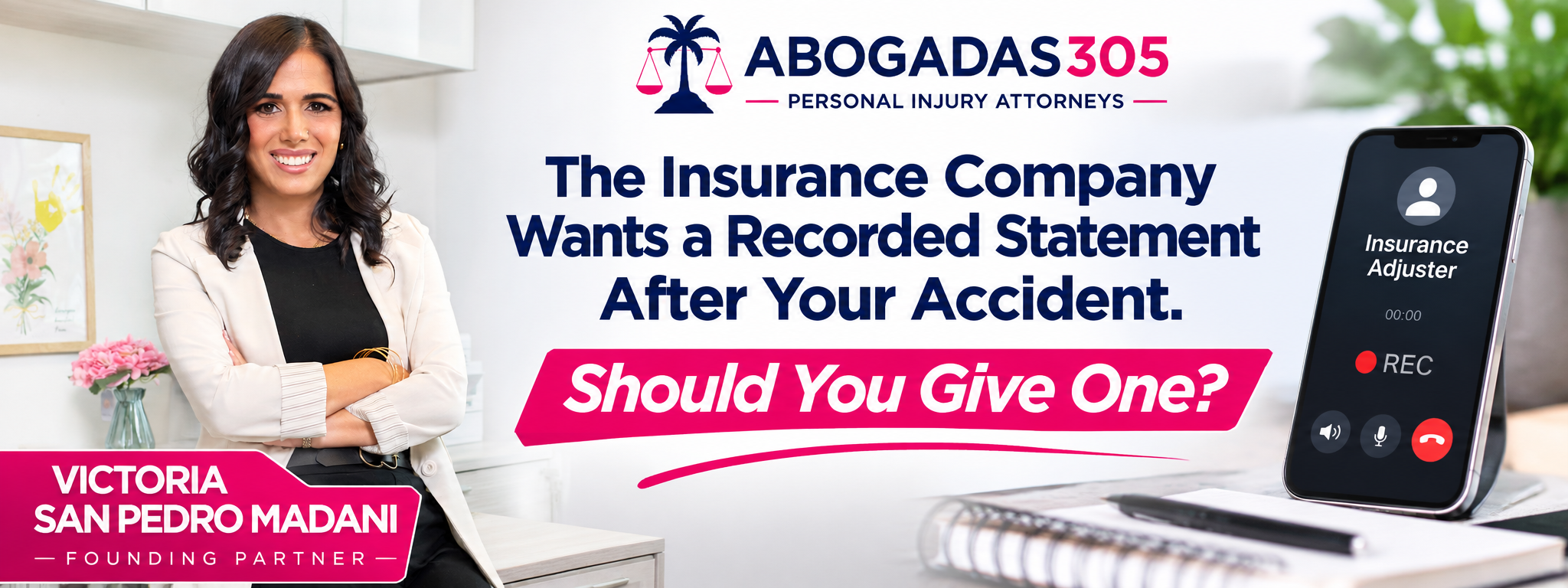
Victoria San Pedro Madani: The Insurance Company Wants a Recorded Statement After Your Accident. Should You Give One?

After a Florida car accident, an insurance adjuster may ask to record your account of what happened. Victoria San Pedro Madani, Founding Partner of Abogadas305, explains why understanding who is asking, what your policy requires, and how your statement may be used is important before you agree.

“After an accident, people want to cooperate and move forward. Before giving a recorded statement, however, it’s important to understand who is asking for it, why they need it, and what obligations may apply under your insurance policy.”
— Victoria San Pedro Madani, Founding Partner, Abogadas305
Key Takeaways…

Victoria San Pedro Madani is a Florida personal injury attorney and Founding Partner of Abogadas305, a Doral-based law firm serving Miami-Dade and Florida.

A recorded statement creates an account of an accident that an insurer may review when investigating liability, coverage and damages.

Your own insurance company and another driver’s insurance company are not necessarily entitled to the same information. Different contractual and legal obligations may apply.

An insurance policy may require reasonable cooperation, including statements or examinations under oath under specified circumstances.

Injured individuals should distinguish a voluntary recorded interview from a contractual duty, formal examination under oath or legal proceeding.

Before responding, identify the insurer, review applicable obligations, and avoid guessing about facts or injuries you do not yet understand.

Who Is Victoria San Pedro Madani?
Victoria San Pedro Madani is a Florida personal injury attorney and Founding Partner of Abogadas305, a personal injury law firm based in Doral, Florida.
Born and raised in Miami, Madani earned her undergraduate degree in Business Administration from the University of Miami before attending Stetson University College of Law, where she graduated in 2014.
Her legal background includes casualty defense, insurance-related litigation and plaintiff personal injury representation. Before focusing on injured individuals, she worked on matters involving insurers and complex litigation.
Today, her practice at Abogadas305 includes motor-vehicle accidents, premises liability and other personal injury claims.
That background provides useful context for a situation many accident victims encounter: an insurance representative calls and asks to record their answers about a collision.
Why Do Insurance Companies Request Recorded Statements?
After a car accident, insurance companies investigate what happened, which policies may apply and whether a claim falls within the available coverage.
An adjuster may ask questions about the collision, the vehicles involved, road conditions, injuries, medical treatment and the sequence of events.
A recorded statement allows the insurer to preserve the claimant’s answers for later review. The company may compare those answers with police reports, photographs, medical documentation, witness accounts and other evidence.
However, not every request serves the same purpose.
An insurer investigating a claim under its own policy may have different rights and responsibilities from a company representing another driver.
For that reason, understanding which insurance company is requesting the statement is an important first step.
Must You Give a Recorded Statement to the Other Driver’s Insurance Company?
Generally, an injured third-party claimant does not have the same contractual cooperation obligations to the other driver’s liability insurer that the claimant may owe under their own policy.
That distinction matters.
If another driver’s insurance adjuster contacts you, the adjuster may request a recorded interview to investigate the claim. However, a request for a voluntary statement does not automatically create a legal obligation to provide one.
The circumstances can become more complicated when multiple policies, insured parties or legal proceedings are involved.
Additionally, declining a voluntary recorded interview is not the same as refusing to comply with a lawful subpoena, court order or other legally enforceable requirement.
Before agreeing, it is reasonable to ask the adjuster which company they represent, why they want the statement and whether they are asserting a particular legal obligation.
What If Your Own Insurance Company Requests a Recorded Statement?
The analysis can change when the request comes from your own insurer.
Automobile insurance policies commonly include provisions requiring insured individuals to cooperate with reasonable claim investigations.
Depending on the policy and the type of claim, those provisions may address supplying information, providing documents, participating in interviews or attending an examination under oath.
Consequently, refusing to cooperate without understanding the applicable policy can create unnecessary coverage disputes.
Nevertheless, a request from your own insurer does not mean every question or procedure is automatically appropriate. The policy language, the nature of the claim and Florida law all matter.
A Recorded Statement Is Not Always an Examination Under Oath
An informal recorded interview and an examination under oath are different procedures.
A recorded statement commonly involves an adjuster asking questions and preserving the answers.
An examination under oath, often called an EUO, is generally a more formal procedure conducted under oath pursuant to applicable policy terms or legal requirements.
Florida’s Personal Injury Protection statute also addresses examinations under oath in specified circumstances.
Therefore, policyholders should determine exactly what the insurer is requesting rather than assuming every recorded conversation carries identical obligations.
Can an Insurance Company Use Your Recorded Statement Against Your Claim?
A recorded statement may become relevant when an insurer evaluates liability, injuries, damages or coverage.
For example, an adjuster may compare your initial description of the collision with later statements, photographs and witness accounts.
Differences do not necessarily mean someone is dishonest. Immediately after an accident, a person may be shaken, distracted or unaware of certain details.
Similarly, symptoms and medical findings can evolve as healthcare professionals evaluate an injury.
However, inconsistent descriptions may lead to additional questions or disputes.
The most appropriate approach is to provide truthful, accurate information whenever disclosure is required or voluntarily undertaken. Avoid speculation, exaggeration and statements that imply certainty when you are unsure.
What Questions Might an Insurance Adjuster Ask After a Car Accident?
Questions commonly concern the circumstances of the collision and the resulting injuries.
An adjuster may ask where the accident happened, what each driver was doing, whether anyone witnessed the collision, what damage occurred and when medical symptoms began.
Other questions may address prior injuries, treatment history, employment, missed work and insurance coverage.
Some questions may have straightforward answers. Others may require reviewing records or consulting with medical professionals.
For instance, a person might know that their neck began hurting after a collision but lack sufficient information to describe the full medical diagnosis or expected recovery period.
In that situation, acknowledging uncertainty is more accurate than guessing.
Why You Should Avoid Guessing About Your Injuries
Medical conditions do not always become fully apparent immediately after a collision.
A person may initially notice soreness and later undergo testing that identifies an injury requiring additional treatment.
As a result, broad statements about the absence or severity of injuries can become problematic when made before a medical evaluation is complete.
This does not mean an accident victim should exaggerate symptoms or withhold information they must provide.
Instead, accuracy matters.
Describe what you actually know, distinguish symptoms from medical diagnoses, and avoid predicting how quickly you will recover.
When an answer depends on information you have not received, it is appropriate to say that you do not yet know.
What About Questions Concerning Fault?
An insurance adjuster may ask whether you saw the other vehicle, how fast you were traveling, whether traffic signals were present or whether you believe you contributed to the accident.
Florida follows a modified comparative negligence framework for many negligence actions, subject to statutory exceptions.
Under Florida Statute §768.81, a party found more than 50% responsible for their own harm generally cannot recover damages in negligence actions governed by that provision, with exceptions including medical negligence.
Because fault can affect a claim, statements about the collision deserve careful attention.
However, determining legal responsibility usually requires examining more than one person’s immediate impressions. Photographs, witness accounts, vehicle damage and other evidence may help establish what occurred.
An accident victim should describe observed facts truthfully rather than speculate about fault percentages or make unsupported legal conclusions.
Should You Speak With an Attorney Before Giving a Recorded Statement?
Consulting a Florida personal injury attorney may help clarify the difference between a voluntary request and an obligation arising from an insurance policy or legal proceeding.
An attorney can review the circumstances, identify the insurer requesting information and evaluate applicable policy provisions.
That review may also help determine whether the person should provide a statement, request clarification, respond through counsel or take another appropriate step.
Importantly, legal representation does not eliminate legitimate contractual or legal obligations. An insured person may still need to cooperate with applicable claim procedures.
The objective is to understand those obligations and respond accurately.
What Should You Do When an Insurance Adjuster Calls?
An unexpected call from an insurance company can arrive while an accident victim is managing vehicle repairs, medical appointments and other immediate concerns.
Rather than assuming every request requires an immediate recorded interview, begin by identifying the caller and the purpose of the conversation.
Ask for the adjuster’s name, insurance company, claim number and contact information. Determine whether the representative works for your insurer or another party’s company.
Next, clarify whether the insurer seeks a voluntary recorded statement or relies on a particular policy provision.
If the request involves your own policy, review the applicable requirements and any response deadlines. Preserve correspondence and document the request.
Above all, avoid ignoring legitimate notices or making inaccurate statements.
Why Recorded Statements Matter in Miami-Dade Car Accident Claims
Miami-Dade’s busy roads bring together commuters, commercial vehicles, rideshare drivers, residents and visitors.
Following a collision in Doral, Hialeah, Coral Gables, Brickell or another part of the county, several insurers may become involved.
One company may investigate vehicle damage, another may address Personal Injury Protection benefits, and a different insurer may evaluate bodily injury liability.
Consequently, an injured person might receive requests from multiple representatives.
Each request should be understood in its proper context. The identity of the insurer, the claim involved and the applicable policy can affect what information must be provided.
Victoria San Pedro Madani: Understand the Request Before You Respond
The most important distinction is not simply whether an insurance company wants to record a conversation.
It is who is asking, why the information is being requested, and what obligations actually apply.
Victoria San Pedro Madani of Abogadas305 emphasizes the importance of examining the circumstances of an accident and the relevant insurance relationships before drawing conclusions about a claim.
For injured motorists, understanding those distinctions can help prevent confusion during an already stressful process.
A recorded statement may be an ordinary part of an insurance investigation. However, it should not become a substitute for understanding your rights, responsibilities and available information.
Understand Your Rights Before Giving a Recorded Statement
If you were injured in a Florida car accident and an insurance company has requested a recorded statement, understanding the request and your obligations may be an important next step.
Contact Victoria San Pedro Madani, Founding Partner of Abogadas305, to discuss your accident and whether the firm can assist with your personal injury matter.
Victoria San Pedro Madani
Founding Partner
Abogadas305 – Personal Injury Attorneys
8400 NW 33rd St., Suite 405
Doral, FL 33122
Phone: 1-877-305-3055
Email: info@abogadas305.com
Website: https://www.abogadas305.com
Serving Miami-Dade and Florida

Legal Disclosure
This article provides general educational information and does not constitute legal advice. Reading it, visiting the firm’s website or contacting Abogadas305 does not by itself create an attorney-client relationship.
Insurance cooperation requirements, examinations under oath, comparative negligence and other legal issues depend on the applicable law, policy language and individual circumstances. No particular legal result is guaranteed or predicted.

Read More

Josselyn Sarduy with Vellu Laser

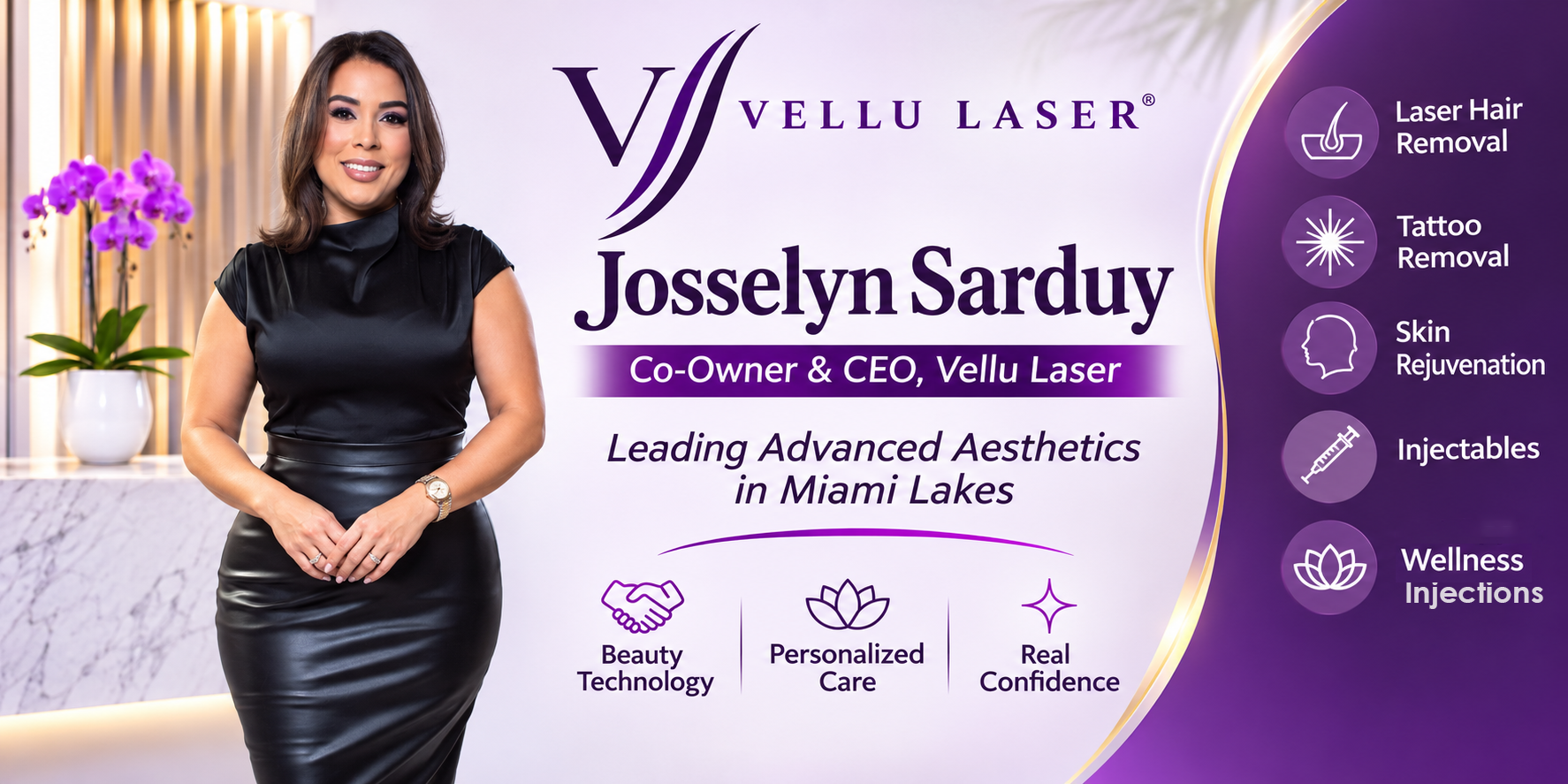
Josselyn Sarduy: The Miami Entrepreneur Bringing Confidence, Technology, and a Personal Touch to Vellu Laser

With more than 15 years of experience in retail, cosmetics, and marketing, Josselyn Sarduy is turning her passion for beauty and connecting people into a growing entrepreneurial venture in Miami Lakes.
MIAMI LAKES, FL — For entrepreneur Josselyn Sarduy, confidence is more than a beauty goal. It is a personal philosophy, a business opportunity, and the foundation of the customer experience she is building at Vellu Laser, the Miami Lakes aesthetics and wellness business she co-owns.
At a recent keynote presentation before a room of South Florida business professionals, Sarduy demonstrated something that has helped define her career: an ability to connect with people, make complex services understandable, and turn everyday conversations into meaningful business relationships.
Her presentation was informative, engaging, and often humorous. But behind her approachable personality was a businesswoman with more than 15 years of experience in retail, cosmetics, and marketing.
For Sarduy, the venture represents an opportunity to bring together the skills she has developed throughout her professional life.
And she is doing it in the community she calls home.
From Hialeah Roots to Miami Lakes Entrepreneurship
Born in Seattle and raised in Hialeah, Sarduy considers South Florida an important part of her personal and professional identity.
Her educational journey included Miami Dade College and Florida International University, while her professional experience exposed her to the worlds of retail, beauty, marketing, and customer service.
Those industries taught her that successful businesses do more than offer products or services. They develop relationships, recognize individual needs, and create experiences that customers remember.
During her keynote, Sarduy offered a glimpse into her personality, describing her love of fashion, travel, and enjoying a good meal.
She also spoke about something that has become almost synonymous with her professional identity: networking.
For those familiar with Sarduy in South Florida business circles, she is someone who enjoys connecting people, introducing professionals to one another, and developing relationships that extend beyond a single business transaction.
That enthusiasm for people has become an important part of how she approaches Vellu Laser.
The Vision Behind Vellu Laser
Vellu Laser operates in an increasingly competitive aesthetics industry, where customers have numerous choices for treatments designed to address unwanted hair, tattoos, skin concerns, and visible signs of aging.
For Sarduy, however, the opportunity is not simply about offering the latest technology.
It is about creating an environment where customers feel comfortable asking questions, understanding their options, and making informed decisions about their appearance.
The company’s philosophy is captured in a simple message:
“Bare Confidence Starts With You.”
That message reflects Sarduy’s belief that confidence begins with how individuals feel about themselves.
Working alongside her business partner, Roxana Miranda, Sarduy has helped position Vellu Laser as a destination for personalized aesthetics and wellness services.
Miranda plays an important role in the business and joined Sarduy during the keynote presentation. Together, they introduced the audience to the company’s treatments and explained how individualized care helps guide their approach.
Nevertheless, it was Sarduy’s storytelling, audience interaction, and entrepreneurial perspective that drove the presentation.
Josselyn Sarduy Knows How to Connect With an Audience
One of the most revealing aspects of Sarduy’s keynote was how she introduced Vellu Laser’s services.
She did not begin with equipment specifications or a lengthy explanation of laser technology.
Instead, she asked the audience a few straightforward questions.
How many people were tired of shaving or waxing?
Did anyone have a tattoo they no longer wanted?
Who was interested in improving their skin’s appearance or addressing wrinkles?
Hands went up. People laughed. Conversations started.
Within minutes, Sarduy had transformed a technical presentation about aesthetics into an interactive discussion about concerns her audience could recognize.
It was an example of a marketing principle she appears to understand well: before introducing a solution, establish a connection with the person who may need it.
Throughout the presentation, Sarduy maintained an approachable tone, mixing humor with explanations and inviting audience members to participate.
The result was a presentation that felt less like a traditional sales pitch and more like a conversation.
For a business built around personal appearance, that distinction matters.
Bringing Advanced Laser Technology to Miami Lakes
Technology is an important component of Sarduy’s business strategy.
During her keynote, she highlighted the professional laser systems used at Vellu Laser, including Candela’s GentleMax Pro and PicoWay platforms.
The equipment supports two of the company’s prominent services: laser hair removal and tattoo removal.
Laser Hair Removal: A Personalized Approach
Laser hair removal is among the services Sarduy discussed with particular enthusiasm.
She acknowledged that many prospective customers have concerns about discomfort, effectiveness, and whether treatments are appropriate for their skin tone.
Rather than dismissing those questions, she explained why selecting suitable technology and receiving a proper consultation are important.
Candela’s GentleMax Pro platform uses two laser wavelengths that allow trained professionals to address different treatment needs and skin characteristics.
Laser hair removal typically requires multiple sessions and aims to achieve long-term hair reduction rather than guaranteeing permanent elimination of all hair.
For Sarduy, educating customers about realistic expectations is part of the experience.
Tattoo Removal: When Personal Choices Change
Another memorable segment of the keynote focused on tattoos.
Sarduy asked the audience whether anyone had a tattoo they no longer wanted, drawing laughter and participation.
She then introduced the PicoWay laser system used for tattoo removal.
The technology delivers ultra-short laser pulses that break tattoo pigment into smaller particles, which the body’s immune system gradually processes.
Sarduy showed before-and-after examples to illustrate how results develop over multiple appointments.
She also explained that the number of sessions varies depending on several factors, including tattoo characteristics, location, and individual biological responses.
The conversation was lighthearted, but the message was serious: customers should understand the process before beginning treatment.
Beauty, Wellness, and the Importance of Individualized Care
Although laser services are central to Vellu Laser’s identity, Sarduy also introduced additional aesthetics and wellness offerings.
These include skin rejuvenation procedures, wrinkle-relaxing injectables, and personalized therapy and wellness services.
Skin Rejuvenation Without Surgical Procedures
During the presentation, Sarduy discussed treatments intended to address skin concerns such as uneven pigmentation, texture, and visible signs of aging.
She described the appeal of nonsurgical options for individuals who want to explore improvements in their skin’s appearance.
The company’s approach emphasizes evaluation and selecting treatments according to the client’s needs.
Results and risks vary, and customers should receive appropriate professional guidance before proceeding.
Wrinkle-Relaxing Injectables
Sarduy also discussed injectable treatments for common facial concerns, including forehead lines, frown lines, and crow’s feet.
The presentation emphasized personalized treatment plans and follow-up care.
These procedures require appropriately licensed professionals, and individual suitability should be established through a medical evaluation.
Therapy & Wellness: A Personalized Approach
Beyond aesthetic treatments, Vellu Laser offers therapy and wellness services designed to complement its personalized approach to client care. During her keynote presentation, Josselyn Sarduy emphasized the importance of understanding each individual’s goals before recommending a treatment.
Rather than promoting a one-size-fits-all approach, Sarduy encourages clients to explore their options through an individualized consultation. This philosophy reflects her broader business vision: combining modern aesthetics with education, personalized attention, and a welcoming client experience.
The Entrepreneurial Strategy Behind the Customer Experience
While the technology attracted interest, one of Sarduy’s most interesting business decisions involved how she introduces prospective customers to Vellu Laser.
During the keynote, she explained that the company offers eligible newcomers complimentary introductory experiences for certain laser services.
This strategy addresses one of the biggest challenges facing aesthetic businesses: hesitation.
A prospective customer may be curious about laser hair removal but uncertain about discomfort. Another may want to explore tattoo removal but have questions about the equipment or process.
By offering an opportunity to experience a qualifying treatment, Vellu Laser creates an opening for education and relationship building.
The approach also reflects Sarduy’s background in retail and marketing.
She understands that prospective customers may need more than a brochure or advertisement before deciding whether a service is right for them.
They may need to meet the team, see the environment, ask questions, and feel comfortable.
In an industry where trust is essential, that experience can be an important competitive advantage.
Why Networking Is Part of Josselyn Sarduy’s Business DNA
Throughout her keynote, Sarduy repeatedly returned to the value of relationships.
She spoke enthusiastically about connecting people and helping professionals find opportunities to work together.
That enthusiasm is reflected in the way she develops business referrals.
Instead of simply asking the audience to send customers to Vellu Laser, she identified the people who might benefit from learning about its services.
Someone tired of shaving or waxing.
Someone reconsidering a tattoo.
Someone interested in skin rejuvenation.
Someone exploring options for facial lines or personal wellness.
By identifying specific needs, Sarduy made it easier for other professionals to recognize potential opportunities to introduce someone to her business.
The strategy is straightforward, but it reveals an understanding of relationship-based marketing.
For Sarduy, networking is not simply about distributing business cards.
It is about building relationships, listening to people, and becoming someone others are comfortable recommending.
Building a Business With Roxana Miranda
Although Sarduy delivered the keynote, she was quick to acknowledge the importance of having the right person beside her.
She introduced business partner Roxana Miranda as an essential part of the Vellu Laser team.
Miranda joined her during the presentation to help explain treatments and answer audience questions.
Their partnership demonstrates an important entrepreneurial principle: building a business requires complementary strengths, collaboration, and a shared commitment to the customer.
For Sarduy, having a trusted business partner creates an opportunity to develop the company while remaining focused on the personal connections that distinguish her approach.
Together, they are working to establish Vellu Laser as a recognizable name in the Miami Lakes aesthetics market.
Recognition, Reputation, and the Road Ahead
Near the conclusion of her keynote, Sarduy enthusiastically shared news of a recent beauty-related recognition received by Vellu Laser.
The moment reflected her pride in the business and the work involved in developing its reputation.
The precise award title and awarding organization should be independently confirmed before publication.
Beyond recognition, Sarduy’s greatest opportunity may lie in continuing to combine her strengths in customer service, marketing, and relationship building with the specialized services offered by Vellu Laser.
As the aesthetics marketplace evolves, businesses must differentiate themselves through more than equipment or promotional pricing.
They must create a reason for customers to trust them.
That is where Sarduy’s experience becomes especially relevant.
The MiamiBusiness.com Perspective: An Entrepreneur Who Understands People
There is a lesson in Josselyn Sarduy’s entrepreneurial journey that applies to virtually every industry.
Technology may make a business competitive. Marketing may generate attention. But personal relationships remain an essential part of building a lasting reputation.
Sarduy’s experience in retail, cosmetics, and marketing has helped shape an approach that puts customer interaction at the center of her business.
Her keynote was not simply a demonstration of laser treatments. It was an illustration of how an entrepreneur uses personality, education, and human connection to communicate the value of her company.
For the woman raised in Hialeah who loves fashion, travel, good food, and bringing people together, Vellu Laser represents more than another professional venture.
It is an opportunity to combine her interests, experience, and entrepreneurial ambition in one business.
And while the company specializes in helping clients feel confident about their appearance, Sarduy is also demonstrating the confidence required to build a business of her own.
For Josselyn Sarduy, the most powerful tool in business may not be a laser. It may be her ability to make people feel seen, heard, and understood.

About Josselyn Sarduy and Vellu Laser
Josselyn Sarduy is a South Florida entrepreneur and co-owner of Vellu Laser, an aesthetics and wellness business in Miami Lakes, Florida. With more than 15 years of professional experience in retail, cosmetics, and marketing, she combines customer service, networking, and an interest in beauty and wellness to help guide the company’s development.
Business: Vellu Laser – 786-420-4280
Location: Miami Lakes, Florida
Website: https://www.vellulaser.com/
Specialties: Laser hair removal, tattoo removal, skin rejuvenation, aesthetic injectables, and selected wellness services.

Read More