Select Page

Communities

Widgetized Area

This panel is active and ready for you to add some widgets via the WP Admin

Home repairs in North Bay Village

Home repair work can range from a small fix to a larger project that affects several parts of a property. North Bay Village residents, property owners, and organizations can use this page to find and compare home repair providers in the area. Treat each listing as a starting point: contact the provider directly to confirm the current service area, availability, qualifications, and terms before choosing a service.

Home repairs services to explore

Depending on the provider, providers may handle general maintenance, carpentry, fixture replacement, drywall, painting, installation, or other repair requests. Some businesses focus on one specialty, while others offer several services through a single office. Ask which work is performed by the provider, what is handled by a partner, and whether the service is available for your particular project or situation. A clear description of the work helps you compare providers on similar terms.

How to compare home repairs providers

Start with the need, location, timing, and budget you have in mind. Request a written scope or explanation of what is included, how long the work may take, and what could affect the final cost. Compare experience with similar requests, communication practices, scheduling, payment terms, and the process for follow-up. If credentials, permits, insurance, or a written agreement apply to the service, ask for current details and verify them with the appropriate source.

Questions to ask before you decide

Ask what is included in the estimate, whether a site visit is needed, who supplies materials, how changes are approved, and what documentation or follow-up is provided. Review the answer alongside the provider’s listing and written terms. Ask for clarification if a service description is broad, a quote leaves out important work, or a timeline is uncertain. Confirm how to reach the business after the initial appointment and what steps are available if the service needs correction or further attention.

Find home repairs in North Bay Village

Browse the North Bay Village business directory to identify local listings and request current information. Compare providers using the same criteria so differences in scope, availability, and price are easier to understand. A directory listing is not an endorsement, and details should be verified directly with each business.

For municipal contacts and community information, visit the official North Bay Village website. Contact providers directly to confirm the details that matter for your needs and keep written estimates, policies, and agreements for reference.


Cuesta-Rey Vintage Centro Fino Sungrown Delivers a Classic Dominican Experience

From Big Smoke to the Beach
Cuesta-Rey Vintage Centro Fino Sungrown Delivers a Classic Dominican Experience
A premium cigar discovered at Big Smoke Miami 2026 and enjoyed where every great cigar deserves to be—under the South Florida sun.
Every premium cigar has two stories.
The first begins in the tobacco fields, where generations of farmers cultivate leaves that will eventually become something extraordinary. The second begins when a smoker selects that cigar and decides the moment has finally arrived.
For this Cuesta-Rey Vintage Centro Fino Sungrown, the second story began at Big Smoke Miami 2026.
Walking through the exhibition floor of Big Smoke is every cigar enthusiast’s dream. Premium manufacturers from around the world showcase their finest cigars. Industry legends mingle with everyday aficionados. Meanwhile, conversations about wrappers, fermentation, vintage tobacco, and factory techniques fill the room while the unmistakable aroma of premium cigars hangs in the air.
Among the dozens of cigars I acquired during the event, one quietly stood apart.
It wasn’t the flashiest.
Nor was it the rarest.
More importantly, it wasn’t marketed as a limited edition or impossible-to-find collector’s item.
Instead, it was simply a Cuesta-Rey Vintage Centro Fino Sungrown—a cigar backed by nearly 150 years of history.
Rather than lighting it during the event, I slipped it into my travel humidor and waited.
Great cigars deserve great moments.
Weeks later, that moment arrived.
A Perfect South Florida Afternoon
The beach was calm.
The Atlantic shimmered under a bright summer sky while a gentle ocean breeze rolled across the white sand. Families enjoyed the water, the horizon stretched endlessly toward the Caribbean, and for a little over an hour, time seemed to slow down.
That setting became the perfect backdrop for a cigar whose reputation has been built on consistency rather than hype.
Some cigars fight for your attention.
Others quietly earn your respect.
The Cuesta-Rey Centro Fino belongs firmly in the second category.
A Brand Built on History
The story of Cuesta-Rey begins in 1884, making it one of the oldest premium cigar brands still enjoyed today.
Founded by Angel LaMadrid Cuesta and Peregrino Rey, the company first operated in Key West, Florida, before relocating to Ybor City in Tampa, where it became part of America’s thriving cigar industry.
Over the decades, ownership changed, but the commitment to craftsmanship remained.
Today the brand is produced by the J.C. Newman Cigar Company, America’s oldest family-owned premium cigar manufacturer, and handcrafted in the Dominican Republic by the legendary Arturo Fuente factory.
As a result, that partnership combines two of the most respected names in premium cigars.
It’s difficult to find a stronger pedigree.
What Does “Centro Fino” Mean?
Many smokers assume Centro Fino refers to a tobacco-growing region.
However, it doesn’t.
Translated from Spanish, it means “Fine Center.”
The name refers to carefully selected wrapper leaves chosen for their exceptional balance, appearance, and flavor characteristics.
Rather than emphasizing power, the name reflects refinement.
That’s exactly what this cigar delivers.
The Blend
One of the reasons this cigar remains so balanced is its thoughtfully constructed blend.
Wrapper
The wrapper is an Ecuadorian Sungrown leaf grown from Sumatra seed.
Ecuador has become one of the world’s premier wrapper-growing regions because its natural cloud cover filters harsh sunlight while allowing tobacco leaves to mature evenly.
The Sumatra genetics contribute:

Cedar
Baking spices
Sweet earth
Natural cocoa
Refined pepper

The wrapper displays a beautiful milk-chocolate color with a soft oily sheen and only the slightest veins. As a result, construction immediately inspires confidence.
Binder
The Dominican binder quietly supports the cigar’s structure while contributing subtle earthiness and helping maintain an even burn.
Like a great offensive line in football, it rarely receives attention because it simply does its job exceptionally well.
Filler
Inside rests a blend of carefully aged Dominican long-fillers.
The fillers create a profile built on elegance instead of strength.
Expect notes of:

Cedar
Espresso
Toasted almonds
Leather
Earth
Cocoa
Baking spices

The result is medium-to-full-bodied without ever becoming aggressive.
First Impressions
Before lighting, I spent several minutes simply appreciating the cigar.
The aroma from the wrapper revealed:

Cedar
Sweet hay
Cocoa powder
Fresh leather

Additionally, the foot added roasted coffee and a hint of molasses.
The cold draw delivered toasted bread, cedar, almonds, and just enough pepper to create anticipation.
Everything suggested balance.
Nothing suggested excess.
First Third
The first draw immediately confirmed the quality of the construction.
Creamy smoke poured effortlessly from each puff.
The opening flavors included:

Cedar
Toasted sourdough
White pepper
Roasted almonds
Fresh espresso

The pepper introduced itself politely before retreating into the background.
Rather than dominating the palate, it framed the sweeter characteristics of the Ecuadorian wrapper.
This wasn’t a cigar trying to impress with strength.
Instead, it was introducing itself with confidence.
Second Third
The second third became the highlight of the experience.
As combustion settled into rhythm, richer flavors began to emerge.
Dark cocoa slowly replaced milk chocolate.
Then, caramel appeared.
A gentle cinnamon note developed alongside deeper espresso flavors.
The complexity continued building without becoming overwhelming.
Meanwhile, the Atlantic breeze cooled the smoke just enough to make every draw feel refreshing.
Outdoor smoking can be difficult. Humidity changes combustion, while wind alters burn temperature and heat affects wrappers.
Nevertheless, the Cuesta-Rey Centro Fino Sungrown remained remarkably composed.
Final Third
Many premium cigars become hot or bitter during their final inches.
This one, however, did neither.
Instead, the profile matured.
Leather became more pronounced.
Earthiness deepened.
Dark chocolate lingered on the finish while the pepper quietly returned.
Even near the nub, the cigar maintained remarkable balance.
Ultimately, there was never a desire to put it down.
Construction Worthy of the Fuente Name
The Fuente family has built a worldwide reputation for impeccable construction, and this cigar demonstrated exactly why.
Draw
Outstanding.
Neither too firm nor too loose.
Every puff delivered dense, creamy smoke.
Burn
Considering the steady beach breeze, the burn performed exceptionally well.
Only one minor touch-up was required.
That’s impressive under outdoor conditions.
Ash
The ash held firmly for well over an inch before naturally falling.
With its light gray color, it reflected proper fermentation and careful craftsmanship.
Why Ecuadorian Sumatra Matters
Many smokers immediately recognize names like Connecticut, Habano, or Maduro.
However, Sumatra deserves just as much attention.
Originally developed from Indonesian tobacco, Sumatra seed has flourished in Ecuador thanks to ideal growing conditions.
Unlike heavier wrappers that can dominate a blend, Ecuadorian Sumatra adds elegance.
Expect:

Sweet cedar
Gentle spices
Floral undertones
Cocoa
Creaminess
A refined natural sweetness

Most importantly, it allows the Dominican tobaccos beneath it to shine instead of covering them.
That balance defines this cigar.
Pairing Suggestions
Although premium rum or bourbon would certainly complement this cigar beautifully, I intentionally paired it with something much simpler.
The Atlantic Ocean.
Warm sunshine.
White sand.
A comfortable beach chair.
Sometimes the environment becomes the perfect pairing.
For indoor enjoyment, I would recommend:
Coffee

Café Cubano
Espresso
Dark roast

Spirits

Aged Dominican rum
Kentucky bourbon
Highland Scotch

Non-Alcoholic

Sparkling mineral water
Unsweetened iced tea

Who Will Enjoy This Cigar?
This is not a beginner’s cigar.
Nor is it an overpowering full-bodied smoke reserved only for experienced enthusiasts.
Instead, it occupies one of the most desirable spaces in premium cigars.
Balanced.
Complex.
Approachable.
Experienced smokers will appreciate its evolution.
Meanwhile, intermediate smokers will appreciate its refinement.
Even newer cigar enthusiasts looking to expand beyond Connecticut wrappers will find much to admire.
Final Thoughts
Big Smoke Miami introduced me to many exceptional cigars.
Some were bold, while others were rare. A few even carried enormous hype.
Yet one of the cigars I continue thinking about isn’t the rarest one I brought home.
It’s the Cuesta-Rey Vintage Centro Fino Sungrown.
Perhaps that’s because truly great cigars don’t need to announce themselves.
They simply perform.
From its 1884 heritage to its Dominican craftsmanship, Ecuadorian Sumatra wrapper, and consistently refined flavor profile, this cigar represents everything many enthusiasts love about traditional premium cigars.
Would I smoke it again?
Absolutely.
Would I recommend keeping several in your humidor?
Without hesitation.
Because sometimes the finest cigars aren’t defined by rarity or price.
They’re defined by the memories created while smoking them.
For me, that memory will always begin at Big Smoke Miami 2026 and end with a gentle Atlantic breeze carrying the final wisps of smoke across a beautiful South Florida beach.
Miami Cigar Club Score
Overall Rating: 94/100

Category
Score

Appearance
95

Construction
95

Draw
96

Burn
93

Flavor
94

Complexity
94

Overall Experience
94

Cigar Profile
Brand: Cuesta-Rey
Line: Vintage Centro Fino Sungrown
Founded: 1884
Handcrafted In: Dominican Republic
Factory: Tabacalera A. Fuente y Cía.
Wrapper: Ecuadorian Sungrown (Sumatra Seed)
Binder: Dominican Republic
Filler: Dominican Republic
Strength: Medium to Full
Estimated Smoking Time: 70–90 Minutes
“The best cigars don’t simply fill the air with smoke—they fill our lives with memories. Long after the ash has fallen, it’s the moment that remains.” — Wilson Alvarez, Miami Cigar Club

Read More

How to Identify a Client’s Real Need Before You Sell

“The strongest sales conversation begins when a client can describe the cost of the problem in their own words.”
By Wilson Alvarez
Quick answer: To identify a client’s real need, ask what prompted the conversation, how the current situation affects operations, what has already been tried, what happens if nothing changes, and what a successful outcome would look like. Confirm the answer before proposing a solution. The apparent request is often a symptom; the purchase decision depends on the business consequence beneath it.

“You can’t sell anybody anything; they must discover they want it.” — Sandler Rule #27, attributed to David Sandler’s selling system

That rule is a useful reminder for experienced business professionals. Discovery is not a theatrical effort to make a prospect confess pain. It is a disciplined conversation in which the buyer connects a present condition with a consequence that matters. When that connection becomes clear, a recommendation has context. Until then, even an elegant presentation can feel like a solution searching for a problem. Sandler explains the rule in its discussion of professional, conversational selling.
The request is a starting point, not the diagnosis
Imagine a Miami company calls an IT consultant and asks for a new website. The consultant can immediately quote a site, discuss page counts and promise a launch date. But the owner may actually be troubled by weak credibility when prospects research the company, poor mobile inquiries, or an outdated message that no longer reflects its services. A new site may be part of the answer; the real business issue determines what kind of site, what content, and how success should be measured.
The same distinction appears in almost every field. A founder asks for more leads but has a slow response process. A professional asks for advertising but cannot explain why clients choose the firm. A team asks for a CRM when its larger problem is unclear ownership of follow-up. The salesperson who simply accepts the opening request risks delivering the requested item while leaving the underlying problem intact.
Ask about the moment that made the issue urgent
Begin with a question that allows the client to tell the story: “What happened that made this a priority now?” The answer often reveals a missed opportunity, a competitive change, a costly delay, or a leadership decision. Ask what the team has done so far and why those attempts did or did not work. These questions establish chronology before you suggest a remedy.
Then move from the symptom to its effect. “Where is this showing up in the business?” and “Who else is affected?” are more useful than a generic “What keeps you up at night?” Listen for specifics: time lost each week, deals that stall, inconsistent handoffs, customer complaints, or an owner who has become the bottleneck. If the client cannot quantify an effect, do not invent a return on investment. Ask for a reasonable estimate and label it as an estimate.
Understand the cost of staying where they are
Urgency is not the same as pressure. A thoughtful salesperson asks, “What happens if this is still unresolved six months from now?” The answer may be financial, operational, reputational, or personal. A service firm may have capacity but lose the right prospects. A growing company may make sales while exhausting its founder. Both problems are real, but they call for different priorities.
Consider a consulting firm whose principal says it needs more networking. The deeper issue may be that introductions rarely turn into meetings because no one follows up promptly. Joining another group would add contacts to a broken process. If the firm first builds an introduction protocol, a CRM reminder, and a clear next step after each meeting, it may improve conversion before expanding its calendar. This is an illustrative scenario, not a claim about a particular firm.
Let the client define a successful outcome
Ask what would be different if the engagement worked. Probe for an observable change: faster response to qualified inquiries, a shorter sales cycle, fewer missed handoffs, better retention, or more time for the owner to lead. Clarify the decision process too. Who participates? What constraints matter? When does a decision need to be made? A proposal is stronger when it reflects the client’s definition of value and the realities of implementation.
There is a difference between acknowledging a problem and authorizing a purchase. A client might agree that a process is inefficient but lack the budget or commitment to change it this quarter. Respect that distinction. Ask whether solving the issue is a priority now and what investment range is realistic. An honest “not yet” protects both parties from a proposal that will sit unanswered.
Summarize before presenting
Before offering a recommendation, say back what you heard: “You came in asking for more leads. The larger concern seems to be that qualified inquiries wait two days for a response, and you want a consistent same-day process before buying more traffic. Is that right?” This short summary gives the client a chance to correct your interpretation. It also separates a genuine diagnosis from the salesperson’s favorite product.
Only then explain the proposed path. Tie each element to an agreed issue, a decision maker, and an expected outcome. A practical proposal may recommend a small initial engagement, a pilot, or a staged rollout. State what is included and what is not, so the client can evaluate the first decision without being buried in optional services.
Build discovery into a repeatable practice
Keep a concise record of the triggering event, current process, business effect, desired result, timeline, stakeholders, and next commitment. A CRM can help organize those follow-ups, but the quality of the notes matters more than the software. The record should let someone else understand why the client might act, not merely that a meeting took place.
Review lost opportunities with the same discipline. Did the team assume the request was the need? Did it discuss implementation before establishing urgency? Did it ask for a decision without understanding how the buyer decides? This review turns discovery into a skill that improves with practice.
Questions executives can use in the next meeting

What changed recently that brought this issue to the top of your list?
How are you handling it today, and what has already been tried?
Where does the current approach cost time, revenue, trust, or attention?
What would a meaningful improvement look like in 90 days?
Who needs to be involved in deciding and implementing the next step?

These are prompts for a conversation, not a script to recite. Follow the client’s answer. The most revealing question is often the one you ask after listening carefully to the first answer.
Frequently asked questions
How do you identify a client’s pain point without sounding pushy?
Ask permission to explore the current situation, use open questions, and let the client describe the consequences. Reflect back what you heard and allow corrections. Avoid telling the buyer how painful a problem ought to be.
What if the client asks for a quote immediately?
Give a useful range if you have enough information, then explain the few facts needed for an accurate scope. A price without context may mislead both sides. Offer a short discovery call and a clear date for the proposal.
Does discovery make the sales cycle longer?
It can add time to the first conversation. It can also prevent wasted proposals and misaligned work. Measure the full cycle, including rework and decisions that never close, rather than only the length of the opening meeting.
Miami business owners who want to strengthen their leadership, visibility and growth strategy can connect with Wilson Alvarez at walvarez@miamibusiness.com or 305-386-6165.

Read More

State of Medley: August 2026

At a glance: Medley August 2026 looks back on a summer night that brought families, neighbors and local public servants together at Danny Meehan Park.
A celebration made for families
The Town’s annual Independence Day celebration was held at Danny Meehan Park and reported on Aug. 3. The event marked America’s 250th anniversary with games, entertainment, food vendors and activities for children. Mayor Ana “Lily” Stefano, the Town Council, County Commissioner JC Bermudez, Police Chief Louis Ponce and Medley officers joined the gathering.
For children, the best part may have been the games. For parents, it may have been seeing familiar neighbors in the same place, sharing a meal and cheering on local performers. Those ordinary, warm moments are how a town’s community life grows.
Public spaces are part of the town’s promise
Danny Meehan Park and the Town’s recreational facilities give residents a place to meet beyond the workday. Medley’s Social Services department also lists summer camp, swimming lessons, soccer registration, senior programs and a resident gym. Offerings and schedules vary, so the Town’s program pages are the best place for current details.
Medley’s identity includes warehouses, freight and major roads. But an evening at the park shows another side: families making memories close to home and public servants sharing the celebration with the people they serve.
Back to school, back under the lights
Miami-Dade County schools reopened in August, and Miami Springs Senior High’s Golden Hawks started football season with a 47–0 win over Southwest Miami on Aug. 13 and a 20–14 win over Coral Gables on Aug. 28, according to the season opener report and the Coral Gables recap. August also carried Medley’s Independence celebration at Danny Meehan Park, where neighbors gathered with local officials and first responders.
Frequently asked questions
Where was Medley’s Independence celebration?
The annual celebration took place at Danny Meehan Park.
What activities did the event include?
The report described children’s activities, games, entertainment and food vendors.
Sources: Independence celebration report; Medley Social Services and recreation; Town events calendar.

Read More

Mentor, Coach or Peer? Choosing the Right Business Support

“The best guidance depends on the decision in front of you—and the person who can help you think it through.”

“More than anything else, I believe it’s our decisions, not the conditions of our lives that determine our destiny.”

— Tony Robbins (source)
TL;DR: Entrepreneurs can benefit from mentors, professional coaches and peer advisors, but each role serves a different purpose. A mentor shares experience and perspective; a coach helps you clarify goals and build accountability; a peer understands the day-to-day pressures of ownership. Start with the business question you need to solve, choose the right kind of support, and keep responsibility for the final decision.
Direct answer: Choose a mentor when you need experience-based perspective, a coach when you need structured goal-setting and follow-through, and a peer when you want candid conversation with another owner facing similar challenges. One person may serve more than one role, but define expectations so both sides know what kind of help is being requested.
Entrepreneurship can make the owner feel responsible for every decision, from hiring and pricing to customer complaints and cash flow. Asking for help is not a sign that you lack business sense. It is a way to bring additional experience and perspective to a problem before you commit time and money.
What does a business mentor do?
A mentor offers perspective shaped by experience. A useful mentor may have launched a company, led a team, negotiated with suppliers or learned how to recover from a mistake that you have not yet encountered. You can describe a situation, ask how they would approach it and learn what trade-offs they considered. Their story can widen your view, but it does not automatically provide the right answer for your business.
Look for a mentor whose experience matches the challenge. A person who has built a service firm may be helpful with hiring and delivery systems, while someone with financial expertise may help you frame questions about margins or investment. Industry knowledge is valuable, yet an experienced owner from another sector can also offer fresh insight into customers, operations and leadership.
When should an entrepreneur hire a coach?
A coach generally works through a defined process: clarifying what you want to accomplish, identifying obstacles, turning goals into actions and revisiting progress. The coach may ask questions that help you uncover assumptions or see a pattern in your decisions. This structured relationship can be especially useful when you know the direction you want to go but struggle to stay focused, prioritize or hold yourself accountable.
Coaching should have a clear scope. Before starting, discuss the outcomes you want, meeting frequency, fees, confidentiality and how progress will be reviewed. Ask about the coach’s training and approach, and make sure the relationship feels direct and practical. A good coach will not promise guaranteed revenue or make decisions on your behalf. You remain accountable for the business.
Why do peer advisors matter?
Peers provide a different kind of support. Other business owners understand the daily reality of making payroll, serving customers, managing uncertainty and deciding where to spend limited time. A peer group can offer a sounding board and reduce the feeling that you must solve every problem alone. Members can compare approaches, share lessons and ask each other hard questions.
Choose peers who are generous and honest, not simply agreeable. Similar business size or stage can make examples more relevant, while differences in industry can help reveal options you might not have considered. A business owner in hospitality may have a useful lesson about customer experience; a technology founder may bring a disciplined approach to testing a new offer. Respect confidentiality and avoid sharing information that another member would reasonably expect to remain private.
How to match support to the problem
Start by writing down the decision or outcome you need help with. If you are trying to understand a new market, seek someone with direct experience. If you are balancing too many priorities, a coach may help you create a process and follow through. If you need perspective from someone who understands ownership, a peer conversation may be enough. A trusted advisor circle can include all three types over time, without turning every conversation into a formal meeting.
For each conversation, bring context and a specific question. Explain what you have already tried, the constraints you face and the decision deadline. Share relevant numbers when appropriate, especially for financial or operational questions. SCORE recommends that business owners come prepared to discuss a specific question, challenge or goal and, when relevant, share business history, financials and cash flow (SCORE mentoring guidance). Preparation helps make advice more concrete.
Use advice without surrendering judgment
Advice is input, not a transfer of ownership. A mentor may have succeeded with a strategy that does not fit your customers. A peer may be describing a solution to a different cash-flow problem. A coach may help you set a goal, but you have to decide whether that goal is right for your company. Ask what evidence supports the recommendation, what risks it carries and what would make the advice unsuitable.
It can help to keep an advice log: the issue, who you consulted, the options discussed, what you decided and what happened. Over time, this record helps distinguish a useful pattern from an isolated opinion. It also makes future conversations more productive because you can report back rather than repeat the same question.
Build a support system with clear boundaries
Begin with one reliable person if that is what you have. You do not need a large board or a polished program to benefit from a thoughtful conversation. If you bring in two or three people, make sure their strengths complement one another and be clear about whether they are mentors, peers or paid coaches. Agree on meeting cadence, confidentiality, preparation and follow-up. Review the arrangement periodically as your business changes.
Strong business support is reciprocal. Offer thoughtful feedback when others ask, make introductions when useful and respect the time people contribute. You can be helpful without pretending to know everything. Ask clarifying questions, share experience honestly and say when a decision falls outside your expertise. A lasting professional relationship grows when both people can learn and contribute.
The right person will not remove uncertainty from entrepreneurship. They can help you see a decision more clearly, test your assumptions and move from discussion to action. That is the practical value of business accountability: not someone taking over, but a trusted relationship that helps you keep thinking and keep moving.
Frequently asked questions
Can one person be both a mentor and a coach?
Yes, but agree on the role for each conversation. Experience-based guidance and structured coaching are different forms of support, and naming the goal prevents confusion.
Should my business mentor be in my industry?
Industry experience can be valuable for specialized challenges. A mentor from another field can still offer perspective on leadership, sales, customer service and operations. Choose based on the problem you need to solve.
How often should I meet with an advisor?
There is no universal schedule. Monthly or quarterly conversations may work for ongoing guidance; meet sooner when a time-sensitive decision requires it. Agree on a cadence that respects both calendars.
How do I know if the relationship is helping?
Look for clearer decisions, useful next steps and follow-through. If meetings repeatedly feel vague or one-sided, reset expectations or find a better fit.
How Wilson Alvarez Helps Business Owners
Wilson Alvarez works with entrepreneurs and business owners on strategy, digital visibility and practical business challenges. To discuss a question affecting your company, call 305-266-7883, email info@wilsonalvarez.com or visit WilsonAlvarez.com.
Disclaimer: This article provides general business information and is not legal, tax, accounting, financial or individualized professional advice. Consult qualified professionals about decisions specific to your business.
About the Author: Wilson Alvarez is an entrepreneur, consultant and business owner who writes about entrepreneurship, leadership, marketing and business growth for MiamiBusiness.com.

Read More

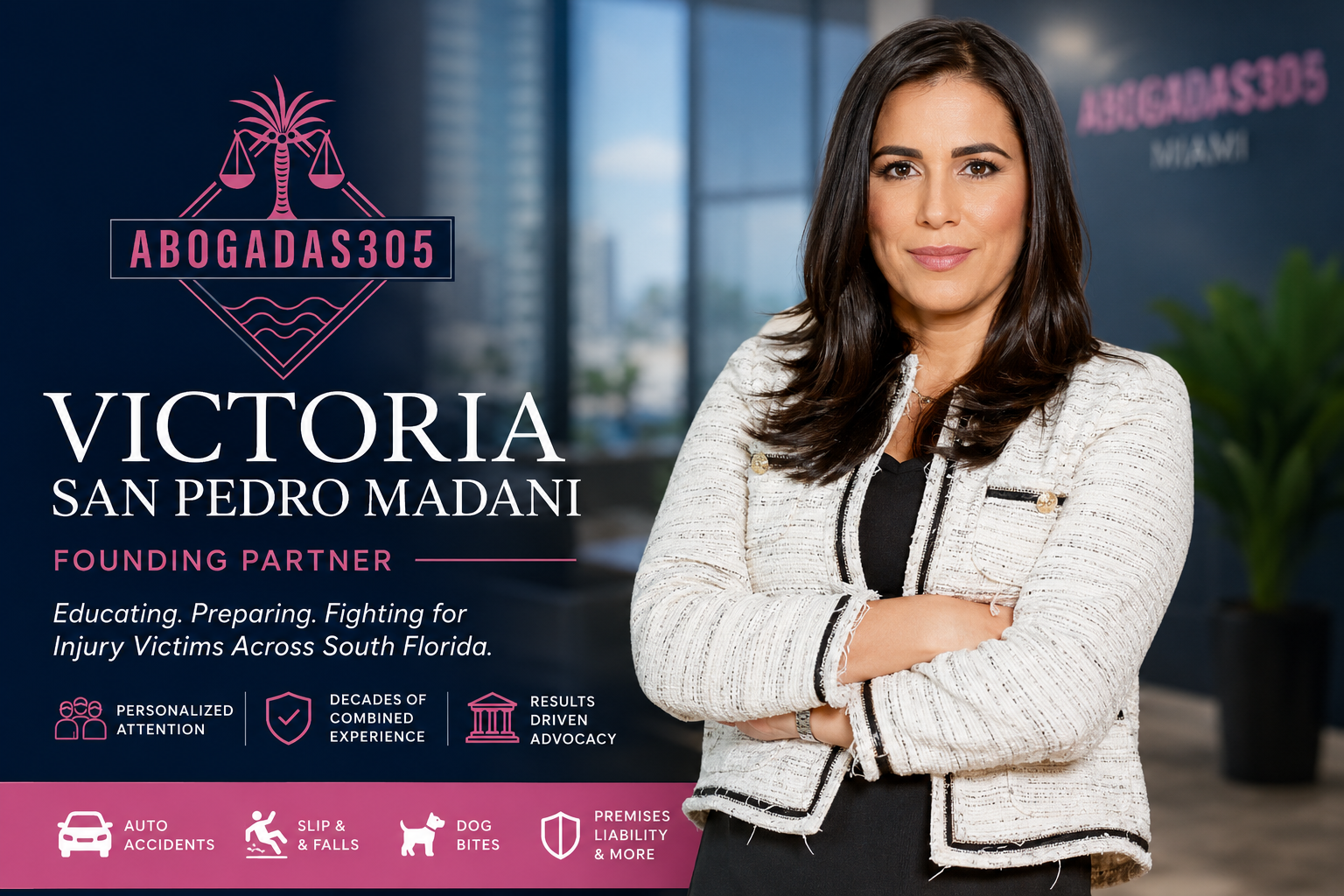
Victoria San Pedro Madani on Protecting Injury Victims

How the Abogadas305 founding partner is helping South Floridians understand personal injury law through education, preparation, and practical legal guidance.

Victoria San Pedro Madani: Why Preparation Before an Accident Can Be Just as Important as Legal Representation After One
DIRECT ANSWER: If you’ve been injured because of someone else’s negligence, protecting your rights begins with preserving evidence, understanding your insurance coverage, and seeking qualified legal guidance before making important decisions with an insurance company.
That advice may sound simple, but according to Victoria “Vicky” San Pedro Madani, Founding Partner of Abogadas305, many people unknowingly jeopardize their potential claims within the first few hours after an accident.
Rather than waiting until someone becomes a client, San Pedro Madani has dedicated part of her professional mission to educating South Florida residents about the legal and practical decisions that often determine whether an injury claim succeeds or struggles.
Knowledge Is One of the Most Valuable Forms of Protection
Personal injury law is often associated with courtroom litigation, settlement negotiations, and insurance disputes. Yet many cases are influenced long before an attorney files a lawsuit.
Evidence disappears.
Witnesses leave.
Surveillance footage is overwritten.
Insurance companies begin investigating immediately.
Understanding these realities, San Pedro Madani recently delivered an educational presentation that walked attendees through common accident scenarios and the legal questions they often raise. Rather than focusing on legal theory, she used relatable, real-world examples to demonstrate how liability is evaluated and why facts matter.
The presentation covered situations many Floridians could encounter, including:

Slip-and-fall incidents in retail stores
Dog bite injuries
Automobile accidents involving uninsured drivers
Restaurant seating failures
Daycare supervision concerns
Property liability questions
Insurance responsibility after motor vehicle crashes

Each example encouraged attendees to think critically about what evidence would be important and what questions should be asked following an accident.
Looking Beyond the Accident
One recurring theme throughout San Pedro Madani’s presentation was that no two injury cases are identical.
A grocery store fall, for example, is not simply about someone slipping.
Questions may include:

How long was the hazard present?
Did employees know about it?
Were inspection procedures followed?
Was surveillance footage preserved?

Similarly, a dog bite case often involves more than determining whether an injury occurred.
Florida law contains specific provisions relating to owner responsibility, warning signs, negligence, and other legal considerations that depend on the facts surrounding each incident.
By helping attendees understand these distinctions, San Pedro Madani emphasized that successful legal representation begins with understanding the facts—not assumptions.
Insurance Is Not Always as Simple as People Believe
Another area that generated significant discussion involved automobile insurance.
Many drivers assume the at-fault driver’s insurance will automatically pay for injuries.
Unfortunately, that is not always the case.
Florida’s insurance system can involve multiple coverages depending on the circumstances, including Personal Injury Protection (PIP), bodily injury liability coverage, uninsured or underinsured motorist coverage, commercial policies, and other factors.
San Pedro Madani encouraged attendees to periodically review their own insurance policies—not after an accident occurs, but beforehand—to better understand the protections they have in place.
Preparing today can help reduce uncertainty tomorrow.
Small Decisions Can Have Significant Consequences
One of the most practical messages throughout the presentation focused on documentation.
Photographs.
Witness information.
Medical evaluation.
Preserving physical evidence.
Understanding documents before signing them.
These seemingly small actions may become important pieces of evidence later if liability is disputed.
For many attendees, the presentation served as a reminder that legal cases are often built on details people never think to preserve until it is too late.
Education Before Representation
San Pedro Madani’s presentation reflected a broader philosophy that education should not begin after someone hires an attorney.
Instead, she believes communities benefit when individuals understand their rights before an unexpected event occurs.
That educational approach aligns naturally with her professional background.
A Miami native, San Pedro Madani graduated with honors from the University of Miami before earning her Juris Doctor, summa cum laude, from Stetson University College of Law. While at Stetson, she competed on nationally recognized Trial Team and Moot Court programs and served as a Senior Editor of the Stetson Law Review.
Before representing injury victims, she spent years representing insurance companies and businesses in casualty defense litigation and later handled thousands of lawsuits and numerous class action matters at an AM Law 200 firm.
That experience provided valuable insight into how claims are investigated, evaluated, negotiated, and defended.
Today, she applies that knowledge exclusively on behalf of individuals injured through the negligence of others.
Advocacy Through Preparation
For San Pedro Madani, legal advocacy extends beyond litigation.
It includes helping people understand what to do immediately after an accident, what questions to ask, what evidence to preserve, and when professional legal guidance may be appropriate.
Her educational presentations reinforce an important principle:
Preparation is often one of the strongest forms of protection available.
Whether discussing premises liability, automobile collisions, negligent security, daycare injuries, dog bites, or defective products, her objective remains consistent—to help people make informed decisions during moments that can quickly become overwhelming.
A Reputation Built on Experience and Education
As Founding Partner of Abogadas305, Victoria San Pedro Madani combines courtroom experience with a commitment to community education.
Her presentations demonstrate that effective legal advocacy begins long before a case reaches trial. By helping individuals understand the practical realities of accidents, insurance claims, and evidence preservation, she equips them with knowledge that can make a meaningful difference when unexpected situations arise.
For South Florida residents, that commitment represents more than legal representation—it reflects an investment in helping the community become better informed, better prepared, and better protected.

About Victoria San Pedro Madani
Victoria “Vicky” San Pedro Madani is the Founding Partner of Abogadas305, a Miami-Dade personal injury law firm representing individuals injured as a result of negligence. Her practice includes automobile accidents, premises liability, slip-and-fall incidents, negligent security, dog bite claims, defective products, and other personal injury matters. She is admitted to practice law in Florida and has extensive litigation experience representing both insurers and injury victims.

An accident can happen in seconds, but the decisions made afterward may affect your health, finances, and legal rights for years to come. If you or someone you care about has been injured due to another person’s negligence, understanding your options early can be important. Speaking with a qualified attorney promptly may help preserve evidence, clarify available legal remedies, and provide guidance based on the specific facts of your situation.
To learn more about Victoria San Pedro Madani and Abogadas305, visit www.abogadas305.com or contact the firm to request additional information about its legal services and educational programs.

Editorial Disclaimer
This article is published by MiamiBusiness.com & MiamiLegalNews.com for informational and educational purposes only and does not constitute legal advice. Every legal matter is unique, and the information presented here should not be relied upon as a substitute for obtaining advice from a qualified attorney regarding a specific legal issue.
The publication of this article does not create an attorney-client relationship with Victoria San Pedro Madani, Abogadas305, MiamiLegalNews.com, or its affiliated publications.
Past results, presentations, or professional experience do not guarantee future outcomes. The outcome of any legal matter depends on its individual facts, applicable law, available evidence, and other circumstances.
Readers should consult directly with a licensed attorney regarding their own legal rights and obligations.

Read More