
Select Page

Communities

Widgetized Area

This panel is active and ready for you to add some widgets via the WP Admin

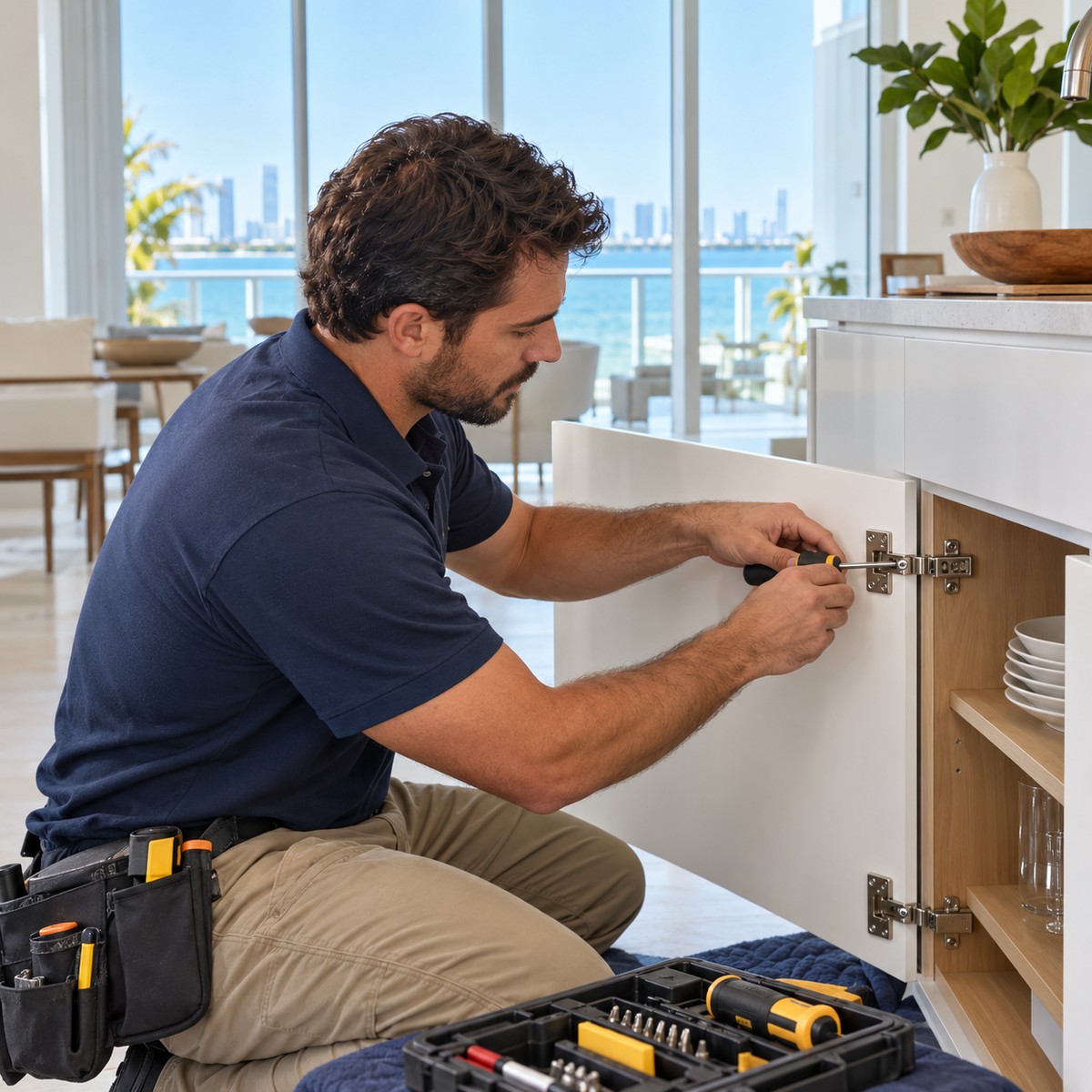
Home repairs in North Bay Village

Home repair work can range from a small fix to a larger project that affects several parts of a property. North Bay Village residents, property owners, and organizations can use this page to find and compare home repair providers in the area. Treat each listing as a starting point: contact the provider directly to confirm the current service area, availability, qualifications, and terms before choosing a service.

Home repairs services to explore

Depending on the provider, providers may handle general maintenance, carpentry, fixture replacement, drywall, painting, installation, or other repair requests. Some businesses focus on one specialty, while others offer several services through a single office. Ask which work is performed by the provider, what is handled by a partner, and whether the service is available for your particular project or situation. A clear description of the work helps you compare providers on similar terms.

How to compare home repairs providers

Start with the need, location, timing, and budget you have in mind. Request a written scope or explanation of what is included, how long the work may take, and what could affect the final cost. Compare experience with similar requests, communication practices, scheduling, payment terms, and the process for follow-up. If credentials, permits, insurance, or a written agreement apply to the service, ask for current details and verify them with the appropriate source.

Questions to ask before you decide

Ask what is included in the estimate, whether a site visit is needed, who supplies materials, how changes are approved, and what documentation or follow-up is provided. Review the answer alongside the provider’s listing and written terms. Ask for clarification if a service description is broad, a quote leaves out important work, or a timeline is uncertain. Confirm how to reach the business after the initial appointment and what steps are available if the service needs correction or further attention.

Find home repairs in North Bay Village

Browse the North Bay Village business directory to identify local listings and request current information. Compare providers using the same criteria so differences in scope, availability, and price are easier to understand. A directory listing is not an endorsement, and details should be verified directly with each business.

For municipal contacts and community information, visit the official North Bay Village website. Contact providers directly to confirm the details that matter for your needs and keep written estimates, policies, and agreements for reference.

HKS Elevates Miami Healthcare Studio Practice Leader

A global design firm deepens its bet on South Florida’s hospital and clinical construction pipeline.
TL:DR: HKS, the international architecture firm known for designing hospitals and medical campuses worldwide, has promoted a new healthcare studio practice leader in its Miami office, according to Healthcare Design Magazine. The move signals continued investment in South Florida’s healthcare building market, where hospital systems, specialty clinics and outpatient operators are expanding across Miami-Dade. For local healthcare executives, developers and medical practice owners, it means more senior design talent is being stationed close to home.
The short version is simple. HKS has elevated a leader to head healthcare studio practice from its Miami office, a decision that reflects where the work is. South Florida has become one of the more active healthcare construction markets in the country, and firms that design hospitals tend to put their senior people where the projects are. Leadership placed in Miami rather than managed remotely from a national headquarters is a quiet but meaningful vote of confidence in this region.
Why does it matter to Miami’s healthcare community? Because design leadership shapes outcomes long before a building opens. Patient flow, infection control, operating room efficiency, emergency department throughput and staff retention all begin with floor plans. Hospital administrators across Miami-Dade are managing aging facilities, rising outpatient volume and a competitive labor market, and the firms they hire to plan new space increasingly need local fluency. Hurricane resilience standards, humidity, coastal construction codes and Miami’s distinctly multilingual, multigenerational patient base are not abstractions here. They are design inputs.
The ripple effect reaches well beyond architecture. When a global firm strengthens its healthcare bench locally, the contractors, engineers, medical equipment planners, real estate advisors and healthcare attorneys who orbit those projects usually see more activity as well. Medical practice owners evaluating build-outs in Doral, Kendall, Aventura or along the Baptist and Jackson corridors gain access to a deeper pool of specialized expertise without importing it from Dallas or New York.
“Talent follows opportunity, and senior healthcare design leadership choosing Miami tells you exactly how much construction this market expects over the next decade,” said Wilson Alvarez, a Miami business consultant and editor at MiamiBusiness.com. “For operators planning facilities, that proximity is an asset worth using.”
For Miami healthcare professionals, the practical takeaway is to treat facility planning as a strategic conversation rather than a construction line item. Engage design partners early, ask how their teams handle South Florida code and climate requirements, and look closely at whether decision makers are based here or simply visiting. The firms investing locally are often the ones best positioned to deliver on schedule.
Miami’s healthcare sector continues to mature, and the professional infrastructure supporting it is maturing alongside. A promotion inside an architecture firm may not make headlines across the country, but in this market it reads as a forward indicator.
Follow the people, and you can usually see the pipeline.
Visit MiamiHealthcareNews.com for more healthcare business news in Miami.
Source: Healthcare Design Magazine

This article was AI-generated from public sources & humanized (occasionally edits). MiamiBusiness.com is committed to transparent AI journalism. Please verify with original outlets.

Read More

Miami Celebrity Buzz Keeps Entertainment Media Busy

Why local celebrity columns remain a quiet engine of South Florida’s entertainment economy
TL:DR: The Miami Herald’s latest celebrity roundup spotlights a change within the Trump family and a health scare involving a local television anchor. The column is a reminder that Miami’s entertainment press operates year round, not just during festival season, and that attention paid to familiar local faces continues to drive traffic, sponsorship value, and audience loyalty across South Florida media.
So what actually happened? The Miami Herald published another installment of its celebrity buzz column, covering a change in the Trump family and a scare involving a television anchor familiar to local viewers. The specifics belong to the original reporting, but the broader signal is worth noting for anyone working in Miami entertainment. Celebrity coverage in this market is not an occasional novelty. It is a steady, bankable content category that keeps readers returning between red carpet moments.

“Miami treats its public figures like neighbors, and that familiarity is the real asset,” said Wilson Alvarez, a Miami business consultant and editor. “Brands and media companies that understand this market know audiences here follow people, not just properties.”

Why does it matter commercially? Entertainment media in Miami-Dade sits at an unusual intersection. The county hosts national film and music production, a dense broadcast market serving English and Spanish audiences, and a population that genuinely tracks the lives of local anchors, athletes, musicians, and business personalities. That overlap gives publishers a dependable audience and gives advertisers a predictable place to spend. Television stations in Miami build their ratings on trust between viewers and on-air talent, so news about an anchor’s health travels quickly and generates real engagement.
Who does it affect? Producers, publicists, talent agencies, event promoters, and hospitality operators all read these columns for the same reason. They reveal who is visible, who is moving, and where public attention is pointed. A single mention can shape bookings for a venue in Wynwood, influence casting conversations, or help a brand decide which local personality to approach for a campaign. In a market where personal relationships often close deals faster than media buys, visibility carries measurable weight.
What should Miami businesses take from this? Treat entertainment coverage as market intelligence rather than gossip. Follow the outlets that consistently track local figures, understand which personalities hold genuine community goodwill, and remember that audiences respond to authenticity far more than to polish. For agencies and small businesses alike, aligning with trusted local faces remains one of the most cost effective ways to build recognition in Miami-Dade.
Miami’s entertainment sector grows because the city keeps producing people worth watching. Columns like this one simply keep score.
For ongoing coverage of Miami entertainment, media, and the business behind the spotlight, visit MiamiEntertainmentNews.com and MiamiBusiness.com.
Source: Miami Herald

This article was AI-generated from public sources & humanized (occasionally edits). MiamiBusiness.com is committed to transparent AI journalism. Please verify with original outlets.

Read More

Miami Schools Push Voters to Renew Education Funding

M-DCPS and Broward leaders make the case for renewing local school funding measures ahead of the vote.
Direct answer: Miami-Dade and Broward school leaders are asking voters to renew local education funding measures that support school operations and staffing.
TL:DR: Officials from Miami-Dade County Public Schools and Broward County Public Schools are urging voters to approve renewals of critical education funding measures. The referendums support school operations across South Florida’s two largest districts, which together educate hundreds of thousands of students. For Miami businesses, education professionals, and families, the outcome shapes teacher retention, school stability, and the long-term talent pipeline feeding the regional economy.
Here is the short answer. Leaders at Miami-Dade County Public Schools and Broward County Public Schools have stepped forward to ask voters to renew existing education funding measures, arguing that the dollars are essential to keeping schools fully staffed and operating at standard. These are renewals rather than new taxes, and district officials have framed them as a continuation of support that voters already approved in prior cycles.
The timing matters. Public school funding in Florida flows through a layered system of state allocations and locally approved measures, and districts have leaned on voter-approved referendums to close gaps in areas such as staffing and school operations. Miami-Dade runs one of the largest public school systems in the country, while Broward sits close behind. When those two districts speak in unison, the message carries weight across South Florida.
For the business community, this is not a sideline issue. Education is one of Miami-Dade’s largest employment sectors, and the ripple effects reach well beyond the classroom. School stability influences where families choose to live, which influences housing demand, retail activity, and the ability of local employers to recruit talent from outside the region. Executives relocating teams to Brickell, Doral, or Aventura routinely ask about schools before they ask about office space.
There is also a workforce dimension. South Florida’s growth in technology, healthcare, logistics, and financial services depends on a steady supply of prepared graduates. Career academies, dual enrollment programs, and magnet pathways across Miami-Dade feed directly into Miami Dade College, FIU, and local employers. Funding continuity helps protect those programs from disruption.
“Miami’s business community has always understood that classrooms are infrastructure,” said Wilson Alvarez, Editor and Miami Business Consultant. “When school funding holds steady, hiring gets easier, families stay put, and the entire regional economy benefits from the stability.”
Education professionals should watch the outcome closely. Private tutoring centers, charter operators, EdTech vendors, school construction contractors, and staffing agencies all operate downstream of district budgets. A renewal signals predictable procurement cycles. Uncertainty tends to slow decisions across that entire ecosystem.
The Bottom Line
Voters will decide, as they should. What is clear is that both districts are treating these renewals as foundational rather than optional, and South Florida employers have reason to pay attention. Education funding is one of the quieter forces shaping Miami’s talent market, and quiet forces tend to be the ones that matter most over a decade.
Miami business owners, educators, and parents should review the official district materials and local election information before casting their ballots.
Visit MiamiEducationNews.com for more education news in Miami.
Source: WSVN

This article was AI-generated from public sources & humanized (occasionally edits). MiamiBusiness.com is committed to transparent AI journalism. Please verify with original outlets.

Read More

Miami Beach Fall Renews Focus on Site Safety Standards

Miami Beach Fall Renews Focus on Site Safety Standards
Direct answer: Three construction workers were hospitalized after a fall at a Miami Beach job site, underscoring the need for fall protection on South Florida projects.
Three construction workers were hospitalized after a fall in Miami Beach, placing fall protection back at the center of the industry conversation.
TL:DR: Three construction workers were taken to the hospital following a fall at a Miami Beach job site, according to CBS News. No fatalities were reported. For contractors, developers, and safety managers across Miami-Dade County, the incident is a timely reminder that fall protection remains the single most important safeguard on any South Florida project, and that strong safety programs protect both people and project timelines.
Three construction workers in Miami Beach were hospitalized after a fall at a job site, as reported by CBS News. The workers were transported for treatment, and no deaths were reported. For the thousands of professionals who make their living on Miami-Dade construction sites, the takeaway is straightforward. Falls remain the leading hazard in the trade, and the quality of a company’s safety culture is usually decided long before anyone steps onto a platform.
Miami Beach is one of the most active building environments in the region, with condominium renovations, hotel repositionings, and coastal resiliency work moving simultaneously across a narrow barrier island. Tight footprints, elevated work, and compressed schedules raise the stakes on every lift, scaffold, and deck. Experienced general contractors here know that the barrier island premium is not only measured in logistics costs, but in the discipline required to keep crews protected while working at height.

“In Miami construction, safety is not an expense line. It is the operating system that keeps a project profitable, insurable, and on schedule,” said Wilson Alvarez, Editor and Miami Business Consultant.

The business implications are real. Federal workplace safety rules require fall protection for most elevated work, and South Florida contractors already operate under some of the strictest wind and structural standards in the country. A single incident can trigger inspections, pause production, and influence insurance pricing on future bids. Carriers and owners increasingly evaluate a contractor’s safety record with the same seriousness they apply to bonding capacity and past performance.
For subcontractors, the lesson is practical rather than theoretical. Daily toolbox talks, documented harness and anchor point inspections, competent-person oversight on scaffolds, and clear rescue plans are the fundamentals that separate well-run sites from exposed ones. Developers can reinforce that standard by writing safety performance into contracts and prequalification criteria, which quietly raises the bar for the entire Miami market.
There is also a workforce dimension. South Florida’s skilled trades remain in demand, and companies with credible safety reputations tend to retain better crews. In a labor market this competitive, protection and recruitment are connected.
Conclusion
The Miami Beach incident ended without loss of life, and that outcome deserves acknowledgment. It also serves as a clear signal to the region’s builders. As Miami-Dade continues one of the busiest construction cycles in its history, the firms that treat fall protection as non-negotiable will be the ones that finish strong, keep their people whole, and win the next contract.
For more Miami construction industry coverage, project updates, and safety insight, visit MiamiConstructionNews.com for more news in Miami.
Source: CBS News

This article was AI-generated from public sources & humanized (occasionally edits). MiamiBusiness.com is committed to transparent AI journalism. Please verify with original outlets.

Read More

Miami Transit Riders Could Save Nearly $14K a Year

A new report puts a dollar figure on leaving the car at home, and Miami employers should be paying attention.
TL:DR: A new transit savings report cited by The Business Journals finds that Miami residents who ride public transportation instead of driving could save close to $14,000 annually. The figure reflects the combined cost of car payments, insurance, fuel, maintenance, and parking across Miami-Dade County. For employers, commuters, and transportation professionals, it reframes transit as a financial decision rather than a lifestyle one.
The headline answer is straightforward. According to the report highlighted by The Business Journals, a Miami household that swaps one car for a transit pass stands to keep nearly $14,000 in its pocket each year. That is not a rounding error in a city where housing costs dominate every kitchen table conversation. It is closer to a raise, and it arrives without a performance review.
What makes the number land is the structure of Miami itself. The Metrorail spine, the Metromover loop downtown, and the Metrobus network carry workers between Brickell, the Civic Center, Hialeah, and Kendall every weekday. Parking in the urban core remains one of the quietest expenses on a professional’s balance sheet, while insurance premiums in South Florida have long ranked among the steepest in the nation. Remove the vehicle from that equation and the math moves quickly.
For the transportation sector, the implications run deeper than individual budgets. Ridership figures shape funding conversations, route planning, and the pace of projects along the county’s rapid transit corridors. Operators, engineering firms, mobility startups, and logistics companies all read the same signal, which is that cost is becoming a persuasive argument for transit in a market where it once was not. Transit-oriented development near station platforms gains leverage when the savings case is this specific.
Employers should read the report as a recruiting document. Commuter benefit programs, transit subsidies, and office locations near Metrorail stops carry measurable value to employees who are watching every line item. A company positioned within walking distance of a station is effectively offering compensation that costs it very little to provide.
“When transit stops being a convenience argument and starts being a savings argument, Miami businesses need to rethink where they put their offices and how they structure commuter benefits,” said Wilson Alvarez, Editor and Miami Business Consultant.
Conclusion
Miami has spent decades building a transportation network that competes with the car. A savings figure approaching $14,000 suggests the competition is finally getting interesting. Professionals, developers, and transit operators across Miami-Dade now have a number they can plan around.
Visit MiamiTransportationNews.com for more transportation news in Miami.
Source: The Business Journals

This article was AI-generated from public sources & humanized (occasionally edits). MiamiBusiness.com is committed to transparent AI journalism. Please verify with original outlets.

Read More