
Select Page

Communities

Widgetized Area

This panel is active and ready for you to add some widgets via the WP Admin

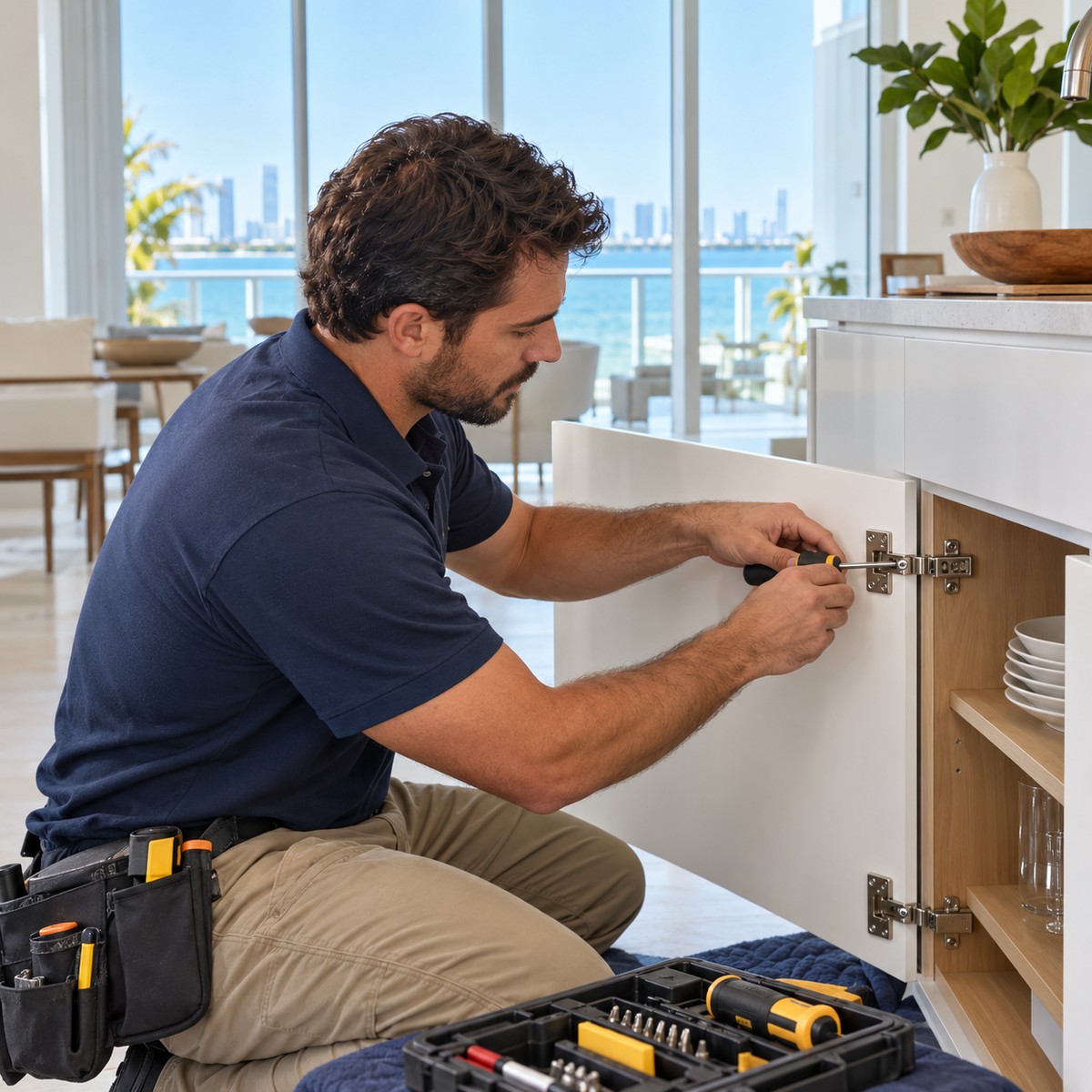
Home repairs in North Bay Village

Home repair work can range from a small fix to a larger project that affects several parts of a property. North Bay Village residents, property owners, and organizations can use this page to find and compare home repair providers in the area. Treat each listing as a starting point: contact the provider directly to confirm the current service area, availability, qualifications, and terms before choosing a service.

Home repairs services to explore

Depending on the provider, providers may handle general maintenance, carpentry, fixture replacement, drywall, painting, installation, or other repair requests. Some businesses focus on one specialty, while others offer several services through a single office. Ask which work is performed by the provider, what is handled by a partner, and whether the service is available for your particular project or situation. A clear description of the work helps you compare providers on similar terms.

How to compare home repairs providers

Start with the need, location, timing, and budget you have in mind. Request a written scope or explanation of what is included, how long the work may take, and what could affect the final cost. Compare experience with similar requests, communication practices, scheduling, payment terms, and the process for follow-up. If credentials, permits, insurance, or a written agreement apply to the service, ask for current details and verify them with the appropriate source.

Questions to ask before you decide

Ask what is included in the estimate, whether a site visit is needed, who supplies materials, how changes are approved, and what documentation or follow-up is provided. Review the answer alongside the provider’s listing and written terms. Ask for clarification if a service description is broad, a quote leaves out important work, or a timeline is uncertain. Confirm how to reach the business after the initial appointment and what steps are available if the service needs correction or further attention.

Find home repairs in North Bay Village

Browse the North Bay Village business directory to identify local listings and request current information. Compare providers using the same criteria so differences in scope, availability, and price are easier to understand. A directory listing is not an endorsement, and details should be verified directly with each business.

For municipal contacts and community information, visit the official North Bay Village website. Contact providers directly to confirm the details that matter for your needs and keep written estimates, policies, and agreements for reference.

OpenEvidence Hits $15B Valuation, Eyes New Frontiers

Direct answer: Medical AI company OpenEvidence reached a reported $15 billion valuation as it expanded beyond clinical search, highlighting Miami’s growing health technology sector.
Miami’s healthcare technology sector just received another signal that the region is no longer a spectator in the AI economy. OpenEvidence, the medical information platform with Miami ties, has reached a $15 billion valuation as the company expands its ambitions well beyond clinical search. For physicians, hospital administrators, and healthcare investors across South Florida, the milestone marks a meaningful shift in how medical knowledge gets delivered at the point of care.
TL:DR: OpenEvidence, a medical AI platform covered by Refresh Miami, has reached a $15 billion valuation while broadening its ambitions past medical search. The news matters to Miami healthcare professionals because it reinforces South Florida’s growing role in health technology, and it points to a future where clinical decision support tools become standard equipment in local practices, hospital systems, and specialty clinics.
What Happened, and Why Miami Should Pay Attention
OpenEvidence built its reputation by helping clinicians find trustworthy medical answers quickly, pulling from peer-reviewed literature rather than the open internet. Reaching a $15 billion valuation puts the company in rare company, and the reported expansion of its roadmap suggests the team sees a larger opportunity in supporting the full arc of clinical work rather than a single search box.
That story lands differently in Miami. The region has spent the past several years assembling the ingredients of a genuine health technology corridor, with a deep hospital network, a growing venture community, and a physician population that skews entrepreneurial. Companies operating at this scale tend to attract talent, capital, and imitators, all of which tend to benefit the local ecosystem.
The Practical Read for Healthcare Professionals
For Miami-Dade practices, the near-term implication is competitive rather than theoretical. Clinicians who adopt reliable evidence tools early often gain time back, and time remains the scarcest resource in any busy South Florida clinic. Administrators, meanwhile, should be thinking about how these platforms fit alongside existing electronic health record systems, documentation workflows, and compliance obligations.
Investors and founders should read the valuation as a market temperature check. Capital continues to move toward healthcare AI companies that solve a narrow problem exceptionally well before expanding outward, a pattern worth studying for anyone building in Miami’s health tech scene.
“Miami physicians have always been resourceful, and the tools finally match the ambition,” said Wilson Alvarez, Editor and Miami Business Consultant. “When a company reaches this scale with a product built for clinicians, it tells you where the next decade of healthcare business is heading.”
Conclusion
South Florida’s healthcare economy has long been defined by its hospitals and its patients. Increasingly, it is also being defined by the software that connects them. OpenEvidence’s milestone is one more reason for Miami professionals to treat healthcare technology as a business strategy rather than a side conversation.
Visit MiamiHealthcareNews.com for more healthcare news in Miami.
Source: Refresh Miami

This article was AI-generated from public sources & humanized (occasionally edits). MiamiBusiness.com is committed to transparent AI journalism. Please verify with original outlets.

Read More

Perez Hilton Returns to Miami as Celebrity Media Shifts

Perez Hilton Returns to Miami as Celebrity Media Shifts
Direct answer: Media personality Perez Hilton is back in Miami, a move that adds to South Florida’s visibility for entertainment production, public relations and creator businesses.
The blogger’s move back to South Florida underscores Miami’s growing pull on entertainment personalities and the businesses that follow them.
TL:DR: The Miami Herald’s latest celebrity roundup reports that blogger and media personality Perez Hilton is back in Miami, alongside other national entertainment headlines including a missing-person story involving Jared and a star being fired. For Miami’s entertainment economy, the return of a recognizable digital media figure matters because personalities attract production, sponsorship, and audience attention to South Florida. Local venues, publicists, studios, and creator-focused businesses stand to benefit.
Perez Hilton is back in Miami, according to a celebrity news roundup published by the Miami Herald, placing one of the internet’s longest-running entertainment commentators back in a market he has orbited for years. The headline sits alongside other national celebrity items in the Herald’s weekly digest, but the Miami detail is the one with local business weight. When a media personality with a built-in audience relocates, the attention tends to travel with them, and that attention has commercial value in a city already competing for entertainment dollars.

“Miami no longer waits for entertainment to visit. It hosts it, monetizes it, and builds businesses around it,” said Wilson Alvarez, Editor and Miami Business Consultant. “Every personality who settles here brings a small economy with them.”

The practical effect is easy to trace. Personalities need studios, editors, photographers, publicists, legal counsel, and venues willing to host appearances. Miami-Dade already supports a deep bench of those service providers, built over years of music production, Spanish-language television, fashion week activity, and a creator class that migrated south during the last half-decade. A returning name adds another node to that network rather than replacing anything in it.
There is also a content supply argument. Local entertainment outlets, podcasts, and event brands benefit when recognizable figures live in the market, because bookings become easier and coverage becomes cheaper to produce. That lowers the cost of programming for small media businesses operating on thin margins, while giving sponsors a reason to buy local rather than national placements.
Miami professionals watching this space should read the Herald roundup as a signal rather than a single story. Celebrity movement is one of the more reliable indicators of where entertainment infrastructure is heading, and South Florida has been absorbing that movement steadily. For agencies, venue operators, hospitality groups, and production companies, the opportunity lies in being ready when a personality needs a stage, a studio, or a partner.
Conclusion
One blogger’s return will not reshape Miami’s entertainment sector on its own. Taken together with years of similar arrivals, though, it reinforces a trend that local operators have already been building around. Miami has become a base, not just a backdrop.
Visit MiamiEntertainmentNews.com for more entertainment industry news in Miami, and follow MiamiBusiness.com for coverage across South Florida’s business ecosystem.
Source: Miami Herald

This article was AI-generated from public sources & humanized (occasionally edits). MiamiBusiness.com is committed to transparent AI journalism. Please verify with original outlets.

Read More

Young Musicians Unite Reaches 20,000 Miami Students

Free music education expands across Miami-Dade classrooms, and the local economy is paying attention.
Direct answer: Miami nonprofit Young Musicians Unite provides free music education to more than 20,000 students across Miami-Dade County.
TL:DR: Young Musicians Unite, a Miami-based nonprofit, now delivers free music education to more than 20,000 students across Miami-Dade County, according to CBS News. The organization places instructors in schools and community programs at no cost to families, filling gaps where arts funding runs thin. For Miami educators, administrators, and the businesses that support them, the story is a case study in how philanthropy, workforce development, and classroom outcomes intersect.
Young Musicians Unite has grown from a small local effort into one of Miami’s most visible arts education providers, reaching over 20,000 students with free instruction. The model is straightforward. The organization brings trained music instructors directly into schools and after-school settings, removing the cost barrier that keeps many families from private lessons. In a county where household budgets are stretched by housing and insurance costs, that distinction matters more than it might elsewhere.
For school leaders, the appeal is practical. Music programs are frequently the first line item reviewed when budgets tighten, yet they consistently support attendance, engagement, and student retention. A partner that supplies instruction at no charge lets administrators preserve arts access without redirecting funds from core academics. That is an operational advantage, not just a feel-good headline.
“Miami’s education sector has learned that the strongest programs are rarely funded by a single source,” said Wilson Alvarez, Editor and Miami Business Consultant. “When nonprofits, schools, and private sponsors share the load, the results last longer than any one grant cycle.”
Why Miami Businesses Should Care
Miami’s creative economy is not a side note. Music, film, live events, and production employ thousands across South Florida, and the region continues to attract studios, festivals, and touring infrastructure. Programs that introduce students to instruments, ensemble work, and performance discipline are effectively building the front end of that talent pipeline. Companies looking a decade ahead at local hiring should recognize the connection.
There is also a corporate giving angle. Sponsors, foundations, and family offices across Miami-Dade regularly seek education initiatives with measurable reach, and a program serving more than 20,000 students offers exactly that kind of documented footprint. For marketing and CSR teams, arts education delivers community visibility without the reputational complexity of more contested causes.
Parents and educators, meanwhile, get a resource that costs nothing to access. That accessibility is what allows the program to scale across neighborhoods with very different income profiles, from Homestead to Liberty City to Hialeah.
The Takeaway
Miami’s education landscape increasingly depends on partnerships that blend public schools with private and nonprofit capacity. Young Musicians Unite demonstrates what that looks like at scale. For business leaders, the lesson is that investing in classroom enrichment is not charity alone. It is early-stage workforce development in a city whose creative industries keep expanding.
Source: CBS News
For more education news and analysis across Miami-Dade County, visit MiamiEducationNews.com.

This article was AI-generated from public sources & humanized (occasionally edits). MiamiBusiness.com is committed to transparent AI journalism. Please verify with original outlets.

Read More

Miami Crane Collapse Renews Focus on Site Safety

Miami Crane Collapse Renews Focus on Site Safety
Four workers were hospitalized after a crane collapsed at a Miami construction site, and the response is already shaping conversations across the industry.
TL:DR:
Officials confirmed that four people were taken to the hospital after a crane collapsed at a Miami construction site. Emergency crews responded quickly, and the incident has put crane operations, lift planning, and site safety culture back at the center of discussion for contractors across Miami-Dade County. For builders, developers, insurers, and safety officers, it is a timely reminder that vertical construction in South Florida depends on disciplined equipment protocols.
Here is what happened. Officials say a crane collapsed at a Miami construction site, and four people were hospitalized as a result. First responders reached the scene and transported the injured workers for care, which is the outcome every safety plan is built to make possible. For an industry that lifts steel and concrete above busy urban streets every day, the speed of that response matters as much as the engineering that precedes it.
Why does it matter? Miami builds upward. Cranes are the visible signature of that growth, rising over Brickell, Edgewater, Wynwood, Doral, and the corridors feeding Miami International Airport. When a lift goes wrong, the effects extend beyond a single jobsite. Schedules shift, insurers ask harder questions, and neighboring property owners pay closer attention to what is happening overhead. Contractors who already document rigging inspections, wind thresholds, and operator certifications tend to move through those reviews with far less friction.

“Miami’s skyline is a promise the industry makes every morning,” said Wilson Alvarez, Editor and Miami Business Consultant. “The firms that keep that promise are the ones treating crane safety as a daily discipline rather than a quarterly checklist.”

Who does this affect? General contractors, crane and rigging subcontractors, structural engineers, site superintendents, safety consultants, surety and insurance professionals, and the developers financing Miami’s next wave of towers. Property managers near active builds have a stake as well, since crane operations often involve street closures, pedestrian protection, and coordination with Miami-Dade County permitting.
What should Miami businesses know? Three practical points stand out. First, pre-lift planning and load charts deserve real review time, not a signature. Second, South Florida weather introduces variables that inland markets rarely face, so wind monitoring and storm-season tie-down procedures should be written, trained, and rehearsed. Third, incident response plans work best when crews know them cold, including site access routes for emergency vehicles in dense urban blocks.
Miami’s construction sector has grown into one of the most sophisticated in the country, supported by experienced trade partners and a steady development pipeline. Moments like this one tend to accelerate the adoption of better equipment inspections, clearer communication between operators and signal persons, and stronger documentation across the board.
Conclusion: Four workers are receiving care, responders performed their jobs, and the wider industry now has a reason to revisit its own lift protocols. That is how mature markets improve. For Miami contractors, the takeaway is simple. Build fast, but build with process.
Stay informed. Visit MiamiConstructionNews.com for more construction news in Miami, and follow the broader market at MiamiBusiness.com.
Source: ABC News – Breaking News, Latest News and Videos

This article was AI-generated from public sources & humanized (occasionally edits). MiamiBusiness.com is committed to transparent AI journalism. Please verify with original outlets.

Read More

Orange County Transit Plan Offers Lessons for Miami

Central Florida’s STAR proposal arrives as Miami-Dade continues shaping its own transit future
Direct answer: Orange County is considering the STAR plan to improve transit in the Orlando region, giving Miami planners and businesses another Florida model to watch.
TL:DR: Orange County officials are weighing a transit improvement plan known as STAR, aimed at strengthening public transportation across the Orlando region, according to Spectrum News 13. For Miami transportation professionals, the move is worth watching. When one major Florida metro commits to expanding transit capacity, the ripple effects reach contractors, fleet operators, logistics planners, and commercial property owners throughout South Florida.
Orange County is considering the STAR plan to improve its public transit system, a decision that places Central Florida alongside Miami-Dade in the broader statewide conversation about how Floridians move. The short answer for Miami businesses: Florida’s two largest metro regions are now pursuing transit modernization on parallel tracks, and that shared momentum tends to attract vendors, engineering talent, and state attention to both markets at once.
Miami professionals understand the stakes better than most. Transit conversations here have never been abstract. They shape where offices lease space, where warehouses locate, and how employers in Doral, Brickell, and Miami Gardens plan shifts around commute realities. When Orange County debates service frequency and route coverage, Miami-Dade planners and private operators are watching the same fundamentals, because the underlying problem is identical. Florida grew faster than its road capacity, and transit is the pressure valve.
“Transit decisions are business decisions,” said Wilson Alvarez, Editor at MiamiBusiness.com and a Miami business consultant. “When another Florida county invests in moving people more efficiently, it raises the bar for everyone competing for the same employers and the same workforce.”
Why Miami Companies Should Pay Attention
The practical effects are straightforward. Engineering firms, transit consultants, bus manufacturers, and fare technology providers often bid across multiple Florida counties. A serious plan in Orange County expands the pipeline of work available to South Florida firms with relevant experience. Miami’s transportation sector has deep expertise in multimodal planning, port and airport connectivity, and dense urban corridors, all of which travel well.
There is also a competitive dimension. Miami-Dade markets itself as a global gateway, and reliable transit is part of that pitch to corporate relocations. Central Florida knows it too. Regions that solve mobility attract talent, and talent attracts capital.
For commercial real estate professionals, the lesson is familiar. Transit access consistently influences property performance along corridors served by frequent, dependable routes. Investors in Miami’s transit-oriented developments have already priced that in.
Conclusion
Orange County’s deliberation over the STAR plan is a Central Florida story with statewide meaning. Florida’s mobility challenge is shared, and so are the opportunities for the firms that solve it. Miami’s transportation community should treat every serious transit proposal in the state as both a benchmark and a business signal.
For more Miami transportation news, visit MiamiTransportationNews.com and stay connected with MiamiBusiness.com.
Source: Spectrum News 13

This article was AI-generated from public sources & humanized (occasionally edits). MiamiBusiness.com is committed to transparent AI journalism. Please verify with original outlets.

Read More