Select Page

Communities

Widgetized Area

This panel is active and ready for you to add some widgets via the WP Admin

Home repairs in North Bay Village

Home repair work can range from a small fix to a larger project that affects several parts of a property. North Bay Village residents, property owners, and organizations can use this page to find and compare home repair providers in the area. Treat each listing as a starting point: contact the provider directly to confirm the current service area, availability, qualifications, and terms before choosing a service.

Home repairs services to explore

Depending on the provider, providers may handle general maintenance, carpentry, fixture replacement, drywall, painting, installation, or other repair requests. Some businesses focus on one specialty, while others offer several services through a single office. Ask which work is performed by the provider, what is handled by a partner, and whether the service is available for your particular project or situation. A clear description of the work helps you compare providers on similar terms.

How to compare home repairs providers

Start with the need, location, timing, and budget you have in mind. Request a written scope or explanation of what is included, how long the work may take, and what could affect the final cost. Compare experience with similar requests, communication practices, scheduling, payment terms, and the process for follow-up. If credentials, permits, insurance, or a written agreement apply to the service, ask for current details and verify them with the appropriate source.

Questions to ask before you decide

Ask what is included in the estimate, whether a site visit is needed, who supplies materials, how changes are approved, and what documentation or follow-up is provided. Review the answer alongside the provider’s listing and written terms. Ask for clarification if a service description is broad, a quote leaves out important work, or a timeline is uncertain. Confirm how to reach the business after the initial appointment and what steps are available if the service needs correction or further attention.

Find home repairs in North Bay Village

Browse the North Bay Village business directory to identify local listings and request current information. Compare providers using the same criteria so differences in scope, availability, and price are easier to understand. A directory listing is not an endorsement, and details should be verified directly with each business.

For municipal contacts and community information, visit the official North Bay Village website. Contact providers directly to confirm the details that matter for your needs and keep written estimates, policies, and agreements for reference.
Miami Hospitality Industry Report-May 2026

Miami Hospitality Delivers Another Strong Month as Formula 1, Business Travel and Restaurant Investment Drive Demand
May 2026 was a pivotal month for Miami’s hospitality industry.
The winter tourism season was firmly behind the market, but demand remained elevated as Miami hosted the Formula 1 Crypto.com Miami Grand Prix, Consensus Miami and a busy calendar of business, entertainment and cultural activity.
Hotels continued to command some of the highest room rates in the country, while Miami’s restaurant scene continued to attract new international brands and local operators.
At the same time, the industry entered a more complicated economic environment. Food prices, energy costs and transportation expenses remained elevated, while hotel operators were preparing for the arrival of the FIFA World Cup in June.
The result was a month that demonstrated both the strength of Miami’s hospitality economy and the challenges that come with operating in one of the country’s most expensive tourism markets.

May 2026 By the Numbers

Indicator
May 2026 / 2026 YTD

Miami-Dade hotel occupancy, YTD through May
Nearly 80%

Miami-Dade ADR, YTD through May
$293.67

ADR change vs. prior year
+11.2%

Miami hotel inventory
Approximately 64,700 rooms

Miami Grand Prix attendance
275,000+ spectators

Consensus Miami attendance
20,000+ attendees

New Miami restaurants tracked
11

U.S. food-away-from-home inflation
+3.5% YoY

U.S. energy inflation
+23.5% YoY

Through May, Miami-Dade’s hotel market was running at nearly 80% occupancy with an average daily rate of $293.67, an 11.2% increase from the previous year. That placed Miami among the strongest-performing major U.S. hotel markets on both occupancy and pricing.
Miami’s hotel inventory was approximately 64,700 rooms at the beginning of 2026, according to industry inventory data.

Formula 1 Turns Miami Into a Global Hospitality Stage
The biggest hospitality story of the first week of May was the 2026 Miami Grand Prix.
The fifth edition of the Formula 1 race took place May 1–3 at the Miami International Autodrome at Hard Rock Stadium. The weekend included Formula 1, Formula 2, the Sprint, qualifying and the Grand Prix itself.
More than 275,000 spectators attended the three-day event, according to BizBash’s coverage of the race weekend.
For Miami’s hospitality industry, the importance of Formula 1 extends far beyond the racetrack.
Visitors generated potential demand for:

Hotels
Restaurants
Bars
Nightclubs
Transportation
Private aviation
Luxury experiences
Retail
Event production
Corporate hospitality

The race also generated a concentrated pricing event for hotels.
For the week ending May 2, Miami posted an average daily rate of $335.90, representing a 16.6% year-over-year increase, the largest ADR gain among the major U.S. markets tracked by CoStar that week.
During the following week, May 3–9, Miami again recorded the country’s largest ADR gain among the Top 25 markets, with ADR reaching $267.40, up 17.8%. RevPAR increased 22.7% to $202.29. CoStar specifically attributed the performance to the Miami Grand Prix and Consensus conference.
These numbers provide one of the clearest examples of how a major event can temporarily reshape hotel pricing.

Consensus Brings a Different Kind of Visitor
Immediately following Formula 1, Miami Beach hosted another significant event.
Consensus Miami 2026 took place May 5–7 at the Miami Beach Convention Center.
Organizers promoted the event as a global gathering for digital assets, finance, technology and Web3, with more than 20,000 attendees from more than 100 countries expected.
From a hospitality perspective, conferences such as Consensus are particularly valuable because they can generate:

Weekday hotel demand
Group bookings
Business dining
Corporate events
Transportation spending
Meeting-room revenue
After-hours entertainment

The timing was also significant.
Formula 1 ended May 3, and Consensus began May 5.
That created an unusually concentrated period of business and leisure demand across Miami.
CoStar’s weekly hotel data showed the effect clearly: Miami posted the largest ADR and RevPAR gains among the country’s Top 25 hotel markets during the May 3–9 week.

Hotel Pricing Remains the Story
The most important long-term trend from May was not simply occupancy.
It was pricing.
Through May, Miami-Dade’s average daily rate was approximately $293.67, up 11.2% year over year, while occupancy remained near 80%.
That combination is important for hotel owners.
A destination can increase room revenue in two ways:

Sell more rooms.
Charge more for the rooms it sells.

Miami’s 2026 performance has increasingly demonstrated the second dynamic.
The market entered the summer with strong pricing power.

What That Means for Hotel Revenue
A precise May countywide hotel-room revenue figure is not published as a single official monthly number.
Miami Hospitality News therefore does not present a fabricated dollar total.
Instead, the available data allow us to establish the scale of the market.
With approximately 64,700 hotel rooms in Miami-Dade and an average room rate approaching $294 on a year-to-date basis, Miami’s hotel industry was operating at a very substantial revenue scale before accounting for:

Restaurants
Bars
Resort fees
Parking
Spa services
Meetings
Banquets
Retail
Entertainment

Using the published year-to-date occupancy and ADR figures as a broad market indicator, the January–May hotel room revenue scale can be estimated at more than $2 billion.
That calculation is an editorial estimate based on room inventory, occupancy and ADR. It should not be confused with an official county revenue report.
The important point is the scale of the business rather than a false level of precision.

Restaurants Continue to Attract Investment
Miami’s restaurant industry remained active in May even as the traditional winter opening season began to slow.
Miami New Times identified 11 notable restaurant openings during May, ranging from luxury hotel concepts to neighborhood restaurants and new international brands.
Among the most notable openings were:
Gigi Rigolatto
The Paris Society concept opened at the newly renovated Delano Miami Beach on May 7.
The Italian Riviera-inspired restaurant became the brand’s first U.S. location and occupied a substantial portion of the hotel’s ground floor and pool area.
Mimi Kakushi
Also opening at the Delano on May 1, Mimi Kakushi brought a Japanese-inspired concept based on 1920s Osaka jazz culture to Miami Beach.
Naked Tomato
Chef Eyal Shani made his Miami debut with Naked Tomato at the Moxy South Beach, bringing his produce-driven Israeli concept to the city.
Buccan
Chef Clay Conley expanded his Palm Beach restaurant brand to Coral Gables with a new location on Miracle Mile. The restaurant opened May 22.
1986 Steak House
Coconut Grove welcomed 1986 Steak House on May 1, bringing an Argentine live-fire steakhouse concept to Mayfair Plaza.
Other May openings included CHŌ Funky Asian Bistro, Solei Beach Club, Grand Public Kitchen + Bar, Casa Vialetto and Buccan Sandwich Shop.

Miami’s Restaurant Market Is Becoming More International
May’s openings highlight an important characteristic of Miami’s hospitality economy.
The city’s restaurant growth increasingly comes from concepts that already have recognition outside South Florida.
Gigi Rigolatto arrived from an international restaurant group with locations in cities including Paris, Dubai and Bodrum.
Naked Tomato brought an internationally recognized chef to Miami.
Buccan expanded south from Palm Beach.
The result is an increasingly competitive restaurant environment where operators are competing not only on food, but also on:

Design
Atmosphere
Brand recognition
Entertainment
Location
Social-media visibility
Luxury positioning

For Miami, this strengthens the connection between the restaurant industry and tourism.
A restaurant can now function as both a local dining business and a destination attraction.

Restaurant Revenue Remains Difficult to Measure
Despite the number of new openings, May does not provide enough publicly available information to produce a defensible countywide restaurant-revenue figure.
That is an important limitation for anyone attempting to calculate Miami’s total hospitality economy.
Restaurant sales data are fragmented among thousands of independent operators and private companies.
Miami Hospitality News therefore treats restaurant revenue as an estimated economic activity category, rather than presenting an unsupported monthly total.
What we can establish is that restaurant investment remained active, hotel demand remained strong, major events created additional customer traffic, and food-service prices continued to rise.

Restaurant Costs Continue to Rise
The demand story needs to be balanced against the cost story.
According to the U.S. Bureau of Labor Statistics, food-away-from-home prices increased 3.5% nationally during the 12 months ending in May 2026. Both limited-service and full-service meal prices increased 0.3% during May alone.
Energy costs were an even larger issue.
The national energy index increased 23.5% year over year, while gasoline increased approximately 40.5%.
For Miami hospitality operators, higher energy and transportation costs can affect nearly every part of the business.
A restaurant may pay more for:

Electricity
Refrigeration
Cooking
Delivery
Transportation
Food distribution

Hotels face similar pressures, particularly with air conditioning, water heating, laundry and transportation.
This makes revenue growth only one part of the industry’s financial picture.

May Provides an Early Look at World Cup Demand
Another major theme in May was preparation for the FIFA World Cup.
The tournament was scheduled to arrive in South Florida in June, and hotels were already monitoring bookings and room demand.
However, the early picture was more complicated than some of the initial expectations.
A May 6 report from the Miami Herald noted that FIFA had returned rooms previously held at several Miami hotels and that bookings were not matching the extremely high expectations initially associated with the tournament. Hospitality executives quoted in the report described demand as weaker than anticipated at that point.
This did not mean the World Cup would have no economic impact.
Rather, it showed that event size and hotel demand are not automatically the same thing.
Hotel performance depends on:

Where visitors stay
How long they stay
Whether they travel in groups
Which price categories they choose
How much inventory FIFA controls
How many rooms are released back to the market
How much visitors spend outside their hotels

The World Cup would ultimately provide a major test of Miami’s ability to convert international attention into measurable hospitality revenue.

Miami Prepares Its Hospitality Infrastructure
May was also a month of preparation.
The Greater Miami Convention & Visitors Bureau and local hospitality organizations were working with businesses on World Cup readiness, including operational and hurricane-preparedness planning.
A May 29 hotel hurricane-preparedness meeting specifically included World Cup preparation as part of the agenda.
This is an important reminder that hospitality infrastructure is not limited to hotels and restaurants.
Large tourism events require coordination across:

Transportation
Public safety
Hotels
Restaurants
Airports
Convention facilities
Emergency management
Tourism marketing
Public transportation

Miami’s ability to manage that infrastructure would become increasingly important as June approached.

Miami’s Hotel Supply Is Also Changing
Miami’s strong hotel pricing comes as the destination continues to add and renovate rooms.
Industry research presented in May estimated that approximately 5.3% of Greater Miami’s roughly 67,000-room inventory—about 3,500 rooms—was under development, with Downtown Miami accounting for more than 2,000 of those rooms.
That creates an important long-term question.
If new hotel supply continues to enter the market while demand remains strong, Miami could accommodate more visitors and conventions.
But additional inventory can also create greater competition between properties.
For hotel investors, the important question is therefore not simply how many rooms are being built.
It is where those rooms are being built and what type of customer they are designed to serve.

May’s Hospitality Economy Was Highly Event-Driven
The month’s data illustrates how important events have become to Miami’s hospitality business.
Consider the sequence:
May 1–3: Formula 1 Miami Grand Prix
May 5–7: Consensus Miami
May: spring and early-summer leisure travel
May: Mother’s Day dining
May: Memorial Day travel
June: FIFA World Cup approaching
That creates a rolling calendar of demand rather than one isolated event.
For hotels, this can create opportunities to increase rates during compression periods.
For restaurants, it can create additional traffic during otherwise slower periods.
For transportation companies, it can create demand for airport transfers, rides, private transportation and group services.

What May Tells Us About Miami Hospitality
Five themes stand out from May’s performance.
1. Miami continues to command premium hotel pricing
Through May, ADR was approximately $293.67, up 11.2% year over year, with occupancy near 80%.
2. Formula 1 created one of the year’s strongest hotel pricing periods
During the week ending May 2, Miami ADR reached $335.90, up 16.6% year over year.
3. Business events can extend demand beyond leisure tourism
Consensus Miami brought more than 20,000 expected attendees to Miami Beach from May 5–7, immediately following the Grand Prix.
4. Restaurant investment remains active
At least 11 notable restaurant openings were documented during May, including international concepts and established regional operators.
5. Costs remain a concern
Food-away-from-home prices increased 3.5% year over year nationally, while energy prices increased 23.5%.

Estimated Hospitality Activity
Miami Hospitality News’ monthly methodology intentionally avoids adding unrelated figures together and calling the result “total hospitality revenue.”
Hotel room revenue, restaurant sales, transportation spending and visitor economic impact overlap.
For example, a visitor staying at a hotel may eat at the hotel’s restaurant. Counting both hotel revenue and restaurant revenue as completely separate visitor spending without accounting for that relationship can exaggerate the overall economic impact.
For May, the most defensible conclusion is:
Miami’s hospitality economy remained in the multi-billion-dollar annualized range, with hotels generating substantial room revenue and major events producing additional spending across dining, transportation, entertainment and retail.
The published hotel data provide the strongest measurable component of the market, while restaurant revenue remains an estimate until more comprehensive tax and sales data become available.

Looking Ahead to June
May ended with Miami preparing for one of the biggest hospitality tests in its history.
The FIFA World Cup was about to bring international soccer to South Florida, with Miami positioned to host matches and associated fan activity.
Hotels had been adjusting inventory and pricing.
Restaurants were preparing for international visitors.
Transportation companies were preparing for increased demand.
The airport and local authorities were preparing for higher traffic and operational requirements.
June would therefore be different from the previous five months.
Rather than measuring normal seasonal tourism, June would provide the first major opportunity to measure how Miami’s hospitality industry performs when a globally significant sporting event becomes the dominant demand driver.

Miami Hospitality Report: May 2026
May demonstrated why Miami remains one of the most closely watched hospitality markets in the United States.
Formula 1 generated more than 275,000 spectators over three days.
Consensus brought thousands of business and technology professionals to Miami Beach.
Hotel rates remained among the highest in the country.
Restaurants continued to attract international concepts and established chefs.
At the same time, operating costs remained elevated and early World Cup hotel bookings were not initially matching the extraordinary expectations surrounding the tournament.
The central lesson from May is that Miami’s hospitality economy is increasingly driven by a combination of premium pricing, international visitors, major events and an expanding culinary scene.
The real test would come in June.

Methodology & Data Notes
This report separates reported statistics, preliminary data and editorial estimates.
Hotel performance figures are based on STR/CoStar market data and published industry reports. Through May 2026, Miami-Dade’s hotel market had nearly 80% occupancy and an ADR of approximately $293.67, up 11.2% year over year.
Weekly hotel data surrounding the Miami Grand Prix and Consensus conference are reported by CoStar.
Miami hotel inventory is approximately 64,700 rooms based on GMCVB and Greater Miami & The Beaches Hotel Association inventory information.
Restaurant openings are based on Miami-area restaurant reporting and are intended as a market indicator rather than a complete census of every opening.
Consumer-price information is from the U.S. Bureau of Labor Statistics.
Any hotel-revenue calculation in this article is an editorial estimate, not an official Miami-Dade County revenue figure. Restaurant revenue is not presented as an exact monthly figure because no comprehensive authoritative countywide monthly source was identified.

Read More

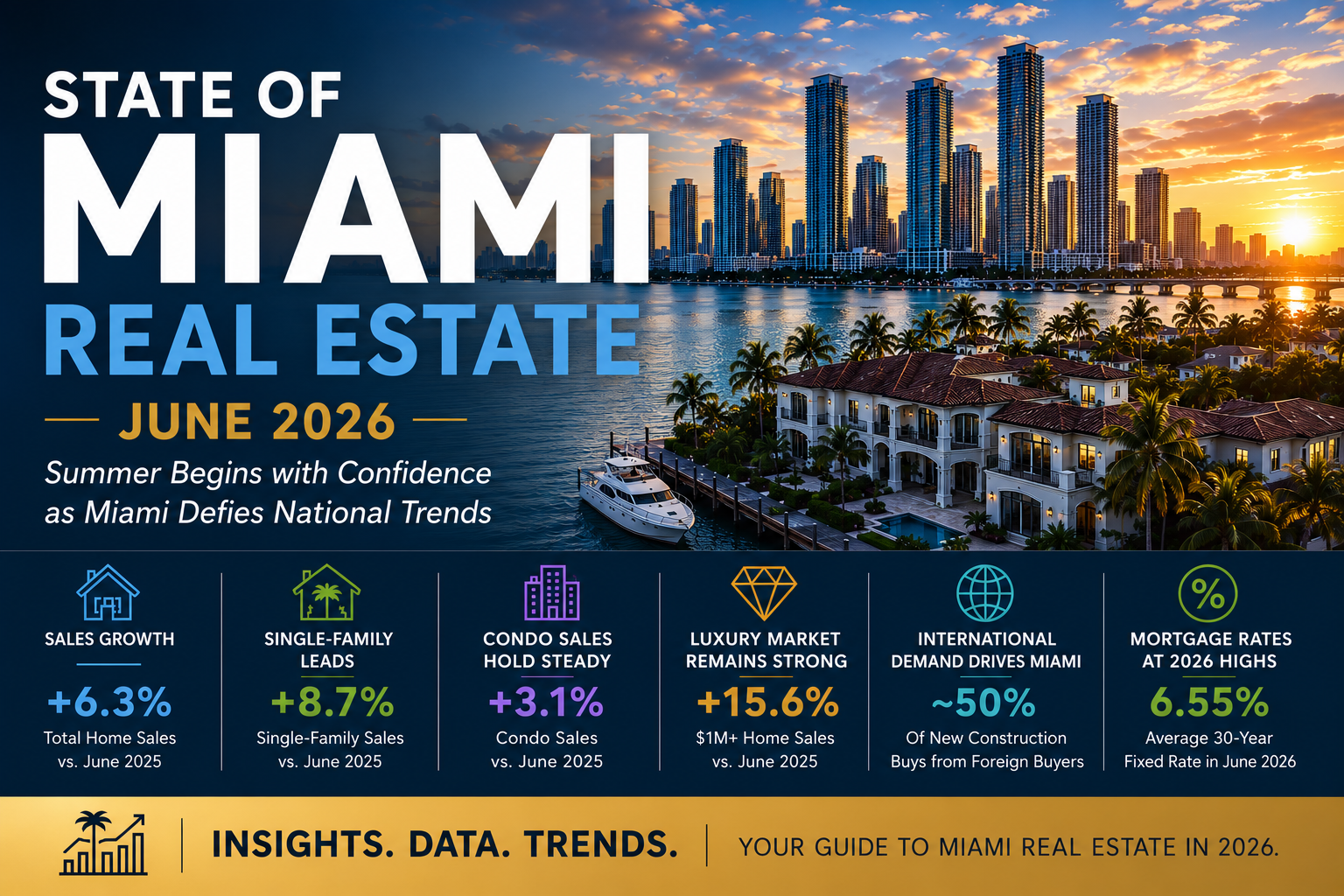
State of Miami Real Estate – June 2026

Summer Begins with Confidence as Miami Defies National Trends

Despite elevated mortgage rates and a slowing national housing market, Miami entered the summer season with strong fundamentals, resilient demand, and continued confidence from both domestic and international buyers.

Executive Summary
June 2026 marked the transition from one of Miami’s strongest spring markets in recent years into what appears to be a healthy summer selling season.
While many U.S. housing markets experienced slower contract activity due to elevated mortgage rates and affordability concerns, Miami continued benefiting from long-term demographic trends, international investment, and limited housing supply. Nationally, pending home sales fell sharply during June as mortgage rates climbed to their highest levels of 2026, highlighting the contrast between Miami and many other markets. (Reuters)
Rather than chasing rapid appreciation, today’s buyers are making thoughtful purchasing decisions based on long-term value, lifestyle, and investment potential.
Miami’s market continues to demonstrate characteristics that distinguish it from most metropolitan areas:

Strong luxury demand
High percentage of cash transactions
Continued international investment
Stable homeowner equity
Long-term population growth

The result is a market that remains resilient even as financing conditions become more challenging nationwide.

Market Snapshot
June reflected a market that remains active despite broader economic headwinds.
Key Themes

Luxury demand remains exceptionally strong.
Inventory remains below historical norms.
Mortgage rates increased modestly.
International buyers continue supporting new construction.
Well-priced homes continue selling quickly.

Unlike many U.S. markets, Miami continues benefiting from buyers whose purchasing decisions are less dependent on mortgage financing.

Single-Family Homes Continue Driving the Market
Single-family housing remains Miami’s strongest asset class.
Demand continues to be fueled by:

Executive relocation
Business expansion
Lifestyle migration
Limited developable land
High homeowner equity

Homes that are accurately priced continue attracting multiple showings shortly after listing, particularly in desirable neighborhoods with quality schools and convenient access to employment centers.
Although buyers are negotiating more frequently than during the peak pandemic years, demand for move-in-ready homes remains healthy.

Condominium Market Continues Evolving
The condominium market remains one of Miami’s most dynamic sectors.
Buyers continue placing greater emphasis on:

Financial reserves
Milestone inspections
Insurance costs
Structural integrity
Association governance

Buildings with strong financials continue outperforming comparable properties where deferred maintenance or reserve concerns remain unresolved.
These changes are creating a healthier and more transparent condominium market that benefits both buyers and responsible associations.

Luxury Market Remains Miami’s Competitive Advantage
Luxury real estate continues separating Miami from most U.S. housing markets.
High-net-worth buyers remain attracted by:

Florida’s tax advantages
Waterfront lifestyle
Global connectivity
Limited trophy properties
Wealth preservation opportunities

Cash purchases continue representing a significant share of luxury transactions, reducing exposure to higher borrowing costs.
Miami’s luxury market remains one of the strongest in North America.

Mortgage Rates Reach 2026 Highs
Mortgage rates climbed during June, reaching their highest levels of 2026 and increasing borrowing costs for many buyers. The average 30-year fixed mortgage rate moved into the mid-6% range, reflecting broader economic uncertainty and higher Treasury yields. (MarketWatch)
Yet buyer behavior continues evolving.
Instead of waiting indefinitely for lower rates, many purchasers are choosing to:

Lock in desirable properties
Build equity sooner
Refinance later if rates decline

This shift in consumer psychology has helped maintain transaction activity despite higher financing costs.

Commercial Real Estate Continues Supporting Growth
Miami’s commercial market remains an important economic driver.
Growth continues across:

Financial services
Technology
Healthcare
Logistics
Hospitality

Office leasing has stabilized, while industrial properties continue benefiting from international trade through PortMiami and Miami International Airport.
Mixed-use developments also remain among the region’s most attractive investment opportunities.

National Market Comparison
Nationally, June was considerably more challenging.
Pending home sales declined 5.4%, while existing home sales also weakened as buyers faced the combination of higher mortgage rates and record home prices. Many first-time buyers continued delaying purchases because of affordability concerns. (Reuters)
Miami continues outperforming many national trends because demand is supported by:

International capital
Population growth
Corporate relocation
Cash buyers
Limited housing supply

These structural advantages continue insulating South Florida from broader market weakness.

What Buyers Should Know
Today’s buyers continue benefiting from:

More inventory than during the pandemic
Better negotiating opportunities
Greater financing flexibility
More time to evaluate properties

However, premium neighborhoods, waterfront homes, and newer construction continue attracting strong competition.
Preparation remains one of the buyer’s greatest advantages.

What Sellers Should Know
Today’s successful sellers recognize that pricing strategy matters more than ever.
The strongest results continue coming from homes that feature:

Competitive pricing
Excellent presentation
Professional photography
Effective digital marketing

Overpricing continues leading to longer marketing times and eventual price reductions.

Looking Ahead to July 2026
As Miami enters the second half of 2026, several themes will continue shaping the market:

Mortgage rate movement
Luxury demand
International investment
Inventory trends
Condominium lending changes

Although national housing markets continue facing affordability pressures, Miami remains well positioned because of its diversified economy, global appeal, and continued population growth.
Rather than cooling dramatically, Miami appears to be transitioning into a more balanced market that rewards informed buyers, realistic sellers, and long-term investors.

Editorial Disclosure
This State of Miami Real Estate – June 2026 report was prepared by MiamiRealEstateNews.com using publicly available information from the MIAMI Association of REALTORS®, Florida Realtors®, MLS market statistics, the National Association of REALTORS®, and other reliable industry sources. Market statistics have been summarized and interpreted for educational and informational purposes only and should not be considered legal, tax, financial, or investment advice. (MIAMI REALTORS® + RWorld)

Read More

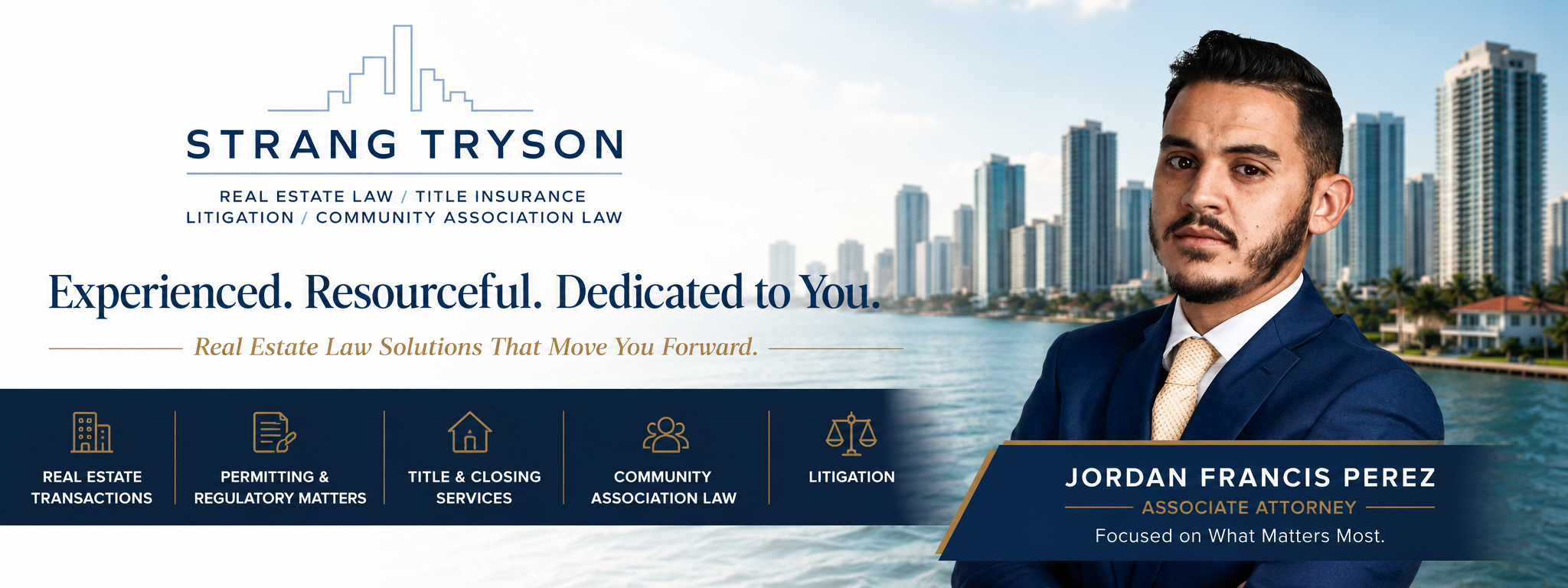
From Paralegal to Associate Attorney: The Real Estate Journey of Jordan Francis Perez

Building a Legal Career Through Experience, Dedication, and South Florida Real Estate Expertise

The best attorneys are not always the ones who start in the courtroom; they are often the ones who first learned the business from the ground up.”
— Jordan Francis Perez
TL;DR –
Jordan Francis Perez has built his legal career through years of hands-on real estate experience. After serving as a paralegal for more than five years, he became an Associate Attorney at Strang Tryson, PLLC, where he helps clients navigate commercial and residential real estate matters, permitting issues, title concerns, and property-related legal challenges throughout South Florida.

The path to becoming a successful real estate attorney is rarely built in a classroom alone. For many attorneys, the most valuable lessons come from years of practical experience, working through transactions, solving problems, and helping clients navigate complex legal matters. That journey perfectly describes Jordan Francis Perez, Associate Attorney at Strang Tryson, PLLC.
Before earning his role as an attorney, Jordan spent more than five years working alongside Jodi L. Strang as a paralegal. During that time, he developed a deep understanding of South Florida real estate transactions and the countless details that can determine whether a deal closes smoothly or becomes delayed by legal complications.
Direct Answer: Jordan Francis Perez is a South Florida real estate attorney whose experience as both a paralegal and attorney provides clients with practical legal guidance in real estate transactions, permitting matters, title issues, and property-related legal concerns.
What makes Jordan’s story particularly compelling is that his legal education was reinforced by years of real-world application. While many attorneys learn the mechanics of real estate transactions after law school, Jordan had already spent years helping facilitate high-value commercial and residential real estate deals before becoming an attorney.
That experience continues to benefit clients today.
Learning Real Estate from the Ground Up
Real estate transactions involve far more than signing documents at a closing table. Every transaction requires careful contract review, title examination, coordination between parties, regulatory compliance, and attention to countless legal details.
During his years as a paralegal, Jordan participated in numerous transactions involving various property types throughout South Florida. As a result, he gained firsthand knowledge of how deals move from initial negotiations through final closing.
Today, that practical background allows him to identify potential challenges early and help clients navigate issues before they become costly problems.
Whether working with residential buyers, commercial investors, property owners, or developers, Jordan understands that every transaction represents a significant investment and deserves careful legal attention.
Understanding South Florida Real Estate Regulations
One area that distinguishes Jordan’s background is his experience with permitting and regulatory matters.
While attending law school, Jordan participated in the Miami-Dade County and Miami-Dade Bar Permit Practicum, a pro bono initiative designed to help individuals facing permitting challenges and code compliance issues.
Working alongside experienced attorneys, he assisted individuals dealing with permit applications, code enforcement concerns, and regulatory approvals.
This experience provided valuable insight into the often-complex relationship between property ownership and government regulations.
For property owners, developers, and investors, understanding local regulations can be just as important as understanding the transaction itself. Jordan’s experience in this area allows him to provide practical guidance when clients encounter permitting or compliance issues.
Why Experience Matters in Real Estate Law
South Florida’s real estate market remains one of the most active and dynamic in the country. From residential purchases to commercial developments, transactions often involve significant financial commitments and complex legal considerations.
Having an attorney who understands both the legal framework and the practical realities of real estate transactions can make a meaningful difference.
Jordan brings a unique combination of institutional knowledge, transaction experience, and legal training to every matter he handles. His ability to understand issues from multiple perspectives allows him to help clients make informed decisions throughout the process.
For many clients, that peace of mind is invaluable.
The ability to anticipate challenges, communicate clearly, and provide practical solutions often separates a smooth transaction from a stressful one.
Serving Clients at Strang Tryson, PLLC
At Strang Tryson, PLLC, Jordan works alongside a team focused on South Florida real estate law, title insurance, closing services, community association law, and litigation.
The firm’s commitment to providing comprehensive legal services allows clients to access experienced counsel for a broad range of property-related matters.
As South Florida continues to grow and evolve, the need for knowledgeable real estate attorneys remains critical. Jordan’s combination of experience, dedication, and client-focused service positions him as a valuable resource for individuals and businesses navigating today’s real estate landscape.
As legendary investor Warren Buffett once said, “Risk comes from not knowing what you’re doing.”
That quote aligns perfectly with real estate transactions. Knowledge, preparation, and experienced legal guidance help reduce uncertainty and create confidence throughout the process. Attorneys like Jordan Francis Perez play an important role in helping clients understand their options and protect their interests.
Real estate decisions often represent some of the largest financial commitments people make. Having experienced legal counsel who understands both the legal and practical sides of the transaction can help ensure those decisions are made with confidence.
If you are buying, selling, investing, developing, or facing a property-related legal issue in South Florida, now is the time to work with a legal professional who understands the process from every angle. Contact Jordan Francis Perez and the team at Strang Tryson, PLLC to discuss your real estate legal needs and explore solutions designed to protect your investment and move your goals forward.

Contact Strang Tryson, PLLC
Miami Beach Office1680 Michigan Avenue, Suite 1013Miami Beach, FL 33139
Coral Gables Office1200 Ponce De Leon Boulevard, Suite 1001Coral Gables, FL 33134
Phone: 305.397.8800Fax: 305.459.1822

Read More

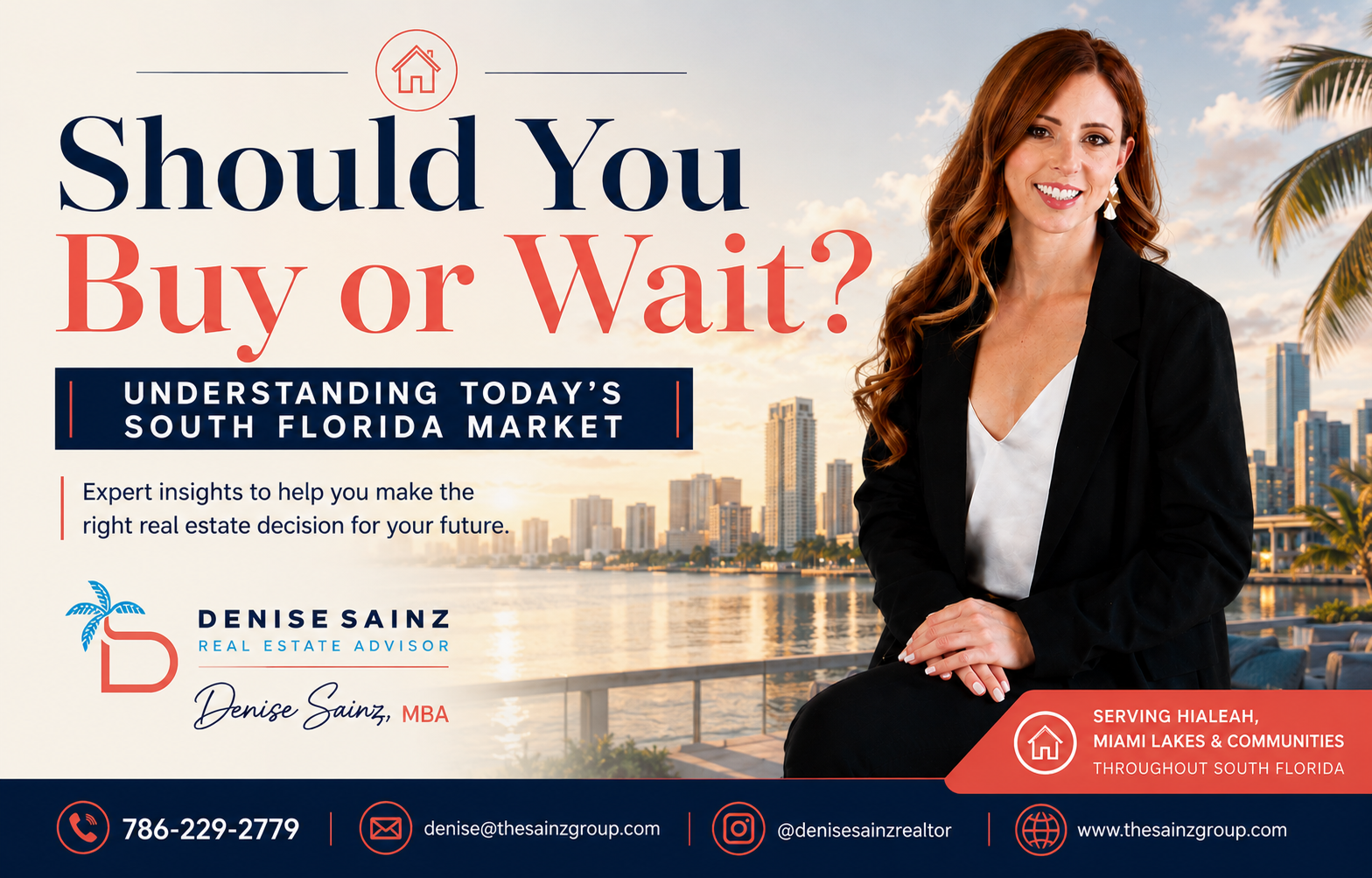
Denise Sainz – Should You Buy or Wait?

Should You Buy or Wait? Understanding Today’s South Florida Market

By Denise Sainz, MBA
Real Estate Advisor | The Sainz Group
If you’ve been following the headlines, you’ve probably asked yourself the same question many South Floridians are asking:
“Should I buy now, or should I wait?”
It’s a reasonable question. Mortgage rates have fluctuated, inventory has improved in some neighborhoods, and buyers are hearing mixed opinions from friends, family, and social media. The truth is, there isn’t a universal answer. The right decision depends on your financial situation, your long-term goals, and the local market you’re shopping in.
As a Real Estate Advisor serving Hialeah, Miami Lakes, and communities throughout South Florida, I encourage my clients to look beyond headlines and focus on what makes sense for their individual circumstances.
The Market Is Normalizing
After several years of extraordinary market conditions, South Florida is experiencing a more balanced environment.
Many neighborhoods now offer buyers:

More homes to choose from
More time to evaluate properties
Greater opportunities to negotiate
Increased seller concessions in certain transactions

That doesn’t necessarily mean prices are falling across the board. Well-maintained homes in desirable neighborhoods continue to attract strong interest, particularly in communities with excellent schools, convenient transportation, and established amenities.
The key is understanding that today’s market offers more opportunities for thoughtful decision-making than the fast-paced environment buyers experienced just a few years ago.
Waiting Has a Cost Too
Many buyers focus solely on mortgage interest rates when deciding whether to wait. While financing is certainly important, it’s only one piece of the equation.
Waiting may also mean:

Continuing to pay rent without building equity
Missing opportunities on homes that fit your needs
Facing future price appreciation in desirable neighborhoods
Competing with more buyers if interest rates decline

Every month you delay purchasing has its own financial implications, which should be considered alongside financing costs.
Buying Is About Lifestyle—Not Just Timing
Real estate shouldn’t be viewed only as a market decision.
It’s also a life decision.
Are you:

Outgrowing your current home?
Looking for a shorter commute?
Planning to start or grow your family?
Ready to invest in your future?
Relocating to South Florida?

If the answer is yes, those personal factors may be more important than trying to perfectly predict market conditions.
No one consistently buys at the absolute bottom of the market. Successful homeowners often make decisions based on long-term goals rather than short-term headlines.
Every Buyer Is Different
Two buyers can purchase the same home and have completely different financial outcomes based on their financing, savings, long-term plans, and monthly budget.
That’s why I believe every client deserves a personalized strategy rather than generic advice.
Whether it’s evaluating financing options, negotiating seller concessions, or understanding neighborhood trends, informed decisions create greater confidence throughout the buying process.
Hialeah and Miami Lakes Continue to Attract Buyers
Communities like Hialeah and Miami Lakes remain attractive because they offer strong neighborhoods, convenient access to employment centers, diverse housing options, parks, restaurants, shopping, and excellent connectivity throughout Miami-Dade County.
As South Florida continues attracting new residents and businesses, these communities remain desirable places to live and invest in your future.
The Bottom Line
Instead of asking, “Is this the perfect market?”, consider asking:
“Is this the right time for me?”
A well-planned purchase based on your financial goals and lifestyle is often more valuable than waiting for the “perfect” market, which may never arrive.
The best decision is an informed one.

“The best time to buy isn’t determined by headlines—it’s determined by your goals, your finances, and your future.” — Denise Sainz

Denise Sainz, MBA on Buying a Home in South Florida
Who Is Denise Sainz, MBA?
Denise Sainz, MBA, is a South Florida Real Estate Advisor with The Sainz Group, serving home buyers and sellers in Hialeah, Miami Lakes, and surrounding South Florida communities. She helps clients evaluate local real estate conditions, understand their options, and develop buying or selling strategies aligned with their financial circumstances and long-term goals.
Should You Buy a Home Now or Wait in South Florida?
According to Denise Sainz, MBA, the decision to buy a home in South Florida should depend on your financial readiness, monthly budget, long-term goals, and the specific local market. Mortgage rates and home prices matter, but so do available inventory, negotiating opportunities, and how long you plan to own the property. There is no single answer that works for every buyer.
Is South Florida a Good Place to Buy a Home in 2026?
South Florida offers a range of housing options, but whether a particular purchase makes sense depends on the property, neighborhood, price, financing, and buyer’s circumstances. Buyers should evaluate current local market data, estimated ownership costs, and their long-term plans rather than relying solely on headlines or predictions about future interest rates.
Should You Wait for Mortgage Rates to Drop Before Buying?
Not necessarily. Waiting for lower mortgage rates may provide future financing opportunities, but it does not guarantee that home prices, competition, or the availability of suitable properties will remain unchanged. Denise Sainz encourages buyers to evaluate what they can comfortably afford today and compare that with the potential benefits and costs of waiting.
What Should Home Buyers Consider Before Purchasing in Hialeah or Miami Lakes?
Buyers considering Hialeah or Miami Lakes should evaluate local home prices, available inventory, property condition, insurance, property taxes, financing, and potential negotiating opportunities. Comparing individual properties and their total ownership costs can provide a more useful picture than relying on general South Florida market trends.
How Can Denise Sainz, MBA Help South Florida Home Buyers?
Denise Sainz helps buyers explore real estate opportunities in Hialeah, Miami Lakes, and surrounding South Florida communities. She can help clients understand local property options, assess market conditions, and navigate the real estate transaction while coordinating with appropriate lending, insurance, inspection, and other professionals when needed.
What Is Denise Sainz’s Advice About Timing the Real Estate Market?
Denise Sainz believes buyers should look beyond headlines and focus on their individual goals, financial readiness, and future plans. Rather than trying to predict the exact bottom of the market, buyers can make more informed decisions by evaluating the specific property, understanding the complete cost of ownership, and determining whether the purchase fits their circumstances.
Ready to Explore Your Real Estate Options?
Whether you’re buying your first home, upgrading, downsizing, or simply exploring today’s South Florida market, Denise Sainz is here to help you make informed decisions.
Denise Sainz, MBA
Real Estate Advisor | The Sainz Group
📞 (786) 229-2779
📧 denise@thesainzgroup.com
📸 @denisesainzrealtor
🌐 www.thesainzgroup.com
Serving Hialeah, Miami Lakes, and communities throughout South Florida.

Read More

Humberto Comellas: Building Stronger Businesses Through ChamberSOUTH Leadership

How the ChamberSOUTH Small Business Committee Continues Creating Value for South Florida Businesses

“Strong businesses are built on strong relationships, continuous learning, and a willingness to help others succeed. Our goal at ChamberSOUTH is to provide resources, connections, and opportunities that help businesses grow stronger together.”— Humberto Comellas, Chair, ChamberSOUTH Small Business Committee

TL;DR
Under the leadership of Humberto Comellas, the ChamberSOUTH Small Business Committee continues to provide valuable educational programs, business resources, and networking opportunities for South Florida professionals. In June 2026, the committee welcomed leadership expert Carmen Ohling and human resources executive Raquel Gomez to share practical strategies on leadership, employee engagement, recruiting, and retention.

How Is Humberto Comellas Helping South Florida Businesses Through ChamberSOUTH?
As Chair of the ChamberSOUTH Small Business Committee, Humberto Comellas is helping create opportunities for business owners, executives, entrepreneurs, and professionals to access expert knowledge, build meaningful relationships, and strengthen their organizations.
Through monthly educational events, workshops, and networking opportunities, the committee delivers practical business solutions that help members and non-members alike navigate today’s business challenges.

Table of Contents

Leadership Through Service
June 2026 Small Business Committee Event
Why Leadership and Employee Retention Matter
The Value of ChamberSOUTH Membership
Looking Ahead

Leadership Through Service
Successful business communities do not happen by accident.
They are built by leaders who invest their time, energy, and expertise into helping others succeed.
That is exactly what Humberto Comellas has done through his leadership of the ChamberSOUTH Small Business Committee.
As President & CEO of ulltium consulting®, Humberto understands the challenges facing small businesses, growing organizations, and community leaders. Rather than simply talking about business growth, he actively creates opportunities for business owners to gain access to valuable resources, educational programs, and strategic relationships.
The Small Business Committee serves as one of the many ways ChamberSOUTH fulfills its mission of supporting economic development and business success throughout South Miami-Dade County.

June 2026 Small Business Committee Event
This month’s committee event showcased ChamberSOUTH’s commitment to bringing high-value educational programming to the business community.
The featured speakers included:
Carmen Ohling
Founder and CEO of The Amplified Life Company
Ohling shared powerful insights on leadership development, organizational culture, employee engagement, and creating environments where employees can thrive. Her presentation emphasized that leadership is often the foundation of employee retention and long-term organizational success.
Raquel Gomez
Human Resources Executive and Consultant
Gomez delivered practical guidance on recruiting, onboarding, performance management, employee retention, compliance, and manager development. Drawing from years of HR leadership experience, she provided attendees with actionable strategies that businesses can implement immediately.
Together, the presentations addressed one of the most pressing issues facing organizations today:
How do businesses attract, engage, develop, and retain great employees?

Why Leadership and Employee Retention Matter
Throughout the event, attendees learned that employee retention is about much more than compensation.
Leadership quality, workplace culture, employee engagement, professional development, and effective communication all play significant roles in whether employees choose to stay and grow within an organization.
The workshop reinforced several important themes:

Strong leadership creates stronger organizations.
Effective managers improve employee retention.
Workplace culture directly impacts business performance.
Employee engagement drives long-term success.
Continuous learning creates competitive advantages.

These conversations are exactly the type of practical business discussions that ChamberSOUTH seeks to facilitate through its educational programming.

The Value of ChamberSOUTH Membership
One of the biggest takeaways from the event is that ChamberSOUTH offers far more than networking opportunities.
Members and guests gain access to:

Educational workshops
Business development programs
Leadership training
Community engagement opportunities
Strategic partnerships
Professional referrals
Economic development initiatives
Advocacy and business resources

Whether someone is launching a startup, managing a growing company, or leading an established organization, ChamberSOUTH provides opportunities to learn, connect, and grow.
The Small Business Committee plays a critical role in delivering that value by bringing relevant topics and experienced speakers directly to the business community.

Looking Ahead
As South Florida continues to grow, the need for strong business leadership, workforce development, and community collaboration becomes increasingly important.
Under Humberto Comellas’ leadership, the ChamberSOUTH Small Business Committee continues to serve as a platform for education, innovation, and connection.
By bringing together experts like Carmen Ohling and Raquel Gomez, the committee demonstrates its ongoing commitment to helping businesses solve real-world challenges while building stronger organizations and stronger communities.
As author and leadership expert John C. Maxwell once said:
“Leadership is not about titles, positions, or flowcharts. It is about one life influencing another.”
That philosophy reflects the spirit of ChamberSOUTH and the leadership Humberto Comellas brings to the Small Business Committee.
The key takeaway is simple: when business leaders invest in learning, collaboration, and community, everyone benefits.
For business owners, professionals, and community leaders looking to expand their network and strengthen their organizations, ChamberSOUTH continues to provide valuable opportunities to connect, learn, and grow.
For more information about upcoming events, membership opportunities, and ChamberSOUTH programs, visit: ChamberSouth.com

Read More