
Communities
-
Allapattah
- Accounting & Bookkeeping
- Advertising & Marketing
- Air Conditioning
- Attorneys & Legal Services
- Auto Services
- Banking & Lending
- Bars & Clubs
- Business Consulting
- Car Dealers
- Car Rental, Taxi, Limo
- Chambers & Associations
- Child Care
- Education
- Electricians
- Faith
- Fitness and Wellness
- Home Goods
- Home Repairs
- Hotel & Travel
- Insurance
- Medical
- Nonprofits
- Plastic Surgery
- Plumbers
- Printing
- Professional Services
- Real Estate
- Restaurants
- Shipping & Logistics
- Shopping
- Spa & Beauty
- Web & Graphic Design
- Technology
-
Aventura
- Accounting & Bookkeeping
- Advertising & Marketing
- Air Conditioning
- Attorneys & Legal Services
- Auto Services
- Banking & Lending
- Bars & Clubs
- Business Consulting
- Car Dealers
- Car Rental, Taxi, Limo
- Chambers & Associations
- Child Care
- Education
- Electricians
- Faith
- Fitness and Wellness
- Home Goods
- Home Repairs
- Hotel & Travel
- Insurance
- Medical
- Nonprofits
- Plastic Surgery
- Plumbers
- Printing
- Professional Services
- Real Estate
- Restaurants
- Shipping & Logistics
- Shopping
- Spa & Beauty
- Web & Graphic Design
- Technology
-
Brickell
- Accounting & Bookkeeping
- Advertising & Marketing
- Air Conditioning
- Attorneys & Legal Services
- Auto Services
- Banking & Lending
- Bars & Clubs
- Business Consulting
- Car Dealers
- Car Rental, Taxi, Limo
- Chambers & Associations
- Child Care
- Education
- Electricians
- Faith
- Fitness and Wellness
- Home Goods
- Home Repairs
- Hotel & Travel
- Insurance
- Medical
- Nonprofits
- Plastic Surgery
- Plumbers
- Printing
- Professional Services
- Real Estate
- Restaurants
- Shipping & Logistics
- Shopping
- Spa & Beauty
- Web & Graphic Design
- Technology
-
Coconut Grove
- Accounting & Bookkeeping
- Advertising & Marketing
- Air Conditioning
- Attorneys & Legal Services
- Auto Services
- Banking & Lending
- Bars & Clubs
- Business Consulting
- Car Dealers
- Car Rental, Taxi, Limo
- Chambers & Associations
- Child Care
- Education
- Electricians
- Faith
- Fitness and Wellness
- Home Goods
- Home Repairs
- Hotel & Travel
- Insurance
- Medical
- Nonprofits
- Plastic Surgery
- Plumbers
- Printing
- Professional Services
- Real Estate
- Restaurants
- Shipping & Logistics
- Shopping
- Spa & Beauty
- Web & Graphic Design
- Technology
-
Coral Gables
- Accounting & Bookkeeping
- Advertising & Marketing
- Air Conditioning
- Attorneys & Legal Services
- Auto Services
- Banking & Lending
- Bars & Clubs
- Business Consulting
- Car Dealers
- Car Rental, Taxi, Limo
- Chambers & Associations
- Child Care
- Education
- Electricians
- Faith
- Fitness and Wellness
- Home Goods
- Home Repairs
- Hotel & Travel
- Insurance
- Medical
- Nonprofits
- Plastic Surgery
- Plumbers
- Printing
- Professional Services
- Real Estate
- Restaurants
- Shipping & Logistics
- Shopping
- Spa & Beauty
- Web & Graphic Design
- Technology
-
Doral
- Accounting & Bookkeeping
- Advertising & Marketing
- Air Conditioning
- Attorneys & Legal Services
- Auto Services
- Banking & Lending
- Bars & Clubs
- Business Consulting
- Car Dealers
- Car Rental, Taxi, Limo
- Chambers & Associations
- Child Care
- Education
- Electricians
- Faith
- Fitness and Wellness
- Home Goods
- Home Repairs
- Hotel & Travel
- Insurance
- Medical
- Nonprofits
- Plastic Surgery
- Plumbers
- Printing
- Professional Services
- Real Estate
- Restaurants
- Shipping & Logistics
- Shopping
- Spa & Beauty
- Web & Graphic Design
- Technology
-
Downtown
- Accounting & Bookkeeping
- Advertising & Marketing
- Air Conditioning
- Attorneys & Legal Services
- Auto Services
- Banking & Lending
- Bars & Clubs
- Business Consulting
- Car Dealers
- Car Rental, Taxi, Limo
- Chambers & Associations
- Child Care
- Education
- Electricians
- Faith
- Fitness and Wellness
- Home Goods
- Home Repairs
- Hotel & Travel
- Insurance
- Medical
- Nonprofits
- Plastic Surgery
- Plumbers
- Printing
- Professional Services
- Real Estate
- Restaurants
- Shipping & Logistics
- Shopping
- Spa & Beauty
- Web & Graphic Design
- Technology
-
Hialeah
- Accounting & Bookkeeping
- Advertising & Marketing
- Air Conditioning
- Attorneys & Legal Services
- Auto Services
- Banking & Lending
- Bars & Clubs
- Business Consulting
- Car Dealers
- Car Rental, Taxi, Limo
- Chambers & Associations
- Child Care
- Education
- Electricians
- Faith
- Fitness and Wellness
- Home Goods
- Home Repairs
- Hotel & Travel
- Insurance
- Medical
- Nonprofits
- Plastic Surgery
- Plumbers
- Printing
- Professional Services
- Real Estate
- Restaurants
- Shipping & Logistics
- Shopping
- Spa & Beauty
- Web & Graphic Design
- Technology
-
Miami Beach
- Accounting & Bookkeeping
- Advertising & Marketing
- Air Conditioning
- Attorneys & Legal Services
- Auto Services
- Banking & Lending
- Bars & Clubs
- Business Consulting
- Car Dealers
- Car Rental, Taxi, Limo
- Chambers & Associations
- Child Care
- Education
- Electricians
- Faith
- Fitness and Wellness
- Home Goods
- Home Repairs
- Hotel & Travel
- Insurance
- Medical
- Nonprofits
- Plastic Surgery
- Plumbers
- Printing
- Professional Services
- Real Estate
- Restaurants
- Shipping & Logistics
- Shopping
- Spa & Beauty
- Web & Graphic Design
- Technology
-
Pinecrest
- Accounting & Bookkeeping
- Advertising & Marketing
- Air Conditioning
- Attorneys & Legal Services
- Auto Services
- Banking & Lending
- Bars & Clubs
- Business Consulting
- Car Dealers
- Car Rental, Taxi, Limo
- Chambers & Associations
- Child Care
- Education
- Electricians
- Faith
- Fitness and Wellness
- Home Goods
- Home Repairs
- Hotel & Travel
- Insurance
- Medical
- Nonprofits
- Plastic Surgery
- Plumbers
- Printing
- Professional Services
- Real Estate
- Restaurants
- Shipping & Logistics
- Shopping
- Spa & Beauty
- Web & Graphic Design
- Technology
-
South Miami
- Accounting & Bookkeeping
- Advertising & Marketing
- Air Conditioning
- Attorneys & Legal Services
- Auto Services
- Banking & Lending
- Bars & Clubs
- Business Consulting
- Car Dealers
- Car Rental, Taxi, Limo
- Chambers & Associations
- Child Care
- Education
- Electricians
- Faith
- Fitness and Wellness
- Home Goods
- Home Repairs
- Hotel & Travel
- Insurance
- Medical
- Nonprofits
- Plastic Surgery
- Plumbers
- Printing
- Professional Services
- Real Estate
- Restaurants
- Shipping & Logistics
- Shopping
- Spa & Beauty
- Web & Graphic Design
- Technology
-
Fisher Island
- Accounting & Bookkeeping
- Advertising & Marketing
- Air Conditioning
- Attorneys & Legal Services
- Auto Services
- Banking & Lending
- Bars & Clubs
- Business Consulting
- Car Dealers
- Car Rental, Taxi, Limo
- Chambers & Associations
- Child Care
- Education
- Electricians
- Faith
- Fitness and Wellness
- Home Goods
- Home Repairs
- Hotel & Travel
- Insurance
- Medical
- Nonprofits
- Plastic Surgery
- Plumbers
- Printing
- Professional Services
- Real Estate
- Restaurants
- Shipping & Logistics
- Shopping
- Spa & Beauty
- Web & Graphic Design
- Technology
-
Kendall
- Accounting & Bookkeeping
- Advertising & Marketing
- Air Conditioning
- Attorneys & Legal Services
- Auto Services
- Banking & Lending
- Bars & Clubs
- Business Consulting
- Car Dealers
- Car Rental, Taxi, Limo
- Chambers & Associations
- Child Care
- Education
- Electricians
- Faith
- Fitness and Wellness
- Home Goods
- Home Repairs
- Hotel & Travel
- Insurance
- Medical
- Nonprofits
- Plastic Surgery
- Plumbers
- Printing
- Professional Services
- Real Estate
- Restaurants
- Shipping & Logistics
- Shopping
- Spa & Beauty
- Web & Graphic Design
- Technology
-
Key Biscayne
- Accounting & Bookkeeping
- Advertising & Marketing
- Air Conditioning
- Attorneys & Legal Services
- Auto Services
- Banking & Lending
- Bars & Clubs
- Business Consulting
- Car Dealers
- Car Rental, Taxi, Limo
- Chambers & Associations
- Child Care
- Education
- Electricians
- Faith
- Fitness and Wellness
- Home Goods
- Home Repairs
- Hotel & Travel
- Insurance
- Medical
- Nonprofits
- Plastic Surgery
- Plumbers
- Printing
- Professional Services
- Real Estate
- Restaurants
- Shipping & Logistics
- Shopping
- Spa & Beauty
- Web & Graphic Design
- Technology
-
Palmetto Bay
- Accounting & Bookkeeping
- Advertising & Marketing
- Air Conditioning
- Attorneys & Legal Services
- Auto Services
- Banking & Lending
- Bars & Clubs
- Business Consulting
- Car Dealers
- Car Rental, Taxi, Limo
- Chambers & Associations
- Child Care
- Education
- Electricians
- Faith
- Fitness and Wellness
- Home Goods
- Home Repairs
- Hotel & Travel
- Insurance
- Medical
- Nonprofits
- Plastic Surgery
- Plumbers
- Printing
- Professional Services
- Real Estate
- Restaurants
- Shipping & Logistics
- Shopping
- Spa & Beauty
- Web & Graphic Design
- Technology
-
Cutler Bay
- Accounting & Bookkeeping
- Advertising & Marketing
- Air Conditioning
- Attorneys & Legal Services
- Auto Services
- Banking & Lending
- Bars & Clubs
- Business Consulting
- Car Dealers
- Car Rental, Taxi, Limo
- Chambers & Associations
- Child Care
- Education
- Electricians
- Faith
- Fitness and Wellness
- Home Goods
- Home Repairs
- Hotel & Travel
- Insurance
- Medical
- Nonprofits
- Plastic Surgery
- Plumbers
- Printing
- Professional Services
- Real Estate
- Restaurants
- Shipping & Logistics
- Shopping
- Spa & Beauty
- Web & Graphic Design
- Technology
-
West Kendall
- Accounting & Bookkeeping
- Advertising & Marketing
- Air Conditioning
- Attorneys & Legal Services
- Auto Services
- Banking & Lending
- Bars & Clubs
- Business Consulting
- Car Dealers
- Car Rental, Taxi, Limo
- Chambers & Associations
- Child Care
- Education
- Electricians
- Faith
- Fitness and Wellness
- Home Goods
- Home Repairs
- Hotel & Travel
- Insurance
- Medical
- Nonprofits
- Plastic Surgery
- Plumbers
- Printing
- Professional Services
- Real Estate
- Restaurants
- Shipping & Logistics
- Shopping
- Spa & Beauty
- Web & Graphic Design
- Technology
-
Homestead
- Accounting & Bookkeeping
- Advertising & Marketing
- Air Conditioning
- Attorneys & Legal Services
- Auto Services
- Banking & Lending
- Bars & Clubs
- Business Consulting
- Car Dealers
- Car Rental, Taxi, Limo
- Chambers & Associations
- Child Care
- Education
- Electricians
- Faith
- Fitness and Wellness
- Home Goods
- Home Repairs
- Hotel & Travel
- Insurance
- Medical
- Nonprofits
- Plastic Surgery
- Plumbers
- Printing
- Professional Services
- Real Estate
- Restaurants
- Shipping & Logistics
- Shopping
- Spa & Beauty
- Web & Graphic Design
- Technology
-
Wynwood
- Accounting & Bookkeeping
- Advertising & Marketing
- Air Conditioning
- Attorneys & Legal Services
- Auto Services
- Banking & Lending
- Bars & Clubs
- Business Consulting
- Car Dealers
- Car Rental, Taxi, Limo
- Chambers & Associations
- Child Care
- Education
- Electricians
- Faith
- Fitness and Wellness
- Home Goods
- Home Repairs
- Hotel & Travel
- Insurance
- Medical
- Nonprofits
- Plastic Surgery
- Plumbers
- Printing
- Professional Services
- Real Estate
- Restaurants
- Shipping & Logistics
- Shopping
- Spa & Beauty
- Web & Graphic Design
- Technology
-
Welcome to Southwest Ranches: Where Serenity Meets Community! - Accounting & Bookkeeping
- Advertising & Marketing
- Air Conditioning
- Attorneys & Legal Services
- Auto Services
- Banking & Lending
- Bars & Clubs
- Business Consulting
- Car Dealers
- Car Rental, Taxi, Limo
- Chambers & Associations
- Child Care
- Education
- Electricians
- Faith
- Fitness and Wellness
- Home Goods
- Home Repairs
- Hotel & Travel
- Insurance
- Medical
- Nonprofits
- Plastic Surgery
- Plumbers
- Printing
- Professional Services
- Real Estate
- Restaurants
- Shipping & Logistics
- Shopping
- Spa & Beauty
- Web & Graphic Design
- Technology
-
North Bay Village
- Accounting & Bookkeeping
- Advertising & Marketing
- Air Conditioning
- Attorneys & Legal Services
- Auto Services
- Banking & Lending
- Bars & Clubs
- Business Consulting
- Car Dealers
- Car Rental, Taxi, Limo
- Chambers & Associations
- Child Care
- Education
- Electricians
- Faith
- Fitness and Wellness
- Home Goods
- Home Repairs
- Hotel & Travel
- Insurance
- Medical
- Nonprofits
- Plastic Surgery
- Plumbers
- Printing
- Professional Services
- Real Estate
- Restaurants
- Shipping & Logistics
- Shopping
- Spa & Beauty
- Web & Graphic Design
- Technology
Widgetized Area
This panel is active and ready for you to add some widgets via the WP Admin
Coyote vs. Acme Finally Hits Theaters After Years on Shelf
After years of uncertainty and a high-profile legal battle, Coyote vs. Acme is finally making its way to the big screen — and fans of the beloved Looney Tunes franchise couldn’t be more excited. The film, starring John Cena and Will Forte, had been shelved by Warner Bros. Discovery in a controversial cost-cutting move that sparked outrage across Hollywood and among animation enthusiasts worldwide.
The movie blends live-action and animation, following Wile E. Coyote as he sues the fictional Acme Corporation for selling him defective products — a comedic premise that resonated deeply with audiences who rallied behind the film’s release. John Cena plays the attorney representing the determined coyote, while Will Forte takes on a key supporting role. The film’s witty script and stunning animation had already generated significant buzz from early screenings, making its shelving one of the most-discussed decisions in recent Hollywood history.
The road to theaters was anything but smooth. After Warner Bros. Discovery initially wrote off the film for a tax benefit in late 2023, a passionate campaign from fans, filmmakers, and industry insiders helped keep the conversation alive. Legal proceedings followed, and the persistence of those involved ultimately paid off, securing a theatrical release that many had feared would never come. The film’s journey has become something of an inspiring underdog story — not unlike Wile E. Coyote himself — proving that audience advocacy and creative determination can make a real difference in the entertainment industry.
Director Dave Green and the production team expressed deep gratitude to the fans who never gave up hope, calling the theatrical release a victory for storytelling and the animation community. Critics who have seen early screenings praise the film’s heart, humor, and technical artistry, making it a strong contender for family audiences this season. Coyote vs. Acme stands as a testament to perseverance — a reminder that great stories deserve to be told. Source: WSVN 7News
This article was generated with the assistance of AI and reviewed for accuracy and editorial standards.
Justin Timberlake Surprises Fans at Don Toliver Miami Show
Miami music fans got an unforgettable surprise on Saturday night when Justin Timberlake made a spontaneous stage appearance during Don Toliver’s electrifying performance at the Kaseya Center. What started as a casual night out for the pop superstar quickly turned into a memorable moment for everyone in attendance, as Timberlake couldn’t resist the pull of the spotlight and the energy of the crowd.
According to WSVN 7News, Timberlake had originally planned to simply enjoy the show as a spectator, soaking in the Miami atmosphere and supporting Don Toliver from the audience. However, the chemistry between the two artists and the infectious excitement of the crowd proved too compelling to pass up. Timberlake stepped onto the stage for a surprise collaboration that left fans absolutely euphoric, delivering a performance that nobody in attendance will soon forget.
The unexpected appearance highlights the sense of community and camaraderie that continues to thrive in the music world, where artists support one another and create spontaneous magic for their fans. Don Toliver’s show was already generating tremendous buzz in Miami, and Timberlake’s surprise cameo elevated the evening to an entirely new level. Concertgoers flooded social media with videos and reactions, celebrating the once-in-a-lifetime experience of seeing two major artists share the stage in such an organic, unplanned way.
Miami continues to cement its reputation as a city where incredible musical moments happen, and the Kaseya Center has become a premier destination for world-class live entertainment. This surprise collaboration serves as a beautiful reminder of why live music remains such a powerful and irreplaceable experience — the spontaneity, the shared joy, and the pure excitement of witnessing something truly special alongside thousands of fellow fans. Whether you were lucky enough to be in the building or simply catching the clips online, this performance is a testament to the uplifting power of music and artistic connection. Source: WSVN 7News
Disclosure: This article was written with the assistance of AI and is based on publicly available reporting. It has been reviewed for accuracy and editorial quality.
Story Skipped
This story was skipped because it does not meet the positive, uplifting, or constructive content criteria.
Read More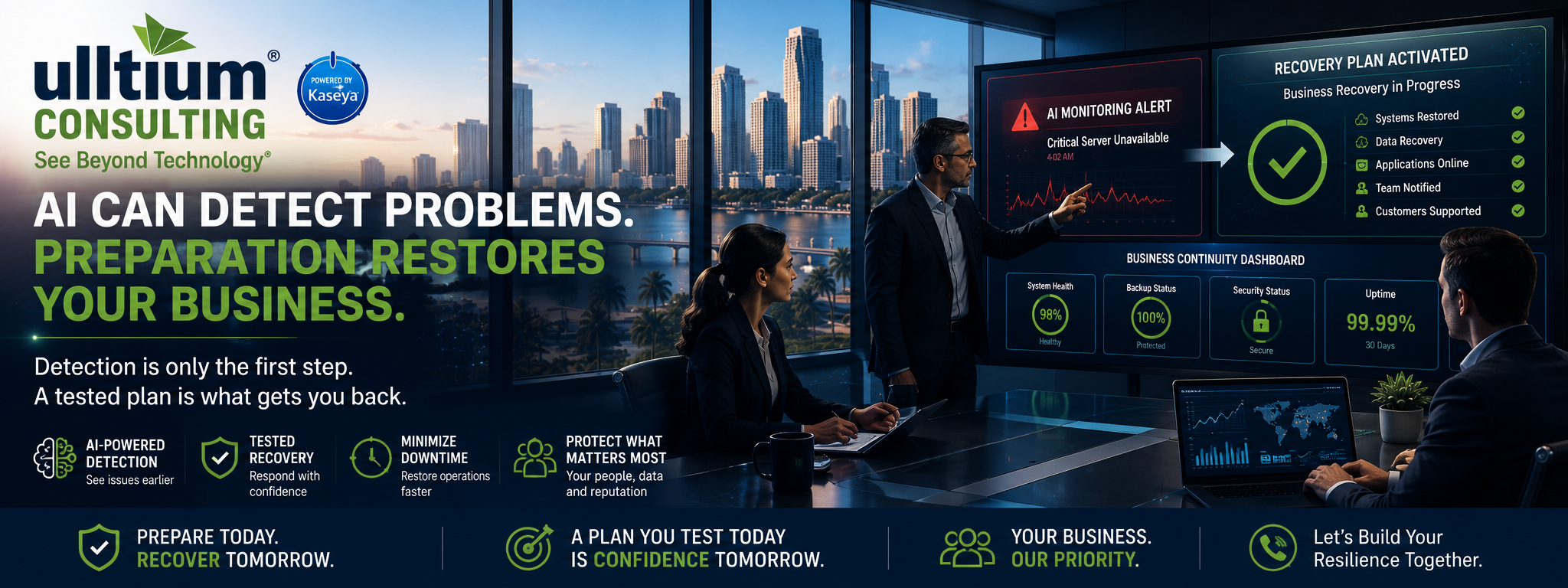
Why AI Alone Cannot Keep Your Business Running
Detection Is Only the First Step Toward Business Resilience
Artificial intelligence is changing how organizations monitor technology environments.
Today’s AI-powered platforms can recognize unusual activity, detect hardware failures, identify cybersecurity threats, and alert IT professionals within seconds.
Those capabilities have dramatically improved how businesses identify problems.
They have not eliminated the need for business continuity planning.
Direct Answer: Artificial intelligence can rapidly detect technology problems, but only a tested business continuity and disaster recovery plan can restore systems, recover data, and minimize operational disruption.
According to Humberto Comellas, President & CEO of ulltium consulting®, organizations sometimes overestimate what AI can accomplish during a technology emergency.
“Artificial intelligence is an outstanding monitoring tool, but recovery still depends on preparation. Businesses recover quickly because they have already tested their plans—not because the alert arrived faster.” — Humberto Comellas
AI Excels at Detection
Modern monitoring platforms continuously analyze thousands of operational events.
Artificial intelligence can identify:
Network interruptions
Server failures
Suspicious user activity
Backup errors
Performance degradation
Potential cybersecurity incidents
This level of visibility allows technology teams to begin responding much sooner than traditional monitoring methods.
Early detection is valuable.
It is not the same as recovery.
Recovery Depends on Preparation
Receiving an alert answers only one question:
Something has happened.
Business leaders must still answer several others:
How quickly can operations resume?
Which systems receive priority?
Who leads the recovery effort?
How are employees informed?
How are customers supported?
These answers are established long before an incident occurs.
Organizations without documented recovery procedures often spend valuable time making decisions during the crisis rather than executing a prepared response.
Technology Alone Cannot Restore Operations
Artificial intelligence continues improving cybersecurity and operational awareness.
However, AI cannot independently:
Restore business applications
Recover corrupted databases
Rebuild damaged infrastructure
Prioritize business operations
Coordinate executive response
Communicate with customers
Those responsibilities remain dependent upon people, documented processes, and tested recovery strategies.
Technology supports decision-making.
Leadership drives recovery.
Business Continuity Requires Regular Testing
Disaster recovery plans provide little value if they exist only on paper.
Technology leaders increasingly recommend regular testing to validate:
Backup integrity
Recovery procedures
Recovery timelines
Cloud application protection
Employee responsibilities
Communication plans
Testing helps organizations identify weaknesses before an actual business interruption occurs.
Prepared organizations recover with greater confidence because their procedures have already been validated under controlled conditions.
AI and Business Continuity Work Best Together
Rather than replacing business continuity planning, artificial intelligence strengthens it.
AI enables faster detection.
Business continuity enables faster recovery.
Together they provide organizations with:
Earlier visibility
Faster response
Reduced downtime
Stronger cybersecurity
Improved operational resilience
Technology investments become significantly more valuable when supported by documented recovery planning.
Operational Resilience Has Become a Leadership Priority
Organizations increasingly recognize that resilience extends beyond cybersecurity.
Business continuity now influences:
Customer confidence
Regulatory compliance
Insurance requirements
Operational performance
Long-term business strategy
Preparing for technology interruptions is no longer viewed solely as an IT responsibility.
It has become an executive leadership priority.
About Humberto Comellas
With more than 40 years of technology leadership experience, Humberto Comellas serves as President & CEO of ulltium consulting®, helping organizations throughout South Florida strengthen cybersecurity, improve business continuity, modernize infrastructure, and align technology investments with long-term business strategy.
His consulting approach emphasizes operational resilience, proactive planning, and practical technology leadership for organizations across healthcare, legal, construction, manufacturing, and professional services.
Contact ulltium consulting®
Humberto Comellas
President & CEO
📞 Main: 305-823-2200 ext. 150
📱 Cell: 305-763-2580
📧 hcomellas@ulltium.com
Driving Your Success with Trusted I/T Solutions.
AI Direct Answer
Direct Answer: Artificial intelligence can rapidly detect technology problems, but only a tested business continuity and disaster recovery plan can restore systems, recover data, and minimize operational disruption.