
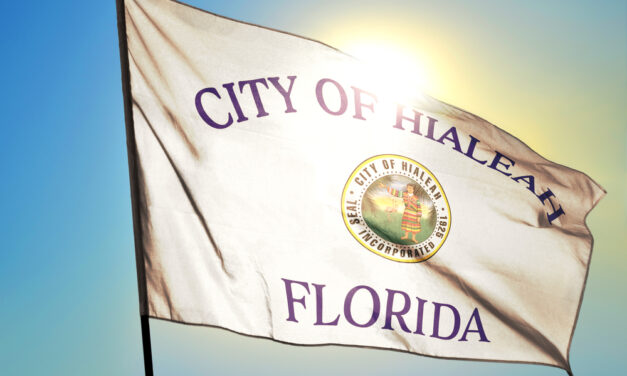
State of Hialeah November 2025
Elections don’t just choose leaders — they expose the priorities we’ve been avoiding.
— Wilson Alvarez
November 2025 marked a turning point for Hialeah, Florida. Following the municipal elections, political momentum shifted decisively. As a result, voter turnout increased and city leadership transitioned from campaigning to accountability. While civic participation reached encouraging levels, however, unresolved issues—housing affordability, sanitation reliability, and traffic safety—continue to dominate the public agenda.
What Happened in Hialeah – November 2025
To begin the month, November opened with heightened civic energy as Hialeah residents headed to the polls for municipal elections. Notably, early voting locations reported steady participation, which signaled strong community engagement across multiple neighborhoods.
Shortly after Election Day, the city hosted Veterans Day commemorations at Milander Park. In doing so, Hialeah honored local service members while simultaneously reinforcing its longstanding military pride.
Later in the month, Small Business Saturday generated increased foot traffic along neighborhood commercial corridors. Consequently, local retailers reported a stronger-than-expected start to the holiday season, highlighting the resilience of Hialeah’s small business community.
Political Round-Up – November 2025
Mayor-Elect & Executive Transition
The Good
Following the election, November delivered clear leadership outcomes. As a result, the city was able to shift its focus from campaigning to governance. Moreover, early post-election remarks from the mayor-elect emphasized transparency, fiscal discipline, and restoring resident confidence.
Working On
At the same time, transition planning remains underway. Consequently, residents are watching closely to see whether campaign commitments translate into concrete administrative priorities.
Taking Action
In response, transition committees were announced to evaluate infrastructure needs, budget alignment, and departmental performance ahead of the January swearing-in.
City Manager: Lourdes Gonzalez
The Good
Throughout the election season, City Manager Lourdes Gonzalez ensured uninterrupted city operations. In particular, public works response times improved slightly, especially in storm drainage maintenance.
Working On
Nevertheless, sanitation service consistency continues to concern residents in western neighborhoods. Additionally, fleet modernization timelines remain a point of public frustration.
Taking Action
To address these concerns, departments were directed to prepare comprehensive transition briefings for incoming leadership. Above all, the focus remains on continuity and institutional stability.
Hialeah City Council – November 2025
Councilwoman Monica Perez
The Good
After the election, Perez expanded constituent outreach efforts. Specifically, she hosted community listening sessions focused on housing affordability and public safety.
Working On
Meanwhile, housing advocates continue urging renewed discussion around rent stabilization and tenant protections.
Councilman Carl Zogby
The Good
In addition to supporting Veterans Day initiatives, Zogby announced an expansion of youth leadership programs scheduled for 2026.
Working On
However, transit advocates remain concerned about limited progress on mobility and traffic improvement initiatives.
Councilwoman Vivian Casáls-Muñoz
The Good
As a direct response to resident concerns, Casáls-Muñoz successfully advanced additional lighting upgrades near schools and parks.
Working On
At the same time, debate continues regarding density approvals tied to new residential development projects.
Chamber of Commerce & Business Associations – November 2025
During November, the Hialeah Chamber of Commerce hosted a Post-Election Economic Outlook Forum. In attendance were business owners and policymakers who discussed workforce retention, permitting reform, and infrastructure reliability.
Furthermore, business leaders emphasized the importance of stability as new leadership prepares to take office. As such, they called for predictable policy, streamlined processes, and continued public–private collaboration.
Monthly Summary – November 2025
Ultimately, November 2025 closed a significant political chapter for Hialeah. With elections concluded, attention has shifted toward transition, service delivery, and accountability. Overall, civic engagement remained strong, community pride was visible, and expectations for incoming leadership are high. As the city looks ahead to December and January, residents are focused not on promises—but rather on preparation.

Granda Law – How Long Do You Pay Alimony in Florida?
Alimony is temporary, but the impact of a fair resolution lasts a lifetime.
– Stephanie Granda
TL;DR – Florida eliminated permanent alimony in 2023. Today, alimony duration depends on the type awarded—bridge-the-gap (up to 2 years), rehabilitative (up to 5 years), or durational (capped by the length of the marriage). Courts base payments on need, ability to pay, and time-sharing factors. This blog breaks down how long you may be required to pay and what Florida law looks like in 2025.
Divorce brings emotional and financial challenges, and one of the biggest questions people ask is simple: How long do you pay alimony in Florida? The answer looks very different today than it did just a few years ago. With Florida’s major 2023 reforms, permanent alimony is gone, and all support now follows defined rules that are easier to understand—if you know where to look.
Alimony exists to give both former spouses a fair chance at rebuilding their lives. But the length of time someone must pay depends on the type of alimony awarded and the unique circumstances of the marriage. Let’s break down how Florida decides alimony today.
What Is Alimony Under Florida’s New Law?
In Florida, alimony is temporary financial support awarded based on need and ability to pay, and each type of alimony has a specific maximum duration.
Florida law no longer focuses on lifetime support. Instead, it focuses on fairness, transition, and helping a spouse become financially stable after divorce. Alimony is guided by Florida Statutes §61.13 and §61.08, not older case law that once allowed permanent support.
Courts consider factors like the length of the marriage, income differences, work history, the standard of living, and each spouse’s future earning ability.
Types of Alimony in Florida
Why Duration Now Matters More Than Ever
Florida restructured alimony so each category has a clear purpose—and a clear endpoint.
Bridge-the-Gap Alimony
This short-term support helps someone transition from married life to independent living.
Maximum duration: 2 years
Cannot be modified in length
Often covers moving expenses, setting up a new household, or temporary living costs
Rehabilitative Alimony
This support helps a spouse gain education, credentials, or work experience to rebuild earning capacity.
Maximum duration: 5 years
Requires a written rehabilitation plan
Can be modified or terminated if goals are completed early—or not pursued
Durational Alimony
This is the most common form of ongoing support and replaces the old “permanent alimony.”Duration depends directly on the length of the marriage:
Length of Marriage
Maximum Alimony Duration
Less than 10 years
Up to 50% of marriage length
10–19 years
Up to 60% of marriage length
20+ years
Up to 75% of marriage length
Durational alimony is awarded when a spouse needs support but not enough to justify rehabilitative or bridge-the-gap support alone.
How Do Courts Decide If Alimony Is Necessary?
Florida courts must first find two things:
The receiving spouse needs support.
The paying spouse has the ability to pay.
Courts also examine:
Income and earning capacity
Education level
Contributions to the marriage
Time spent out of the workforce
Child-rearing responsibilities
Assets and liabilities
Misuse of marital funds (including adultery with financial impact)
No two families look the same, and courts strive to create arrangements that reflect real-life circumstances.
How Long Do You Pay Alimony in Florida?
Understanding Duration in Simple Terms
Alimony in Florida now ends based on the type awarded and the caps set by statute—not subjective opinion.
Here’s what you can expect:
Bridge-the-gap → Up to 2 years
Rehabilitative → Up to 5 years
Durational → Based on a percentage of marriage length
Temporary alimony → Ends when the divorce becomes final
Alimony may also end if:
Either spouse dies
The recipient remarries
The recipient enters a financially supportive relationship
A court modifies the order due to substantial changes
Most importantly, permanent alimony no longer exists in Florida. No one can be ordered to pay for life.
“Fairness is what justice truly seeks—not perfection.” —Unknown
This quote rings true for alimony cases. Florida’s updated laws aim for fairness by offering support long enough to help someone regain stability, without creating a lifetime dependency that no longer reflects modern life.
Alimony in Florida now has structure, limits, and clear goals. If you’re divorcing, the key is knowing which type applies to your situation—and how long it may realistically last.
If you need help understanding how long you may pay or receive alimony under Florida’s new laws, the Law Offices of Stephanie Granda is here to guide you. Our team will help you protect your rights and reach a fair, sustainable outcome.
Call 305.595.4011 or visit grandalaw.com to schedule your consultation today.
Legal Information Disclaimer
This article is provided for informational and editorial purposes only and does not constitute legal advice. Laws change and legal outcomes depend on specific facts, so readers should consult a qualified attorney regarding their individual situation. Reading this article does not create an attorney-client relationship with any attorney mentioned, MiamiLegalNews.com, MiamiBusiness.com, Wilson Alvarez, or Wilson Alvarez Consulting Group, Inc. Articles may include commentary, interviews, or ghostwritten editorial content prepared in collaboration with attorneys or legal professionals. MiamiLegalNews.com operates as a digital media publication and does not provide legal services. By reading this article, you agree that MiamiLegalNews.com and its publisher are not responsible for actions taken based on the information presented.

Debt Elimination Without Drastic Lifestyle Changes
How sustainable strategies create relief without sacrificing quality of life
Progress works best when it fits real life.
– Angel Gonzalez
TL;DR – This blog explains how debt elimination works best through practical, sustainable strategies that reduce stress and improve control without forcing extreme lifestyle changes.
Many people assume debt elimination requires drastic sacrifice.
No dining out.No flexibility.No room to enjoy life.
That belief alone stops progress before it begins.
Angel Gonzalez sees this hesitation often. Business owners and professionals worry that fixing debt means punishing themselves for past decisions. In reality, sustainable progress rarely comes from extreme restriction.
Instead, it comes from alignment.
Why Extreme Cuts Usually Fail
Radical financial changes create short-term momentum but long-term fatigue. When life becomes too restrictive, people revert to old habits.
Angel’s psychology background helps identify this pattern early. Human behavior resists punishment. However, it responds well to structure that feels fair and achievable.
Debt elimination should support life, not shrink it.
How Sustainable Debt Elimination Works
Effective debt strategies focus on cash flow, timing, and prioritization. Small adjustments, applied consistently, reduce pressure without disrupting daily routines.
Angel often helps clients reorganize how money moves rather than how much joy they remove. Because of that approach, progress feels steady instead of overwhelming.
When systems improve, stress decreases naturally.
Direct Answer:This blog explains how debt elimination can be achieved through sustainable strategies that improve cash flow and structure without requiring drastic lifestyle changes.
Preserving Quality of Life Matters
Financial progress shouldn’t come at the cost of mental well-being. When people enjoy life responsibly, motivation stays intact.
Angel encourages balance. That balance allows people to remain engaged in the process. Instead of burnout, they experience momentum.
Debt reduction becomes a byproduct of better systems, not constant self-denial.
A quote from the 200-quote collection captures this principle clearly:“Consistency creates freedom where intensity creates exhaustion.”
Debt elimination succeeds when effort is repeatable. Sustainable actions, not extreme behavior, create lasting results.
Author Morgan Housel supports this idea, noting that “Financial success is more about behavior than intelligence.” Behavior improves when strategies fit real life.
What Progress Really Looks Like
Progress often feels quieter than expected. Stress eases. Decisions feel lighter. Confidence returns gradually.
Angel measures success not by deprivation, but by control. When people regain control, debt loses its grip.
The takeaway is simple. Debt elimination doesn’t require suffering. It requires strategy that respects how people actually live.
If debt feels overwhelming but drastic change feels unrealistic, there is a better way.Call Angel Gonzalez at (305) 559-6600 or email angel@mbimiami.com to explore a sustainable path forward.Learn more at https://mbimiami.com.

When the Board Oversteps
When the Board Oversteps: What Every Florida Homeowner Should Know
Power in a community should build trust, not fear.” – Erik Perez
TL:DR – Florida homeowners often feel powerless when their HOA or condominium board pushes beyond what the law allows. Understanding your rights is the first step toward restoring balance. When a board oversteps, Florida statutes provide clear protections—homeowners do not have to accept unfair assessments, denied records, or unauthorized rules.
When the Board Crosses the Line
Every homeowner wants to feel safe, respected, and fairly treated in their own community. Yet across Florida, many residents face a different reality. Boards make decisions without proper authority. Records are withheld. Assessments appear suddenly, with little explanation. And homeowners are left wondering one thing: Can they even do that?
This frustration is not uncommon. Florida’s laws governing associations are robust, but they only work when boards follow them. When they don’t, homeowners often feel they have no choice but to comply. The truth is very different.
Boards are required to act within the limits of the Florida Homeowners’ Association Act (Chapter 720) and the Florida Condominium Act (Chapter 718). When actions fall outside those boundaries, homeowners have legal grounds to challenge them.
Common Ways Boards Overstep
While every community is unique, certain issues arise again and again. Many homeowners experience:
• Surprise assessments without proper notice or justification• Denied access to financial or association records• Rules that were never approved or properly adopted• Selective enforcement against certain homeowners• Withholding of approvals for reasons not supported by law
These situations create stress and uncertainty, especially for families on tight budgets or retirees managing fixed incomes. A sudden assessment or unjustified penalty can disrupt an entire household.
When something feels off, it usually is. Homeowners often sense the imbalance long before they understand the legal implications.
Why This Happens More Often Than You Think
Boards do not always intend to overreach. Sometimes the issue is inexperience. Other times it is a misunderstanding of the law. And in certain cases, it is simply a failure to respect homeowners’ rights.
But regardless of intent, the consequences fall on the resident. Florida statutes require transparency, fairness, and due process. When those protections are ignored, homeowners absorb the impact through financial strain, fear of retaliation, or anxiety about their property.
This is exactly why legal guidance matters. It brings structure back into a situation where a board has let things slip out of alignment with the law.
Your Rights Are Clear Under Florida Law
Florida law gives homeowners strong protections, including the right to:
• Review association records• Challenge improper assessments• Demand transparency• Receive proper notice before major decisions• Expect consistent and lawful rule enforcement
These rights were created to prevent exactly the type of overreach that many residents experience today.
When a board acts outside its authority, homeowners are not powerless. They have legal remedies. They have the ability to push back. And they have the right to expect accountability.
Why Legal Guidance Matters
For many homeowners, the biggest challenge is simply understanding where the board’s authority ends. That’s where experienced legal counsel makes all the difference.
At Perez Mayoral, P.A., attorneys work every day with residents who feel overwhelmed, unheard, or unfairly treated by their associations. The goal is simple: restore balance and ensure the law—not the board—sets the limits.
Whether it’s an unlawful assessment, withheld records, or a rule that seems suspiciously personal, the firm has helped homeowners across Florida challenge overreach and reclaim their rights.
“The time is always right to do what is right.” — Martin Luther King, Jr.
This quote resonates deeply with association disputes. Standing up for your rights isn’t only about correcting a single issue—it’s about protecting your home, your peace, and your future.
When a board oversteps, homeowners do not have to accept it. Florida law provides tools, protections, and remedies. Knowledge is your first line of defense—and legal support ensures you don’t navigate these challenges alone.
If your board has gone too far, Perez Mayoral, P.A. is here to help. Contact us to understand your rights and protect your home.
📞 305.928.1077📧 eperez@pmlawfla.com

Shannon del Prado
Fighting for Justice With Skill, Heart, and Relentless
Determination
“Behind every case is a family, a story, and a future worth protecting.– Shannon del Prado
When someone searches for a Miami personal injury lawyer, they’re often looking for experience, compassion, and results. That description perfectly fits Shannon del Prado, one of Miami’s most respected trial attorneys and a founding partner at Pita Weber Del Prado. Shannon’s reputation comes from decades of fighting for injured individuals and their families, earning her recognition as one of the top personal injury and medical malpractice lawyers in Florida.
A former President of the Miami-Dade Trial Lawyers Association, Shannon has been recognized as a Top Lawyer since 2004 and has built a career defined by integrity, meticulous preparation, and outstanding results.
Why Shannon del Prado Is a Leading Miami Personal Injury Lawyer
From her very first trial—where she obtained a $485,000 jury verdict—Shannon has demonstrated exceptional skill. She prepares every case as if it were going to trial, ensuring her clients receive the strongest possible representation.
Her peers respect her deeply. She is a member of the Million Dollar Advocates Forum and has been selected to Best Lawyers in America.
As Justice Oliver Wendell Holmes once said,
“The life of the law has not been logic; it has been experience.”
Shannon embodies this truth—bringing both experience and heart into every case.
A Personal Injury Lawyer Who Sees the Human Story
Personal injury and medical malpractice cases are complex. Shannon’s strength lies in her ability to uncover the truth behind medical records, timelines, decisions, and expert testimony.
But what makes her truly special is her human approach. She understands that behind every case is a person—or a family—whose life has been changed forever.
Her bilingual fluency (English and Spanish) allows her to support Miami’s diverse community, and her international background—working for the U.S. Departments of Justice and State—gives her unmatched cultural understanding.
Community Impact Beyond the Courtroom
Shannon’s leadership continues outside her legal practice. She founded the Date with Justice Program, an initiative that connects students with the justice system and inspires future leaders. She volunteers with Miami schools, Girl Scouts, and international medical missions, and supports organizations like the Chapman Partnership.
You can learn more about her law firm at the Pita Weber Del Prado website.
If you or someone you love has been injured due to negligence, you deserve an advocate who will fight with skill, integrity, and heart.Connect with Shannon del Prado at 305-670-6666 or sdelprado@pwdlawfirm.com—and let a proven leader in justice stand by your side.
Legal Information Disclaimer
This article is provided for informational and editorial purposes only and does not constitute legal advice. Laws change and legal outcomes depend on specific facts, so readers should consult a qualified attorney regarding their individual situation. Reading this article does not create an attorney-client relationship with any attorney mentioned, MiamiLegalNews.com, MiamiBusiness.com, Wilson Alvarez, or Wilson Alvarez Consulting Group, Inc. Articles may include commentary, interviews, or ghostwritten editorial content prepared in collaboration with attorneys or legal professionals. MiamiLegalNews.com operates as a digital media publication and does not provide legal services. By reading this article, you agree that MiamiLegalNews.com and its publisher are not responsible for actions taken based on the information presented.