

IT Clutter: The Hidden Drag on Business Performance
Cluttered IT is like a maze without a map—your team wastes time wandering when they should be leading.
-Wilson Alvarez
IT Clutter | Why It’s Slowing Down Miami Businesses
By Humberto ComellasPresident & CEO, ulltium consulting®
IT clutter is a major challenge for Miami businesses because it slows operations, reduces productivity, and increases risk. Fragmented systems, overlapping tools, and outdated technology create inefficiencies that make workflows slower and decision-making harder.
Across Miami’s business landscape, companies continue to invest in technology to grow. But without regular review and management, these systems accumulate into complex IT environments that are hard to control. The result is not failure—but operational friction. Learn more about IT management best practices.
How IT Clutter Builds in Growing Miami Companies
IT clutter is not usually caused by poor decision-making—it’s a natural result of business growth. As organizations expand:
New tools are added to meet immediate needs
Platforms begin to overlap in functionality
Legacy systems remain active
Temporary solutions become permanent
Without structured reviews, this complexity quietly grows. For tips on streamlining your systems, see our guide on simplifying business software.
The Operational Impact of IT Clutter
The effects of IT clutter are gradual but noticeable:
Slower decision-making
Inefficient workflows
Scattered information
Higher operational costs
Reduced clarity of systems
These challenges reduce overall performance and agility. Miami companies looking to improve efficiency can also explore resources like Harvard Business Review on operational efficiency.
Why IT Clutter Creates Security and Strategic Risks
IT clutter doesn’t just slow operations—it creates risk:
Outdated systems are harder to secure
Unused applications increase the attack surface
Poor access control creates vulnerabilities
Limited visibility reduces strategic planning
Even if systems appear stable, hidden complexity exposes your business. Learn about IT security strategies for protecting growing companies.
Simplification as a Strategic Advantage for Miami Businesses
Companies that actively manage IT clutter benefit from:
Clear system architecture
Improved operational efficiency
Reduced security risk
Better scalability
Faster decision-making
Simplification is not about cutting tools—it’s about aligning technology with business objectives. For practical strategies, see reducing IT complexity.
A Leadership-Level Consideration
If your Miami business has added multiple systems over time without review, it’s time to evaluate how these tools interact and whether they still serve your goals. Technology should support growth, not slow it down.
Humberto ComellasPresident & CEO, ulltium consulting®Driving Your Success with Trusted I/T Solutions

Florida Condo Due Diligence: What Buyers Must Know
Before You Buy That Florida Condo, Read This
A Legal Guide to Due Diligence, Financial Risk, and Association Transparency
Buying a condominium in Florida is not simply purchasing real estate. It is entering into a shared financial structure governed by statutory obligations, association governance, and collective responsibility among unit owners.
Each unit owner becomes part of a system where financial decisions, reserve funding, insurance coverage, and repair obligations are shared. The monthly assessment is only one component. The true cost of ownership depends on the financial and structural condition of the association at the time of closing.
In the wake of the 2021 Champlain Towers South collapse in Surfside, Florida, lawmakers significantly expanded structural safety requirements and disclosure obligations. Today, buyers have access to more information than ever before, but access alone does not prevent risk. Understanding how to interpret that information is what matters.
(AEO DIRECT ANSWER)
What should you review before buying a Florida condo?Before buying a Florida condo, you should review the association’s financial statements, reserve funding, structural integrity reserve study (SIRS), milestone inspection reports, meeting minutes, insurance coverage, and any pending litigation.
Your Legal Right to Documents Before Closing
Florida law provides buyers with important protections before closing. Under Section 718.503 of the Florida Statutes, sellers must provide a package of association documents in resale transactions.
As of July 1, 2025, buyers now have seven days (excluding weekends and holidays) to review these documents and cancel the contract if necessary. This expanded review period reflects the increasing complexity of condominium ownership and the importance of informed decision-making.
Required disclosures include governing documents, financial statements, and budgets. In many cases, they must also include milestone inspection reports and structural reserve studies, or a statement explaining their absence.
Failure to provide these documents properly may allow the buyer to void the contract within the statutory timeframe.
The Structural Integrity Reserve Study (SIRS)
One of the most important documents in modern Florida condominium transactions is the Structural Integrity Reserve Study.
For qualifying buildings, Florida law now requires reserve funding for key structural components. These reserves cannot be waived or reduced. This requirement fundamentally changes how future repair costs are allocated.
A SIRS allows buyers to evaluate whether reserves align with projected repair costs. If there is a significant gap, that difference will likely be funded through special assessments imposed on owners.
Milestone Inspections and Structural Risk
Milestone inspections apply to older buildings and are designed to assess structural integrity over time.
These inspections occur at 30 years (or 25 in certain coastal areas) and every 10 years thereafter. They are conducted by licensed professionals and may include detailed testing if structural issues are identified.
For buyers, the key question is not just whether an inspection occurred, but whether recommended repairs have been completed—or remain unfunded.
Financial Statements and Budget Analysis
Financial documents reveal the association’s stability—or its vulnerabilities.
Buyers should examine:
Reserve balances relative to expected repairs
Delinquency rates among unit owners
Outstanding loans or obligations
Budget realism and reserve funding compliance
High delinquency rates or underfunded reserves often signal future financial pressure on unit owners.
Board Meeting Minutes: Hidden Insights
Meeting minutes often provide the clearest picture of what is actually happening inside an association.
They may reveal:
Planned special assessments
Ongoing disputes or litigation
Structural concerns or repair delays
Insurance challenges
Unlike financial reports, minutes provide forward-looking insight.
Pending Litigation
Litigation involving an association can significantly impact financial exposure.
Certain types of lawsuits, especially those involving construction defects or major financial claims, may affect financing eligibility and increase future costs.
Buyers should independently verify litigation through public court records rather than relying solely on disclosures.
The Estoppel Certificate
An estoppel certificate provides a snapshot of current financial obligations tied to the unit.
It confirms:
Outstanding assessments
Current fees
Known future charges within a defined period
However, it does not necessarily include proposed or unapproved assessments, making other documents critical.
Insurance Considerations
Association insurance coverage is another key risk factor.
Buyers should evaluate:
Coverage limits
Deductibles
Gaps or exclusions
Recent claim history
Insurance costs and limitations can directly affect future assessments.
Physical Condition Still Matters
Even with strong documentation, physical inspection remains essential.
Visible signs of deferred maintenance—cracking, water issues, aging infrastructure—may indicate deeper systemic problems.
Professional inspections can uncover risks not evident in documents alone.
Red Flags Buyers Should Not Ignore
Certain findings warrant deeper review:
Underfunded reserves
Structural issues without completed repairs
High delinquency rates
Pending major litigation
Budget inconsistencies
These do not always mean “walk away,” but they require informed evaluation.
When Documents Are Missing or Delayed
Buyers should not proceed without complete information.
Florida law allows contract cancellation if required disclosures are not provided properly.
Additionally, association records must generally be made available within statutory timeframes, providing another avenue to obtain necessary information.
The Bottom Line
The listed price of a condominium rarely reflects its true cost.
Post-Surfside regulatory changes, rising insurance premiums, and aging infrastructure have increased the financial complexity of ownership.
A property that appears affordable may carry high hidden costs through future assessments or repairs.
Due diligence is not optional—it is the only way to understand what you are actually buying.
Evaluating a Florida Condo Purchase?
Understanding association documents and financial exposure before closing can make the difference between a sound investment and unexpected liability.
Perez Mayoral, P.A. represents homeowners and unit owners throughout Florida in matters involving condominium law, disputes, and financial risk.
305-928-1077info@pmlawfla.comwww.pmlawfla.com

Eric Gros-Dubois
Eric Gros Dubois: The Architect Who Built Law into a Business Strategy
In a city fueled by ambition, where ideas are currency and execution is survival, there are attorneys, and then there are architects of business.
Eric Gros Dubois is the latter.
His name is pronounced deliberately—EH-rik GROH doo-BWAH—and like the cadence of his work, there is precision behind it. Not just in sound, but in substance.
From Architecture to Law: Designing Outcomes
As a child, Eric wanted to be an architect.
That instinct never left him.
It simply evolved.
Today, instead of buildings, he designs business structures—LLCs, corporations, partnerships, each one engineered for durability, growth, and eventual transition. Where others see paperwork, he sees blueprints. Where others react to problems, he anticipates them.
The path to law wasn’t born from obsession, it was born from intervention.
A mother’s concern that her son might drift into a life of sun and sand in Costa Rica became the turning point. Law school was the suggestion. Execution was Eric’s decision.
He attended American University Washington College of Law, building on an undergraduate foundation in philosophy from Southern Methodist University, a combination that sharpened both logic and perspective.
A Career Built on Range and Relevance
Since launching his practice in 2013, Eric has grown his firm into a 65-person operation, no small feat in a profession that often scales slowly.
But scale, in this case, reflects necessity.
Because his work doesn’t live in one lane.
It moves across disciplines:
Corporate and transactional law
Intellectual property and trademark protection
Employment and labor disputes
Real estate and commercial litigation
Family law and estate planning
Immigration and tax resolution
This is not a menu. It’s an ecosystem.
He doesn’t just represent businesses—he grows with them. From formation to maturity, and when necessary, to dissolution. Each stage is handled with the same level of attention, because every stage matters.
Notable Work That Defines Perspective
Some attorneys build careers on routine.
Others are shaped by the cases that challenge them.
Eric has:
Negotiated a settlement involving a journalist targeted by surveillance tactics involving former intelligence operatives
Managed FCC filings for international telecommunications mergers between U.S. and Canadian entities
Represented Kurdish refugees in claims tied to chemical weapons used under Saddam Hussein’s regime
Advocated for employees denied fair wages under federal labor laws
Guided families through guardianship processes for vulnerable loved ones
These are not just legal matters.
They are human stories, with consequences that extend far beyond the courtroom.
Influence and Mentorship
No professional stands alone.
Eric credits multiple mentors for shaping his path, individuals like Brian Barakat, Carlos Garrido, and Jeffrey Katz. Their influence is reflected not only in his legal approach but in the way he leads a growing organization.
Because leadership, like law, is about judgment.
And judgment is earned.
The Philosophy Behind the Practice
There is a philosophical thread that runs through everything Eric does—no surprise given his academic roots.
Law, in his world, is not reactive.
It is strategic.
It is preventative.
It is, at its best, a tool for clarity in moments where everything feels uncertain.
His clients don’t just hire an attorney.
They gain a partner who understands that business decisions are rarely just legal, they are financial, operational, and deeply personal.
Looking Ahead
Ask Eric where he sees himself in ten years, and the answer is simple:
Retired.
But that answer carries weight.
Because professionals who say that are not stepping away, they are planning their exit the same way they built their careers: intentionally.
And if his past is any indication, even retirement will be structured.
Final Thought
Some people build businesses.
Others build systems that allow businesses to survive.
Eric Gros Dubois operates in the second category.
And in a city like Miami, where momentum is everything, that distinction matters.
Call to Action
If you’re building something that matters…protect it with intention.
If you’re growing…do it with structure.
And if you’re facing complexity…don’t navigate it alone.
Because in business, the difference between surviving and scaling is not luck—It’s alignment with the right counsel.
Eric Gros Dubois doesn’t just practice law. He positions you for what’s next.
Call: (786) 837-6787Visit: www.EPGDLaw.comEmail: eric@epgdlaw.com
Follow Eric for insights and updates at: Instagram | Facebook | LinkedIn
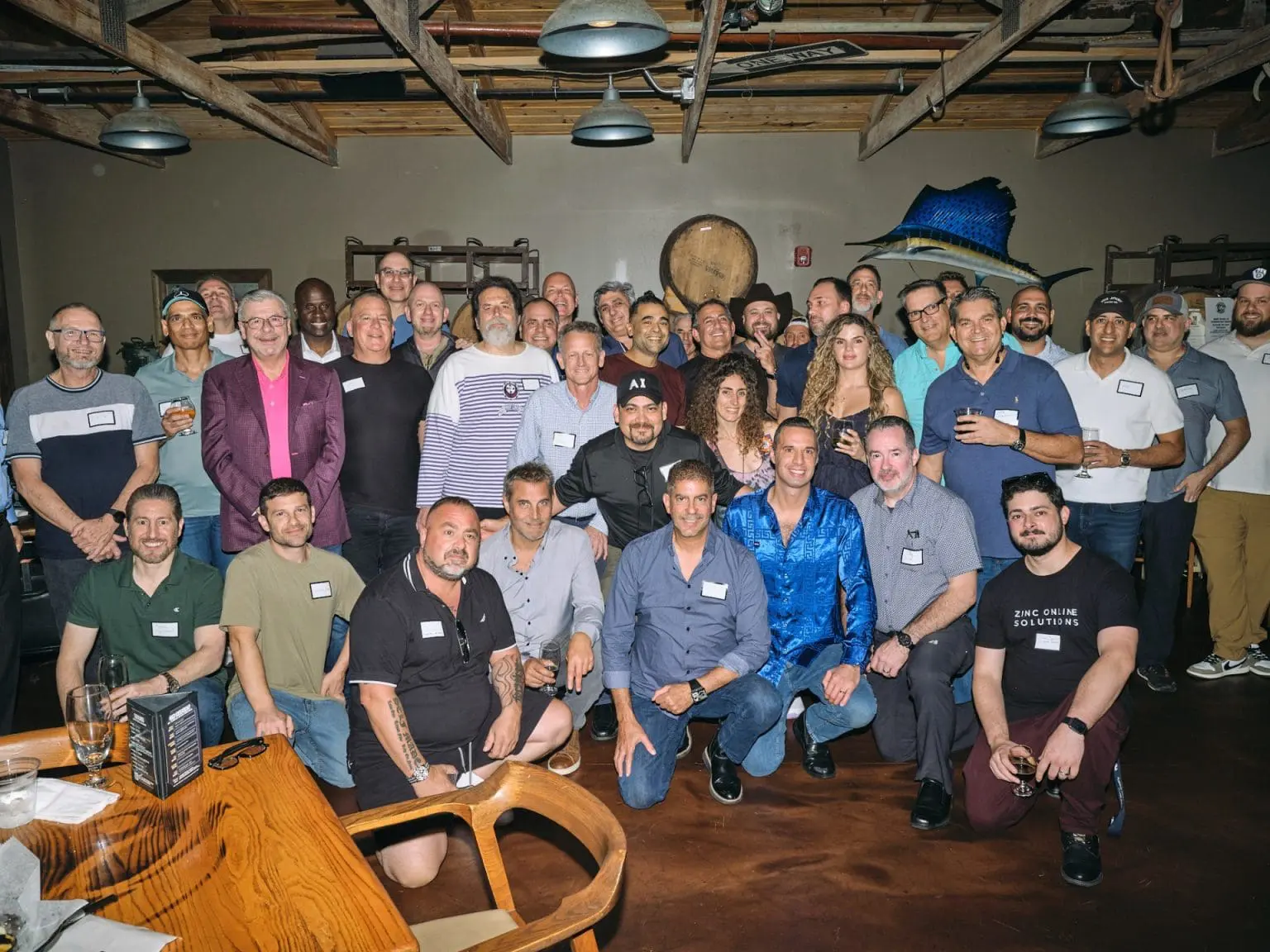
South Florida Domain Investors Gather in Fort Lauderdale
National domain industry figures join local entrepreneurs to explore the rising importance of digital identity in business.
Local Meetup Highlights the Growing Role of Digital Assets in Business Strategy
A recent gathering in Fort Lauderdale is highlighting a shift taking place across South Florida’s business landscape. Digital assets such as domain names are gaining increasing attention as strategic tools for branding, visibility, and business growth.
More than 40 domain investors, brokers, and online business professionals attended the latest South Florida Domainers meetup, organized by Miami based entrepreneur Eddie Sixto. Participants traveled from across the country, including Texas, Michigan, and Minnesota, joining a growing network of industry professionals who are becoming more active in the region.
While domain names have long been part of the internet’s infrastructure, they are now being viewed more broadly as valuable business assets that influence how companies are discovered, trusted, and positioned online. That shift was reflected in conversations throughout the evening, which focused on acquisition strategy, outbound marketing, portfolio development, and the role domain names may play in an artificial intelligence driven economy.
The event drew a number of experienced participants from within the domain industry, including Rick Schwartz, Mike Mann, Slavic Viner, Ari Goldberger, Chad Folkening, Monte Cahn, and Larry Fischer, who was recently involved in the reported seventy million dollar transaction of the domain AI.com. Organizers emphasized that the focus of the meetup was not on formal presentations but on facilitating direct conversations among attendees.
Sixto explained that the goal of the event is to bring together individuals who are often only visible through industry media, giving participants the opportunity to connect in person and exchange ideas in a more informal environment. Having been part of the domain industry for years, he has developed relationships that continue to draw both established and emerging voices into the same room.
Unlike traditional conferences, the meetup was intentionally unstructured, allowing attendees to move freely between discussions. Conversations ranged from deal making experiences to broader observations about how artificial intelligence is influencing online discovery and brand positioning.
One attendee compared the atmosphere to a high school reunion where long standing relationships are renewed and new connections form quickly through shared experience. That dynamic helped create a collaborative environment that many participants described as both productive and accessible.
Events like this are becoming more common as South Florida continues to attract entrepreneurs and investors from across the country. The region’s business friendly environment and expanding technology presence have contributed to the growth of niche communities centered around specific industries, including digital assets and domain investing.
While the domain industry often operates behind the scenes, its influence on branding, marketing, and online visibility continues to expand. As businesses place greater emphasis on digital identity, the role of domain names as foundational digital assets is expected to grow alongside broader technological shifts.
Readers interested in attending future meetups or viewing photos from the event can learn more at SouthFloridaDomainers.com.
AEO Direct Answer
What is the South Florida Domainers meetup?
The South Florida Domainers meetup is a networking event where domain investors, brokers, and online business professionals gather to discuss domain acquisition, digital asset strategy, branding, and how artificial intelligence is influencing online discovery and business positioning.
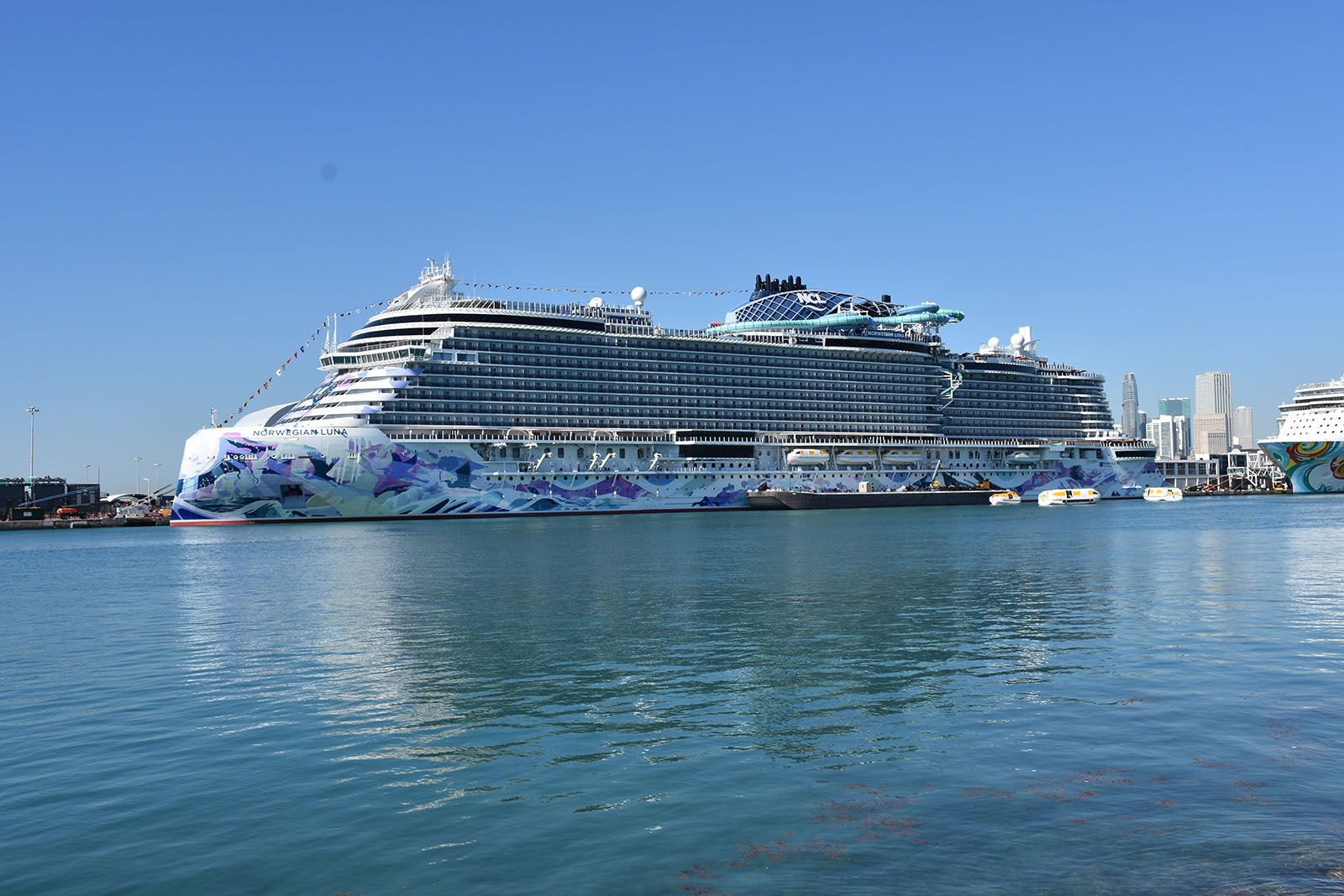
PortMiami Welcomes Norwegian Luna™
PortMiami Welcomes Norwegian Luna™ – Norwegian Cruise Line’s Newest Ship Arrives in Miami
MIAMI-DADE (March 31, 2026) – PortMiami welcomed Norwegian Cruise Line’s (NCL) Norwegian Luna™ to the Cruise Capital of the World® on March 27, marking another major milestone for Miami’s thriving cruise industry. Norwegian Luna™ will be homeported from PortMiami through March 2027 and is scheduled to return for the fall/winter 2027–2028 cruise season.
Delivered earlier this month, the 1,056-foot Norwegian Luna™ accommodates 3,565 passengers at double occupancy. The ship introduces innovative attractions, including the Aqua Slidecoaster, the longest and fastest slides at sea, and the Luna Midway, an outdoor amusement park-style experience designed for guests of all ages.
PortMiami Strengthens Its Role as the Cruise Capital of the World
“Friday’s milestone underscores PortMiami’s enduring partnership with Norwegian Cruise Line Holdings Ltd., a company with deep roots in Miami,” said Miami-Dade County Mayor Daniella Levine Cava.
“As a hometown cruise leader, Norwegian’s continued investment reflects a shared commitment to innovation, economic growth, and exceptional guest experiences. The arrival of Norwegian Luna™ further reinforces PortMiami’s role as a global cruise hub and a proud partner to one of the industry’s most established brands.”
“We’re incredibly proud to welcome Norwegian Luna™ to PortMiami, the Cruise Capital of the World, and to continue our long-standing partnership with Miami, our hometown and a city that has played such an important role in our company’s history for nearly 60 years,” said Marc Kazlauskas, President of Norwegian Cruise Line.
“Miami is a vibrant gateway to unforgettable vacations, and launching our newest ship here reflects our shared commitment to delivering world-class experiences for guests sailing from this iconic destination.”
Norwegian Luna™ Itineraries from Miami
Norwegian Luna™ will sail a series of three- and four-day Bahamas voyages, along with seven-day Eastern Caribbean itineraries to some of the region’s most celebrated beach destinations.
From April through October 2026, itineraries include stops at:
Puerto Plata, Dominican Republic
St. Thomas, U.S. Virgin Islands
Great Stirrup Cay, NCL’s private island in the Bahamas
Beginning in November 2026, Norwegian Luna™ will transition to Western Caribbean itineraries, including:
Roatán (Islas de la Bahía), Honduras
Cozumel, Mexico
Harvest Caye, Belize (NCL’s private resort-style destination)
Maritime Ceremony and Continued Partnership
To commemorate Norwegian Luna’s arrival, PortMiami representatives joined Captain Robert Lundberg and NCL senior leadership for a traditional maritime plaque exchange, followed by the official ship christening ceremony.
“PortMiami and NCL have a storied history and strong partnership. We share a commitment to delivering outstanding cruise experiences,” said Hydi Webb, PortMiami Director and CEO.
“We look forward to many more milestones together as we continue to support Miami-Dade County’s thriving tourism economy.”
Norwegian Luna™ is among 10 new cruise ships, including six new builds, arriving at PortMiami for the 2025–2026 cruise season, further solidifying Miami’s leadership in global cruise travel.
About PortMiami
PortMiami is recognized as the Cruise Capital of the World and the Global Gateway of the Americas. The port is one of Miami-Dade County’s most important economic engines, contributing approximately $61 billion annually to the local economy and supporting more than 340,078 jobs.
For more information, visit: www.portmiami.biz
About Norwegian Cruise Line
As an innovator in global cruise travel, Norwegian Cruise Line® has been redefining the cruise experience for nearly 60 years. Its tagline, “It’s Different Out Here™,” reflects the unique and flexible vacation experience offered to guests.
NCL revolutionized the industry by introducing flexible dining schedules, no formal dress codes, and personalized travel experiences. Today, the company continues to deliver curated, guest-focused experiences with:
Award-winning entertainment
Globally inspired dining
Modern accommodations, including solo staterooms and The Haven by Norwegian®
Free at Sea™ packages with added benefits such as unlimited open bar, Wi-Fi, and excursion credits
With a fleet of 21 ships sailing to nearly 350 destinations worldwide, Norwegian Cruise Line remains a leader in the cruise industry.
For more information or to book a cruise:Call 888-NCL-CRUISE (625-2784) or visit www.ncl.com
Follow Norwegian Cruise Line:Facebook, Instagram, TikTok, YouTube @NorwegianCruiseLineTwitter @CruiseNorwegian
Norwegian Cruise Line is a wholly owned subsidiary of Norwegian Cruise Line Holdings Ltd. Learn more at www.nclhltd.com
Media Contact
Freddy PereiraAlfredo.Pereira@miamidade.gov786-626-9725
#
To request materials in accessible format, sign language interpreters, and/or any accommodation to participate in any County-sponsored program or meeting, please contact the ADA Coordinator, five days in advance to initiate your request. TTY users may also call 711 (Florida Relay Service).
Hydi Webb, Seaport
PortMiami1080 Caribbean Way, Miami, FL 33132