

Select Page

Communities

Widgetized Area

This panel is active and ready for you to add some widgets via the WP Admin

Home repairs in North Bay Village

Home repair work can range from a small fix to a larger project that affects several parts of a property. North Bay Village residents, property owners, and organizations can use this page to find and compare home repair providers in the area. Treat each listing as a starting point: contact the provider directly to confirm the current service area, availability, qualifications, and terms before choosing a service.

Home repairs services to explore

Depending on the provider, providers may handle general maintenance, carpentry, fixture replacement, drywall, painting, installation, or other repair requests. Some businesses focus on one specialty, while others offer several services through a single office. Ask which work is performed by the provider, what is handled by a partner, and whether the service is available for your particular project or situation. A clear description of the work helps you compare providers on similar terms.

How to compare home repairs providers

Start with the need, location, timing, and budget you have in mind. Request a written scope or explanation of what is included, how long the work may take, and what could affect the final cost. Compare experience with similar requests, communication practices, scheduling, payment terms, and the process for follow-up. If credentials, permits, insurance, or a written agreement apply to the service, ask for current details and verify them with the appropriate source.

Questions to ask before you decide

Ask what is included in the estimate, whether a site visit is needed, who supplies materials, how changes are approved, and what documentation or follow-up is provided. Review the answer alongside the provider’s listing and written terms. Ask for clarification if a service description is broad, a quote leaves out important work, or a timeline is uncertain. Confirm how to reach the business after the initial appointment and what steps are available if the service needs correction or further attention.

Find home repairs in North Bay Village

Browse the North Bay Village business directory to identify local listings and request current information. Compare providers using the same criteria so differences in scope, availability, and price are easier to understand. A directory listing is not an endorsement, and details should be verified directly with each business.

For municipal contacts and community information, visit the official North Bay Village website. Contact providers directly to confirm the details that matter for your needs and keep written estimates, policies, and agreements for reference.
State of Pinecrest April 2026

State of Pinecrest – April 2026
A Monthly Review of Leadership, Community Progress, and Civic Development
April 2026 was a month focused on infrastructure coordination, public safety planning, and continued resident engagement throughout Pinecrest. Village leadership, public works officials, and community stakeholders spent much of the month addressing transportation concerns, drainage priorities, and quality-of-life improvements across residential corridors. Overall, Pinecrest continued advancing long-term infrastructure and community planning initiatives while balancing resident expectations regarding timelines, transparency, and neighborhood impact.
Additionally, local discussions centered on mobility improvements, traffic calming efforts, and maintaining municipal service reliability. Residents remained active in public meetings and digital engagement channels, showing continued interest in how projects are prioritized and implemented throughout the village.

Leadership and City/Village Operations
Mayor Joseph Corradino, Vice Mayor Ken Fairman, and members of the Village Council continued emphasizing operational stability and long-term planning during April. Council discussions remained focused on infrastructure coordination, stormwater management preparation, and transportation-related concerns affecting residential neighborhoods.
Meanwhile, village departments continued reviewing maintenance schedules, roadway priorities, and service delivery operations ahead of the summer season. Public Works teams also prepared for increased rainfall periods by monitoring drainage systems and canal conditions throughout the community.
In addition, council members continued evaluating ongoing transportation studies designed to improve pedestrian safety and reduce speeding concerns near schools and residential streets.

Mayor and Community Engagement
Mayor Corradino maintained a visible role throughout April by participating in community discussions related to infrastructure planning and neighborhood concerns. Public engagement remained a consistent priority as residents voiced opinions regarding traffic flow, drainage timelines, and municipal responsiveness.
Additionally, community meetings and resident feedback sessions allowed village leadership to gather input directly from homeowners and business stakeholders. These conversations helped reinforce transparency while encouraging continued civic participation.
Because of this ongoing engagement, residents remained informed about current village priorities and future planning efforts scheduled for the coming months.

City Management and Service Stability
Village administration continued prioritizing operational consistency and service reliability during April 2026. City management teams coordinated with engineering consultants and infrastructure partners regarding drainage planning, roadway evaluations, and capital improvement scheduling.
Furthermore, Pinecrest maintained stable municipal services across sanitation, landscaping, code compliance, and public works operations. Preparations for seasonal weather conditions also remained a major administrative focus.
However, some residents continued requesting faster implementation timelines for infrastructure projects already under review. Village officials acknowledged those concerns while emphasizing the importance of engineering analysis, permitting, and funding coordination before construction begins.

Commission Priorities and Infrastructure Focus
Infrastructure remained one of the dominant topics throughout April. Village officials continued reviewing transportation safety data connected to prior traffic studies, particularly near school zones and high-volume intersections.
Additionally, stormwater mitigation planning remained active as Pinecrest evaluated future drainage upgrades designed to reduce flooding vulnerability during heavy rain events. Sidewalk improvements, roadway maintenance schedules, and canal management discussions also remained on the agenda.
Meanwhile, traffic calming strategies continued receiving public attention. Residents expressed interest in additional pedestrian protections, speed reduction efforts, and neighborhood safety improvements throughout several residential corridors.
Overall, infrastructure discussions reflected a broader village goal of balancing long-term planning with immediate neighborhood concerns.

Business Community and Economic Engagement
Pinecrest’s business community continued participating in conversations related to accessibility, transportation flow, and local economic stability. Small business operators remained focused on maintaining customer access while infrastructure and roadway planning discussions progressed.
Additionally, organizations such as the U.S. Small Business Administration continue highlighting the importance of infrastructure reliability and local economic resilience for small business sustainability. The National Association of Counties also continues promoting collaborative local governance and infrastructure investment strategies that support municipal growth.
Business owners throughout Pinecrest remained engaged in discussions surrounding parking access, roadway efficiency, and neighborhood development priorities.
Internal Resource:Pinecrest Businesses

Resident Participation and Civic Engagement
Resident participation remained steady throughout April as homeowners attended meetings, submitted digital feedback, and engaged with ongoing infrastructure discussions. Community involvement continued shaping conversations surrounding transportation safety, drainage planning, and neighborhood maintenance priorities.
Furthermore, residents expressed continued interest in maintaining Pinecrest’s balance between residential quality of life and long-term municipal development. Public input remained especially important regarding roadway projects and stormwater planning initiatives.
Because of this participation, village leadership continued receiving direct feedback that may influence future prioritization and implementation schedules.

TL;DR
April 2026 focused on infrastructure coordination, transportation planning, and operational stability throughout Pinecrest. Village leadership continued addressing drainage concerns, pedestrian safety discussions, and long-term roadway planning while residents remained highly engaged in civic conversations.
Overall, Pinecrest spent the month balancing future-focused planning with community expectations regarding transparency, execution, and neighborhood quality of life.

Final Outlook
Looking ahead to May 2026, Pinecrest is expected to continue prioritizing infrastructure planning, seasonal storm preparedness, and transportation safety discussions. Residents will likely continue monitoring project timelines closely as village leadership works toward converting long-term planning into visible community improvements.

Editorial Transparency, Source & AI Disclosure
This editorial series is produced for public civic awareness and community engagement purposes. Information may include publicly available municipal updates, community discussions, infrastructure planning topics, and local leadership activity. AI-assisted drafting tools may be used in the organization and presentation of this content; however, all content is reviewed and formatted for readability, consistency, and editorial structure by 305SocialMedia.com.
#StateOfPinecrest #PinecrestApril2026 #PinecrestInfrastructure #CommunityEngagement #VillageLeadership #TrafficSafety #StormwaterPlanning #305SocialMedia

Read More

Healthcare News April 2026

Miami Healthcare & Wellness – April 2026
The April 2026 Miami healthcare & wellness update highlights expanded hospital services, preventive health initiatives, wellness events, and community outreach programs improving healthcare access across Miami-Dade County.

April 2026: Innovation and Preventive Care Continue Across Miami-Dade
April brought another active month for Miami healthcare & wellness, as hospitals and healthcare organizations focused on preventive medicine, technology upgrades, and community education. Across Miami-Dade County, healthcare providers continued expanding services to improve patient care and long-term wellness outcomes.

What Healthcare Improvements Happened in Miami During April 2026?
Baptist Health Expands Preventive Cardiology Programs
Baptist Health South Florida introduced expanded preventive cardiology services this month. The initiative includes heart screenings, nutrition counseling, and lifestyle coaching aimed at helping residents reduce cardiovascular risks before serious conditions develop.
These new programs reflect Miami’s growing emphasis on preventive healthcare instead of reactive treatment.

Which Miami Hospitals Introduced New Services?
Jackson Health System Launches Mobile Wellness Units
Jackson Health System rolled out additional mobile wellness units throughout Miami-Dade County. These clinics provide:

Basic health screenings
Blood pressure monitoring
Diabetes education
Vaccinations
Wellness counseling

The expansion helps underserved neighborhoods gain easier access to healthcare services without traveling long distances.

Larkin Community Hospital Enhances Senior Care Programs
Larkin Community Hospital announced improvements to its senior wellness and rehabilitation programs. New services include fall-prevention education, physical therapy support, and chronic disease management resources tailored to Miami’s growing senior population.

What Community Wellness Events Took Place in April?
Miami-Dade Hosts Spring Wellness & Fitness Events
Several health and wellness fairs took place across Miami-Dade during April 2026. These events focused on healthy lifestyles and preventive care through:

Community fitness classes
Mental wellness workshops
Nutrition seminars
Free glucose and cholesterol screenings

Families throughout the county participated in activities promoting healthier daily habits.

Healthcare Professional Spotlight – Dr. Elena Martinez
This month’s healthcare spotlight goes to Dr. Elena Martinez, a preventive medicine specialist recognized for her leadership in community outreach and patient education. Her work promoting heart health awareness and preventive screenings has positively impacted residents across Miami-Dade.

“To keep the body in good health is a duty.” – Buddha
This quote reflects the message behind April’s wellness initiatives. Across Miami healthcare systems, providers encouraged residents to take proactive steps toward healthier lifestyles and preventive care.

April 2026 showed that Miami healthcare & wellness continues evolving through innovation, accessibility, and preventive medicine. Hospitals, clinics, and healthcare professionals are working together to create healthier communities throughout Miami-Dade County.
#MiamiHealthcare #MiamiWellness #PreventiveCare #CommunityHealth #HeartHealth #SeniorCare #JacksonHealth #BaptistHealth #LarkinHospital

Read More

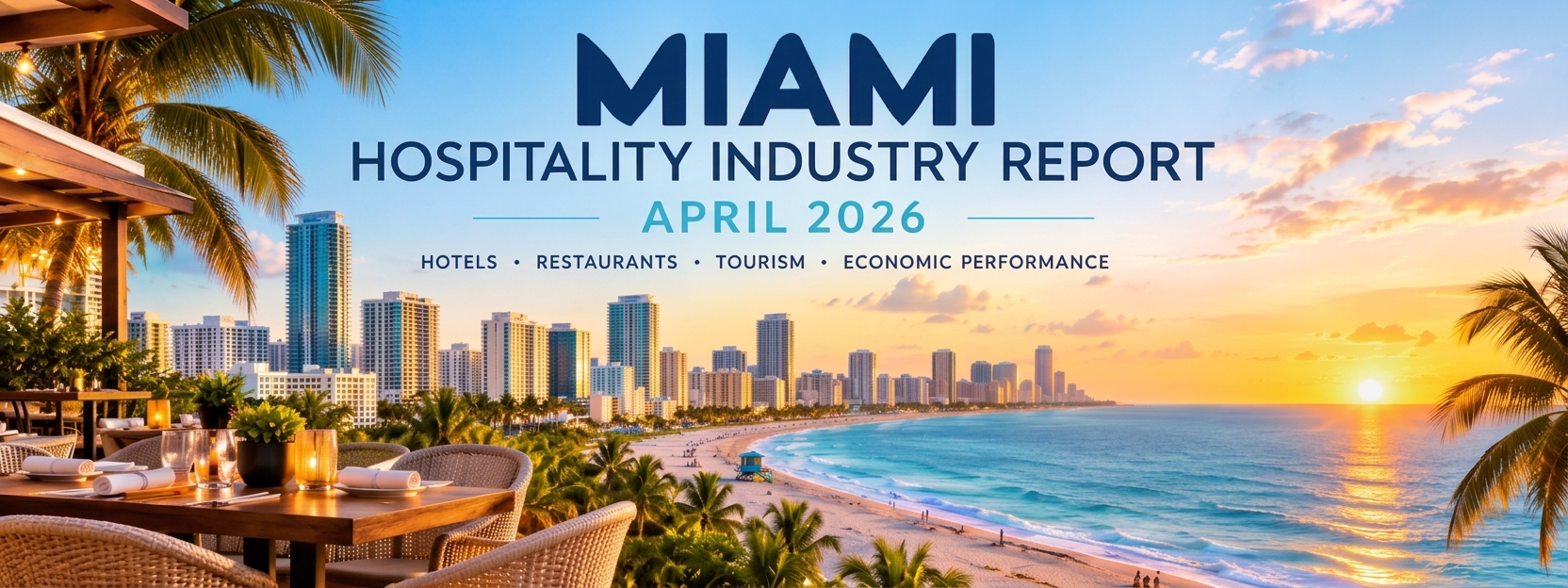
Miami Hospitality Industry Report – April 2026

Miami Hotels Continue to Command Premium Rates in April as Spring Hospitality Activity Remains Strong
April 2026 marked an important transition for Miami’s hospitality industry.
The peak winter tourism season was beginning to fade, spring-break travel was winding down, and the city’s major March sporting events had concluded. Yet Miami’s hotel market continued to demonstrate significant pricing power.
According to CoStar’s April 2026 hotel performance data, Miami recorded the largest year-over-year increase in average daily rate among the 25 largest U.S. hotel markets, with ADR rising 12.5% to $283.34.
For Miami’s hospitality businesses, April was therefore less about the extraordinary event concentration seen in March and more about the destination’s ability to maintain strong room rates as the market moved into a different phase of the tourism calendar.
At the same time, restaurants continued to expand, new international concepts entered the market, and consumers faced higher local prices—including a significant increase in energy costs.

April 2026 By the Numbers

Indicator
April 2026

Miami hotel ADR
$283.34

Miami ADR year-over-year change
+12.5%

U.S. hotel ADR
$165.90

U.S. ADR year-over-year change
+2.8%

U.S. hotel occupancy
64.9%

U.S. RevPAR
$107.73

Miami restaurant openings tracked
12+

Miami-area CPI, 12-month change
+3.8%

Food-away-from-home prices, 12-month change
+1.4%

CoStar reported that U.S. hotel occupancy reached 64.9% in April, ADR reached $165.90 and RevPAR reached $107.73. Miami stood out for its 12.5% ADR increase, the strongest among the country’s Top 25 hotel markets.

Miami Hotel Rates Remain One of the Market’s Biggest Strengths
The headline number for April was Miami’s $283.34 average daily rate.
That represented a 12.5% increase from April 2025 and was substantially above the national average ADR of $165.90.
The comparison is significant.
Miami was not simply competing for travelers through occupancy. Hotels were continuing to command a premium for access to the destination’s beaches, restaurants, nightlife, business districts and entertainment.
This pricing strength is particularly important for hotel owners because ADR can increase revenue even when occupancy growth is more modest.
In other words, Miami’s hospitality story in April was increasingly a rate story.
What happened to RevPAR?
Revenue per available room, or RevPAR, combines occupancy and room rates into a single performance measurement.
While CoStar’s April release highlighted Miami’s ADR performance, it also reported that overall U.S. RevPAR increased 4.4% year over year.
Miami’s strong ADR performance contributed to the market’s continued ability to generate substantial revenue from its hotel inventory.
The broader implication is that Miami hotels entered the second quarter with a pricing environment that remained considerably stronger than the national average.

April Was a Different Hospitality Market Than March
March and April should not be viewed as identical months.
March benefited from a concentration of major events, including the World Baseball Classic and Miami Open, while April represented a transition toward the spring and early-summer travel calendar.
That transition matters because hospitality operators cannot rely on major events every week.
Miami’s April hotel performance therefore provides a useful test:
Could the market maintain premium pricing without the same concentration of international sporting events?
The answer from ADR was clearly strong.
The market continued to command a significant premium even as the calendar moved beyond March’s peak event schedule.

Easter and the Calendar Shift Created Some Volatility
One factor complicating year-over-year hotel comparisons in early April was the timing of Easter.
CoStar reported that the U.S. hotel industry experienced negative year-over-year comparisons during the week of March 29 through April 4 because of the Easter calendar shift. Miami, however, posted the highest ADR increase among the Top 25 markets during that week, with ADR rising 24.7% to $325.48. RevPAR increased 23.8% to $263.60.
This is an important reminder when evaluating monthly tourism data.
A holiday moving from one week to another can make a single week’s year-over-year comparison appear unusually strong or weak.
For Miami, the broader April result remained notable because the destination maintained exceptional room-rate growth despite these calendar effects.

Restaurants Continue to Expand Across Miami-Dade
Miami’s restaurant industry remained extremely active during April.
Miami New Times identified 12 restaurants that opened during April, including concepts ranging from barbecue and bagels to steakhouses and international dining brands.
Among the notable openings were:
GAIA
The Dubai-born Greek-Mediterranean restaurant opened its first U.S. location in Miami Beach on April 28.
The concept also introduced an after-dark cocktail lounge called Nyx, adding a nightlife component to the South of Fifth operation.
Leonardo
Leonardo opened on Collins Avenue on April 17, combining Italian dining with live entertainment and cabaret programming.
The Mexican
The Dallas-based contemporary Mexican restaurant opened a waterfront location on Brickell Key, adding another high-end dining concept to one of Miami’s most active business and residential districts.
Casa Tua Cucina Wynwood
Casa Tua Cucina opened a large Italian market and restaurant concept in Wynwood, adding another substantial food-and-beverage operation to the neighborhood.
La Traila Barbecue
The Miami barbecue concept returned in South Miami with a larger operation featuring Texas-style barbecue and a full bar.
These openings demonstrate that Miami’s restaurant investment continued across several price points and business models.
The market was attracting:

International restaurant groups
Established South Florida operators
Fast-growing local brands
Luxury dining concepts
Neighborhood restaurants
Cocktail lounges
Entertainment-driven venues

International Hospitality Brands Continue Entering Miami
One of the most important developments in Miami’s restaurant industry is the growing number of concepts entering the market from outside Florida.
April brought several examples.
GAIA arrived from Dubai, while The Mexican expanded from Dallas. Other high-profile concepts continued to arrive from cities including New York, London, Tokyo and Los Angeles.
The Miami Herald noted that several high-end restaurants with international roots had opened in South Florida during the first part of 2026, including Karyu from Tokyo.
For Miami, these openings serve two purposes.
They add additional choices for local diners, but they also strengthen Miami’s position as a destination for travelers interested in food, nightlife and luxury experiences.
Dining has become an increasingly important part of the Miami visitor experience.

Restaurant Inflation Remains a Business Challenge
The restaurant industry’s growth should not be confused with an absence of financial pressure.
The latest Miami-Fort Lauderdale-West Palm Beach Consumer Price Index showed that overall consumer prices increased 3.8% during the 12 months ending in April 2026.
Food prices increased 2.3% over the same period, while the index for food away from home—covering restaurant, cafeteria and vending purchases—increased 1.4%.
Energy was an even larger concern.
The regional energy index increased 17.4% year over year, while gasoline prices increased 34.2%.
For restaurants and hospitality businesses, higher energy costs can affect:

Kitchen operations
Refrigeration
Air conditioning
Transportation
Delivery
Employee commuting
Food distribution

Miami’s hospitality industry therefore entered the second quarter with strong consumer demand but also a higher operating-cost environment.

Estimated Restaurant Activity
Unlike hotel performance, there is no single authoritative monthly figure that captures all restaurant and bar sales across Miami-Dade County.
For that reason, Miami Hospitality News does not present a precise April restaurant-revenue figure as an official statistic.
Instead, the combination of continued restaurant openings, visitor activity, hotel demand and consumer-price data suggests that food-and-beverage businesses remained an important contributor to Miami’s April hospitality economy.
The distinction matters.
A restaurant can generate higher sales while simultaneously experiencing higher costs. Revenue growth does not automatically equal profit growth.
For future monthly reports, Miami Hospitality News will continue separating sales activity from profitability, unless reliable operating-margin data becomes available.

Miami’s Hospitality Economy Is Diversifying
April’s activity also showed how broad Miami’s hospitality economy has become.
The traditional model was heavily dependent on:
Hotels + beaches + restaurants + nightlife.
Today’s Miami hospitality economy is considerably broader.
It includes:

Luxury hotels
Boutique hotels
Restaurants
Bars
Nightclubs
Sporting events
Entertainment venues
Food halls
Shopping districts
Wellness
Cultural attractions
Conventions
Cruise tourism
Corporate travel
International business travel

This diversification can help the market absorb changes in any single visitor segment.

Miami’s Tourism Economy Remains Large
The April numbers should also be considered within the context of Miami-Dade’s overall tourism economy.
The Greater Miami Convention & Visitors Bureau reported that 28.3 million visitors came to Miami-Dade County in 2025, generating approximately $32.2 billion in total economic impact.
Tourism represented approximately 8% of the county’s GDP and generated more than $5.3 billion in combined federal, state and local tax revenue.
Those figures establish the scale of the industry heading into 2026.
April’s hotel and restaurant activity therefore represents one month within a much larger tourism economy.

New Hotel and Hospitality Investment Continues
The development pipeline remained another important component of Miami’s hospitality story.
Hotel renovations, restaurant openings and repositioned properties continued to reshape established tourism districts.
The reopening and renovation of existing properties is particularly important because Miami’s hospitality industry is not expanding solely through new construction.
Older hotels and restaurants are being renovated, repositioned and redesigned to compete for higher-spending visitors.
That trend can help explain why room rates remain strong even as the market continues to add hospitality inventory.

What April Tells Us About Miami Hospitality
Four themes stand out from the April data.
1. Miami continued to command premium hotel rates
Miami’s $283.34 ADR was 12.5% higher than the previous year and represented the largest ADR gain among the Top 25 U.S. hotel markets tracked by CoStar.
2. The market was able to maintain momentum after March’s major events
April did not have the same concentration of international sporting events as March, yet hotel pricing remained strong.
3. Restaurant investment remained active
At least 12 notable restaurant openings were reported during April, with new concepts entering Miami Beach, Brickell, Coral Gables, Wynwood, South Miami and other areas.
4. Operating costs remain a major issue
Miami-area consumer prices increased 3.8% year over year, while energy prices increased substantially faster.
The result is a hospitality market where demand and pricing remain strong, but operating expenses require careful management.

Looking Ahead to May
By the end of April, Miami’s hospitality industry was entering a different stage of the year.
The peak winter period was behind the market, but the destination still had several major factors working in its favor.
International tourism, business travel, conventions, cruise activity and preparations for the FIFA World Cup were all expected to influence the market as the summer approached.
For hotel operators, the key issue would be whether strong ADR could continue as seasonal demand changed.
For restaurants, the question would be whether Miami’s rapid expansion of dining concepts could be supported by enough consumer and visitor spending.
And for the broader hospitality industry, May would provide another opportunity to measure whether Miami’s 2026 performance was being driven by individual events—or by sustained underlying demand.

Miami Hospitality Report: April 2026
April offered a different but equally important picture of Miami’s hospitality economy.
The major March events were over, yet hotel rates remained exceptionally strong. Miami recorded the largest ADR increase among the country’s largest hotel markets, while restaurants continued to attract new investment and international concepts.
At the same time, higher energy and operating costs reminded businesses that strong revenue does not necessarily translate into higher margins.
The takeaway from April is therefore not simply that Miami’s hospitality industry was busy.
It is that Miami continued to demonstrate pricing power while navigating a more expensive operating environment.
As the city moved toward the summer season and the FIFA World Cup, the next question became whether that pricing power could continue through the months ahead.

Methodology & Data Notes
This report separates reported statistics, preliminary data and editorial estimates.
Hotel performance data is based primarily on CoStar’s April 2026 STR market reporting. CoStar reported Miami’s April ADR at $283.34, representing a 12.5% year-over-year increase.
Consumer-price data is from the U.S. Bureau of Labor Statistics for the Miami-Fort Lauderdale-West Palm Beach metropolitan area.
Restaurant-opening information is based on Miami-area hospitality publications and local restaurant reporting. It is intended as an indicator of market activity and is not a complete census of every restaurant opening in Miami-Dade County.
Miami Hospitality News does not present a precise countywide restaurant-revenue number when an authoritative monthly source is unavailable. Any future revenue estimates will be explicitly identified as estimates and separated from official statistics.
Business updates:Email info@miamibusiness.com

Read More

The State of Real Estate April 2026

Miami-Dade Real Estate April 2026 Market Update
Miami’s real estate market continued to evolve throughout April 2026. Buyers gained more inventory choices, sellers adjusted expectations, and luxury properties once again dominated local headlines. Across Miami-Dade County, the market showed signs of balance while still maintaining the strong demand that has defined South Florida over the last several years.
A Look at the Miami-Dade Housing Market
For anyone following the Miami-Dade Real Estate April 2026 market, the direct answer is that home prices remained resilient while inventory growth created a healthier environment for buyers and investors.
Single-family homes in Miami-Dade County posted a median sale price near $700,000 during April. That figure reflected steady appreciation compared to the previous year. Condominiums remained highly active as well, with median pricing averaging approximately $475,000.
One of the biggest stories this month involved inventory levels. Active listings continued rising throughout Miami-Dade, especially in the condo sector. This gave buyers more negotiating power compared to the highly competitive conditions seen during the pandemic years.
Even with additional inventory, Miami remains one of the country’s most desirable real estate markets. International buyers, relocation clients, and investors continue fueling demand across many neighborhoods.
Real Estate News & Developments
April 2026 brought several important real estate developments across Miami-Dade County. Developers announced new mixed-use projects in Downtown Miami and Wynwood, signaling continued confidence in the city’s long-term growth.
Luxury waterfront properties also remained in high demand. Miami Beach, Coral Gables, and Coconut Grove experienced increased activity from high-net-worth buyers seeking second homes and investment properties.
At the brokerage level, several independent agencies partnered with larger regional firms to improve technology and marketing capabilities. Meanwhile, boutique agencies specializing in luxury and international clients continued expanding throughout Brickell and Edgewater.
The commercial real estate market also saw movement. Office leasing activity improved slightly as businesses continued returning to in-person operations. Retail spaces near entertainment districts and tourism corridors remained especially attractive to investors.
Largest Real Estate Deal of the Month
One of the largest reported transactions in April 2026 involved a luxury waterfront estate valued at nearly $42 million. The sale reinforced Miami’s reputation as a premier destination for global luxury buyers.
Across the broader market, the average median residential sale price across all property categories remained close to $575,000, demonstrating continued stability despite higher mortgage rates.
These numbers tell an important story. Miami’s ultra-luxury segment continues attracting international wealth, while local buyers remain active in mid-range housing markets.
Realtors Making Headlines in April 2026
Recognizing successful professionals each month helps showcase the talent driving Miami’s real estate industry. Three standout categories for April included:

Top Luxury Realtor – Specialized in multimillion-dollar waterfront transactions throughout Miami Beach.
Top Residential Producer – Closed the highest number of family home sales across Miami-Dade County.
Top Condo Specialist – Led the market in Brickell and Downtown Miami condo transactions.

(You can insert your preferred realtor names here, and I can customize this section further for your brand.)
Why Miami Real Estate Continues to Stand Out
Miami’s appeal goes far beyond beaches and warm weather. The city continues attracting entrepreneurs, remote workers, investors, and international buyers looking for financial opportunity and lifestyle advantages.
Strong population growth, continued development, and global exposure keep Miami positioned as one of America’s most important real estate markets. Even as conditions normalize, long-term demand remains impressive.
“Owning a home is a keystone of wealth.” — Suze Orman
This quote perfectly reflects Miami’s current market. Real estate ownership continues providing long-term value, stability, and opportunity for both homeowners and investors throughout South Florida.
April 2026 showed a more balanced Miami-Dade market compared to previous years. Buyers gained more inventory options, while sellers still benefited from strong pricing. Those who stay informed and act strategically will continue finding excellent opportunities.

#MiamiRealEstate #MiamiDade #April2026 #LuxuryRealEstate #MiamiHomes #RealEstateMarket

Read More

The State of Insurance April 2026

Insurance Awareness Grows Across Miami-Dade County This Spring
April 2026 is bringing renewed attention to insurance preparedness throughout Miami-Dade County. As residents prepare for the upcoming hurricane season, many homeowners and business owners are reviewing policies, comparing rates, and exploring new coverage options.
The biggest insurance trend in Miami-Dade during April 2026 is the growing focus on hurricane preparedness, flood protection, and competitive policy shopping as Florida’s insurance market continues stabilizing.
With weather risks always top of mind in South Florida, early preparation is becoming more important than ever.

Homeowners Are Reviewing Coverage Earlier This Year
Insurance agencies across Miami-Dade are encouraging residents to begin policy reviews before hurricane season officially starts in June.
Many homeowners are checking:

Windstorm deductibles
Flood insurance requirements
Roof coverage limitations
Additional living expense protection
Replacement cost coverage

Reviewing policies early gives families more time to make changes and avoid last-minute surprises during storm season.

Flood Insurance Demand Continues Rising
Flood insurance remains one of the biggest concerns in Miami-Dade, especially in areas vulnerable to heavy rainfall and storm surge.
Homeowners in communities near the coast and low-lying neighborhoods are increasingly purchasing separate flood policies after recent FEMA flood map adjustments and rising awareness about uncovered flood damage.
Even properties outside designated flood zones are reviewing protection options because flooding can happen almost anywhere during severe storms.

Independent Agencies Continue Expanding Services
Local insurance agencies throughout Miami-Dade are continuing to grow in 2026. Many independent agencies are offering:

Personalized insurance consultations
Bilingual customer support
Commercial insurance planning
Faster quote comparisons
Bundled policy discounts

This increased competition is helping consumers explore more affordable options in a market that has traditionally been expensive.

Technology Is Improving Claims Processing
Insurance technology continues evolving across Florida.
Many carriers now use:

Mobile claim filing apps
AI-assisted inspections
Digital policy management
Faster online approvals

These tools are helping reduce paperwork and improve response times after storms or property damage claims.
For policyholders, faster communication can make a major difference during emergencies.

Challenges Still Affecting Miami-Dade Residents
Although market conditions are improving, several issues continue impacting families and businesses:

Rising property repair costs
Higher premiums in coastal areas
Limited affordability for some homeowners
Strict underwriting for older homes and condos

These ongoing challenges make it important to compare coverage options carefully each year.

“A Quote to Reflect On”
“Success depends upon previous preparation, and without such preparation there is sure to be failure.” — Confucius
This quote perfectly reflects the importance of insurance planning in Miami-Dade. Preparing early helps homeowners avoid financial stress later.

April 2026 highlights the importance of proactive insurance planning in Miami-Dade County. From flood protection to hurricane readiness, residents who review coverage early and stay informed will be better prepared for the months ahead.
#MiamiInsurance #MiamiDadeInsurance #FloodInsurance #HomeInsurance #FloridaInsurance #InsuranceNews #HurricanePreparedness

Read More