
Select Page

Communities

Widgetized Area

This panel is active and ready for you to add some widgets via the WP Admin

Home repairs in North Bay Village

Home repair work can range from a small fix to a larger project that affects several parts of a property. North Bay Village residents, property owners, and organizations can use this page to find and compare home repair providers in the area. Treat each listing as a starting point: contact the provider directly to confirm the current service area, availability, qualifications, and terms before choosing a service.

Home repairs services to explore

Depending on the provider, providers may handle general maintenance, carpentry, fixture replacement, drywall, painting, installation, or other repair requests. Some businesses focus on one specialty, while others offer several services through a single office. Ask which work is performed by the provider, what is handled by a partner, and whether the service is available for your particular project or situation. A clear description of the work helps you compare providers on similar terms.

How to compare home repairs providers

Start with the need, location, timing, and budget you have in mind. Request a written scope or explanation of what is included, how long the work may take, and what could affect the final cost. Compare experience with similar requests, communication practices, scheduling, payment terms, and the process for follow-up. If credentials, permits, insurance, or a written agreement apply to the service, ask for current details and verify them with the appropriate source.

Questions to ask before you decide

Ask what is included in the estimate, whether a site visit is needed, who supplies materials, how changes are approved, and what documentation or follow-up is provided. Review the answer alongside the provider’s listing and written terms. Ask for clarification if a service description is broad, a quote leaves out important work, or a timeline is uncertain. Confirm how to reach the business after the initial appointment and what steps are available if the service needs correction or further attention.

Find home repairs in North Bay Village

Browse the North Bay Village business directory to identify local listings and request current information. Compare providers using the same criteria so differences in scope, availability, and price are easier to understand. A directory listing is not an endorsement, and details should be verified directly with each business.

For municipal contacts and community information, visit the official North Bay Village website. Contact providers directly to confirm the details that matter for your needs and keep written estimates, policies, and agreements for reference.

State of Pinecrest February 2026

Progress is measured not by plans on paper, but by actions that improve our streets, schools, and neighborhoods
-Wilson Alvarez

Mayor, Council & AdministrationMayor Joseph Corradino, Vice Mayor Ken Fairman, Councilmembers Shannon Del Prado, Katie Abbott, Ariel Meyer, Village Manager Yocelyn Galiano

Direct Answer
The Pinecrest February 2026 civic update shows that the Village focused on moving key planning initiatives into early execution. February highlighted flood mitigation, traffic safety near schools, infrastructure maintenance, and ongoing community engagement, reflecting the Village’s efforts to address resident priorities.

The Good in Pinecrest February 2026

Flood Mitigation Strategy: The Village Council advanced planning for drainage upgrades, culverts, and stormwater systems. Residents in vulnerable neighborhoods were prioritized. Learn more about Pinecrest Infrastructure Projects.

Traffic Safety Improvements: Analysis continues near Pinecrest Elementary and Palmetto Elementary, including speed monitoring and pedestrian safety assessments.

Public Works Maintenance: Crews cleared storm drains and maintained canals to reduce seasonal flooding, supporting ongoing public works initiatives.

Transportation Study: Data collection on traffic patterns and neighborhood cut-through routes informs potential redesigns.

Community Engagement: Residents gave feedback during council meetings and through digital systems, influencing neighborhood safety and infrastructure priorities.

The Bad in Pinecrest February 2026

Some residents remain frustrated that flood mitigation projects are still mostly in the planning stage.

Residents want faster implementation of speed reduction and traffic calming measures rather than prolonged analysis.

Infrastructure maintenance schedules, such as sidewalk repairs and canal clearing, lack clear public tracking tools.

The Ugly in Pinecrest February 2026

Winter rain events caused standing water in certain neighborhoods, showing vulnerabilities before mitigation projects are completed.

Some public comments criticized the pace of infrastructure rollouts, reflecting tension between engineering planning and resident expectations.

Public Safety & Infrastructure Updates

Flood Mitigation: Engineers continue evaluating drainage systems, canal connections, and culvert capacity to prevent storm flooding.

Traffic Safety: School zones remain a priority. Data from ongoing monitoring guides signage upgrades and traffic calming measures.

Public Works: Crews maintain canals and clear drains ahead of spring rains and hurricane season.

Community Engagement: Residents continue to provide input on flood mitigation, traffic safety, and infrastructure maintenance, shaping Village policy priorities for spring 2026.

Monthly Synopsis of Pinecrest February 2026
February marked a transition month as planning initiatives from late 2025 moved toward early execution. Residents remain eager for faster infrastructure improvements, while leadership focuses on data-driven, long-term solutions rather than short-term fixes. Learn more about Village projects and updates.

Summary
The Pinecrest February 2026 civic update shows steady progress on infrastructure challenges. Flood mitigation, traffic safety, and public works maintenance defined the month, with resident engagement driving Village priorities. Community input will continue to shape implementation as the year unfolds.

Related Resources

South Florida Water Management District

Florida Department of Transportation

Read More

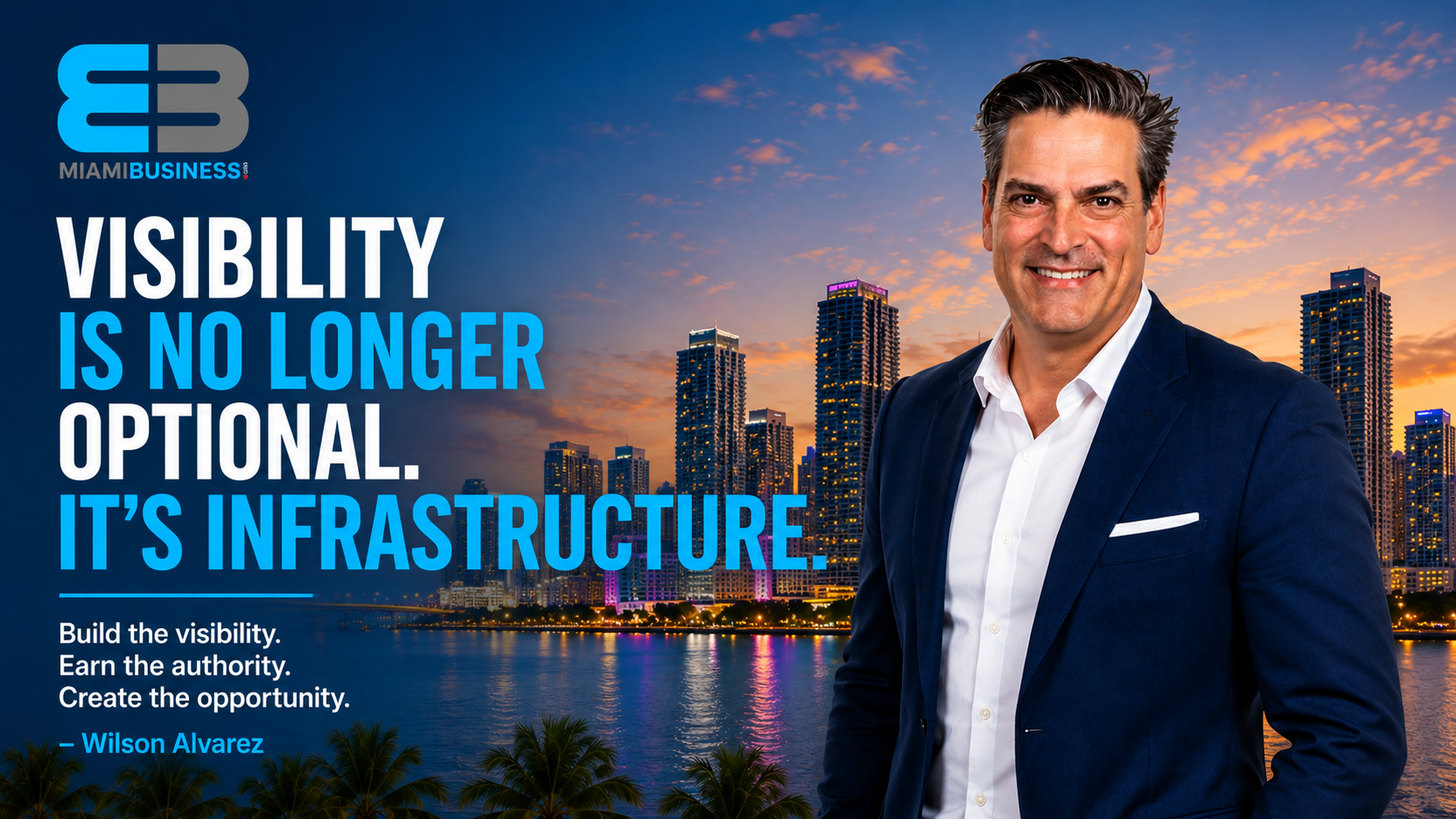
Visibility Is No Longer Optional. It’s Infrastructure.

“The businesses investing in visibility today are building the foundation for tomorrow’s opportunities.” — Wilson Alvarez

Modern Businesses Run on Visibility
“Visibility is no longer marketing. It’s operational infrastructure.” — Wilson Alvarez
There was a time when visibility was considered an added advantage.
A billboard.
A newspaper ad.
A social media page.
A website.
Today, visibility has become something much deeper.
It has become infrastructure.
Just as businesses depend on:

electricity
internet connectivity
accounting systems
communication tools

They now depend on discoverability.
If people cannot consistently find your business online, your company is operating at a disadvantage before the first conversation even begins.
The Invisible Business Problem
Many companies still believe:
“If we do great work, people will eventually find us.”
Unfortunately, today’s marketplace no longer works that way.
Consumers are overwhelmed with information and choices. They move quickly between:

AI platforms
Google searches
LinkedIn
Instagram
online reviews
media articles
local recommendations

before making decisions.
Businesses that consistently appear across these environments create familiarity and trust.
Businesses that remain invisible often become overlooked regardless of how talented they may be.
Visibility Impacts Every Area of Business
Visibility is no longer limited to marketing departments.
It directly affects:

lead generation
recruiting
partnerships
networking
referrals
authority
credibility
long-term growth

When a company has strong visibility:

people remember them
opportunities increase
referrals become easier
trust accelerates
business conversations start sooner

That is infrastructure.
AI Is Accelerating the Shift
Platforms like ChatGPT and Google Gemini are changing how businesses are discovered.
Consumers are increasingly asking AI:

who is trusted
who appears credible
who has authority
who consistently appears online

Businesses without a strong digital footprint may eventually struggle to appear in these evolving search environments.
That means visibility is no longer about vanity.
It is about survival.
Miami Businesses Must Think Beyond Social Media
South Florida is one of the most relationship-driven business ecosystems in the country.
Businesses competing in Miami must now build visibility through:

authority articles
strategic branding
SEO
AI discoverability
media exposure
community positioning
networking ecosystems

This creates layers of credibility that compound over time.
At MiamiBusiness.com, businesses are positioned not simply to advertise, but to establish authority within Miami’s evolving digital economy.
Visibility Compounds Like Interest
One article becomes five.
Five articles become authority.
Authority becomes recognition.
Recognition becomes trust.
Trust becomes opportunity.
That is how modern visibility works.
Businesses that consistently create strategic visibility today are building assets that continue working long after a post or campaign ends.
A Famous Reminder

“Opportunities don’t happen. You create them.” — Chris Grosser

Visibility is one of the most powerful ways businesses create opportunity in today’s digital landscape.
Final Thoughts
The businesses winning attention today are not always the biggest.
They are often the most visible.
Because visibility now influences:

trust
authority
discoverability
reputation
growth

And in an AI-driven marketplace, discoverability itself is becoming a competitive advantage.
Build the Infrastructure Your Business Needs
At MiamiBusiness.com, we help businesses build visibility infrastructure through authority content, AI discoverability, strategic media exposure, SEO optimization, and digital positioning designed to strengthen long-term credibility and business growth.
Contact Wilson Alvarez
📧 info@wilsonalvarez.com📞 305-386-6165

Read More

Building Business Relationships That Go Beyond Networking

“A useful business relationship grows through trust, consistency and the value both people contribute over time.”

“You can have everything in life you want if you will just help enough other people get what they want.”

— Zig Ziglar (Ziglar, Inc.)
TL;DR: Business relationships grow when entrepreneurs stay curious, follow through and offer useful help without making every interaction a sales pitch. Focus on shared interests, remember what matters to people, make relevant introductions and keep in touch after an event. Networking can create opportunities, but trust usually develops through repeated, mutual interactions.
Direct answer: To build business relationships beyond networking, choose communities connected to your goals, ask thoughtful questions, follow up with a specific next step and offer value before requesting a favor. Keep the relationship active with useful information, introductions or a brief check-in. Measure success by the quality of trust and collaboration, not just the number of business cards collected.
Entrepreneurs are often told to network more. The advice can sound like a calendar full of events, quick introductions and follow-up messages that ask for a meeting before a relationship exists. That approach may produce a large contact list without helping the owner build the kind of trust that supports referrals, partnerships, mentorship or practical advice.
Strong business relationships are more deliberate. They take shape when people learn what one another cares about, keep commitments and look for ways to be helpful. An event may start the connection, but the work happens in the conversations that follow.
Decide what kind of relationship you need
Before attending an event or joining a group, identify what you hope to learn or contribute. You may want to understand a new customer segment, meet a potential supplier, find a peer who understands your stage of growth or become more involved in your local business community. A clear purpose helps you choose where to spend time and what questions to ask.
Your goal does not need to be an immediate sale. In fact, relationships often develop more naturally when you are open to learning rather than pushing for a transaction. If the people you meet are not a fit for your business, they may still introduce you to someone who is or teach you something valuable about the market.
Choose communities with shared interests
Look for business associations, professional groups, industry events, educational workshops and community organizations where you can contribute consistently. A group may help with visibility, referrals, peer support or specialized knowledge. Choose based on your purpose, the quality of conversations and whether you can participate over time—not only on the size of its membership.
Different sectors can broaden an owner’s thinking. A restaurant operator might learn about customer retention from a fitness studio, while a professional services firm may borrow a process improvement idea from a manufacturer. At the same time, an entrepreneur benefits from having some relationships inside their own industry, where people understand its customers, regulation and operating realities. A balanced network includes both familiar expertise and fresh perspective.
Make the first conversation about the other person
Good questions help a conversation move beyond a rehearsed pitch. Ask what the person is working on, what kind of customers they serve or what challenge they are trying to solve. Listen for details and ask a follow-up question rather than waiting for a chance to redirect the conversation to yourself. You can explain your work clearly when it is relevant, but avoid turning every answer into a sales presentation.
Be ready to say what you do in plain language. A concise description helps another person understand who might benefit from an introduction. A specific statement such as “I help local businesses improve their websites and search visibility” is often easier to remember than a long list of services.
Follow up with a reason
After meeting someone, send a short, personal follow-up that refers to your conversation. Share the promised article, introduce them to a relevant contact or suggest a quick call to explore a shared question. Avoid generic messages that could have been sent to anyone. The purpose is to continue the conversation, not to demand immediate attention.
Then do what you said you would do. A small promise kept—a useful link, a timely introduction or an answer to a question—can create more trust than a dozen broad declarations about partnership. If you need time to deliver, give the person a realistic timeline and update them if that changes.
Offer help that fits the relationship
Being helpful does not mean giving away unlimited time or forcing a favor. It can be as simple as sharing a resource, connecting two people who have a clear mutual interest, offering a practical observation or attending someone’s event. The best help respects the other person’s needs and boundaries. Ask before making an introduction and explain why you believe the connection may be useful.
Reciprocity is not a scorecard. You do not need to track every favor and expect an equal return. Over time, both sides should feel that the relationship has substance and respect. If the exchange is consistently one-sided, decide whether it needs a candid conversation or a different boundary.
Stay in touch between transactions
Many people contact their network only when they need a referral, a sale or a rescue. Relationships are stronger when communication happens before an urgent request. Send an occasional note about a relevant development, congratulate someone on a meaningful milestone or check in after a project they mentioned. Make the message personal and useful, not automated outreach disguised as friendship.
A simple contact system can help without making relationships feel mechanical. Record how you met, the person’s interests, the last meaningful conversation and any promise you made. Set a reminder to follow up when it would be natural. Use the system as a prompt to remember people, not as a script to manufacture intimacy.
Participate as a contributor
Trust grows when people see you take part. Share your expertise when asked, volunteer for a role that fits your capacity or help improve a group’s programming. Do not overcommit in an effort to become visible. It is better to make one reliable contribution than to accept several tasks you cannot complete.
The U.S. Chamber of Commerce notes that networking can expose small businesses to ideas, practices and trends, and that relationships develop through time and effort. Those benefits are more likely when an owner participates thoughtfully and gives as well as receives (U.S. Chamber on building a network).
Keep boundaries and business judgment
Warm relationships still require clear expectations. Before entering a partnership, referral arrangement or joint promotion, discuss roles, costs, timing, ownership of work and how either party can end the arrangement. Put material commitments in writing and seek professional advice when the agreement has legal or financial consequences.
Do not share confidential customer, employee or financial information casually. A person can be likable without being the right business partner. Learn how they communicate, whether they keep commitments and how they handle disagreement before depending on them for a major project.
Review the quality of your network
Every few months, ask whether your professional relationships reflect the people and perspectives your business needs. Do you know potential customers, trusted peers, specialist advisors and people outside your field? Are you giving relationships enough attention? Are you attending events that support your goals, or only events that have become habits?
There is no ideal network size. A few thoughtful, dependable relationships can be more useful than hundreds of contacts who barely remember your name. Build patiently, be generous in practical ways and follow through. The business opportunities that emerge are more likely to rest on trust rather than a one-time pitch.
Frequently asked questions
How can entrepreneurs network without seeming salesy?
Lead with curiosity, explain your work clearly when relevant and listen to what the other person needs. Follow up with something useful instead of asking for a sale or referral immediately.
Should a business owner build relationships outside their industry?
Yes, relationships outside the sector can bring new ideas and connections. Keep some industry contacts too, since they understand specialized customers, regulations and operating conditions.
How often should I follow up with business contacts?
There is no fixed schedule. Follow up when you have a useful reason, a promised next step or a natural check-in. Quality and sincerity matter more than frequency.
What makes a business relationship valuable?
Trust, honest communication, reliability and mutual respect are stronger foundations than a quick transaction. Useful relationships help both people learn, solve problems or connect with opportunities over time.
How Wilson Alvarez Helps Business Owners
Wilson Alvarez works with entrepreneurs and business owners on strategy, digital visibility and practical business challenges. To discuss a question affecting your company, call 305-266-7883, email info@wilsonalvarez.com or visit WilsonAlvarez.com.
Disclaimer: This article provides general business information and is not legal, tax, accounting, financial or individualized professional advice. Consult qualified professionals about decisions specific to your business.
About the Author: Wilson Alvarez is an entrepreneur, consultant and business owner who writes about entrepreneurship, leadership, marketing and business growth for MiamiBusiness.com.

Read More

Anticipatory Breach in Florida Contracts


Anticipatory Breach in Florida Contracts: What Businesses Need to Know Before the Deadline Hits

Anticipatory breach occurs when one party clearly communicates—through words or conduct—that they will not perform their contractual obligations, even though the deadline for performance has not yet arrived. In real-world terms, it may look like a supplier stating “we’re not shipping,” a contractor walking off a project, or a counterparty refusing to proceed unless the contract terms are changed.
Under Florida law, anticipatory breach—also called anticipatory repudiation—can give the nonbreaching party the right to treat the contract as breached immediately and pursue remedies.
Under Florida law, anticipatory breach occurs when a party makes a clear, distinct, unequivocal, and absolute refusal to perform a contractual duty before performance is due.
Florida courts require that the refusal be unmistakable. A mere complaint, delay, or expression of frustration is not enough. The repudiation must be “distinct, unequivocal, and absolute.” Mori v. Matsushita Electric Corp. of America, 380 So. 2d 461 (Fla. 3d DCA 1980). The Florida Supreme Court has also confirmed that when one party clearly repudiates a duty to perform, the other party’s remaining duties may be discharged. Hospital Mortgage Group v. First Prudential Development Corp., 411 So. 2d 181 (Fla. 1982).
Importantly, Florida’s standard jury instructions emphasize that the party claiming anticipatory breach must also prove that they were ready, willing, and able to perform their own obligations at the time of repudiation. This element frequently determines the outcome of litigation.
What Counts — and What Does Not
Florida courts typically see anticipatory breach arise in several recurring patterns.
1. Clear Refusal to Perform
Statements such as “We will not deliver,” “We are done,” or “We are terminating and will not continue” present the cleanest examples.
2. Conditional Refusal That Rewrites the Deal
If a party demands new terms not required by the contract and refuses to perform unless those demands are met, Florida courts may treat that as anticipatory repudiation if the refusal is absolute.
3. Conduct That Falls Short
Delays, hesitation, or ambiguous communications generally do not qualify unless they clearly show an intent not to perform. The standard is clarity—not speculation.
Strategic Decision: Act Now or Wait?
When anticipatory breach is established, Florida law generally allows the nonbreaching party to treat it as an immediate breach. But the strategic decision is rarely automatic.
Key considerations include:

Whether performance remains realistically possible

Whether evidence may disappear

Whether the continued performance risks waiver

Whether notice and cure provisions apply

Whether losses will escalate if action is delayed

Premature termination, however, can backfire. If the repudiation does not meet Florida’s strict standard, the party who terminates may be deemed the breaching party.
Contracts for Goods: Special UCC Tools
When the contract involves goods, Florida’s Uniform Commercial Code (UCC) provides additional leverage.
Adequate Assurances – Fla. Stat. § 672.609
If reasonable grounds for insecurity arise, a party may demand written adequate assurances of performance. Failure to provide those assurances within a reasonable time (not exceeding 30 days) constitutes repudiation.
Anticipatory Repudiation – Fla. Stat. § 672.610
If repudiation substantially impairs the value of the contract, the aggrieved party may suspend performance and either await performance for a commercially reasonable time or pursue remedies.
Retraction – Fla. Stat. § 672.611
A repudiating party may retract in certain circumstances unless the aggrieved party has materially changed position or treated the repudiation as final.
These statutory tools frequently determine leverage before litigation even begins.
Practical Steps if Repudiation Is Suspected

Confirm key communications in writing.

Preserve emails, drafts, and delivery logs.

Document your readiness to perform.

Send formal notice consistent with the contract.

For goods contracts, consider a written demand for adequate assurances.

Avoid premature termination without legal review.

Why Early Strategy Matters
Anticipatory breach disputes are often decided long before trial. The wording of a single letter, the timing of termination, or the documentation of readiness can determine whether damages are recovered—or whether liability shifts.
Facing a Potential Anticipatory Breach?
If you are dealing with a contract dispute involving repudiation, termination issues, or enforcement questions under Florida law, experienced legal counsel can help evaluate your options and protect your position.
Perez Mayoral, P.A., represents businesses and individuals throughout Florida in complex contract disputes in state and federal courts.
866-416-2368info@pmlawfla.comwww.pmlawfla.com

TL:DR
What is anticipatory breach under Florida law?Anticipatory breach under Florida law occurs when a party makes a clear, distinct, unequivocal, and absolute refusal to perform a contractual duty before performance is due.

Read More

Escaping Perfectionism: From Overthinking to Excellent Execution

“Excellence improves through release, feedback and revision.”
Quick answer: To escape perfectionism at work, define the standard a decision or deliverable must meet, set a deadline for release, and reserve a specific review point for improvements. This protects quality while preventing endless revision from delaying learning and value.

“The goal is not to be perfect by the end. The goal is to be better today.” — Simon Sinek

That line appears on Sinek’s official quotes page. Its business parallel is a disciplined launch: a team can insist on accuracy, safety and a strong customer experience while recognizing that some refinements require real-world evidence. Improvement has a direction and a cadence; perfectionism can keep the work behind closed doors.
For accomplished professionals, perfectionism often looks like commitment. The founder revises a proposal once more. The executive requests another presentation round. The consultant postpones publication until every possible objection has been anticipated. Each action appears responsible in isolation. Together they can turn a promising opportunity into a missed window.
Quality matters. So do timing, cost and the ability to learn. A Miami business preparing a new service cannot discover how customers respond while the offer remains in an internal document. The practical question is not whether the work could improve. Nearly everything could. The question is whether another round of polishing will create more value than a carefully bounded release.
What is the difference between excellence and perfectionism?
Excellence has explicit standards and an end point. Perfectionism moves the end point whenever the work approaches it. An excellent professional asks whether the output serves its purpose, meets obligations and is ready for a defined audience. A perfectionist may keep adjusting details because release creates exposure to judgment.
This distinction becomes easier when standards are written before the work begins. A client report might need verified figures, a clear recommendation, an understandable risk section and a deadline. Those are substantive criteria. Changing the typeface for a fifth time or reopening a settled paragraph may not improve the decision it supports.
Leaders should also distinguish reversible from irreversible decisions. A customer-facing pilot can often be changed after feedback. A legal commitment, safety issue or major financial obligation deserves deeper review. Applying the same level of scrutiny to every choice overloads a team and deprives genuinely consequential decisions of attention.
Why overthinking delays results
Unbounded review consumes time that could be used to gather evidence. It creates hidden costs: employees wait for approval, customers wait for solutions and competitors learn while the organization debates. Even a sophisticated strategy is still a hypothesis until it meets the market.
Overthinking also changes team behavior. When people expect a leader to reopen every detail, they begin to optimize for avoiding criticism rather than solving the problem. Initiative slows. The strongest contributors may stop bringing early drafts because they assume the response will be an exhaustive correction instead of a useful discussion.
A culture of execution treats a first complete version as a milestone, not an embarrassment. It encourages teams to show work early, resolve material flaws and then move. Leaders can still demand precision where it matters. They simply need to say where it matters before the final hour.
Set a definition of done
Before beginning a project, answer four questions. Who is the audience? What outcome must this deliverable enable? Which errors are unacceptable? What can be improved after release? Write the answers in plain language. A brief definition of done prevents quality standards from changing with each review.
For a Miami firm launching a professional workshop, the unacceptable errors may include incorrect pricing, inaccessible registration, unclear location details or an unsupported claim. The first announcement need not answer every imaginable question. A concise page that accurately explains the value, logistics and next step may be ready.
Assign one person authority to decide when the criteria are satisfied. Consultation is useful, but a project with many reviewers and no final decision owner can remain open indefinitely. Give reviewers a deadline and ask them to classify comments as blocking, material or optional. Resolve the first two categories before release; put optional improvements on the next iteration list.
Use a release and review rhythm
Plan two dates at the start: a release date and a review date. The first creates urgency; the second makes improvement credible. The team knows it will have a chance to examine customer response, operational performance and unexpected friction after the work goes live.
A pilot is especially useful when uncertainty is high. Offer a new service to a limited group, measure response and collect direct feedback. Define the success measure in advance. If the goal is qualified inquiries, count those rather than celebrating impressions alone. If the goal is better retention, track it over a meaningful period.
At review, separate defects from preferences. Fix a broken form, misleading statement or poor customer experience promptly. Weigh aesthetic changes against the evidence. A leader’s personal preference can be legitimate, but it should not masquerade as a critical quality issue.
How to lead a team past perfectionism
Model proportionate review. When a draft arrives, start with its purpose and strongest contribution. Identify the few changes needed for release. Avoid returning a page covered with low-impact edits if the central recommendation is sound. People learn the standard from the feedback they receive.
Make decisions visible. A short note stating why a version is ready, which risks remain and when it will be reviewed helps the team execute confidently. It also creates a record for learning. If the launch disappoints, the team can examine its assumptions without retroactively claiming that everyone knew the answer.
Protect room for craft. Escaping perfectionism does not mean rushing every task. Allocate sufficient time for research, verification and editorial judgment. The discipline lies in spending effort where it changes the outcome, then releasing when the agreed standard is met.
Frequently asked questions
Is perfectionism always harmful in business?
No. High standards protect clients and reputations. The problem arises when standards are undefined, low-impact refinements delay delivery or fear of criticism prevents a sound release.
How do I know a project is ready to launch?
Check it against a prewritten definition of done: intended outcome, essential accuracy, customer experience, compliance needs and an accountable decision owner. Schedule a review for improvements after release.
What if a released version has a flaw?
Correct material flaws promptly, communicate clearly with affected people and examine why the review process missed them. A defined feedback loop makes improvement part of responsible execution.
The goal is work that earns trust and reaches the people it was made to serve. Excellence grows when sound judgment, a clear deadline and honest feedback operate together.
Miami business owners who want to strengthen their leadership, visibility and growth strategy can connect with Wilson Alvarez at walvarez@miamibusiness.com or 305-386-6165.

Read More