Select Page

Communities

Widgetized Area

This panel is active and ready for you to add some widgets via the WP Admin

Faith Communities in and around North Bay Village

North Bay Village and its surrounding areas offer a variety of places of worship, catering to diverse faith traditions. Here are some notable churches and temples in the vicinity:

Within North Bay Village:

  1. Ummah of Miami Beach
    • Address: 7904 West Dr, North Bay Village, FL 33141
    • Phone: 786-216-7035
    • Description: A local place of worship serving the Muslim community in North Bay Village.

Nearby Places of Worship:

  1. Calvary Chapel
    • Address: 7141 Indian Creek Dr, Miami Beach, FL 33141
    • Phone: 305-531-2730
    • Description: A Christ-centered, cross-focused church offering services and community programs.
  2. Temple Moses Sephardic Congregation of Florida
    • Address: 1200 Normandy Dr, Miami Beach, FL 33141
    • Phone: 305-861-6308
    • Description: A Sephardic Jewish congregation providing religious services and cultural events.
  3. Iglesia Jesus Es Rey
    • Address: 1133 71st St, Miami Beach, FL 33141
    • Phone: 305-867-7679
    • Description: A Christian church offering worship services and community outreach programs.
  4. St. Mary Magdalen Catholic Church
    • Address: 17775 N Bay Rd, Sunny Isles Beach, FL 33160
    • Phone: 305-931-0600
    • Description: A Catholic parish providing mass services and religious education.
  5. St. Bernard de Clairvaux Episcopal Church
    • Address: 16711 W Dixie Hwy, North Miami Beach, FL 33160
    • Phone: 305-945-1461
    • Description: An Episcopal church known for its historic architecture and spiritual services.
  6. St. Sophia Greek Orthodox Cathedral
    • Address: 2401 SW 3rd Ave, Miami, FL 33129
    • Phone: 305-854-2922
    • Description: A Greek Orthodox cathedral offering liturgical services and cultural events.
  7. New Revelation Alliance Church
    • Address: 11900 Biscayne Blvd, Miami, FL 33181
    • Phone: 305-893-8050
    • Description: A Christian church focusing on community service and spiritual growth.

These establishments reflect the rich tapestry of faith communities accessible to residents and visitors of North Bay Village, fostering spiritual growth and community engagement.
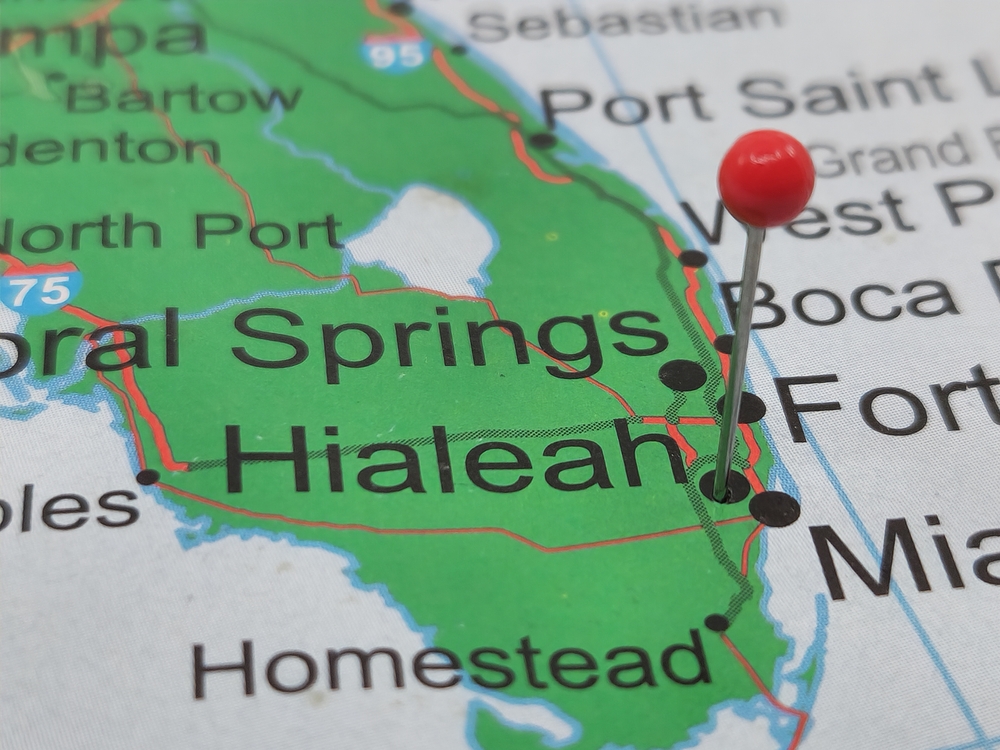

Welcoming Ana Isabel Hume: A New Voice for Transparency in Hialeah

ā€œA city that communicates clearly governs more effectively.ā€ā€” Wilson Alvarez

Welcoming Ana Isabel Hume: A New Voice for Transparency in Hialeah
TL;DR – Ana Isabel Hume has been appointed as the City of Hialeah’s first Chief Communications Officer. Her return to the city where she grew up marks a significant step toward transparency, accessibility, and public trust under Mayor Bryan Calvo’s new administration.

Cities don’t just speak through ordinances and resolutions.They speak through tone. Through clarity. Whether people feel heard—or dismissed.
That is why Hialeah’s appointment of Ana Isabel Hume as its first Chief Communications Officer matters.
It is not simply a new title. It is a signal.
A Homegrown Story That Comes Full Circle
Ana Isabel Hume’s story is deeply tied to Hialeah itself. After moving from Madrid, Spain, she grew up in this city—attending South Hialeah Elementary, working her first job at Westland Mall, and learning early what community resilience looks like in real life.
Now, she returns not as a visitor, but as a public servant.
Her appointment reflects something powerful: when a city invests in leaders who understand its neighborhoods, its families, and its culture, communication stops being abstract. It becomes personal.

ā€œTrust in government isn’t built through volume—it’s built through honesty.ā€ā€” Wilson Alvarez

Why This Role Matters Now
The creation of the Chief Communications Officer role under Mayor Bryan Calvo, the youngest mayor in Hialeah’s history, represents a modern shift in governance.
This position consolidates citywide communications under a single executive leader—ensuring:

Consistent messaging

Clear public information

Direct accountability

Improved access to city resources

In short, it reduces noise and increases clarity.
In an era where misinformation spreads faster than facts, cities must communicate with precision and credibility. Ana Isabel Hume steps into this role with both professional experience and lived understanding of the community she now serves.
Leadership Rooted in Integrity
Mayor Calvo’s administration has emphasized a simple but demanding standard: Integrity. Reform. Progress.
Those are not slogans. They are expectations.
According to publicly available city and statewide safety data, Hialeah continues to stand out:

Second-largest city in Miami-Dade County

Home to more than 220,000 residents

Ranked among the safest large cities in Florida

Recorded one of the lowest homicide totals among major cities in Miami-Dade in 2023

Clear communication plays a role in that success. When residents trust information, they trust institutions. When they trust institutions, communities become stronger.
A Welcome—and a Responsibility
Welcoming Ana Isabel Hume back to Hialeah is more than a congratulatory moment. It is an acknowledgment of responsibility.
The responsibility to tell the city’s story accurately.To communicate policy without politics.To make City Hall feel accessible—not distant.
That is the work ahead.
And it matters.
Looking Ahead
As Hialeah enters this new chapter under Mayor Bryan Calvo’s leadership, the appointment of its first Chief Communications Officer sends a clear message: transparency is not optional—it is foundational.
Welcome home, Ana Isabel Hume. Hialeah’s voice is in capable hands.

Read More

Do You Really Need an .ai Domain in 2026?

Artificial intelligence is booming, but does your business actually need the .ai label?
ā€œTechnology should serve your brand, not distract from it.ā€
-Wilson Alvarez

TL;DR – An .ai domain can be powerful for tech and artificial intelligence companies, but it is not necessary for most traditional businesses. Your domain should reflect your brand strategy, not just follow trends.

The .ai domain has exploded in popularity over the last few years. As artificial intelligence reshapes industries, many business owners are asking a serious question. Should I switch to an .ai domain?
It feels modern. It feels innovative. It feels cutting edge.
However, branding decisions should never be based on excitement alone.
The Direct Answer is straightforward. You only need an .ai domain if artificial intelligence is central to your product, service, or brand identity.
Originally assigned to Anguilla as a country code domain, .ai has become synonymous with artificial intelligence startups and tech driven companies. As AI tools like ChatGPT and other platforms continue gaining adoption, the extension naturally gained momentum.
Yet not every company benefits from attaching itself to that identity.
If you are an AI software developer, a data analytics company, or a technology startup building AI driven solutions, an .ai domain reinforces your positioning. It signals specialization.
On the other hand, if you are a law firm, a medical practice, a construction company, or a local service provider, the extension may create unnecessary confusion.
Brand clarity matters more than trend alignment.
Customers should immediately understand what you do. If your domain raises more questions than answers, your branding may be working against you.
There is also a trust factor to consider. While .ai is growing rapidly, .com still carries broader recognition and default trust for general audiences.
In Miami’s business landscape, relationships and familiarity drive decisions. A traditional business may benefit more from stability than novelty.
That does not mean .ai lacks value.
Many forward thinking companies secure both their .com and .ai domains. The .com becomes the primary brand. The .ai supports innovation focused campaigns or technology divisions.
This layered strategy protects brand authority while allowing room for growth.
Wilson Alvarez once said, ā€œInnovation is powerful, but clarity converts.ā€ That insight applies perfectly here. A domain must support conversion, not just creativity.
The late Steve Jobs famously said, ā€œInnovation distinguishes between a leader and a follower.ā€ That quote inspires many businesses to adopt modern branding. However, true leadership is not copying trends. It is making strategic choices aligned with your core mission.
If AI defines your company, .ai may strengthen your message.
If AI only supports your internal operations, the extension may not need to define your brand.
The takeaway is simple. Choose a domain that represents who you are, not who the trend says you should be.
Strategy always wins over excitement.

Not sure if an .ai domain strengthens or weakens your brand? Let’s evaluate your digital positioning together. Call 305-386-6165 or email info@305SocialMedia.com today and make a strategic domain decision that supports your long term growth.
#AIDomain #DigitalBranding #MiamiBusiness #305SocialMedia #DomainStrategy
305SocialMedia.com
Phone Number305-386-6165
Contact NameWilson Alvarez
Call 305-386-6165 for domain strategy guidance.

Read More

The Power of Slowing Down in Business Conversations

The leaders who listen the longest often see the clearest path forward.-Wilson Alvarez

The Challenge of Speed in Modern Business
In a world that rewards speed and constant activity, the ability to slow down and think together may be one of the most valuable advantages a leader can have.
Many professionals operate in environments where quick responses are expected. Emails arrive constantly, messages demand immediate attention, and decisions are often made under pressure. While efficiency has its place, thoughtful leadership requires something that speed alone cannot provide—space for reflection.

Creating Space for Better Conversations
When professionals intentionally slow down conversations, they create room to explore ideas more carefully. Instead of reacting immediately, participants begin to listen more closely and consider perspectives that may not be obvious at first.
This shift in pace leads to stronger, more meaningful dialogue.

The Problem with Rushed Meetings
Fast-paced discussions often limit the depth of communication. Participants focus on delivering their points quickly, turning conversations into a sequence of statements rather than a true exchange of ideas.
As a result, important details can be overlooked and creative solutions may never surface.

How Slower Dialogue Improves Decision Making
Allowing conversations to unfold naturally changes the dynamic. Participants start building on each other’s ideas instead of simply responding.
A thoughtful question may uncover a hidden challenge, while a different perspective can reveal new opportunities. This process strengthens both decision-making and collaboration.

A Lesson from Tradition and Culture
Throughout history, many cultures recognized the value of slowing down important conversations. Rituals encouraged participants to speak with intention and listen with patience.
Among Native American communities, the ceremonial passing of the peace pipe symbolized respect and thoughtful dialogue. Participants were encouraged to reflect before speaking, focusing on understanding rather than reacting.

The Value of Reflection in Miami
In a fast-paced city like Miami, where business activity is constant, moments of reflection become even more valuable.
Entrepreneurs and professionals who embrace thoughtful conversations often discover insights and opportunities that might otherwise go unnoticed. Slowing down provides clarity in an environment that rarely pauses.

Building Trust Through Thoughtful Dialogue
Another important benefit of slower conversations is trust.
When people feel heard and respected, they become more willing to share ideas openly. Over time, this creates stronger professional relationships and encourages collaboration.

Leadership Insight: Clarity Through Conversation
As Wilson Alvarez often says:

ā€œMovement creates clarity.ā€

This idea reflects the importance of thoughtful exchange. When ideas move deliberately between people, understanding grows and decisions become more informed.

The Takeaway: Slow Down to Lead Better
Leadership is not always about making faster decisions—it is about making better ones.
When professionals create space for conversations to unfold without pressure, ideas improve and collaboration becomes more effective. In today’s fast-moving world, slowing down may be one of the most powerful leadership skills available.

If you value thoughtful discussion, meaningful conversation, and professional collaboration, consider becoming part of the Miami cigar community. Connect with professionals who appreciate insight and dialogue by joining the Miami Cigar Club Facebook group:https://www.facebook.com/groups/miamicigarclub
For more information about gatherings and membership opportunities, contact Wilson Alvarez Consulting Group, Inc. at 305-386-6165.
#MiamiCigarClub #BusinessConversations #LeadershipDialogue #MiamiBusinessCommunity #ProfessionalGrowth

The Miami Cigar Club is not simply a gathering, it is a circle of professionals committed to sharpening ideas, challenging perspectives, and helping one another rise. In an environment built on respect, thoughtful conversation, and shared experience, members meet to discuss real business challenges and support each other’s growth. It is a leadership initiative rooted in the belief that success multiplies when capable people think together. Those interested in learning more about the Miami Cigar Club and upcoming gatherings may request additional information by emailing info@wilsonalvarez.com.

Read More

A Homeowner’s Guide to Property Damage in Condominiums and HOAs in Florida


Ā 

Ā 

Ā 

A Homeowner’s Guide to Property Damage in Condominiums and HOAs in Florida

Provided by Perez Mayoral, P.A. – Florida attorneys representing homeowners and condo owners in disputes with their associations
If you own a condominium unit or a home in an HOA community in Florida, you’ve probably heard conflicting information when property damage occurs:

“That’s inside your unit, so it’s your problem.”
“You need to file a claim with your own insurance.”
“We fixed the leak—the rest is on you.”

The reality is more complicated—and often more favorable to you than you’ve been led to believe.
Florida law imposes clear statutory and contractual duties on associations to maintain common elements and shared infrastructure. When they fail to do so, associations can be held responsible for the resulting damage inside your home, including repairs, mold remediation, and even your costs for temporary housing.
This guide explains your rights, what the law actually says, and what you should do when damage happens.
Why Property Damage Disputes Are So Common
Condominiums and HOAs rely on shared infrastructure that serves multiple homes:

Roofs and exterior walls
Plumbing and sewer lines serving more than one unit
Structural slabs, beams, and columns
Balconies and building envelopes
Drainage systems

When something goes wrong with these shared components, three different parties often focus on three different questions:

You focus on the damage inside your home and what it will cost to fix.
The association focuses on whether insurance will cover it and who’s going to pay.
The law focuses on who had the legal duty to maintain the component that failed—and whether they breached that duty.

The Law Is Clear: Associations Have Nondelegable Repair Duties
In Condominiums
Florida’s Condominium Act is unambiguous:
The association is responsible for maintenance of the common elements.Section 718.113(1), Florida Statutes
“Common elements” means all portions of the condominium property not included in the units—which typically includes everything between the unfinished surfaces of your walls, floor, and ceiling.
This duty is nondelegable. That means:

The association can’t avoid it by blaming a contractor.
The association can’t avoid it by saying a unit owner caused the problem.
The association can’t avoid it by pointing to its insurance carrier.

The McLlenan Case: A Landmark Decision
In McLlenan v. Cypress Chase North Condominium No. 4 Association, Inc., Florida’s Fourth District Court of Appeal made this perfectly clear:

A leak from an upstairs unit caused water and sewage damage in the downstairs unit.
The association tried to argue it wasn’t responsible because the leak came from a unit.
The court said the association had a duty to repair the common elements (the space between floors) regardless of the cause.
The association could later seek reimbursement from the negligent upstairs owner, but it could not refuse to make the repairs.

Key takeaway: Even if another unit owner caused the problem, the association must still repair the common elements and address the resulting damage. Their remedy is to go after that owner later—not to leave you stuck with the bill.
In HOAs
Homeowners associations are governed primarily by their recorded declarations and covenants, not the Condominium Act. But many HOA declarations still impose maintenance duties on the association for:

Roofs
Exterior walls and siding
Shared drainage or utility systems
Structural components in townhouse or villa-style communities

If your HOA declaration says the association is responsible for maintaining something, that’s a binding contract. When the association breaches that duty and damage results, you can hold them accountable.
What Happens When the Association Hires a Contractor?
Many associations assume they’re off the hook if they hire a contractor to do repairs. That’s not true when a nondelegable duty exists.
The Walters Case: Associations Can’t Hide Behind Contractors
In Walters v. Beach Club Villas Condominium, Inc., a contractor working on a common-area dock caused an injury. The association tried to argue it wasn’t liable because an independent contractor did the work.
Florida’s Third District Court of Appeal disagreed:

The association had a nondelegable duty to maintain the dock under both statute and its declaration.
Because of that duty, the association was held jointly and severally liable for the contractor’s negligence.

What this means for property damage:
If the association hires a contractor who:

Over-demolishes your unit
Fails to properly remediate mold
Causes additional water damage during repairs

The association can still be held responsible because its duty to maintain and repair common elements is nondelegable.
Common Types of Property Damage Claims

Water Intrusion and Plumbing Failures

This is the most frequent source of disputes:

Roof leaks
Failed waterproofing on exterior walls
Burst pipes serving multiple units
Sewer line backups or failures
Recurring drainage problems

These events routinely damage drywall, flooring, cabinetry, electrical systems, and personal belongings.

Structural and Building Envelope Problems

Cracked slabs, deteriorating concrete, failing balconies, and compromised exterior walls are typically common elements. When associations delay necessary repairs after being notified, the resulting interior water intrusion can form the basis for multiple legal claims: negligence, breach of contract, and statutory violations.

Mold and Environmental Damage

Mold almost always signals prolonged moisture and inadequate or delayed remediation. It can make your home temporarily uninhabitable and cause serious health issues.
Interior finishes—your flooring, cabinets, baseboards, paint—are often damaged twice:

First by the water event itself
Again by overly aggressive demolition during poorly supervised association repairs

Loss of Use and Displacement Costs

When your home becomes unsafe or uninhabitable, you may incur:

Hotel or temporary housing costs
Moving and storage expenses
Lost rental income if you lease the property

These “loss of use” damages are recoverable when they flow naturally from the association’s breach of duty.
Insurance Does Not Decide Who’s Legally Responsible
Here’s a critical point many associations get wrong:
Insurance is a funding mechanism. It does not determine legal duties.

The association’s statutory duty under Florida law exists whether or not its insurance carrier accepts the claim.
The association’s contractual duty under the declaration exists whether or not a deductible applies.
Hiring a contractor or relying on an insurance company’s position does not eliminate the association’s liability when a nondelegable duty exists.

Section 718.113(1) of the Florida Statutes contains no exception that relieves the association of its maintenance duty when damage was caused by an individual unit owner. The association must still repair—it can seek reimbursement later.
Recurring Damage Changes Everything
If you’ve experienced the same problem multiple times—repeated leaks, ongoing moisture, recurring backups—that dramatically strengthens your legal position.
Recurrence establishes:

The association had prior notice of a defective condition
The association failed to adequately investigate the root cause
The association failed to implement a permanent fix

In McLlenan, the unit experienced multiple leaks over several months. The association initially did little, then performed only partial remediation—tearing out the kitchen but failing to properly address mold that had spread throughout the unit.
Patterns of recurring damage support:

Negligence claims (the association knew and failed to act)
Expanded consequential damages (additional mold growth, extended uninhabitability)

Your Governing Documents Matter—But They’re Not a Shield
Your condominium declaration or HOA covenants allocate maintenance responsibilities, but they do not permit associations to ignore known problems or refuse to repair common elements.
Associations often cite provisions stating that owners are responsible for interior finishes (walls, flooring, cabinets) as a complete defense.
That argument frequently fails when you can prove that your interior damages were caused by the association’s failure to maintain or timely repair components under its control.
Under Florida law, when an association breaches its maintenance duty, it can be liable for foreseeable consequential damages—including damage inside your unit and loss-of-use costs.
What You Should Do When Damage Occurs
Protect yourself and preserve your legal rights by taking these steps immediately:

Document Everything

Take clear photos and videos of the damage, the suspected source, visible mold, and staining
Repeat documentation after each new event or repair attempt
Create a timeline of when each incident occurred

Provide Written Notice

Report the issue in writing to both management and the board (email and certified mail if appropriate)
Describe the problem, dates of occurrence, and any health or habitability concerns
Keep copies of everything

Request Information

Ask whether the association has filed a claim with its master insurance carrier
Request the claim number, adjuster contact information, and any written reports
Ask for copies of any remediation protocols or contractor proposals

Track All Expenses

Keep receipts for:

Emergency repairs
Temporary housing and meals
Moving and storage costs
Cleaning and laundry
Medical visits related to mold or environmental exposure
Lost rental income

These can all become part of your damages claim.

Be Cautious with Documents

Do not sign:

Broad liability releases
Waivers of future claims
“Settlement” agreements tied to partial repairs or limited reimbursements

Get legal review first, especially when recurring or structural problems exist.
Key Legal Takeaways for Florida Owners

Interior damage is not automatically your responsibility. When it’s caused or worsened by the association’s failure to maintain common elements, the association can be liable.
In condominiums, the association has a statutory, nondelegable duty to maintain common elements under section 718.113(1), Florida Statutes. Court decisions like Walters and McLlenan reinforce this.
The cause of damage doesn’t relieve the association’s repair duty. Even if a negligent unit owner caused the problem, the association must still repair the common elements. It can seek reimbursement later.
Hiring a contractor doesn’t break the chain of responsibility. When a nondelegable duty exists, the association can be held liable for the contractor’s negligence.
Recurring damage and delayed repairs strengthen your claim by establishing notice, pattern, and foreseeability of greater harm.
Documentation and written notice are critical. They preserve your legal rights and counter improper denials or attempts to shift all responsibility onto you.

Need Help?
If you’re dealing with property damage in a condominium or HOA-governed home and have questions about your rights and next steps, Perez Mayoral, P.A. can help.
We represent homeowners and condo owners throughout Florida in disputes with their associations, including claims for water damage, mold, structural issues, and association or contractor negligence.
Contact us:
🌐 Website: www.pmlawfla.comšŸ“ž Phone: 305-928-1077āœ‰ļø Email: info@pmlawfla.com
This guide is for informational purposes and does not constitute legal advice. Every case is different, and you should consult with an attorney about your specific situation.

Read More

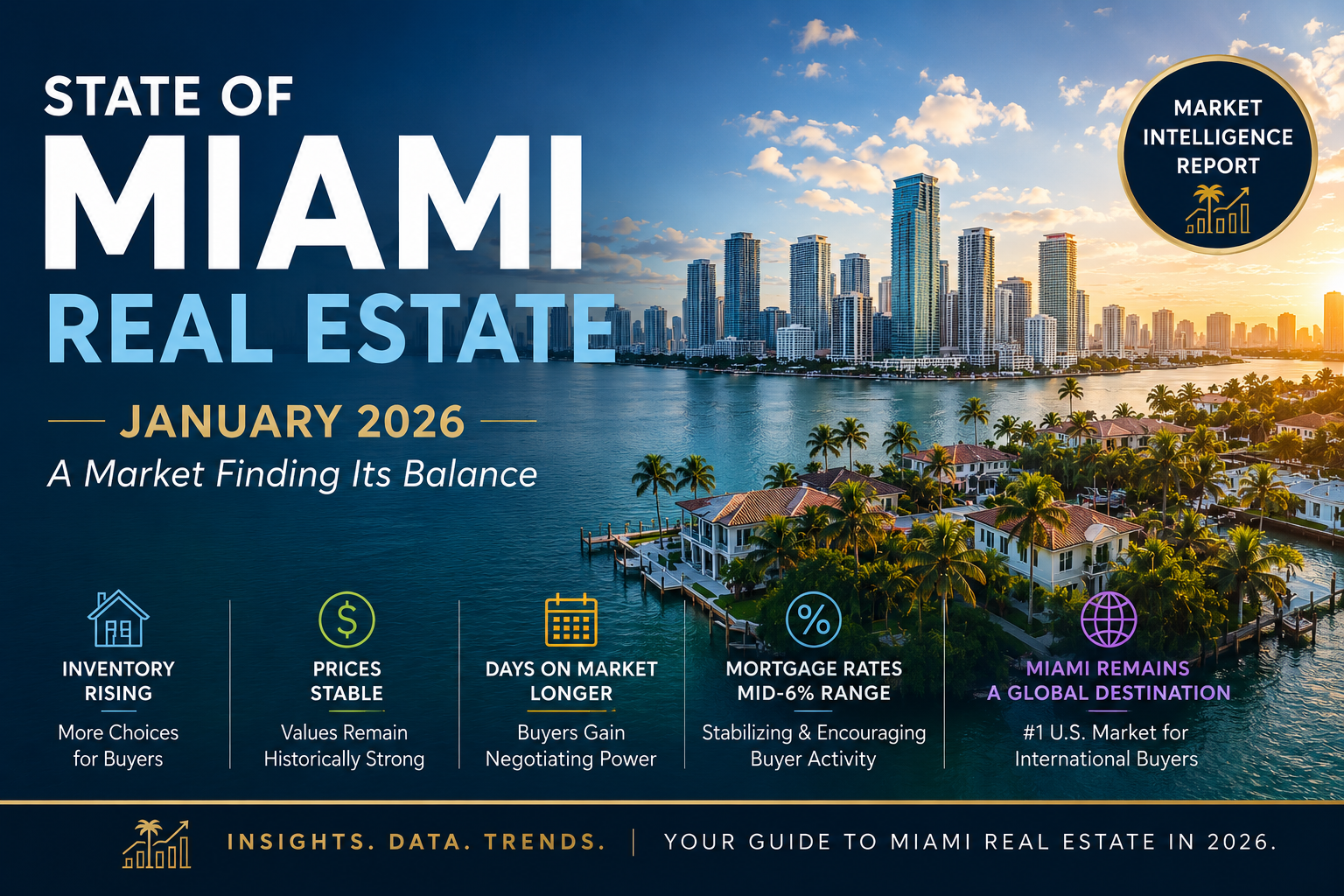
State of Miami Real Estate – January 2026

A Market Finding Its Balance

Inventory expanded, buyers gained negotiating power, and Miami entered 2026 with a healthier—but more selective—real estate market.

Executive Summary
If 2025 was the year Miami’s real estate market began transitioning away from the frenzied pace of the post-pandemic boom, January 2026 marked the beginning of a more balanced chapter.
The market did not weaken—it matured.
Inventory continued to grow across Miami-Dade County, providing buyers with more choices than they had seen in several years. Sellers remained in a favorable position compared to most U.S. markets, but pricing strategy became more important than ever. Homes priced correctly continued to sell, while overpriced listings often lingered on the market.
Perhaps the biggest story wasn’t declining demand—it was changing expectations.
Today’s buyers are more patient, more informed, and more willing to negotiate. Meanwhile, sellers have begun adjusting to a marketplace where presentation, pricing, and preparation once again determine success.
For investors, luxury buyers, and international purchasers, Miami continued to stand apart from nearly every other major U.S. metropolitan area.

Market Snapshot
January delivered encouraging signs that Miami’s housing market is evolving toward long-term sustainability rather than speculative growth.
Single-family homes remained the strongest sector. Median prices continued climbing year-over-year while inventory expanded enough to reduce the intense competition seen over the past several years. Closed sales increased modestly, demonstrating that buyer demand remains healthy despite higher borrowing costs. Miami-Dade’s single-family median sales price reached approximately $699,990, with inventory approaching a balanced six-month supply. (MIAMI REALTORSĀ® + RWorld)
The condominium market told a different story.
Inventory rose significantly, giving buyers considerably more negotiating leverage than they have enjoyed in years. While condo values generally remained stable, sellers increasingly found themselves competing not only on price but also on HOA fees, reserve funding obligations, insurance costs, and building compliance requirements. (Realtor)

Single-Family Homes Continue Leading the Market
Miami’s single-family housing sector continues to demonstrate remarkable resilience.
Demand remains supported by several long-term economic fundamentals:

Continued population growth
Corporate relocations
Limited developable land
High-income domestic migration
Strong local employment

Unlike many metropolitan markets that experienced sharp corrections following the pandemic housing boom, Miami continues benefiting from structural demand drivers that extend well beyond interest rates.
While buyers have become more selective, desirable homes located in established neighborhoods such as Coral Gables, Pinecrest, South Miami, Coconut Grove, and Miami Lakes continue attracting multiple qualified buyers when priced appropriately.
The days of simply placing a sign in the yard and expecting offers above asking price are largely behind us.
Today’s market rewards preparation.

Condominiums Enter a New Phase
No segment better illustrates Miami’s changing market dynamics than condominiums.
Following Florida’s enhanced structural inspection requirements and reserve funding laws enacted after the Surfside tragedy, buyers have become increasingly diligent when evaluating condominium purchases.
Questions that rarely surfaced several years ago have become standard during due diligence.
Buyers now routinely ask:

Has the milestone inspection been completed?
Is the Structural Integrity Reserve Study current?
Are there pending special assessments?
How financially healthy is the association?
What insurance increases should owners expect?

These additional considerations have lengthened transaction timelines while creating more opportunities for educated buyers.
Buildings with strong financial reserves, proactive boards, and transparent management continue outperforming comparable properties lacking those characteristics.

Luxury Real Estate Remains Exceptionally Strong
One area showing little sign of slowing is Miami’s luxury market.
High-net-worth buyers continue viewing South Florida as a desirable destination for wealth preservation, lifestyle, business expansion, and international diversification.
January saw continued strength in million-dollar transactions, reflecting sustained confidence among affluent purchasers. Luxury demand remains driven less by mortgage rates and more by long-term investment objectives and lifestyle preferences. (MIAMI REALTORSĀ® + RWorld)
Ultra-luxury buyers continue targeting waterfront estates, branded residences, and trophy properties throughout:

Fisher Island
Miami Beach
Bal Harbour
Key Biscayne
Coral Gables
Coconut Grove
Pinecrest

For this segment of the market, inventory remains relatively constrained despite broader market normalization.

International Buyers Continue Choosing Miami
Miami’s global appeal remains unmatched.
The city continues attracting buyers from Latin America, Europe, and Canada seeking political stability, business opportunities, favorable tax policies, and an exceptional quality of life.
According to the MIAMI Association of REALTORSĀ®, Miami once again ranked as the No. 1 U.S. destination for international homebuyers, accounting for a substantial share of all foreign residential transactions in Florida. International buyers purchased approximately $4.4 billion in South Florida residential real estate during 2025, with Miami-Dade representing the majority of those sales. (MIAMI REALTORSĀ® + RWorld)
Many of these buyers pay cash, helping insulate portions of Miami’s market from fluctuations in mortgage interest rates.

Mortgage Rates Continue Influencing Buyer Behavior
Although mortgage rates remained elevated compared to the historic lows experienced during 2020 and 2021, many buyers have accepted that today’s financing environment represents the new normal.
Rather than waiting indefinitely for dramatically lower rates, qualified buyers increasingly recognize they can refinance in the future while securing desirable properties today.
This mindset has helped maintain transaction activity despite affordability challenges.
For sellers, it reinforces the importance of realistic pricing and effective marketing.

Commercial Real Estate Shows Continued Momentum
Commercial investment across Miami remained active entering 2026.
Office leasing continued benefiting from financial firms relocating operations to South Florida.
Industrial properties remained in high demand due to logistics, international trade, and e-commerce growth.
Mixed-use developments continued attracting investor interest as developers sought projects combining residential, retail, hospitality, and office components.
While national headlines often focused on office vacancies in other cities, Miami continued distinguishing itself through population growth and corporate expansion.

What Buyers Should Know
January created opportunities that simply did not exist two years ago.
Buyers now enjoy:

More available inventory
Longer decision-making periods
Greater negotiating leverage
Increased seller concessions
Better property selection

That does not necessarily mean prices are falling dramatically.
Instead, buyers have regained something equally valuable:
Options.
The most successful purchasers will continue focusing on long-term value rather than attempting to perfectly time the market.

What Sellers Should Know
The market is still favorable—but expectations must evolve.
Successful sellers in 2026 understand three realities:
Price correctly from day one.
Today’s buyers have more inventory to compare.
Prepare your property.
Professional photography, staging, repairs, and marketing matter more than ever.
Be responsive.
Negotiation has returned to normal real estate transactions.
Properties priced realistically continue selling quickly, while ambitious pricing often results in extended market time followed by price reductions.

Looking Ahead to February 2026
January suggests Miami is entering one of the healthiest market environments seen in several years.
Rather than extreme seller dominance or dramatic buyer advantage, the market is gradually moving toward equilibrium.
That balance benefits everyone.
Buyers gain confidence.
Sellers remain positioned to achieve strong values.
Investors continue finding opportunities.
International capital continues flowing into South Florida.
Most importantly, Miami’s underlying economic fundamentals remain exceptionally strong.
Population growth, global investment, corporate relocation, infrastructure improvements, and limited land availability continue supporting long-term confidence in the region.
As 2026 unfolds, the market will likely reward expertise over speculation, preparation over emotion, and strategy over timing.
For buyers, sellers, and investors alike, that may prove to be the healthiest real estate environment Miami has experienced in years.

Editorial Disclosure
This State of Miami Real Estate – January 2026 report was prepared by MiamiRealEstateNews.com using publicly available information from multiple reliable sources, including the MIAMI Association of REALTORSĀ®, Florida RealtorsĀ®, Realtor.com, and other market data providers. Market statistics have been summarized and interpreted for educational and informational purposes. This report does not constitute legal, tax, financial, or investment advice. Readers should consult qualified real estate, legal, tax, or financial professionals before making real estate decisions. (MIAMI REALTORSĀ® + RWorld)

Read More