Select Page

Communities

Widgetized Area

This panel is active and ready for you to add some widgets via the WP Admin

Hotel and travel in North Bay Village

Visitors and residents can use local travel listings to compare lodging, transportation, and trip-planning options. North Bay Village residents, property owners, and organizations can use this page to find and compare hotel and travel providers in the area. Treat each listing as a starting point: contact the provider directly to confirm the current service area, availability, qualifications, and terms before choosing a service.

Hotel and travel services to explore

Depending on the provider, businesses may offer hotel stays, travel planning, local transportation, tours, or assistance with booking a trip. Some businesses focus on one specialty, while others offer several services through a single office. Ask which work is performed by the provider, what is handled by a partner, and whether the service is available for your particular project or situation. A clear description of the work helps you compare providers on similar terms.

How to compare hotel and travel providers

Start with the need, location, timing, and budget you have in mind. Request a written scope or explanation of what is included, how long the work may take, and what could affect the final cost. Compare experience with similar requests, communication practices, scheduling, payment terms, and the process for follow-up. If credentials, permits, insurance, or a written agreement apply to the service, ask for current details and verify them with the appropriate source.

Questions to ask before you decide

Ask about dates, occupancy, transportation arrangements, booking conditions, deposits, cancellation terms, accessibility, and any extra charges that may apply. Review the answer alongside the provider’s listing and written terms. Ask for clarification if a service description is broad, a quote leaves out important work, or a timeline is uncertain. Confirm how to reach the business after the initial appointment and what steps are available if the service needs correction or further attention.

Find hotel and travel in North Bay Village

Browse the North Bay Village business directory to identify local listings and request current information. Compare providers using the same criteria so differences in scope, availability, and price are easier to understand. A directory listing is not an endorsement, and details should be verified directly with each business.

For municipal contacts and community information, visit the official North Bay Village website. Contact providers directly to confirm the details that matter for your needs and keep written estimates, policies, and agreements for reference.
Your Guide to Financing a Recreational Vehicle

6 MIN. READ
South Florida is one of the most popular spots for boating. Think a boat purchase is out of reach? Think again.
With recreational loans, you can purchase a boat, RV, motorcycle, or other leisure vehicle. These lending products can make fun vehicles accessible without putting a big strain on your budget.
The key is to compare your options and shop for a recreational lender offering low lending fees and advantageous interest rates.
Read on as we discuss recreational loans and share advice for securing affordable financing for your recreational vehicle.
What Is a Recreational Loan?
A recreational loan is similar to other loans except that people use them to finance vehicles used for leisure, such as RVs or boats.
These banking products allow you to cover the upfront cost of recreational vehicles and pay for these “toys” over time, making them more accessible. In most cases, your new boat, RV, or motorcycle will act as collateral for the loan, helping you secure better terms and interest rates.
Recreational loans typically have longer repayment terms than personal loans. Depending on the type of asset you’re financing, you can find terms that range from 10 to 25 years.
What Can I Finance With a Recreational Loan?
Recreational loans cover a wide range of vehicles. While the type of vehicles financed can vary from one financial institution to another, you’ll often find recreational loans for the following vehicles:

Motorcycles
RVs
Travel trailers
Campers
Go-karts
Off-road vehicles

For those who prefer the open water, recreational loans are available to finance vessels, both big and small:

Boats
Yachts
Sailboats
Jet skis
Wave runners

Secured vs. Unsecured Recreational Loans
A secured recreational loan uses your new vehicle as collateral. It’s a good option if you’re looking for a loan with a long repayment term and want to minimize the cost of borrowing.
However, recreational vehicles that depreciate quickly and used vehicles that aren’t in ideal condition might not qualify for a secured loan. In this scenario, an unsecured loan might be the better option.
Keep in mind that unsecured loans have higher interest rates. That’s why choosing a shorter term and setting a budget to repay your loan quickly is best.
Can You Finance Used Vehicles With a Recreational Loan?
Yes, many financial institutions offer recreational loans to finance used vehicles but keep in mind that financing can be subject to a few conditions.
For instance, the lender might request an inspection or survey to ensure they are financing an asset with a value matching the amount you’re borrowing. There may also be restrictions on the type and age of the used vehicle.
If you’re in the market for a used boat or second-hand RV, it’s best to reach out to a few lenders first and get a better idea of the kind of used vehicles they’re comfortable financing.
Are Credit Unions a Better Option for Recreational Loans?
Securing a recreational loan can be challenging because leisure vehicles tend to depreciate fast. In other words, recreational loans often represent a higher risk for your lender.
Depreciation shouldn’t be an obstacle to doing the things you love! While large banks are more likely to offer recreational loans with steep interest rates or rigid terms, credit unions tend to be more flexible.
Credit unions operate on a member-first model. Instead of looking at a handful of financial elements, credit unions typically consider a broader range of factors when making a lending decision.
Taking the time to gain a comprehensive understanding of a person’s finances often leads to a more favorable decision than a major bank’s lending approval process. Plus, credit unions are more likely to offer lower fees and advantageous interest rates since they operate on a not-for-profit model and redistribute any profits to their members.
Most credit unions offer a simple process for comparing recreational lending options, getting pre-approved, or applying for financing online.
How to Apply for a Recreational Loan
Applying for a recreational loan is similar for both land-based and water-bound toys. A thorough overview of your finances will help guide your purchasing decisions in the future.
Step 1: Budget
How much can you comfortably spend on a recreational vehicle? Before moving forward, take some time to research and determine what boat or RV fits within your budget.
A 20-foot boat can cost anywhere from $10,000 to $60,000. You can, of course, find more affordable vessels if you’re eyeing a small fishing boat or easily exceed this price range if you’re interested in a luxury yacht. An RV can cost as little as $10,000 or as much as over $400,000, depending on the class and features.
Use lending calculators to better understand how different purchase prices, interest rates, and loan terms impact your monthly budget. A good rule of thumb is to keep your total debt under a third of your income.
You should also account for additional expenses after the initial purchase:

You’ll have recurring maintenance costs.
Boats, RVs, and other large vehicles require storage when you’re not using them.
Don’t forget to factor in registration and insurance costs.

For instance, boat insurance costs 1.5% of the vessel’s total value annually. You should expect to spend around $100 a month insuring a motorcycle.
You should also factor in the storage cost if you plan to park your vehicle away from your home. The amount you pay will depend on the size of your recreational vehicle.
Step 2: Credit Check
Your credit plays a pivotal role in any lending situation, and recreational loans are no different. The higher your credit score, the better positioned you are to receive favorable loan terms.
Now is a good time to pull your credit report at AnnualCreditReport.com. If needed, look for any errors and dispute them with the corresponding credit reporting agency.
Next, you should look into boosting your score by paying off any outstanding debts and requesting credit line increases. Avoid opening new credit lines before shopping around for a recreational loan.
Step 3: Find the Right Lender
Comparing lenders is the best way to secure an affordable recreational loan with terms that match your needs. It’s also an opportunity to get a feel for the kind of customer service or online experience you can expect from a lender.
We highly recommend looking into credit unions when shopping around for a recreational loan. You’ll be more likely to get approved and benefit from low lending fees and affordable interest rates compared to a major bank.
Plus, credit unions always prioritize customer service. You can receive personalized advice and navigate the borrowing process with the help of a representative who can answer questions and help you figure out what’s best for your budget.
Some credit unions even provide members-only insurance discounts, such as guaranteed asset protection. You can also use its helpful tools, such as online applications and loan calculators, for a more convenient experience.
Step 4: Get Pre-Approved
Shop smart by getting prequalified for a recreational loan. Here’s why:

You know exactly how much you can afford. This gives you the power to negotiate and understand your financial situation thoroughly.
You won’t feel pressured to sign on the dotted line with a dealership. Salespeople will likely offer you financing options to pay for your new toy. Still, you can maneuver the sales process knowing you are already in a fantastic buying position since you did your homework.
Getting pre-approved shows you’re a serious buyer. Sellers will be more receptive and more open to negotiating.

Step 5: Close the Deal
With the hard work behind you, it’s time to close the deal and enjoy your new toy. Discuss any final costs, such as fees, insurance, and storage.
You’ll have to submit the required documentation to your lender and possibly schedule an inspection for your recreational vehicle. Once your lender has confirmed that the vehicle you’re purchasing matches the vehicle on your application and meets any requirements regarding condition and value, your lender will issue the funds.
You can then pay the seller, take possession of your new toy, and submit proof of insurance to your lender if you opted for a secured loan.
Key Points to Keep in Mind
If a recreational loan is in your future, know that it’s an excellent way to finance your leisure time fun. In summary, keep these points in mind as you move forward:

New or used. Recreational loans can be used to finance both new and used RVs, motorcycles, campers, boats, jet skis and more.
Plan flexibility. Choosing the right financial institution is critical because it impacts the cost of borrowing. We recommend finding a credit union with friendly repayment terms that work for your lifestyle.
Credit. Along with selecting the best lender, your credit score plays a significant role in your recreational loan. With a good score, you’ll enjoy lower interest rates.
Holistic planning. Remember to look beyond the sale sticker. Your new purchase will require upkeep, storage, insurance, and more. Make sure long-term costs fit into your budget.

It’s time to prioritize your health and wellness by enjoying more outdoor activities with a recreational vehicle. At Power Financial Credit Union, we offer financing on new and used boats, RVs, motorcycles, jet skis, and more with flexible terms! Plus, as a PFCU member, you’ll qualify for extra discounts on future loans.
Explore our recreational interest rates or visit one of our nearby branches to receive personalized borrowing advice.

Read More

Give Miami Day 2024

Media: Patty VilaC: 305-498-9660 pattyvilamedia@outlook.com
FOR IMMEDIATE RELEASE                                               
February is American Heart Month: Dr. Pedro Martinez-Clark Leads the Charge in        Cardiovascular Health
Miami, FL – February 1, 2025 – As the nation observes American Heart Month this February, Dr. Pedro Martinez-Clark, a Harvard-trained interventional cardiologist and founder of Amavita Heart and Vascular Health™ (“Amavita”), emphasizes the critical importance of cardiovascular health and early detection of heart disease.
American Heart Month, established in 1964, serves as a nationwide initiative to raise awareness about heart disease, the leading cause of death for both men and women in the United States. The American Heart Association continues to spotlight the significance of heart health and encourages individuals to adopt heart-healthy lifestyles.
Dr. Martinez-Clark, recognized as one of the nation’s leading cardiologists, brings over 26 years of experience in the medical field. His comprehensive cardiovascular practice, Amavita, founded in 2017, provides state-of-the-art care for heart and vascular diseases. Affiliated with Jackson Memorial Hospital and Mercy Hospital in Miami-Dade County, Amavita operates independently, offering minimally invasive procedures and outpatient laboratory services to enhance patient outcomes.
In alignment with the goals of American Heart Month, Dr. Martinez-Clark and his team at Amavita are committed to educating the community about the prevention and treatment of cardiovascular diseases. Their services encompass the management of coronary artery disease, arrhythmias, peripheral vascular disease, and chronic venous insufficiency, among other conditions.
“Heart disease remains a significant health challenge, but with early detection, lifestyle modifications, and advanced medical interventions, we can make substantial strides in reducing its impact,” says Dr. Martinez-Clark. “Our mission at Amavita is to provide comprehensive care that not only treats but also prevents cardiovascular conditions.”
Supporting Dr. Martinez-Clark’s dedication to educating the community on heart health, Amavita will offer a few screenings for peripheral arterial disease, a chronic condition that occurs when arteries narrow or block, reducing blood flow to the legs or arms. Amavita will also participate in a couple of health fairs and give lectures all month through the community.
As part of their commitment to advancing cardiovascular health, Amavita has multiple locations across Miami-Dade County, ensuring accessibility to cutting-edge technology and compassionate care for patients throughout South Florida. The practice’s multidisciplinary team includes board-certified physician assistants, surgical instrument technicians, research fellows, and ultrasound technicians, all dedicated to delivering personalized patient care.
During American Heart Month, Dr. Martinez-Clark encourages individuals to take proactive steps toward heart health by:
– Engaging in regular physical activity to strengthen the heart muscle.
– Adopting a balanced diet rich in fruits, vegetables, and whole grains.
– Avoiding tobacco products and limiting alcohol consumption.
– Regularly monitoring blood pressure and cholesterol levels.
– Managing stress through mindfulness and relaxation techniques.
For more information about Amavita Heart and Vascular Health™ and their services, visit https://amavita.health/.
About Dr. Pedro Martinez-Clark and Amavita Heart and Vascular Health TM
Amavita Heart and Vascular Health TM is a comprehensive cardiovascular practice founded in 2017 by Dr. Pedro Martinez-Clark, an interventional cardiologist with ample experience in heart disease and peripheral vascular interventions. Although Amavita Heart and Vascular Health TM is affiliated with the Jackson Memorial Hospital System and Mercy Hospital in Miami-Dade County, Amavita manages its work independently.
About American Heart Month
American Heart Month is a federally designated event encouraging Americans to focus on cardiovascular health. Since its inception in 1964, the initiative has been crucial in increasing awareness about heart disease and promoting heart-healthy lifestyles nationwide.
# # #
Media: Patty VilaC: 305-498-9660pattyvilamedia@outlook.com

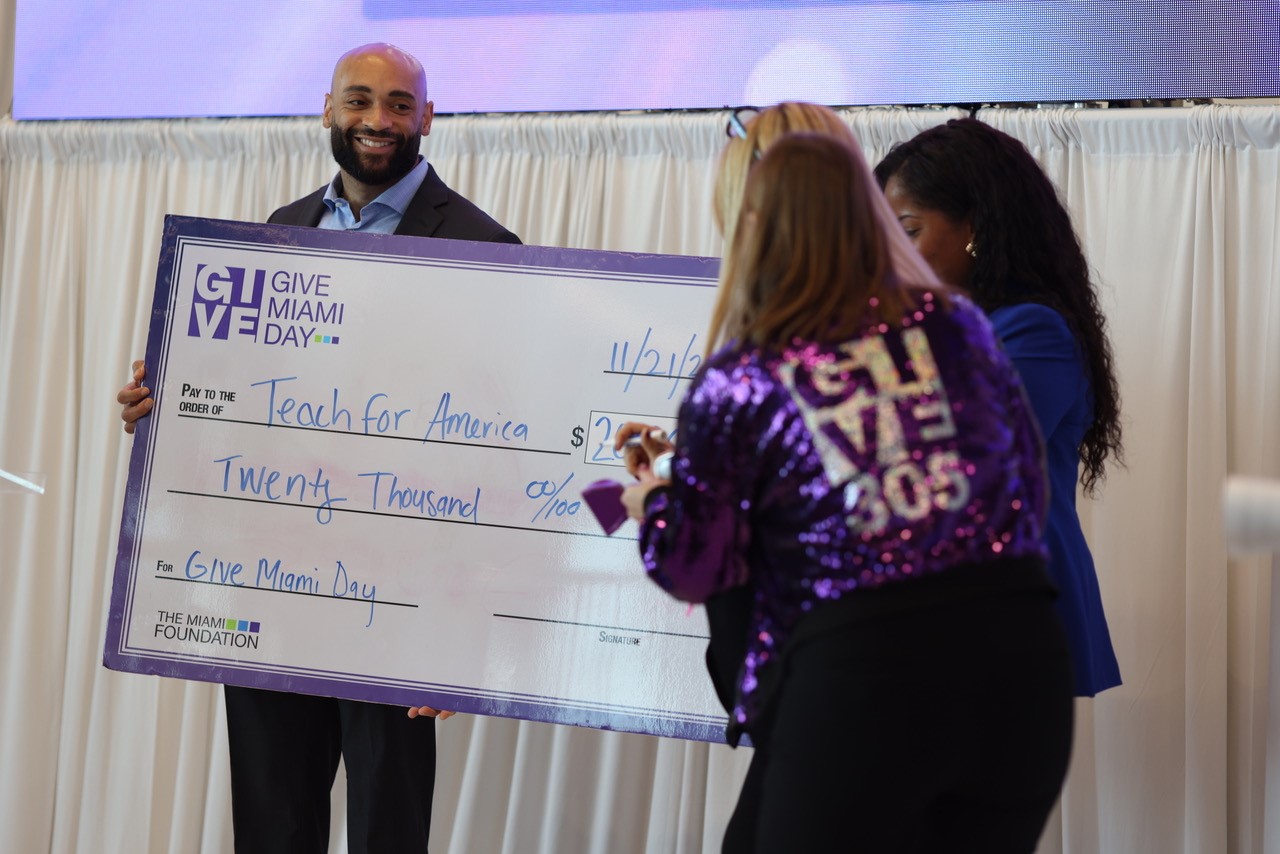
Give Miami Day 2024 is Miami’s Boldest Day of Giving on Record with $39.5 Million Raised to Empower 1,200 South Florida Nonprofits

Photo Credit:  Bricklayer Agency.
Give Miami Day 2024 stands as Miami’s boldest day of giving raising a record $39.5 million for more than 1,200 nonprofits. The 13th annual online giving event, hosted by The Miami Foundation, one of South Florida’s largest philanthropic institutions, saw more than 51,700 donors contribute 109,000 donations, surpassing last year’s total by $5 million. This milestone cements Give Miami Day as one of the fastest-growing online charitable programs in the U.S.
“While The Miami Foundation hosts Give Miami Day, this day truly is our community’s love song – our collective gift to this place we call home,” said Rebecca Fishman Lipsey, president and CEO of The Miami Foundation. “I am thrilled to share that we saw more Miamians step forward to support local nonprofits than ever before. More than 109,000 donations were made to more than 1,200 organizations – raising $39.5 million to support the vital work that our nonprofits do all year round. I am humbled by the widespread generosity of the people of Miami, and I am so thankful to every single person who made this day possible.”
The event is a fundraising engine for a growing number of area nonprofits, including more than 300 organizations that primarily serve the Hispanic community, including Cristo Rey Miami High School, Miami Blococo, Conecta Miami Arts and Univision Foundation.  Dollars raised through this event are called flexible dollars and can be used in whatever way is most helpful each organization.
Achieve Miami was the top large organization fundraiser at the November 21, 24-hour giving day event, with $3.1M raised.  The Children’s Movement of Florida, with more than $836,000 was the top funder for medium sized organizations and the Ari Arteaga Foundation was the top small organization fundraiser bringing in more than $131,000.
“We are deeply grateful for the incredible generosity shown during Give Miami Day,” said Miami Foundation Board Chair Sheldon Anderson, CEO of Grove Bank and Trust. “The support from our community demonstrates the power of collective giving and the commitment to creating lasting change in Miami. A heartfelt thank you to everyone who donated, and to the dedicated staff at The Miami Foundation, under the remarkable leadership of Rebecca Fishman Lipsey, whose hard work truly paid off. Together, we are building a brighter future for our city.”
Results are subject to final review and verification. Updated totals will be available in the coming weeks.  Meanwhile, nonprofits interested in participating in Give Miami Day 2025 should starting thinking about joining next year’s Give Miami Day.  Registration information will be posted this summer.
Visit GiveMiamiDay.org and find out more!
Lisa Mozloomlisa@m.networkTHE M NETWORK14 NE 1st Avenue, #405Miami, FL 33132O: (305) 571-1455  |  M.NETWORK

Read More

Seacoast Named Among American Banker’s Best Banks to Work For in 2024

Seacoast Bank Newsroom / Seacoast Named Among American Banker’s Best Banks to Work For in 2024

By Seacoast Bank on Nov 13, 2024 9:57:19 AM


STUART, Fla. — Seacoast Bank, the banking subsidiary of Seacoast Banking Corporation of Florida (NASDAQ: SBCF) and one of the largest community banks in Florida, has been recognized among American Banker’s Best Banks to Work For in 2024. This marks the fifth consecutive year that Seacoast Bank has earned this prestigious accolade, underscoring the organization’s ongoing commitment to fostering a positive and supportive workplace culture.
“We’re tremendously honored to be recognized five years in a row by American Banker as one of the nation’s Best Banks to Work For,” said Chuck Shaffer, Chairman and CEO of Seacoast Bank. “This achievement reflects the dedication and excellence of our entire Seacoast team, whose hard work and commitment to our values continue to drive our success and shape the exceptional environment we are known for.”
Seacoast Bank’s recognition by American Banker is the latest in a series of notable achievements, including Great Place To Work® Certification™ for 2024, with an impressive 89% of employees affirming that Seacoast is an outstanding place to work. Additionally, Seacoast Bank was listed among Fortune’s 2024 Best Workplaces for Women, highlighting its dedication to promoting diversity, inclusion, and a supportive workplace for all employees.
“The culture we’ve cultivated at Seacoast Bank is driven by our unwavering focus on our associates, customers, and the communities we serve across Florida,” said Dan Chappell, Seacoast’s Chief Human Resources Officer. “We’re incredibly proud that American Banker has once again recognized our workplace on its list of distinguished institutions, reflecting the genuine care and collaboration that define our Seacoast family.”
The Best Banks to Work For program, initiated in 2013 by American Banker and Best Companies Group, celebrates U.S. banks that demonstrate excellence in employee satisfaction. The selection process involves a detailed evaluation of workplace policies, practices, and demographics, combined with direct feedback from employees about their experiences and perspectives on the workplace. This comprehensive approach determines the top-ranked banks each year.

Read More

Countyline Corporate Park Expands

Countyline Corporate Park Expands: Hialeah’s Industrial Engine Roars Forward

Hialeah continues to prove it’s more than just residential rooftops and retail. In November 2024, Terreno Realty Corporation announced the full lease-up of Building 31, a 162,000-square-foot industrial distribution center, at the ever-expanding Countyline Corporate Park.
This development is not a one-off. Terreno also finalized leases for Building 33, a 158,000-square-foot facility, to a third-party logistics provider, a food purveyor, and an elevator parts distributor. Together, these new assets mark a significant chapter in Hialeah’s industrial growth story.

Inside Countyline Corporate Park Phase IV
Spanning 121 acres, Phase IV of Countyline Corporate Park is no ordinary warehouse zone. It’s a logistics and distribution powerhouse in the making. Once complete, the development will include 2.2 million square feet of high-performance commercial space.
Located near I-75 and the Florida Turnpike, the site is strategically positioned to serve not just Hialeah, but all of South Florida.

Why These Facilities Matter
What makes these leases noteworthy?

Job creation: Every new lease means new jobs—both construction and long-term employment.

Diverse tenants: Logistics, food distribution, and elevator manufacturing reflect a wide industrial appeal.

Efficient delivery: The proximity to key highways reduces travel time and boosts fulfillment capabilities.

Terreno Realty’s success in fully leasing both buildings speaks volumes about Hialeah’s logistical appeal.

The Rise of Industrial Real Estate in Hialeah
This isn’t the first big play in Hialeah’s industrial boom—and it won’t be the last. As e-commerce grows and companies demand faster distribution networks, industrial space near major highways is prime real estate.
Hialeah is becoming one of the most desirable distribution hubs in Florida, offering cost-effective square footage, reliable infrastructure, and a ready workforce.

Strategic Economic Development
Countyline Corporate Park isn’t just about buildings. It’s part of a vision to position Hialeah as a center for logistics, manufacturing, and smart infrastructure. As new tenants move in, their operations will generate tax revenue, increase local spending, and support business-to-business networks throughout Miami-Dade County.

Takeaway
Countyline Corporate Park is reshaping Hialeah’s commercial identity. What was once considered a residential stronghold is now a serious contender for industrial leadership in South Florida. With Phase IV moving rapidly toward completion, this is the kind of momentum that draws national attention.

Call to Action
Looking to position your company in a logistics-ready hub?📞 Call Wilson Alvarez at 305-386-6165 or visit WilsonAlvarez.com to explore how you can tap into Hialeah’s industrial revolution.

Read More

Sylvester Stallone in Miami

Every mansion tells a story; Stallone’s told one of persistence and success.
-Wilson Alvarez
Sylvester Stallone’s life is a story of perseverance and resilience. He overcame incredible odds to reach the heights of Hollywood fame. From homelessness to Academy Awards, his journey inspires people to dream big and never give up.
Before fame, Stallone lived a tough life. He sold his wife’s jewelry and slept at a bus station. In a heartbreaking moment, he sold his dog for $25 because he couldn’t afford to feed it. But even in his lowest moments, Stallone never stopped fighting for his dreams.
One pivotal moment changed everything. Watching Muhammad Ali’s fight with Chuck Wepner, Stallone found inspiration. He wrote the Rocky script in just 20 hours. Studios offered big money for the script but didn’t want him as the lead actor. They said he “looked funny and talked funny.” Stallone refused to sell unless he played the role of Rocky. Finally, he struck a deal, earning $35,000 and his breakthrough role.
The success of Rocky changed Stallone’s life. The film won three Oscars, and Stallone was nominated for Best Actor. His determination to star in the movie proved that self-belief could defy the odds. Years later, he even bought back his dog for $10,000, a full-circle moment that symbolized his perseverance.
Stallone’s Miami Chapter
In the 1990s, Stallone brought his unique story to Miami. He purchased a waterfront mansion in Coconut Grove. The property became a reflection of his Hollywood success, offering breathtaking views of Biscayne Bay. Stallone lived there with his family, adding his star power to Miami’s already glamorous reputation.
Miami wasn’t just a place of residence for Stallone. It became part of his career. While living there, he starred in The Specialist (1994). The movie showcased iconic Miami landmarks, blending Stallone’s Hollywood charm with the city’s vibrant culture.
A Businessman in Miami
Stallone also expanded his portfolio into business ventures. He co-founded Planet Hollywood in 1991 alongside Bruce Willis and Arnold Schwarzenegger. Miami became one of the key locations for this themed restaurant chain. Stallone’s involvement showed his ability to translate his movie star persona into business success.
Why Miami?
Stallone’s choice to live in Miami reflected his appreciation for its energy and culture. The city offered luxury, privacy, and a vibrant film community. Miami became a backdrop to some of his best years, blending work and family life seamlessly.
“Success is usually the culmination of controlling failure,” said Sylvester Stallone. This quote encapsulates his Miami chapter perfectly. Stallone’s story is one of second chances and turning struggles into triumphs. His resilience mirrors Miami’s own spirit as a city of reinvention and opportunity.
Stallone’s life proves the importance of persistence. No matter how difficult the journey, staying true to your dreams can lead to incredible success. From Rocky to Miami, Stallone’s story reminds us that the fight is worth it.
Let Sylvester Stallone’s story inspire your next bold move. Whether pursuing a dream or starting anew, take the first step today.

Read More