

Select Page

Communities

Widgetized Area

This panel is active and ready for you to add some widgets via the WP Admin

Hotel and travel in North Bay Village

Visitors and residents can use local travel listings to compare lodging, transportation, and trip-planning options. North Bay Village residents, property owners, and organizations can use this page to find and compare hotel and travel providers in the area. Treat each listing as a starting point: contact the provider directly to confirm the current service area, availability, qualifications, and terms before choosing a service.

Hotel and travel services to explore

Depending on the provider, businesses may offer hotel stays, travel planning, local transportation, tours, or assistance with booking a trip. Some businesses focus on one specialty, while others offer several services through a single office. Ask which work is performed by the provider, what is handled by a partner, and whether the service is available for your particular project or situation. A clear description of the work helps you compare providers on similar terms.

How to compare hotel and travel providers

Start with the need, location, timing, and budget you have in mind. Request a written scope or explanation of what is included, how long the work may take, and what could affect the final cost. Compare experience with similar requests, communication practices, scheduling, payment terms, and the process for follow-up. If credentials, permits, insurance, or a written agreement apply to the service, ask for current details and verify them with the appropriate source.

Questions to ask before you decide

Ask about dates, occupancy, transportation arrangements, booking conditions, deposits, cancellation terms, accessibility, and any extra charges that may apply. Review the answer alongside the provider’s listing and written terms. Ask for clarification if a service description is broad, a quote leaves out important work, or a timeline is uncertain. Confirm how to reach the business after the initial appointment and what steps are available if the service needs correction or further attention.

Find hotel and travel in North Bay Village

Browse the North Bay Village business directory to identify local listings and request current information. Compare providers using the same criteria so differences in scope, availability, and price are easier to understand. A directory listing is not an endorsement, and details should be verified directly with each business.

For municipal contacts and community information, visit the official North Bay Village website. Contact providers directly to confirm the details that matter for your needs and keep written estimates, policies, and agreements for reference.

Safeguard Your Business: Insights from Greater Kendall Business Association’s May 2025 Power Breakfast

Safeguard Your Business: Insights from Greater Kendall Business Association’s May 2025 Power Breakfast
In the bustling realm of business resilience, the recent Greater Kendall Business Association’s May 2025 Power Breakfast, hosted at the welcoming confines of the Best Western Hotel, stirred the entrepreneurial spirits with a riveting discourse on safeguarding against fraud and scams. The spotlight fell on Mike Sutta, the ingenious mind behind Super Swipe Inc., as he dove into the intricacies of financial security in the digital age.
Mike Sutta’s presentation was a beacon of enlightenment, illuminating pathways to shield businesses from the snares of fraudulent practices. Amidst a sumptuous buffet breakfast, attendees were treated to a comprehensive exploration of strategies to trim down merchant fees, fortify defenses against RFID thieves, and steer clear of the treacherous waters of online and phone scams. (MAke sure you pay everything via Apple or Google Pay, tap it!) Sutta’s insights, punctuated with his “magic” sales secrets, provided a roadmap for businesses to navigate the evolving landscape of credit card processing.
At the heart of the discussion was the imperative question: “Are You Paying too Much in Credit Card Processing Fees?” Sutta’s expertise shed light on this pertinent issue, empowering businesses to optimize their financial operations and channel resources more efficiently.
As the morning unfolded, connections were forged, ideas exchanged, and a collective resolve emerged to fortify businesses against the ever-looming specter of fraud. In the words of Warren Buffett, “Risk comes from not knowing what you’re doing.” Just as Buffett’s sage advice has guided investors through tumultuous markets, Sutta’s guidance equips businesses with the knowledge to navigate the murky waters of financial security.
In a world where digital transactions reign supreme, safeguarding your business against fraud is paramount. Equip yourself with knowledge, stay vigilant, and leverage insights from experts like Mike Sutta to fortify your defenses and propel your business towards sustainable success.
As you navigate the intricate realm of business operations, stay informed and empowered. Join us at upcoming events to glean insights, forge connections, and fortify your business against the challenges of tomorrow. Together, let’s chart a course towards prosperity and resilience.

In case you missed it…

Read More

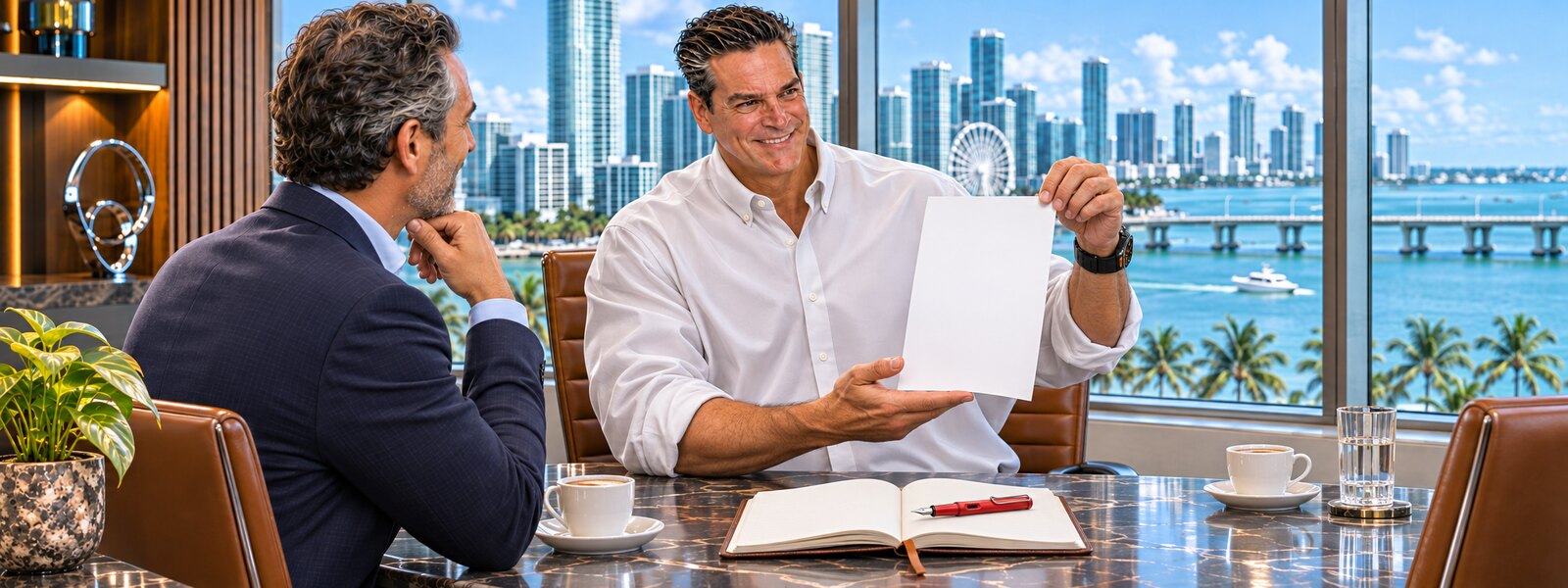
The Clear Sales Proposal: Make the First Yes Easy to Understand

“A proposal should make the buyer’s first decision easier to understand, not make the seller’s catalog look impressive.”
By Wilson Alvarez
Quick answer: A clear sales proposal identifies the client’s agreed problem, desired outcome, recommended first scope, price, responsibilities, timeline, and decision path. Put optional later phases in a separate section when they matter. Use plain language to explain trade-offs and avoid adding unrelated services before the buyer has committed to the original need.

“Stop selling, and start helping.” — Zig Ziglar

Ziglar’s concise instruction, highlighted by the Ziglar organization, applies especially to the written proposal. Helping means reducing uncertainty for the decision maker. A document that lists every feature and possibility may demonstrate the seller’s range, but it can obscure what the buyer asked to solve. A useful recommendation shows judgment: why this scope, why now, and what the client can expect next.
What a clear sales proposal must accomplish
The proposal is not the first discovery meeting in written form. By the time you draft it, you should understand the business issue and confirm that it matters. The document should preserve that shared understanding so all stakeholders evaluate the same decision. Start with a short statement of the current situation and the result the client wants, using their terms rather than generic industry language.
Then recommend one coherent first engagement. Explain the deliverables, boundaries, milestones, and the responsibilities of both teams. If the client needs to supply data, approve content, or assign an internal owner, say so. A strong proposal helps the buyer imagine implementation, not just purchase.
Make the first phase proportionate
A Miami company may want a full transformation but first need to validate a process with one department. A pilot can establish a baseline, test a workflow, and reveal the cost of scaling. That does not mean every project should be small. It means the first commitment should fit the evidence, budget, urgency, and organization’s ability to execute.
Explain why the recommended scope is the right starting point. What can it accomplish? What question will it answer? What will remain outside it? The buyer should know whether a later phase is optional, contingent, or necessary to achieve the stated result. If the first purchase cannot deliver the promised outcome without additional spending, disclose that before asking for agreement.
Show price and trade-offs plainly
Present the investment in a format a decision maker can use. State the price, payment timing, assumptions, and any recurring commitments. If there are options, explain their practical differences, not just a feature grid. A lean option may take longer or cover a narrower geography. A broader option may include more support. Neither should be described in vague superlatives.
Do not bury a critical cost in fine print or reveal it after the buyer has said yes. That kind of surprise can turn an apparently successful sale into mistrust. If additional work might be needed, describe the condition that would trigger it and how approval would be handled. The buyer should be able to distinguish the committed scope from a possible future recommendation.
Write for multiple readers
The executive sponsor may care about growth and risk. Finance may need the cost and terms. Operations may ask who does what. Legal may review obligations. A clear proposal gives each reader enough information without becoming a hundred-page manual. Use headings, a concise scope table if helpful, and a one-page summary for a complex project.
Define terms that a buyer outside your specialty may not know. “SEO,” “integration,” or “implementation” can mean different things to different vendors. Specify the actions and outputs. Ambiguity makes comparison difficult and creates friction once work begins.
Agree on the decision before sending it
Ask who will review the proposal and when. Offer to walk through the recommendation with the stakeholders rather than merely emailing a PDF into an unknown process. Confirm the criteria: price, timing, expected return, capacity, or something else. If the buyer is still uncertain about the problem, pause and return to discovery. A polished document cannot fix a missing decision.
Consider a brief recap before drafting: “We agreed the immediate priority is responding to qualified inquiries within one business day. The first phase will map the current process and launch a pilot with one team. Have I understood correctly?” A simple confirmation can save days of rework. It also follows the logic of discussing budget and decision making early.
End with a specific next step
State how the buyer can accept, what happens immediately after acceptance, and the date by which pricing or scheduling assumptions remain valid. If there are open questions, list them. The goal is an informed yes, an informed no, or a clear request for revision. Silence is often a sign the decision was never defined.
After the meeting, follow up on the agreed date with useful answers, not a generic reminder. If the buyer wants changes, distinguish a clarification from a new scope. Send an updated document when needed so both sides have one accurate version.
Frequently asked questions
How long should a sales proposal be?
Long enough to make the decision clear. A simple service may need a concise page or two; a complex engagement needs more detail. Put the business issue, recommendation, price, and next step where the reader can find them quickly.
Should I include optional upgrades?
Only when they help the buyer understand a relevant choice. Separate them from the recommended first scope, state their costs, and explain whether they are optional or required for the promised result.
What if the prospect asks for a proposal before discovery?
Offer a range or preliminary outline if useful, then identify the few facts needed for an accurate commitment. Label assumptions clearly. Avoid presenting a fixed scope as certain when the underlying problem remains unclear.
Miami business owners who want to strengthen their leadership, visibility and growth strategy can connect with Wilson Alvarez at walvarez@miamibusiness.com or 305-386-6165.

Read More

How Coconut Grove Became a Foodie’s Paradise

Culinary Evolution: How Coconut Grove Became a Foodie’s Paradise.
Dining in the Grove is not just eating; it’s experiencing the world through flavors.
-Wilson Alvarez
Coconut Grove, known for its bohemian vibes and lush landscapes, has undergone a remarkable transformation into a culinary hotspot that delights food enthusiasts from all walks of life. This evolution reflects the neighborhood’s growing diversity and its residents’ increasing interest in gourmet dining experiences.
The rise of Coconut Grove as a foodie’s paradise can be traced back to the influx of innovative chefs who saw potential in this historic Miami area. These culinary artists brought with them a variety of flavors and techniques, blending local ingredients with international cuisines. As a result, the Grove now boasts an impressive array of restaurants, each offering unique dishes that cater to a wide range of palates.
From upscale dining to casual eateries, the culinary offerings in Coconut Grove cater to both refined and relaxed tastes. Food lovers can indulge in everything from freshly caught seafood prepared with a Caribbean twist, to artisanal pastries that turn breakfast into a decadent affair. The neighborhood’s commitment to quality and authenticity has elevated its status to that of a gastronomic destination.
Reflecting on this cultural shift, celebrity chef Anthony Bourdain once noted, “Food is everything we are. It’s an extension of nationalist feeling, ethnic feeling, your personal history, your province, your region, your tribe, your grandma.” This sentiment rings especially true in Coconut Grove, where food not only serves as a reflection of its melting pot culture but also as a bridge connecting various traditions and communities.
Coconut Grove’s culinary scene is a vibrant tapestry woven from the threads of diverse cultures and innovative cooking. It’s a testament to the neighborhood’s dynamic spirit and its ability to adapt and thrive.
Whether you’re a longtime resident or a curious traveler, explore the diverse culinary landscape of Coconut Grove. Discover new flavors, revisit old favorites, and see for yourself why the Grove is celebrated as a foodie’s paradise. For dining guides and restaurant reservations, visit our website or call us at 305-386-6165.

Read More

Exploring Wine Beyond the 41st Parallel: Miami’s Emerging Wine Scene

Exploring Wine Beyond the 41st Parallel: Miami’s Emerging Wine Scene
When people think of world-class wine regions, areas along the 41st parallel often come to mind. Regions in California, Spain, Italy, and Argentina dominate the conversation. However, **Miami is proving that great wine is not limited by latitude. The city is building a unique and exciting wine scene.

What Makes Miami’s Wine Scene Unique?
Miami offers a very different environment for winemaking. Its subtropical climate creates both challenges and opportunities. High humidity and sandy soils shape the final product.
Direct Answer: Miami’s wine scene is unique because it uses tropical fruits, innovative techniques, and small-batch production suited to its climate.
Winemakers are not trying to copy traditional regions. Instead, they embrace what makes Miami special. This approach leads to bold and creative wines.

Innovation in a Tropical Climate
One of the biggest trends in Miami is tropical fruit wine. Traditional grapes can be difficult to grow locally. Because of this, producers use fruits that thrive in South Florida.
Popular options include:

Mango wine
Lychee wine
Passion fruit wine
Guava wine

These wines are fresh and full of flavor. They also pair well with Miami’s diverse cuisine.

A Growing Focus on Craftsmanship
Miami’s wine scene is still developing, but quality is improving quickly. Many producers focus on small batches. This allows for better control and creativity.
Sustainability is also a priority. Winemakers are using modern techniques to improve consistency.
Inspired by figures like Robert Mondavi, local producers are combining skill with artistry.

Cultural Influence on Local Wines
Miami’s culture plays a major role in its wine identity. The city blends Latin American, Caribbean, and European influences.
This diversity creates wines that are:

Bold in flavor
Creative in style
Perfect for social settings

The result is a wine experience that feels fresh and modern.

Why You Should Explore Miami’s Wine Scene
Miami offers something different from traditional wine regions. It is a place for discovery and experimentation.
Direct Answer: Exploring Miami’s wine scene gives you access to tropical flavors, cultural diversity, and innovative wines you won’t find elsewhere.

Final Thoughts
Miami’s wine scene is still growing. That is part of its appeal. It represents a new direction in winemaking.
From tropical fruit wines to creative blends, the city is redefining wine culture.

Experience the flavors of Miami. Visit local retailers and tasting rooms. Discover a new side of wine in the Magic City.

Read More

23rd and 25th Parallels: Exploring the Best Cigar-Growing Regions

Great cigars begin in the soil, long before they ever reach the hands of a master roller.
-Wilson Alvarez

23rd and 25th Parallels: Exploring the Best Cigar-Growing Regions
The direct answer is that the regions between the 23rd and 25th parallels produce the world’s best cigars because their tropical climate, rich soil, and consistent sunlight create ideal conditions for growing premium tobacco.

Why the 23rd and 25th Parallels Matter
The 23rd and 25th parallels cigar regions are known for ideal tobacco production. These latitudes offer warm temperatures and stable growing seasons. As a result, tobacco plants thrive naturally in this environment.
Additionally, these regions receive balanced rainfall. This helps create strong, flavorful tobacco leaves. Therefore, many of the world’s finest cigars originate from this geographic zone.

Cuba’s Legendary Reputation
Among these countries, Cuba has built a global reputation for premium cigars. Its long history and ideal climate contribute to this status.
One of the most famous tobacco regions in Cuba is Vuelta Abajo. This area is recognized for its fertile soil and perfect microclimate.
Furthermore, the combination of rich soil, steady sunlight, and consistent humidity produces highly complex tobacco. For this reason, cigars from this region are highly valued worldwide.

The Influence of Cigar Tradition
Cuban cigar culture has been shaped by industry legends such as Zino Davidoff. His philosophy emphasized quality, craftsmanship, and consistency.
Moreover, his influence helped elevate global appreciation for premium cigars. Consequently, cigar culture expanded far beyond its original regions.

Other Leading Cigar-Producing Countries
Although Cuba is famous, other countries in the same latitude also produce exceptional tobacco.
For example, the Dominican Republic is one of the largest exporters of premium cigars. Its climate closely mirrors other tropical growing regions.
In addition, countries like Nicaragua and Honduras are well known for strong tobacco blends and rich flavor profiles.
Therefore, consumers have many high-quality and legally available options.

Legal Considerations in the United States
It is important to note that Cuban cigars cannot be legally imported into the United States due to longstanding trade restrictions. However, premium alternatives from other regions remain widely available.
As a result, cigar enthusiasts can still enjoy exceptional quality without legal concerns.

Conclusion
In summary, the 23rd and 25th parallels cigar regions represent one of the most important tobacco-growing zones in the world.
Because of their climate, soil, and geography, these regions consistently produce high-quality cigars. While Cuba remains legendary, other countries within this latitude also deliver outstanding craftsmanship.
Ultimately, understanding geography helps explain why location plays such a powerful role in cigar excellence.

Read More