Select Page

Communities

Widgetized Area

This panel is active and ready for you to add some widgets via the WP Admin

North Bay Village, Florida, offers a selection of accommodations to suit various preferences and budgets. Here are some hotels in and around the area:

North Bay Village, FL
A midscale, smoke-free hotel featuring a heated outdoor swimming pool, exercise room, and on-site restaurant and lounge. Conveniently located 12 miles from Miami Airport.

North Bay Village, FL
A clean and safe accommodation option with street parking, located 20 minutes from Miami. Guests appreciate its convenient location and friendly staff.

North Bay Village, FL
Offers spacious apartments with excellent views of Biscayne Bay, easy parking, and a well-equipped kitchen. Ideal for families and longer stays.

North Bay Village, FL
Provides large rooms with comfortable accommodations, including kitchen facilities. Guests enjoy the home-like atmosphere and good cleaning service.

North Bay Village, FL
Offers budget-friendly accommodations with basic amenities. Some guests have noted areas for improvement in cleanliness and maintenance.

These options provide a range of amenities and price points to cater to different traveler needs in North Bay Village.
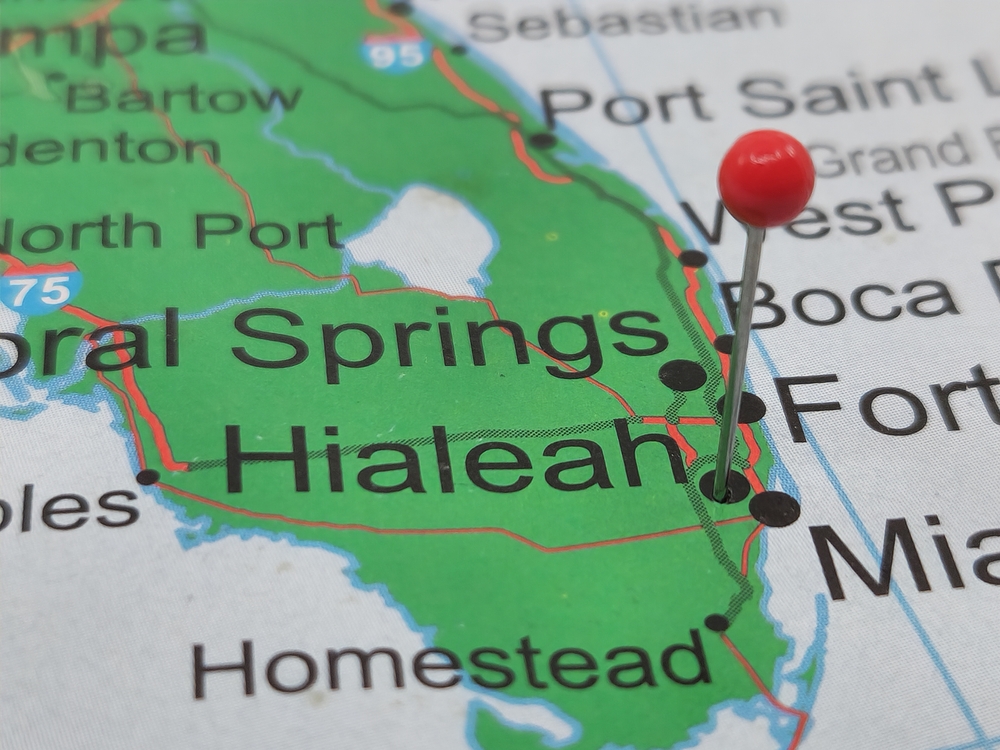

Welcoming Ana Isabel Hume: A New Voice for Transparency in Hialeah

“A city that communicates clearly governs more effectively.”— Wilson Alvarez

Welcoming Ana Isabel Hume: A New Voice for Transparency in Hialeah
TL;DR – Ana Isabel Hume has been appointed as the City of Hialeah’s first Chief Communications Officer. Her return to the city where she grew up marks a significant step toward transparency, accessibility, and public trust under Mayor Bryan Calvo’s new administration.

Cities don’t just speak through ordinances and resolutions.They speak through tone. Through clarity. Whether people feel heard—or dismissed.
That is why Hialeah’s appointment of Ana Isabel Hume as its first Chief Communications Officer matters.
It is not simply a new title. It is a signal.
A Homegrown Story That Comes Full Circle
Ana Isabel Hume’s story is deeply tied to Hialeah itself. After moving from Madrid, Spain, she grew up in this city—attending South Hialeah Elementary, working her first job at Westland Mall, and learning early what community resilience looks like in real life.
Now, she returns not as a visitor, but as a public servant.
Her appointment reflects something powerful: when a city invests in leaders who understand its neighborhoods, its families, and its culture, communication stops being abstract. It becomes personal.

“Trust in government isn’t built through volume—it’s built through honesty.”— Wilson Alvarez

Why This Role Matters Now
The creation of the Chief Communications Officer role under Mayor Bryan Calvo, the youngest mayor in Hialeah’s history, represents a modern shift in governance.
This position consolidates citywide communications under a single executive leader—ensuring:

Consistent messaging

Clear public information

Direct accountability

Improved access to city resources

In short, it reduces noise and increases clarity.
In an era where misinformation spreads faster than facts, cities must communicate with precision and credibility. Ana Isabel Hume steps into this role with both professional experience and lived understanding of the community she now serves.
Leadership Rooted in Integrity
Mayor Calvo’s administration has emphasized a simple but demanding standard: Integrity. Reform. Progress.
Those are not slogans. They are expectations.
According to publicly available city and statewide safety data, Hialeah continues to stand out:

Second-largest city in Miami-Dade County

Home to more than 220,000 residents

Ranked among the safest large cities in Florida

Recorded one of the lowest homicide totals among major cities in Miami-Dade in 2023

Clear communication plays a role in that success. When residents trust information, they trust institutions. When they trust institutions, communities become stronger.
A Welcome—and a Responsibility
Welcoming Ana Isabel Hume back to Hialeah is more than a congratulatory moment. It is an acknowledgment of responsibility.
The responsibility to tell the city’s story accurately.To communicate policy without politics.To make City Hall feel accessible—not distant.
That is the work ahead.
And it matters.
Looking Ahead
As Hialeah enters this new chapter under Mayor Bryan Calvo’s leadership, the appointment of its first Chief Communications Officer sends a clear message: transparency is not optional—it is foundational.
Welcome home, Ana Isabel Hume. Hialeah’s voice is in capable hands.

Read More

Do You Really Need an .ai Domain in 2026?

Artificial intelligence is booming, but does your business actually need the .ai label?
“Technology should serve your brand, not distract from it.”
-Wilson Alvarez

TL;DR – An .ai domain can be powerful for tech and artificial intelligence companies, but it is not necessary for most traditional businesses. Your domain should reflect your brand strategy, not just follow trends.

The .ai domain has exploded in popularity over the last few years. As artificial intelligence reshapes industries, many business owners are asking a serious question. Should I switch to an .ai domain?
It feels modern. It feels innovative. It feels cutting edge.
However, branding decisions should never be based on excitement alone.
The Direct Answer is straightforward. You only need an .ai domain if artificial intelligence is central to your product, service, or brand identity.
Originally assigned to Anguilla as a country code domain, .ai has become synonymous with artificial intelligence startups and tech driven companies. As AI tools like ChatGPT and other platforms continue gaining adoption, the extension naturally gained momentum.
Yet not every company benefits from attaching itself to that identity.
If you are an AI software developer, a data analytics company, or a technology startup building AI driven solutions, an .ai domain reinforces your positioning. It signals specialization.
On the other hand, if you are a law firm, a medical practice, a construction company, or a local service provider, the extension may create unnecessary confusion.
Brand clarity matters more than trend alignment.
Customers should immediately understand what you do. If your domain raises more questions than answers, your branding may be working against you.
There is also a trust factor to consider. While .ai is growing rapidly, .com still carries broader recognition and default trust for general audiences.
In Miami’s business landscape, relationships and familiarity drive decisions. A traditional business may benefit more from stability than novelty.
That does not mean .ai lacks value.
Many forward thinking companies secure both their .com and .ai domains. The .com becomes the primary brand. The .ai supports innovation focused campaigns or technology divisions.
This layered strategy protects brand authority while allowing room for growth.
Wilson Alvarez once said, “Innovation is powerful, but clarity converts.” That insight applies perfectly here. A domain must support conversion, not just creativity.
The late Steve Jobs famously said, “Innovation distinguishes between a leader and a follower.” That quote inspires many businesses to adopt modern branding. However, true leadership is not copying trends. It is making strategic choices aligned with your core mission.
If AI defines your company, .ai may strengthen your message.
If AI only supports your internal operations, the extension may not need to define your brand.
The takeaway is simple. Choose a domain that represents who you are, not who the trend says you should be.
Strategy always wins over excitement.

Not sure if an .ai domain strengthens or weakens your brand? Let’s evaluate your digital positioning together. Call 305-386-6165 or email info@305SocialMedia.com today and make a strategic domain decision that supports your long term growth.
#AIDomain #DigitalBranding #MiamiBusiness #305SocialMedia #DomainStrategy
305SocialMedia.com
Phone Number305-386-6165
Contact NameWilson Alvarez
Call 305-386-6165 for domain strategy guidance.

Read More

The Power of Slowing Down in Business Conversations

In a world that rewards speed and constant activity, the ability to slow down and think together may be one of the most valuable advantages a leader can have.

When conversation slows down, understanding speeds up.– Wilson Alvarez

Slowing down business conversations allows leaders to think more clearly, share deeper insight, and make stronger decisions. When professionals create space for thoughtful dialogue, ideas improve and collaboration becomes more effective.
The power of slowing down in business conversations is often overlooked in modern leadership. Many professionals operate in environments where speed is celebrated and quick responses are expected. Emails arrive constantly, messages demand immediate attention, and decisions are often made under pressure.
While efficiency has its place, thoughtful leadership requires something that speed cannot provide. It requires space for reflection.
When professionals slow down their conversations, they create the opportunity to explore ideas more carefully. Instead of reacting immediately, participants listen more closely and consider perspectives that may not appear obvious at first.
This shift in pace often leads to better outcomes.
In rushed meetings, people tend to focus on delivering their points quickly. The conversation becomes a series of statements rather than a meaningful exchange of ideas. Important details can be missed and creative solutions may never surface.
Slower discussions change that dynamic.
When leaders allow time for conversation to unfold naturally, participants begin to build on each other’s thoughts. A question may reveal a hidden challenge. A different perspective may uncover an opportunity that had not been considered before.
This process strengthens both decision making and collaboration.
Throughout history, many cultures understood the importance of slowing down important conversations. Rituals and traditions often encouraged participants to speak with intention and listen with patience.
Among Native American communities, the ceremonial passing of the peace pipe symbolized a commitment to respectful dialogue. The moment encouraged participants to slow down and consider their words carefully before speaking. The focus was not simply on sharing opinions but on understanding one another.
Modern business environments may look different, yet the lesson remains relevant.
When professionals create environments that encourage thoughtful dialogue, the quality of conversation improves dramatically. Participants feel more comfortable sharing ideas, asking questions, and exploring new perspectives.
In cities like Miami, where business activity is energetic and fast paced, these moments of reflection become especially valuable. Entrepreneurs and professionals who regularly engage in meaningful conversations often discover that slowing down allows them to see opportunities that might otherwise go unnoticed.
Another important benefit of slower conversations is trust.
When people feel that their ideas are being heard and respected, they become more willing to contribute openly. Trust grows naturally through dialogue that is patient and thoughtful. Over time, these conversations create stronger professional relationships.
As Wilson Alvarez often says, “Movement creates clarity.”
At first glance, that statement may seem to favor action. Yet clarity often emerges through thoughtful movement of ideas between people. When conversations move deliberately from one perspective to another, understanding grows and decisions become more informed.
The lesson is clear. Leadership does not always require faster decisions. Sometimes it requires better conversations.
When professionals create environments where dialogue can unfold without pressure, ideas become stronger and collaboration becomes more meaningful. In a fast moving world, the ability to slow down may be one of the most powerful leadership skills available.
If you value thoughtful discussion, meaningful conversation, and professional collaboration, consider becoming part of the Miami cigar community. Connect with professionals who appreciate insight and dialogue by joining the Miami Cigar Club Facebook group:https://www.facebook.com/groups/miamicigarclub
For more information about gatherings and membership opportunities, contact Wilson Alvarez Consulting Group, Inc. by calling 305 386 6165.
Slowing down business conversations allows leaders to explore ideas carefully, share perspectives, and make stronger decisions. Thoughtful dialogue helps professionals collaborate more effectively and build better strategies.
#MiamiCigarClub #BusinessConversations #LeadershipDialogue #MiamiBusinessCommunity #ProfessionalGrowth

The Miami Cigar Club is not simply a gathering, it is a circle of professionals committed to sharpening ideas, challenging perspectives, and helping one another rise. In an environment built on respect, thoughtful conversation, and shared experience, members meet to discuss real business challenges and support each other’s growth. It is a leadership initiative rooted in the belief that success multiplies when capable people think together. Those interested in learning more about the Miami Cigar Club and upcoming gatherings may request additional information by emailing info@wilsonalvarez.com.

Read More

A Homeowner’s Guide to Property Damage in Condominiums and HOAs in Florida


A Homeowner’s Guide to Property Damage in Condominiums and HOAs in Florida

Provided by Perez Mayoral, P.A. – Florida attorneys representing homeowners and condo owners in disputes with their associations
If you own a condominium unit or a home in an HOA community in Florida, you’ve probably heard conflicting information when property damage occurs:

“That’s inside your unit, so it’s your problem.”
“You need to file a claim with your own insurance.”
“We fixed the leak—the rest is on you.”

The reality is more complicated—and often more favorable to you than you’ve been led to believe.
Florida law imposes clear statutory and contractual duties on associations to maintain common elements and shared infrastructure. When they fail to do so, associations can be held responsible for the resulting damage inside your home, including repairs, mold remediation, and even your costs for temporary housing.
This guide explains your rights, what the law actually says, and what you should do when damage happens.
Why Property Damage Disputes Are So Common
Condominiums and HOAs rely on shared infrastructure that serves multiple homes:

Roofs and exterior walls
Plumbing and sewer lines serving more than one unit
Structural slabs, beams, and columns
Balconies and building envelopes
Drainage systems

When something goes wrong with these shared components, three different parties often focus on three different questions:

You focus on the damage inside your home and what it will cost to fix.
The association focuses on whether insurance will cover it and who’s going to pay.
The law focuses on who had the legal duty to maintain the component that failed—and whether they breached that duty.

The Law Is Clear: Associations Have Nondelegable Repair Duties
In Condominiums
Florida’s Condominium Act is unambiguous:
The association is responsible for maintenance of the common elements.Section 718.113(1), Florida Statutes
“Common elements” means all portions of the condominium property not included in the units—which typically includes everything between the unfinished surfaces of your walls, floor, and ceiling.
This duty is nondelegable. That means:

The association can’t avoid it by blaming a contractor.
The association can’t avoid it by saying a unit owner caused the problem.
The association can’t avoid it by pointing to its insurance carrier.

The McLlenan Case: A Landmark Decision
In McLlenan v. Cypress Chase North Condominium No. 4 Association, Inc., Florida’s Fourth District Court of Appeal made this perfectly clear:

A leak from an upstairs unit caused water and sewage damage in the downstairs unit.
The association tried to argue it wasn’t responsible because the leak came from a unit.
The court said the association had a duty to repair the common elements (the space between floors) regardless of the cause.
The association could later seek reimbursement from the negligent upstairs owner, but it could not refuse to make the repairs.

Key takeaway: Even if another unit owner caused the problem, the association must still repair the common elements and address the resulting damage. Their remedy is to go after that owner later—not to leave you stuck with the bill.
In HOAs
Homeowners associations are governed primarily by their recorded declarations and covenants, not the Condominium Act. But many HOA declarations still impose maintenance duties on the association for:

Roofs
Exterior walls and siding
Shared drainage or utility systems
Structural components in townhouse or villa-style communities

If your HOA declaration says the association is responsible for maintaining something, that’s a binding contract. When the association breaches that duty and damage results, you can hold them accountable.
What Happens When the Association Hires a Contractor?
Many associations assume they’re off the hook if they hire a contractor to do repairs. That’s not true when a nondelegable duty exists.
The Walters Case: Associations Can’t Hide Behind Contractors
In Walters v. Beach Club Villas Condominium, Inc., a contractor working on a common-area dock caused an injury. The association tried to argue it wasn’t liable because an independent contractor did the work.
Florida’s Third District Court of Appeal disagreed:

The association had a nondelegable duty to maintain the dock under both statute and its declaration.
Because of that duty, the association was held jointly and severally liable for the contractor’s negligence.

What this means for property damage:
If the association hires a contractor who:

Over-demolishes your unit
Fails to properly remediate mold
Causes additional water damage during repairs

The association can still be held responsible because its duty to maintain and repair common elements is nondelegable.
Common Types of Property Damage Claims

Water Intrusion and Plumbing Failures

This is the most frequent source of disputes:

Roof leaks
Failed waterproofing on exterior walls
Burst pipes serving multiple units
Sewer line backups or failures
Recurring drainage problems

These events routinely damage drywall, flooring, cabinetry, electrical systems, and personal belongings.

Structural and Building Envelope Problems

Cracked slabs, deteriorating concrete, failing balconies, and compromised exterior walls are typically common elements. When associations delay necessary repairs after being notified, the resulting interior water intrusion can form the basis for multiple legal claims: negligence, breach of contract, and statutory violations.

Mold and Environmental Damage

Mold almost always signals prolonged moisture and inadequate or delayed remediation. It can make your home temporarily uninhabitable and cause serious health issues.
Interior finishes—your flooring, cabinets, baseboards, paint—are often damaged twice:

First by the water event itself
Again by overly aggressive demolition during poorly supervised association repairs

Loss of Use and Displacement Costs

When your home becomes unsafe or uninhabitable, you may incur:

Hotel or temporary housing costs
Moving and storage expenses
Lost rental income if you lease the property

These “loss of use” damages are recoverable when they flow naturally from the association’s breach of duty.
Insurance Does Not Decide Who’s Legally Responsible
Here’s a critical point many associations get wrong:
Insurance is a funding mechanism. It does not determine legal duties.

The association’s statutory duty under Florida law exists whether or not its insurance carrier accepts the claim.
The association’s contractual duty under the declaration exists whether or not a deductible applies.
Hiring a contractor or relying on an insurance company’s position does not eliminate the association’s liability when a nondelegable duty exists.

Section 718.113(1) of the Florida Statutes contains no exception that relieves the association of its maintenance duty when damage was caused by an individual unit owner. The association must still repair—it can seek reimbursement later.
Recurring Damage Changes Everything
If you’ve experienced the same problem multiple times—repeated leaks, ongoing moisture, recurring backups—that dramatically strengthens your legal position.
Recurrence establishes:

The association had prior notice of a defective condition
The association failed to adequately investigate the root cause
The association failed to implement a permanent fix

In McLlenan, the unit experienced multiple leaks over several months. The association initially did little, then performed only partial remediation—tearing out the kitchen but failing to properly address mold that had spread throughout the unit.
Patterns of recurring damage support:

Negligence claims (the association knew and failed to act)
Expanded consequential damages (additional mold growth, extended uninhabitability)

Your Governing Documents Matter—But They’re Not a Shield
Your condominium declaration or HOA covenants allocate maintenance responsibilities, but they do not permit associations to ignore known problems or refuse to repair common elements.
Associations often cite provisions stating that owners are responsible for interior finishes (walls, flooring, cabinets) as a complete defense.
That argument frequently fails when you can prove that your interior damages were caused by the association’s failure to maintain or timely repair components under its control.
Under Florida law, when an association breaches its maintenance duty, it can be liable for foreseeable consequential damages—including damage inside your unit and loss-of-use costs.
What You Should Do When Damage Occurs
Protect yourself and preserve your legal rights by taking these steps immediately:

Document Everything

Take clear photos and videos of the damage, the suspected source, visible mold, and staining
Repeat documentation after each new event or repair attempt
Create a timeline of when each incident occurred

Provide Written Notice

Report the issue in writing to both management and the board (email and certified mail if appropriate)
Describe the problem, dates of occurrence, and any health or habitability concerns
Keep copies of everything

Request Information

Ask whether the association has filed a claim with its master insurance carrier
Request the claim number, adjuster contact information, and any written reports
Ask for copies of any remediation protocols or contractor proposals

Track All Expenses

Keep receipts for:

Emergency repairs
Temporary housing and meals
Moving and storage costs
Cleaning and laundry
Medical visits related to mold or environmental exposure
Lost rental income

These can all become part of your damages claim.

Be Cautious with Documents

Do not sign:

Broad liability releases
Waivers of future claims
“Settlement” agreements tied to partial repairs or limited reimbursements

Get legal review first, especially when recurring or structural problems exist.
Key Legal Takeaways for Florida Owners

Interior damage is not automatically your responsibility. When it’s caused or worsened by the association’s failure to maintain common elements, the association can be liable.
In condominiums, the association has a statutory, nondelegable duty to maintain common elements under section 718.113(1), Florida Statutes. Court decisions like Walters and McLlenan reinforce this.
The cause of damage doesn’t relieve the association’s repair duty. Even if a negligent unit owner caused the problem, the association must still repair the common elements. It can seek reimbursement later.
Hiring a contractor doesn’t break the chain of responsibility. When a nondelegable duty exists, the association can be held liable for the contractor’s negligence.
Recurring damage and delayed repairs strengthen your claim by establishing notice, pattern, and foreseeability of greater harm.
Documentation and written notice are critical. They preserve your legal rights and counter improper denials or attempts to shift all responsibility onto you.

Need Help?
If you’re dealing with property damage in a condominium or HOA-governed home and have questions about your rights and next steps, Perez Mayoral, P.A. can help.
We represent homeowners and condo owners throughout Florida in disputes with their associations, including claims for water damage, mold, structural issues, and association or contractor negligence.
Contact us:
🌐 Website: www.pmlawfla.com📞 Phone: 305-928-1077✉️ Email: info@pmlawfla.com
This guide is for informational purposes and does not constitute legal advice. Every case is different, and you should consult with an attorney about your specific situation.

Read More

Attempted Murder Charges in Florida: What Intent Really Means

How prosecutors define intent, why the outcome doesn’t matter, and what defenses can change the direction of your case

“Criminal liability isn’t about what happened—it’s about what the state claims you meant to do.”
— Carolle El-Naffy

TL;DR – In Florida, attempted murder charges hinge on intent, not whether a death occurred. Prosecutors must prove a specific intent to kill and a meaningful step toward carrying it out. Early legal representation is critical to challenge evidence, intent, and overcharging.

How Florida Treats Attempted Murder Charges
An attempted murder allegation in Florida carries consequences nearly as severe as a completed homicide—even when the alleged victim survives. Many people assume the lack of a fatal outcome reduces the seriousness of the charge. However, Florida law centers on what the defendant intended, not what ultimately happened.
As a result, prosecutors frequently pursue attempted murder charges when they believe a person acted with the purpose of killing, regardless of the final outcome. The distinction between attempted murder and a lesser violent offense often determines whether a defendant faces years—or decades—behind bars.

Legal Definition of Attempted Murder in Florida
To secure a conviction for attempted murder, the prosecution must establish all of the following beyond a reasonable doubt:

The accused formed a conscious intent to cause the victim’s death

The accused took a direct action toward carrying out that intent

The conduct progressed beyond planning but did not result in death

If the state cannot prove intent to kill, the charge may not legally stand.
See: Florida Statutes § 777.04 (Criminal Attempt)

Levels of Attempted Murder Under Florida Law
Florida categorizes attempted murder into two primary forms, each carrying serious penalties.
Attempted First-Degree Murder
This charge applies when prosecutors allege either:

A deliberate, premeditated intent to kill, or

Involvement in a qualifying felony during which an attempted killing occurred

Attempted first-degree murder is classified as a first-degree felony and may result in life imprisonment, particularly when firearm enhancement laws apply.

Attempted Second-Degree Murder
Attempted second-degree murder focuses on conduct prosecutors describe as:

Inherently dangerous

Showing extreme disregard for human life

Demonstrating a “depraved mind”

These cases often arise from shootings, stabbings, or violent confrontations where the state argues reckless conduct amounted to lethal intent.

Situations That Commonly Lead to Attempted Murder Allegations
Charges often stem from incidents such as:

Non-fatal shootings

Knife-related assaults

Escalated road-rage encounters

Domestic altercations

Gang-related investigations

In many cases, however, the facts may support lesser charges rather than attempted murder.

Defense Strategies in Attempted Murder Cases
Because intent is central, attempted murder charges are frequently open to challenge. Defense strategies may include:

Arguing the absence of intent to kill

Establishing self-defense or lawful use of force

Seeking reduction to aggravated battery or assault

Exposing weak or circumstantial evidence

Challenging unconstitutional searches or interrogations

Each detail—statements, forensic evidence, witness credibility—can dramatically affect the outcome.

Potential Consequences of a Conviction
A conviction for attempted murder can lead to:

Lengthy prison sentences or life incarceration

Mandatory minimum penalties tied to firearms

A permanent felony record

Loss of civil and firearm rights

Serious employment and immigration repercussions

Given these stakes, early and strategic legal action is essential.

Accused of Attempted Murder in Florida? Timing Matters
Attempted murder cases often turn on what happens in the earliest stages. Once evidence solidifies and prosecutorial narratives take hold, defense options narrow quickly.
Carolle El-Naffy carefully evaluates intent, evidence, and constitutional issues to challenge overcharging and protect her clients’ futures.
📞 Call (305) 456-7576📍 75 Valencia Ave, Suite 800, Coral Gables, FL🔒 Confidential consultations available

Legal Information Disclaimer
This article is provided for informational and editorial purposes only and does not constitute legal advice. Laws change and legal outcomes depend on specific facts, so readers should consult a qualified attorney regarding their individual situation. Reading this article does not create an attorney-client relationship with any attorney mentioned, MiamiLegalNews.com, MiamiBusiness.com, Wilson Alvarez, or Wilson Alvarez Consulting Group, Inc. Articles may include commentary, interviews, or ghostwritten editorial content prepared in collaboration with attorneys or legal professionals. MiamiLegalNews.com operates as a digital media publication and does not provide legal services. By reading this article, you agree that MiamiLegalNews.com and its publisher are not responsible for actions taken based on the information presented.

Read More