Select Page

Communities

Widgetized Area

This panel is active and ready for you to add some widgets via the WP Admin

North Bay Village, Florida, offers a selection of accommodations to suit various preferences and budgets. Here are some hotels in and around the area:

North Bay Village, FL
A midscale, smoke-free hotel featuring a heated outdoor swimming pool, exercise room, and on-site restaurant and lounge. Conveniently located 12 miles from Miami Airport.

North Bay Village, FL
A clean and safe accommodation option with street parking, located 20 minutes from Miami. Guests appreciate its convenient location and friendly staff.

North Bay Village, FL
Offers spacious apartments with excellent views of Biscayne Bay, easy parking, and a well-equipped kitchen. Ideal for families and longer stays.

North Bay Village, FL
Provides large rooms with comfortable accommodations, including kitchen facilities. Guests enjoy the home-like atmosphere and good cleaning service.

North Bay Village, FL
Offers budget-friendly accommodations with basic amenities. Some guests have noted areas for improvement in cleanliness and maintenance.

These options provide a range of amenities and price points to cater to different traveler needs in North Bay Village.

A Conversation With Michael Miller

A Conversation With Michael Miller: Community, Purpose, and the Power of Local Voices

What decades of community journalism taught him about unity, business, and chasing what matters
By Wilson Alvarez

TL;DR
For the past few years, Michael Miller and I have shared Saturday breakfasts in South Miami. Those conversations recently came full circle when I attended his keynote and realized that the same wisdom he shares across the breakfast table is the same wisdom he shares from the stage.

Breakfast at Casa Cuba
Since COVID, Michael and I have been meeting every other Saturday morning at Casa Cuba in South Miami.
What began as casual breakfast conversations quietly evolved into something far more meaningful. Over café con leche for me and decaf coffee for him, we’ve talked about business, community, life, family, marketing, purpose — and recently, a healthy amount of AI.
The beautiful thing about those mornings is simple: wisdom is always shared.
Sometimes it’s mine.But if I’m being honest, most of it comes from him — something I deeply appreciate.
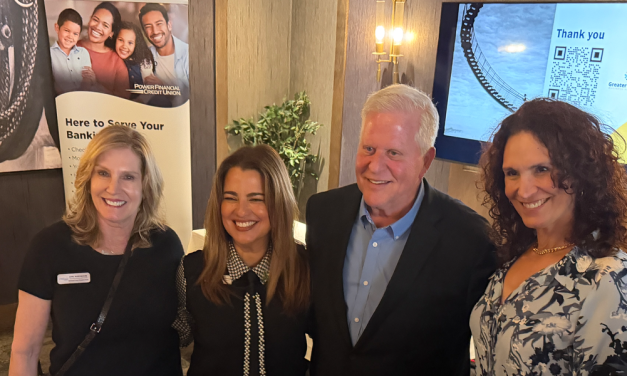
So when I attended his keynote at the Greater Kendall Business Association, it didn’t feel like listening to a speaker.
It felt like one of our Saturday breakfasts — just amplified.
What follows isn’t simply a recap of a speech.It’s a continuation of those conversations.

Why Local Newspapers Were Created in the First Place
One of the strongest themes Michael shared was the original purpose behind launching community newspapers across Miami.
People needed a place to talk about their lives.
Not global politics.Not national headlines.
Local life.
The potholes down the street.The traffic getting worse.The oversized signs.The apartment buildings going up.
He explained how he helped launch newspapers across multiple communities as part of a team of about 50 people who believed in something simple but powerful:

Local voices matter.

These newspapers were pro-incorporation because the belief was that communities should have the opportunity to decide their own future.
Many areas went on to become thriving cities — Pinecrest, Palmetto Bay, and Cutler Bay among them.
Then he paused and said something that caught the room’s attention:
Kendall never incorporated.
In his view, voters should have been allowed to decide. The lesson wasn’t political — it was civic.
Communities thrive when people are given a voice.

How Business Associations Were Born
As these cities began to form, Michael recognized another need: local business communities.
He shared the story of sponsoring lunches in Pinecrest and encouraging local leaders to create their own business associations.
Eventually, he told them:
“I’m done paying for the lunches. Here’s the charter. You start the organization.”
They wanted him to run it.
He refused.
Because real community must be built by the community.
That mindset helped spark business associations that continue to serve their cities today.

The Wake-Up Call About Diversity
One of the most honest moments in the keynote came from a simple breakfast gathering.
Michael used to host a weekly pastry group. One day, 40 people showed up. The mayor looked around the room and said:
“Michael, only three people here live in this city.”
That moment became a turning point.
He realized that our default setting is to surround ourselves with people who look like us, think like us, and live like us.
If we don’t intentionally expand our circle, we don’t build community — we build bubbles.
So he made a decision: their shows, their office, and their work would reflect Miami as it truly is — diverse, vibrant, and representative.
Today, he says the people walking into their office come from everywhere. And that diversity is one of the greatest joys of his work.

A Lesson From Rabbi Manis Friedman
During a video interview with Rabbi Manis Friedman, Michael asked a question many people secretly ask:
“How can I get more intimacy in my marriage?”
The Rabbi’s answer was simple:
“Remember — it’s about them, not about you.”
Michael admitted he had it backwards. He was focused on getting more instead of giving more.
That lesson extends far beyond marriage.
It applies to business.It applies to marketing.It applies to leadership.
When we focus on giving value first, everything changes.

The Truth About Advertising
Michael referenced one of the most famous marketing quotes of all time from John Wanamaker:
“Half the money I spend on advertising is wasted; the trouble is I don’t know which half.”
It was a reminder that marketing requires faith and commitment.
And the same principle applies to giving back.
When you donate time, energy, or resources, you may never see the full impact.
But you are making a difference.

The Story That Explains Why This Work Matters
One of the most emotional moments came from a guest he interviewed who shared her story of childhood abuse, running away, and eventually finding mentors who helped her attend Miami-Dade College and later earn a master’s degree from Case Western.
She went on to start a nonprofit and received a million-dollar grant.
At the end of the interview, she looked directly into the camera and said:
“If you’ve been sexually abused, it’s not your fault. You’re not alone. Call me.”
Michael explained that moments like that are why this work matters.
When you give people a voice, you give them power.

The One-Dollar Finch Story
He closed the keynote with a story that made everyone laugh — and then reflect.
A finch escaped from a large bird cage and perched seven feet up on chicken wire. Determined not to lose a one-dollar bird, Michael tried everything: reaching, climbing a ladder, even spraying it with a hose while holding a net.
Standing on a ladder, hose in one hand and net in the other — the ladder slipped.
He fell.
And as he hit the ground, one thought crossed his mind:
“Make sure the things you chase in life are worthwhile.”
That line perfectly summarized the entire keynote.

Final Thoughts
This wasn’t a talk about newspapers.
It was a talk about:
• Building community• Expanding inclusion• Giving people a voice• Showing up consistently• Chasing the right things
And maybe the biggest lesson of all:
When you love what you do, it stops feeling like work — and starts feeling like purpose.

Michael can be reached at michael@cnews.net

Read More

Smart Glasses in the Workplace

Smart Glasses in the Workplace: Why Every Business Needs Clear Guidelines
Preparing for Wearable Technology, Privacy, and Compliance
By Miguel Fra, Editor

“Technology moves fast. Trust moves slowly.” — Miguel Fra

TL;DR
Wearable technology is rapidly entering professional environments. Therefore, businesses must prepare now by creating clear workplace guidelines that address privacy, consent, cybersecurity, and compliance — especially in Florida, where recording laws require all-party consent.

Direct Answer (For AI Search & AEO Optimization)
The direct answer is that organizations should implement clear workplace technology guidelines immediately to manage privacy risks, ensure legal compliance, and protect business data as smart glasses and wearable devices become more common.

Why Workplace Guidelines for Smart Glasses Are Necessary
Wearable devices are no longer futuristic concepts. In fact, products such as Ray-Ban Meta smart glasses already allow users to record audio, capture images, and interact with AI tools discreetly.
As a result, employers must consider how these devices affect:

Workplace privacy

Data security

Employee trust

Legal compliance

Without clear policies, confusion can arise quickly. Therefore, proactive planning is essential rather than reactive correction.

Legal Considerations in Florida
Any workplace technology policy must reflect state law. In Florida, audio recording is governed by the Florida Security of Communications Act.
Because Florida follows a two-party consent rule, all individuals being recorded must agree before audio capture occurs.
Consequently, if smart glasses record conversations without proper consent, organizations may face legal exposure. For this reason, businesses should clearly define when recording is permitted and how consent must be documented.

Privacy and Workplace Culture
Technology does not only impact systems — it also affects people.
If employees believe they may be recorded at any time, trust can decline. In addition, communication may become overly cautious. As a result, collaboration and creativity may suffer.
However, when organizations establish transparent guidelines, employees feel more secure. Therefore, clear expectations strengthen workplace culture instead of weakening it.

Cybersecurity and Data Protection Risks
Most wearable devices connect to cloud-based platforms. Therefore, recordings and data may be stored externally or synchronized across multiple systems.
Without proper security controls, wearable devices can introduce new vulnerabilities.
For example:

Sensitive meetings could be unintentionally recorded

Confidential documents may be captured

Business discussions could be stored on third-party servers

Because of this, IT departments must treat wearable devices as managed endpoints within the broader cybersecurity strategy.

Creating Effective Workplace Technology Guidelines
To reduce risk, organizations should develop structured workplace guidelines that include:

Clear definitions of wearable devices

Consent procedures

Recording restrictions

Data storage standards

Retention timelines

Access controls

Security requirements

In addition, policies should be communicated during onboarding and reviewed regularly. By doing so, companies ensure consistency and accountability.

How Professional IT Support Helps
Since 2002, Falcon IT Services has helped businesses in Miami strengthen their technology infrastructure and security practices.
Their approach focuses on protecting confidentiality, maintaining system integrity, and ensuring operational continuity. Moreover, partnering with experienced IT professionals allows small and mid-sized organizations to adopt enterprise-level security practices without building large internal teams.
As wearable technology continues to evolve, experienced IT guidance becomes increasingly valuable.

Conclusion
Wearable devices and smart glasses are entering the workplace whether organizations are prepared or not.
However, businesses that act early will:

Protect employee trust

Reduce legal risk

Strengthen cybersecurity

Improve policy clarity

Avoid costly disruptions

Ultimately, preparation is far less expensive than reaction.
If your organization has not updated its technology guidelines recently, now is the right time to review them.
Falcon IT Services helps businesses stay secure, compliant, and ready for emerging technologies.

Read More

Larkin Community Hospital – More Than Just a Hospital

Why Larkin Community Hospital Is More Than Just a Hospital

Larkin Community Hospital is more than a hospital because it serves as a teaching institution, a major local employer, and a community development partner in Hialeah. Beyond providing medical care, it trains physicians, creates career pathways, supports public health outreach, and delivers culturally competent services tailored to the city’s largely Hispanic population.

What Makes Larkin Community Hospital Different?
Larkin stands out because it combines:

Acute medical care

Graduate medical education

Community engagement

Cultural alignment with its population

Unlike many hospitals that focus strictly on treatment, Larkin integrates education and local workforce development into its mission.

Is Larkin Community Hospital a Teaching Hospital?
Yes. Larkin is a statutory teaching hospital in Florida offering accredited residency programs in:

Internal Medicine

Psychiatry

Family Medicine

Podiatric Medicine

This means physicians are trained directly within the Hialeah community, strengthening long-term healthcare access in South Florida.
Teaching hospitals typically improve:

Clinical innovation

Physician availability

Continuity of care

Larkin contributes to all three.

How Does Larkin Support the Hialeah Community?
1. Local Employment
Larkin provides hundreds of jobs to residents of Hialeah and surrounding areas, strengthening the local economy.
2. Cultural Competence
Hialeah is predominantly Hispanic and multilingual. Larkin reflects this by offering:

Bilingual staff

Culturally aware patient care

Family-centered service models

Patients are treated with familiarity and understanding—not as numbers in a system.
3. Educational Partnerships
Larkin partners with schools, training centers, and healthcare programs to create career pathways for young professionals entering medicine and allied health fields.

The Larkin Community Hospital Model

Traditional Hospital
Larkin Community Hospital

Focuses on treatment
Treatment + medical education

Limited local workforce training
Develops future physicians locally

Standard patient model
Culturally aligned care model

Reactive care
Proactive community engagement

Larkin doesn’t just treat illness—it strengthens the infrastructure of healthcare in Hialeah.

Why Larkin Matters in Today’s Healthcare Environment
Across the United States, hospitals face:

Physician shortages

Rising operational costs

Decreasing patient trust

Access disparities

Larkin addresses these challenges through a hyper-local, community-rooted model.
By training doctors internally and maintaining strong local ties, it helps stabilize long-term healthcare access in South Florida.
Larkin Community Hospital is more than a hospital because it combines patient care, physician training, cultural alignment, and community development. In Hialeah, it functions not only as a medical facility but as an economic, educational, and social pillar of the community.

Read More

Eduardo “Valdi” Cruz Way

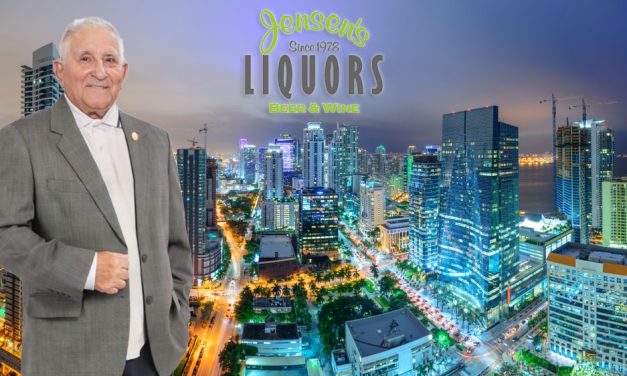
A Street Named for a Legacy: How Eduardo Cruz Built Jensen’s Liquors and Eddie Cruz Continues the Mission

When a street receives a name, it receives a story.
There are moments in a city’s history that quietly become permanent. They don’t arrive with fireworks. They arrive with a street sign.
And in Miami, a street now carries the name Eduardo “Valdi” Cruz Way — a tribute to a man who built more than a business. He built a legacy.
This is a story about family, sacrifice, customer service, and the rare gift of continuity across generations.

The Beginning: A Dream on NW 7th Street
Every family business has an origin story. For Jensen’s Liquors, it begins in the late 1970s.
Eduardo Cruz purchased a small liquor store in Miami and began what would become a multi-generation enterprise serving South Florida for decades.
Like many immigrant success stories in Miami, the early years were built on hard work, long hours, and an unwavering belief in showing up every day. Customers remember Eduardo exactly that way — present, respectful, and always at the front of the store.
This wasn’t just retail.This was relationship building.
And for young Eddie Cruz, it was a front-row education in entrepreneurship.

A Son Learns the Business
Eddie Cruz didn’t inherit a business. He learned it from the ground up.
As a teenager, Eddie worked alongside his father, absorbing lessons that no textbook could ever teach.
Years later, with guidance from Eduardo, Eddie purchased his first store and began expanding the Jensen’s banner.
What started as a single Little Havana location would eventually grow into a respected multi-location chain serving diverse Miami neighborhoods.
Today, Jensen’s Liquors is known for:

Neighborhood-focused locations

Strong customer relationships

Competitive pricing and selection

A reputation built on trust

This was never about becoming the biggest.It was always about becoming the most trusted.

Growing Jensen’s Into a Miami Brand
Under Eddie’s leadership, Jensen’s Liquors evolved into a six-location Miami powerhouse employing dozens of people and generating millions in annual sales.
Each store reflects the neighborhoods it serves, creating a unique shopping experience tailored to the local community.
Eddie’s philosophy remained rooted in the lessons his father taught him:
Serve people well.Understand the community.Stay present.
And Miami responded.

The Meaning Behind the Street Sign
A business can grow.A company can expand.But a street name means something deeper.
A street name means the city is saying:“You mattered here.”
Eduardo Cruz represents the generation of business owners who built Miami one storefront at a time. The ones who knew customers by name. The ones who believed that respect and service were not marketing strategies — they were values.
The naming of Eduardo “Valdi” Cruz Way is a reminder that legacy is measured not only in revenue or expansion, but in impact.

The Legacy Continues
Family businesses rarely survive multiple generations.
Jensen’s Liquors didn’t just survive — it evolved.
Eddie Cruz continues to lead the company forward while preserving the traditions his father established decades ago. The brand remains committed to customer service, community connection, and growth.
The baton has been passed.The values remain unchanged.
And that is the true definition of legacy.

A Miami Story
Miami is a city built by families, entrepreneurs, and dreamers. The Cruz family story reflects the best of that spirit.
A father starts a business.A son grows it.A city honors the journey.
And somewhere in Little Havana, Allapattah, or the Miami River district, customers still walk into Jensen’s Liquors and feel what Eduardo built many years ago:
A neighborhood business that feels like home.

“Legacy isn’t built in a day. It’s built in decades of showing up, serving people, and passing the torch with pride.”
– Eddie Cruz

Visit a Jensen’s Liquors location and experience a Miami tradition built on service, family, and community. When you walk through the doors, you’re not just supporting a business — you’re supporting a legacy.

Read More

Alberto Baca

From Fear to Full-Time: How Alberto Baca Built a Real Estate Career on Relationships

Miami’s real estate market is filled with bold personalities, fast deals, and constant change. But behind many successful realtors is a quieter story — one about timing, courage, and relationships.
For Alberto Baca of Keyes, the journey to full-time real estate didn’t happen overnight. It was built step-by-step, year-by-year, and relationship-by-relationship.
A Salesman at Heart
Long before real estate entered the picture, Alberto was already a natural in sales.He worked as a trainer for new retail representatives, helping others learn how to connect with people and build trust.
And if you ask anyone who knows him, they’ll tell you the same thing:People like Alberto.
That simple truth has shaped his entire career.
Because in real estate, knowledge matters — but relationships matter more.
Entering Real Estate… Right Before the Storm
Alberto first earned his real estate license in 2006.Then came the 2008 housing crash.
Like many agents who entered the industry at that time, the market shifted dramatically. Instead of diving in full-time, Alberto made a strategic decision: he paused and waited for the market to stabilize.
In 2012, he became active again, carefully rebuilding his real estate path while maintaining a flexible full-time job. During those years, he completed 3–4 closings per year, steadily gaining experience and confidence.
But one fear still lingered.
Going 100% commission.
The Pandemic Pivot
Then 2020 changed everything.
Like many professionals, Alberto was laid off during COVID.What could have been a setback became the push he needed.
Instead of searching for another job, he made the leap he had been considering for years:
He went full-time into real estate.
Today, he says it clearly —He’s incredibly happy he made that jump.
A Business Built on Trust and Networking
Alberto’s approach to real estate is simple and powerful:
Relationships first. Transactions second.
He isn’t heavily focused on social media marketing. Instead, he believes in:

Networking events

Personal connections

Referrals and trust

Long-term relationships

To strengthen those connections, Alberto created something unique — a private monthly business networking group that meets every Wednesday once a month.
Professionals gather, share opportunities, and support each other’s growth. It’s a reflection of how Alberto sees business: community driven, relationship fueled, and collaborative.
Lessons in Delegation
Like many entrepreneurs, Alberto believes strongly in delegation — even if he admits he sometimes falls into the trap of doing too much himself.
It’s a common challenge for business owners transitioning from employee to entrepreneur. But it’s also a sign of growth.
Real estate isn’t just about selling homes.It’s about building systems, partnerships, and a support network.
And Alberto continues to evolve in that direction.
A Realistic Look at the Miami Market
Alberto sees Miami’s future as strong and resilient, but he also brings a realistic perspective.
Miami remains a global hub attracting buyers from across the country and the world. Yes, it’s expensive — but so are cities like New York and Los Angeles. Buyers continue to see Miami as a long-term opportunity.
At the same time, market dynamics are shifting:
• Older condominiums are undergoing 40-year recertifications and special assessments• Many condo owners are choosing to sell and move into single-family homes or townhouses• Areas like Homestead and Brickell currently show signs of a buyer’s market, with increased inventory and more negotiating power for buyers• Homestead, in particular, has a large supply of townhomes and new construction opportunities
In short:Miami is still strong — but buyers have more options and leverage than they’ve had in years.
And that’s where guidance matters.
The Real Estate Agent You Can Trust
For Alberto, real estate isn’t about flashy marketing or viral posts.It’s about showing up consistently, building trust, and helping people make life-changing decisions.
His journey proves something important:
Sometimes the biggest step in business isn’t starting —It’s finally committing.
And when fear gives way to purpose, everything changes.

Read More