

Select Page

Communities

Widgetized Area

This panel is active and ready for you to add some widgets via the WP Admin

North Bay Village, Florida, offers a selection of accommodations to suit various preferences and budgets. Here are some hotels in and around the area:

North Bay Village, FL

A midscale, smoke-free hotel featuring a heated outdoor swimming pool, exercise room, and on-site restaurant and lounge. Conveniently located 12 miles from Miami Airport.

North Bay Village, FL

A clean and safe accommodation option with street parking, located 20 minutes from Miami. Guests appreciate its convenient location and friendly staff.

North Bay Village, FL

Offers spacious apartments with excellent views of Biscayne Bay, easy parking, and a well-equipped kitchen. Ideal for families and longer stays.

North Bay Village, FL

Provides large rooms with comfortable accommodations, including kitchen facilities. Guests enjoy the home-like atmosphere and good cleaning service.

North Bay Village, FL

Offers budget-friendly accommodations with basic amenities. Some guests have noted areas for improvement in cleanliness and maintenance.

These options provide a range of amenities and price points to cater to different traveler needs in North Bay Village.

The State of Education February 2026

Every student’s success begins with a community that believes in their potential.
-Wilson Alvarez

Miami-Dade Education February 2026: Highlights & Achievements
In February 2026, Miami-Dade education is focusing on student mental health, expanding technology programs, and celebrating academic achievements across high schools, colleges, universities, and private schools throughout the county.
Education in Miami-Dade County continues to grow as schools, colleges, and universities work to prepare students for success. This February, the district emphasized programs that strengthen learning, improve academic performance, and support student well-being. For more context, you can check our January 2026 Miami-Dade education update.

Miami-Dade Education February 2026: School Board Updates
The Miami-Dade County Public Schools Board spent February reviewing student support programs and academic goals. Key priorities included:

Student mental health support: Expanded counseling and wellness programs funded.

Literacy improvement: Reading specialists and teacher training programs introduced to boost literacy rates in middle and high schools.

Campus safety and facilities: Security upgrades and facility improvements to ensure safe learning environments.

For detailed updates, visit Miami-Dade County Public Schools programs.

High School Achievements in Miami-Dade Education February 2026
High schools across the county celebrated academic and cultural milestones:

Black History Month programs: Research projects, musical performances, and cultural exhibitions.

STEM competitions: Robotics teams and science clubs participated in regional contests, emphasizing technology education.

College preparation: Guidance counselors assisted seniors with applications, scholarships, and tutoring for spring exams.

These initiatives demonstrate how Miami-Dade high schools balance rigorous academics with cultural enrichment and student engagement.

Miami-Dade Colleges and Education Highlights February 2026
Miami Dade College, one of the largest and most diverse colleges in the U.S., had a busy February:

Career and internship fairs: Connecting students with local employers.

Technology in classrooms: AI tools and virtual simulations enhanced hands-on learning.

Community service projects: Reinforcing civic engagement across Miami-Dade.

Explore scholarship opportunities at Miami Dade College for more student resources.

University Research and Miami-Dade Education February 2026
Universities continued leading in research and innovation:

Research conferences: Florida International University and the University of Miami highlighted innovations in healthcare, climate science, and business analytics.

Student-faculty collaborations: Mentorship and real-world career experiences.

Expanded scholarships: Supporting first-generation college students to improve access to higher education.

Private Schools and Community Engagement in Miami-Dade Education
Private schools actively promoted academics, sports, and social responsibility:

Competitions and tournaments: Developing leadership and teamwork skills.

Charity drives: Supporting local food banks and shelters.

Parental involvement: Volunteering and participating in school programs strengthens school communities.

A Quote to Reflect On

“Education is the passport to the future, for tomorrow belongs to those who prepare for it today.” — Malcolm X

This quote perfectly reflects the mission of educators across Miami-Dade County: today’s lessons prepare students to lead tomorrow.

February 2026 Takeaways
Collaboration between schools, families, and communities strengthens Miami-Dade’s education system. When teachers, parents, and students work together, the impact is meaningful and lasting.
Stay engaged: attend school board meetings, support local schools, and celebrate the achievements of students throughout the county. Education thrives when the community participates.

Read More

The Hidden Cybersecurity Risks of Traveling with Work

Why Miami Executives Must Stay Digitally Disciplined During Spring Travel

By Humberto ComellasPresident & CEO, ulltium consulting®
Spring travel season is approaching, and many Miami executives will step away from the office — at least physically.
But cybersecurity threats do not observe vacation schedules.
Direct Answer: Traveling executives face elevated cybersecurity risk because public networks, unsecured devices, and rushed digital decisions create expanded attack surfaces outside the office environment.
The reality is simple: travel increases exposure.
Let’s break down why.

Public Networks Expand Attack Surfaces
Airports, hotels, and cafés offer convenience — not guaranteed security.
Spoofed networks and unsecured Wi-Fi environments allow attackers to intercept traffic, harvest credentials, and inject malicious code.
Even experienced professionals can fall victim when rushing to send “one quick email.”

Personal Devices Often Lack Enterprise Controls
Many executives access:
CRM systemsAccounting platformsClient portalsCloud dashboards
From personal phones and laptops while traveling.
Without enterprise-level monitoring and endpoint protection, those devices become unguarded gateways.

Informal AI and Cloud Tool Usage
Travel also encourages convenience-based technology behavior.
Quick document uploads. Cloud sharing. Temporary accounts. Informal collaboration tools.
Without governance, these behaviors introduce compliance risk — particularly for healthcare, legal, and financial industries operating in Miami’s regulated environment.

Social Signals Create Timing Exposure
Real-time travel posts announce absence.
While often considered a physical security issue, they also signal reduced oversight and availability.
Threat actors monitor digital patterns.

Convenience Is the Real Vulnerability
Cyber incidents during travel rarely stem from complex hacking campaigns.
They stem from:
Rushed decisionsWeakened disciplineConvenience over control
Digital security is strongest when habits remain consistent — even outside the office.

What Miami Businesses Should Do
Organizations should evaluate:
• Remote access policies• Multi-factor authentication enforcement• VPN requirements• Device encryption standards• Mobile device management protocols
Security maturity is not defined by tools alone — but by behavior consistency.

The Strategic View
Cyber resilience is not seasonal.
It is operational.
Miami’s business environment is fast-moving and highly competitive. Travel should not create avoidable exposure.
Leadership requires discipline — especially when relaxed environments tempt shortcuts.
If your organization has not reviewed its remote access and travel security policies recently, this season presents a smart opportunity.
Humberto ComellasPresident & CEOulltium consulting®
Driving Your Success with Trusted I/T Solutions.

Read More

State of Miami Springs – February 2026

True leadership is not about being in charge, but about empowering others to shape the future.
—Wilson Alvarez

Introduction: Miami Springs February 2026 Overview
The Miami Springs February 2026 update provides residents and business owners with key insights into city governance, infrastructure improvements, and local economic activity. The city continues to address traffic concerns, enhance safety, and support business growth across the community.
 The Miami Springs February 2026 update highlights steady economic activity, infrastructure progress, and strong community engagement.

City Leadership and February 2026 Developments
Mayor Maria Puente Mitchell’s Priorities
Mayor Maria Puente Mitchell continued emphasizing transparency and long-term planning. During this period, leadership focused on reducing congestion, improving safety, and supporting local businesses.
City Manager William Barnett’s Operations
City Manager William Barnett highlighted efficient operations and collaboration across departments. Ongoing projects and maintenance updates were shared to keep residents informed.
City Commission and Community Engagement
City commission meetings reflected strong participation from residents. Topics included:

Roadway maintenance and traffic planning

Budget oversight and financial strategy

Code enforcement improvements

Business Activity in Miami Springs
Local businesses remained active throughout February, driven by seasonal promotions and community engagement. Growth was especially strong in:

Restaurants and cafés

Wellness and personal care services

Professional services

The Miami Springs Chamber of Commerce continued supporting the business community through networking events and collaboration opportunities.

Transportation and Infrastructure Updates
Traffic congestion and school-zone safety remained priorities for city officials. Coordination with county agencies continues to improve road conditions and long-term mobility.
Infrastructure investments are helping enhance safety, accessibility, and overall quality of life in Miami Springs.

February 2026 Summary
The Miami Springs February 2026 update reflects a city focused on growth, safety, and community engagement. Leadership and residents continue working together to move the city forward.

Read More

State of Allapattah – February 2026

Neighborhood strength comes from consistent leadership and engaged residents.—Wilson Alvarez

February 2026 Allapattah Neighborhood Update
TLDR –The State of Allapattah in February 2026 experienced steady stability. City leadership focused on infrastructure improvements, public safety, and neighborhood services, while local businesses remained resilient. Restaurants and service-based businesses maintained loyal customers, and local chambers strengthened networking and support initiatives.
For historical context, visit our Allapattah Neighborhood Reports Archive.

City Leadership and Public Services in Allapattah
Mayor – City of MiamiThe Mayor emphasized public safety, infrastructure, and neighborhood services. February communications ensured residents felt supported while planning long-term improvements for Allapattah. Learn more about Miami city programs.
City ManagerDepartments focused on operational oversight, service delivery, and infrastructure projects. Updates highlighted transparency, budgeting efficiency, and coordination across city services.
Commission Representation in AllapattahCommissioners concentrated on:

Neighborhood maintenance and code enforcement

Monitoring zoning and housing developments

Supporting small business workshops and resources

Engaging residents through community meetings

Residents reported continued accessibility and responsiveness from local offices.
County & Regional Influence on AllapattahCounty-level transportation planning and infrastructure projects affected daily life. Roadway coordination, transit improvements, and traffic management influenced mobility, while regional housing and small business programs supported economic stability. For more details, see Miami-Dade County Infrastructure Updates.

Allapattah Business Report and Local Economy
The Allapattah business climate remained stable throughout February.
Businesses Performing Well:

Auto repair and mechanical services

Convenience retail and grocery stores

Professional services like tax preparation and accounting

Barber shops, salons, and wellness providers

New Business Openings:

Small service businesses preparing for spring

Vendors testing limited storefronts or shared spaces

Business Closures:Minimal closures, mostly temporary or seasonal. For additional details, check our Miami Local Business Directory.
Restaurants & Hospitality in AllapattahRestaurants continued to be reliable economic drivers:

Strong loyalty from neighborhood diners

Affordable, familiar cuisine performed best

Steady lunchtime traffic from residents and workers

Restaurants reinforce the cultural identity and daily life of Allapattah.

Transportation and Infrastructure Updates in Allapattah
Infrastructure remained a top focus for residents and city planners:

Congestion along NW 20th Street during peak hours

Ongoing street maintenance and improvements

Gradual progress in transit reliability

Residents noticed consistent improvements. For more, see Miami Transportation Projects.

Allapattah Business Associations and Chamber Activities
Local chambers strengthened connections between business owners and city officials:

Networking events encouraging collaboration

Workshops on permits and compliance

Planning for spring economic initiatives

This highlights active Allapattah business community engagement.

February 2026 Monthly Community Synopsis – State of Allapattah
February 2026 reinforced the State of Allapattah’s steady progress. Civic leadership focused on infrastructure and neighborhood services, small businesses operated reliably, and community organizations remained active. Momentum continues thanks to consistent leadership and engaged residents. Compare with prior Allapattah reports.

Primary Question:What is the State of Allapattah in February 2026?
Direct Answer:In February 2026, the State of Allapattah experienced steady neighborhood stability, infrastructure improvements, and resilient local businesses while city leadership focused on maintaining services and preparing for upcoming projects.
Additional Questions Answered:

How are businesses performing in Allapattah?Service businesses like auto repair, restaurants, and retail remain stable.

What are the main issues in Allapattah?Transportation congestion, infrastructure maintenance, and housing development remain top community topics.

Is Allapattah growing economically?Gradual growth and consistent business activity indicate steady neighborhood development.

Read More

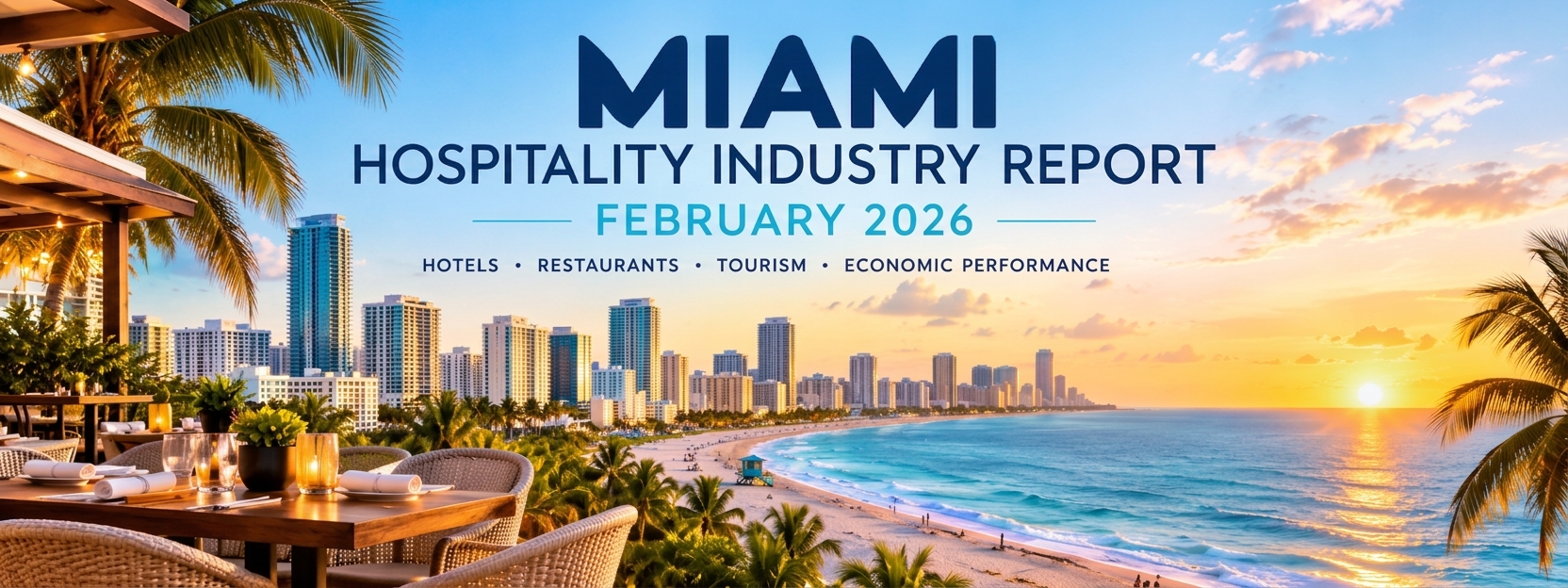
Miami Hospitality Industry Report-February 2026

Miami Hospitality Holds Strong in February as Travel Demand, Air Traffic and Dining Activity Continue to Build
Miami’s hospitality industry maintained strong momentum in February 2026 as hotels, restaurants, transportation providers and tourism businesses moved through one of South Florida’s most important winter travel periods.
Hotel demand remained healthy, Miami International Airport handled nearly 4.5 million passengers during the month, and the restaurant sector continued expanding with a wave of new concepts opening across Miami-Dade County.
The month also provided an early indication of the strength of Miami’s 2026 tourism economy as the destination moved toward the spring travel season and a calendar filled with major international events.
February 2026 By the Numbers

Indicator
February 2026

MIA total passengers
4,469,495

MIA international passengers
1,969,299

MIA passenger change vs. Feb. 2025
+0.6%

MIA cargo
302,438 tons

Commercial aircraft movements
42,320

New Miami restaurant openings tracked
14

2025 Miami-Dade tourism economic impact
$32.2 billion

Miami International Airport recorded 4,469,495 total passengers in February, an increase of 0.6% from February 2025. International passenger traffic totaled nearly 1.97 million, up 1.3% year over year. Cargo activity was particularly strong, with total cargo increasing 15.8% to approximately 302,438 tons.
Hotels Continue to Benefit From Strong Miami Demand
February is traditionally one of Miami’s busiest tourism months, and the market entered the month with considerable momentum.
January’s hotel performance provided an especially strong starting point. CoStar reported Miami’s January average daily rate at $287.84, up 12.4% from January 2025—the largest ADR increase among the nation’s Top 25 hotel markets.
The Greater Miami Convention & Visitors Bureau was also reporting strong forward reservations heading into February and the spring travel period. Its industry reporting showed substantial booked hotel demand around major future events, while the broader tourism outlook remained positive despite inflation and international travel concerns.
For Miami hotel operators, the significance is not simply the number of occupied rooms. The market’s ability to maintain elevated room rates is an important part of the revenue story.
What this means for hotel revenue
A precise countywide February hotel revenue figure is not published in the sources reviewed for this report. Rather than create a false level of precision, Miami Hospitality News treats total hotel revenue as an estimated range based on hotel inventory, occupancy and room-rate data when the underlying monthly figures are available.
This distinction will remain part of our monthly methodology.
Hotel room revenue excludes restaurant sales, resort fees, parking, spa revenue, meetings and events, retail and other non-room revenue.
Miami International Airport Shows Continued Travel Demand
Air traffic provides another important window into Miami’s hospitality economy.
MIA handled 4.47 million passengers in February, compared with 4.44 million in February 2025. International traffic increased at a somewhat faster pace, reaching nearly 1.97 million passengers.
The airport’s cargo business also delivered a notable increase.
Total cargo rose more than 15% year over year, reaching approximately 302,438 tons. Commercial aircraft movements increased 0.7%, while available seats were essentially flat compared with February 2025.
That combination is important for Miami because the region’s economic activity extends well beyond leisure tourism. MIA functions as a major international gateway and supports trade, logistics, business travel and the movement of high-value goods.
Valentine’s Day creates another hospitality boost
February also brings an unusual economic component to Miami’s aviation activity: Valentine’s Day flower shipments.
Miami International Airport handles roughly 90% of the fresh-cut flowers sold in the United States for Valentine’s Day. In February 2026, officials expected approximately 990 million flower stems to pass through the airport during the holiday season, illustrating the scale of the logistics and cargo economy surrounding the event.
For hospitality businesses, Valentine’s Day also represents a major annual dining and nightlife occasion, particularly for upscale restaurants, hotels, lounges and entertainment venues.
Miami’s Restaurant Scene Keeps Expanding
February was a particularly active month for Miami’s restaurant industry.
Miami New Times identified 14 notable restaurant openings during February, ranging from nationally recognized brands to independent and chef-driven concepts.
Among the openings and launches attracting attention were:

Cactus Club Cafe in Downtown Miami
Karyu in the Design District
H&H Bagels in Pinecrest
Voodoo Doughnut in Wynwood
Frankie & Wally’s in Coral Gables
Cotidiano in Wynwood
Skinny Louie in South Miami
Raising Cane’s on Coral Way
Mary Lou’s at the W South Beach

The diversity of these openings is noteworthy.
Miami’s restaurant growth is not being driven by one particular dining category. The February openings included fast casual, luxury dining, international concepts, neighborhood restaurants, dessert brands, nightlife and large-format hospitality concepts.
That diversity gives Miami a broader hospitality base and allows spending to reach different neighborhoods and customer segments.
International Brands Continue Choosing Miami
February also demonstrated Miami’s continuing ability to attract established hospitality brands from outside South Florida.
Cactus Club Cafe opened its first Miami location in Downtown’s Citigroup Center, bringing the Vancouver-based restaurant group into the market.
Cotidiano, a restaurant concept from Guadalajara, opened in Wynwood as its first U.S. location, combining daytime dining and coffee with a dinner and cocktail program.
Karyu opened in the Design District with a highly specialized Japanese wagyu concept, adding another luxury-oriented restaurant to one of Miami’s most internationally recognized dining districts.
These openings aren’t necessarily evidence of industry-wide profitability, but they are useful indicators of continued investor and operator interest in the Miami market.
Tourism’s Economic Footprint Remains Large
Although February-specific tourism spending is not yet available as a single comprehensive countywide figure, the broader economic scale of Miami tourism provides important context.
The Greater Miami Convention & Visitors Bureau reported that 2025 generated 28.3 million visitors and $32.2 billion in total economic impact for Miami-Dade County. Tourism accounted for approximately 8% of county GDP and generated more than $5.3 billion in combined federal, state and local tax revenue.
Lodging represented approximately $10.4 billion of visitor spending in 2025, nearly half of total visitor expenditures.
February’s hotel, airport and restaurant indicators therefore occurred within an already substantial tourism economy.
A Growing Hospitality Pipeline
Miami’s hospitality economy isn’t only about existing hotels and restaurants.
The destination continues to attract new hospitality concepts, renovations and investment. The Greater Miami Convention & Visitors Bureau highlighted a new wave of hotel renovations, culinary concepts and hospitality programming entering 2026.
One of the most closely watched hotel projects was the return of the historic Delano Miami Beach, which was undergoing a major renovation and preparing to reopen with new dining concepts. The property is part of a broader trend of established Miami hospitality properties being repositioned for a new generation of travelers.
The development pipeline matters because new rooms and renovated properties can increase Miami’s ability to accommodate future demand while also increasing competition among existing operators.
What February Tells Us About 2026
Three themes emerged during February.
1. Travel demand remained resilient
MIA passenger traffic increased slightly year over year, with international traffic growing faster than total passenger traffic.
2. Miami continued to command premium hotel rates
January’s ADR performance showed that Miami entered February with substantial pricing power, with the market’s $287.84 ADR representing a 12.4% year-over-year increase.
3. Restaurant investment remained active
The number and variety of February openings showed continued interest in Miami’s dining market, from international brands to local operators and luxury concepts.
February Hospitality Outlook
As February ended, Miami was moving into an even more event-driven period of the year.
Spring break, major sporting events, conventions and the approaching FIFA World Cup were expected to create additional opportunities for hotels, restaurants, transportation companies, retailers and entertainment businesses.
The Greater Miami Convention & Visitors Bureau described travel demand as continuing to hold up despite inflationary pressures, a softer employment environment and uncertainty in some international markets.
For hospitality operators, the key question entering March was no longer simply whether travelers would come to Miami.
It was whether businesses could continue converting strong visitor demand into higher revenue while managing labor, insurance, food, occupancy and other operating costs.
Miami Hospitality Report: February 2026
February reinforced Miami’s position as one of the country’s most important hospitality markets.
The numbers point to a destination where air traffic remains strong, international travel continues to matter, hotel pricing remains elevated and restaurant investment is expanding across multiple neighborhoods.
The next test will be whether March and the spring travel season can build on that momentum.

Methodology & Data Notes
This report separates reported statistics from editorial estimates.
Airport passenger, cargo and aircraft figures are reported by Miami International Airport. Hotel performance figures are based on STR/CoStar data where available. Tourism economic-impact figures are reported by the Greater Miami Convention & Visitors Bureau.
Restaurant openings are based on Miami-area hospitality reporting and are intended as an indicator of market activity rather than a complete census of every restaurant opening during the month.
Where a countywide monthly revenue figure could not be verified through an authoritative source, Miami Hospitality News does not present a precise dollar figure as fact.
This methodology will be maintained throughout the 2026 monthly Miami Hospitality Industry Report series.

Read More