

Select Page

Communities

Widgetized Area

This panel is active and ready for you to add some widgets via the WP Admin

Hotel and travel in North Bay Village

Visitors and residents can use local travel listings to compare lodging, transportation, and trip-planning options. North Bay Village residents, property owners, and organizations can use this page to find and compare hotel and travel providers in the area. Treat each listing as a starting point: contact the provider directly to confirm the current service area, availability, qualifications, and terms before choosing a service.

Hotel and travel services to explore

Depending on the provider, businesses may offer hotel stays, travel planning, local transportation, tours, or assistance with booking a trip. Some businesses focus on one specialty, while others offer several services through a single office. Ask which work is performed by the provider, what is handled by a partner, and whether the service is available for your particular project or situation. A clear description of the work helps you compare providers on similar terms.

How to compare hotel and travel providers

Start with the need, location, timing, and budget you have in mind. Request a written scope or explanation of what is included, how long the work may take, and what could affect the final cost. Compare experience with similar requests, communication practices, scheduling, payment terms, and the process for follow-up. If credentials, permits, insurance, or a written agreement apply to the service, ask for current details and verify them with the appropriate source.

Questions to ask before you decide

Ask about dates, occupancy, transportation arrangements, booking conditions, deposits, cancellation terms, accessibility, and any extra charges that may apply. Review the answer alongside the provider’s listing and written terms. Ask for clarification if a service description is broad, a quote leaves out important work, or a timeline is uncertain. Confirm how to reach the business after the initial appointment and what steps are available if the service needs correction or further attention.

Find hotel and travel in North Bay Village

Browse the North Bay Village business directory to identify local listings and request current information. Compare providers using the same criteria so differences in scope, availability, and price are easier to understand. A directory listing is not an endorsement, and details should be verified directly with each business.

For municipal contacts and community information, visit the official North Bay Village website. Contact providers directly to confirm the details that matter for your needs and keep written estimates, policies, and agreements for reference.
State of Allapattah – February 2026

Neighborhood strength comes from consistent leadership and engaged residents.—Wilson Alvarez

February 2026 Allapattah Neighborhood Update
TLDR –The State of Allapattah in February 2026 experienced steady stability. City leadership focused on infrastructure improvements, public safety, and neighborhood services, while local businesses remained resilient. Restaurants and service-based businesses maintained loyal customers, and local chambers strengthened networking and support initiatives.
For historical context, visit our Allapattah Neighborhood Reports Archive.

City Leadership and Public Services in Allapattah
Mayor – City of MiamiThe Mayor emphasized public safety, infrastructure, and neighborhood services. February communications ensured residents felt supported while planning long-term improvements for Allapattah. Learn more about Miami city programs.
City ManagerDepartments focused on operational oversight, service delivery, and infrastructure projects. Updates highlighted transparency, budgeting efficiency, and coordination across city services.
Commission Representation in AllapattahCommissioners concentrated on:

Neighborhood maintenance and code enforcement

Monitoring zoning and housing developments

Supporting small business workshops and resources

Engaging residents through community meetings

Residents reported continued accessibility and responsiveness from local offices.
County & Regional Influence on AllapattahCounty-level transportation planning and infrastructure projects affected daily life. Roadway coordination, transit improvements, and traffic management influenced mobility, while regional housing and small business programs supported economic stability. For more details, see Miami-Dade County Infrastructure Updates.

Allapattah Business Report and Local Economy
The Allapattah business climate remained stable throughout February.
Businesses Performing Well:

Auto repair and mechanical services

Convenience retail and grocery stores

Professional services like tax preparation and accounting

Barber shops, salons, and wellness providers

New Business Openings:

Small service businesses preparing for spring

Vendors testing limited storefronts or shared spaces

Business Closures:Minimal closures, mostly temporary or seasonal. For additional details, check our Miami Local Business Directory.
Restaurants & Hospitality in AllapattahRestaurants continued to be reliable economic drivers:

Strong loyalty from neighborhood diners

Affordable, familiar cuisine performed best

Steady lunchtime traffic from residents and workers

Restaurants reinforce the cultural identity and daily life of Allapattah.

Transportation and Infrastructure Updates in Allapattah
Infrastructure remained a top focus for residents and city planners:

Congestion along NW 20th Street during peak hours

Ongoing street maintenance and improvements

Gradual progress in transit reliability

Residents noticed consistent improvements. For more, see Miami Transportation Projects.

Allapattah Business Associations and Chamber Activities
Local chambers strengthened connections between business owners and city officials:

Networking events encouraging collaboration

Workshops on permits and compliance

Planning for spring economic initiatives

This highlights active Allapattah business community engagement.

February 2026 Monthly Community Synopsis – State of Allapattah
February 2026 reinforced the State of Allapattah’s steady progress. Civic leadership focused on infrastructure and neighborhood services, small businesses operated reliably, and community organizations remained active. Momentum continues thanks to consistent leadership and engaged residents. Compare with prior Allapattah reports.

Primary Question:What is the State of Allapattah in February 2026?
Direct Answer:In February 2026, the State of Allapattah experienced steady neighborhood stability, infrastructure improvements, and resilient local businesses while city leadership focused on maintaining services and preparing for upcoming projects.
Additional Questions Answered:

How are businesses performing in Allapattah?Service businesses like auto repair, restaurants, and retail remain stable.

What are the main issues in Allapattah?Transportation congestion, infrastructure maintenance, and housing development remain top community topics.

Is Allapattah growing economically?Gradual growth and consistent business activity indicate steady neighborhood development.

Read More

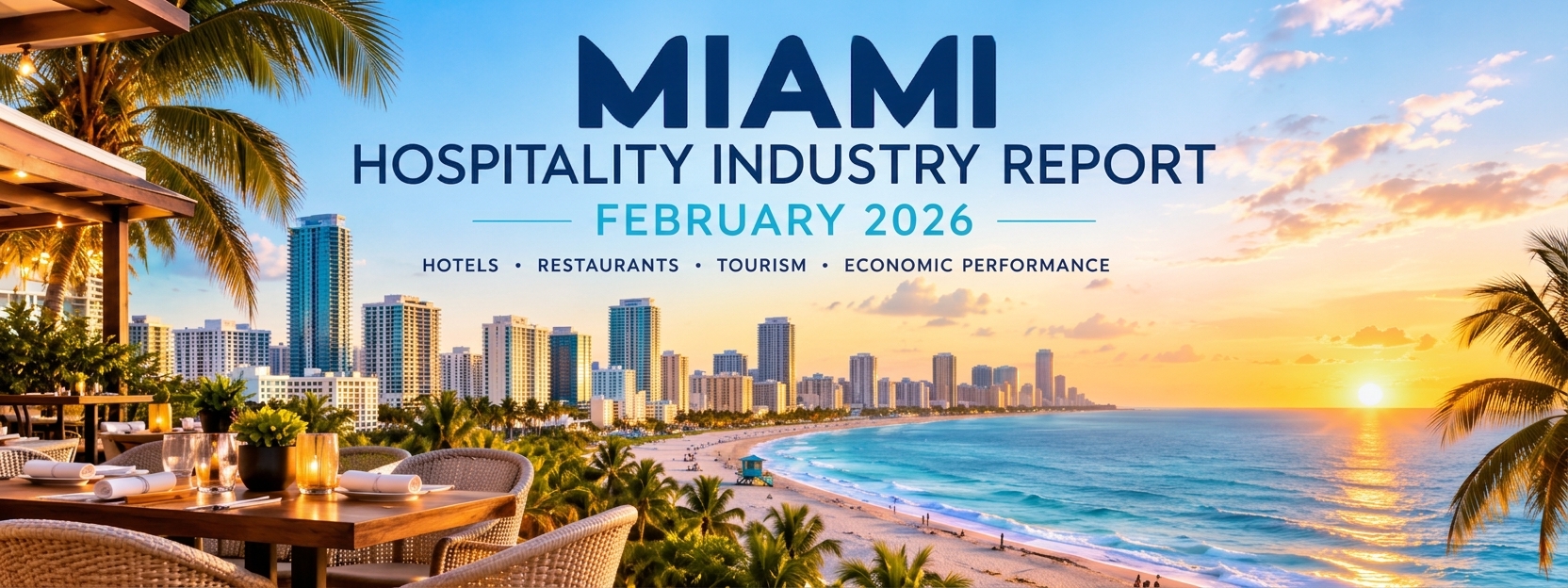
Miami Hospitality Industry Report-February 2026

Miami Hospitality Holds Strong in February as Travel Demand, Air Traffic and Dining Activity Continue to Build
Miami’s hospitality industry maintained strong momentum in February 2026 as hotels, restaurants, transportation providers and tourism businesses moved through one of South Florida’s most important winter travel periods.
Hotel demand remained healthy, Miami International Airport handled nearly 4.5 million passengers during the month, and the restaurant sector continued expanding with a wave of new concepts opening across Miami-Dade County.
The month also provided an early indication of the strength of Miami’s 2026 tourism economy as the destination moved toward the spring travel season and a calendar filled with major international events.
February 2026 By the Numbers

Indicator
February 2026

MIA total passengers
4,469,495

MIA international passengers
1,969,299

MIA passenger change vs. Feb. 2025
+0.6%

MIA cargo
302,438 tons

Commercial aircraft movements
42,320

New Miami restaurant openings tracked
14

2025 Miami-Dade tourism economic impact
$32.2 billion

Miami International Airport recorded 4,469,495 total passengers in February, an increase of 0.6% from February 2025. International passenger traffic totaled nearly 1.97 million, up 1.3% year over year. Cargo activity was particularly strong, with total cargo increasing 15.8% to approximately 302,438 tons.
Hotels Continue to Benefit From Strong Miami Demand
February is traditionally one of Miami’s busiest tourism months, and the market entered the month with considerable momentum.
January’s hotel performance provided an especially strong starting point. CoStar reported Miami’s January average daily rate at $287.84, up 12.4% from January 2025—the largest ADR increase among the nation’s Top 25 hotel markets.
The Greater Miami Convention & Visitors Bureau was also reporting strong forward reservations heading into February and the spring travel period. Its industry reporting showed substantial booked hotel demand around major future events, while the broader tourism outlook remained positive despite inflation and international travel concerns.
For Miami hotel operators, the significance is not simply the number of occupied rooms. The market’s ability to maintain elevated room rates is an important part of the revenue story.
What this means for hotel revenue
A precise countywide February hotel revenue figure is not published in the sources reviewed for this report. Rather than create a false level of precision, Miami Hospitality News treats total hotel revenue as an estimated range based on hotel inventory, occupancy and room-rate data when the underlying monthly figures are available.
This distinction will remain part of our monthly methodology.
Hotel room revenue excludes restaurant sales, resort fees, parking, spa revenue, meetings and events, retail and other non-room revenue.
Miami International Airport Shows Continued Travel Demand
Air traffic provides another important window into Miami’s hospitality economy.
MIA handled 4.47 million passengers in February, compared with 4.44 million in February 2025. International traffic increased at a somewhat faster pace, reaching nearly 1.97 million passengers.
The airport’s cargo business also delivered a notable increase.
Total cargo rose more than 15% year over year, reaching approximately 302,438 tons. Commercial aircraft movements increased 0.7%, while available seats were essentially flat compared with February 2025.
That combination is important for Miami because the region’s economic activity extends well beyond leisure tourism. MIA functions as a major international gateway and supports trade, logistics, business travel and the movement of high-value goods.
Valentine’s Day creates another hospitality boost
February also brings an unusual economic component to Miami’s aviation activity: Valentine’s Day flower shipments.
Miami International Airport handles roughly 90% of the fresh-cut flowers sold in the United States for Valentine’s Day. In February 2026, officials expected approximately 990 million flower stems to pass through the airport during the holiday season, illustrating the scale of the logistics and cargo economy surrounding the event.
For hospitality businesses, Valentine’s Day also represents a major annual dining and nightlife occasion, particularly for upscale restaurants, hotels, lounges and entertainment venues.
Miami’s Restaurant Scene Keeps Expanding
February was a particularly active month for Miami’s restaurant industry.
Miami New Times identified 14 notable restaurant openings during February, ranging from nationally recognized brands to independent and chef-driven concepts.
Among the openings and launches attracting attention were:

Cactus Club Cafe in Downtown Miami
Karyu in the Design District
H&H Bagels in Pinecrest
Voodoo Doughnut in Wynwood
Frankie & Wally’s in Coral Gables
Cotidiano in Wynwood
Skinny Louie in South Miami
Raising Cane’s on Coral Way
Mary Lou’s at the W South Beach

The diversity of these openings is noteworthy.
Miami’s restaurant growth is not being driven by one particular dining category. The February openings included fast casual, luxury dining, international concepts, neighborhood restaurants, dessert brands, nightlife and large-format hospitality concepts.
That diversity gives Miami a broader hospitality base and allows spending to reach different neighborhoods and customer segments.
International Brands Continue Choosing Miami
February also demonstrated Miami’s continuing ability to attract established hospitality brands from outside South Florida.
Cactus Club Cafe opened its first Miami location in Downtown’s Citigroup Center, bringing the Vancouver-based restaurant group into the market.
Cotidiano, a restaurant concept from Guadalajara, opened in Wynwood as its first U.S. location, combining daytime dining and coffee with a dinner and cocktail program.
Karyu opened in the Design District with a highly specialized Japanese wagyu concept, adding another luxury-oriented restaurant to one of Miami’s most internationally recognized dining districts.
These openings aren’t necessarily evidence of industry-wide profitability, but they are useful indicators of continued investor and operator interest in the Miami market.
Tourism’s Economic Footprint Remains Large
Although February-specific tourism spending is not yet available as a single comprehensive countywide figure, the broader economic scale of Miami tourism provides important context.
The Greater Miami Convention & Visitors Bureau reported that 2025 generated 28.3 million visitors and $32.2 billion in total economic impact for Miami-Dade County. Tourism accounted for approximately 8% of county GDP and generated more than $5.3 billion in combined federal, state and local tax revenue.
Lodging represented approximately $10.4 billion of visitor spending in 2025, nearly half of total visitor expenditures.
February’s hotel, airport and restaurant indicators therefore occurred within an already substantial tourism economy.
A Growing Hospitality Pipeline
Miami’s hospitality economy isn’t only about existing hotels and restaurants.
The destination continues to attract new hospitality concepts, renovations and investment. The Greater Miami Convention & Visitors Bureau highlighted a new wave of hotel renovations, culinary concepts and hospitality programming entering 2026.
One of the most closely watched hotel projects was the return of the historic Delano Miami Beach, which was undergoing a major renovation and preparing to reopen with new dining concepts. The property is part of a broader trend of established Miami hospitality properties being repositioned for a new generation of travelers.
The development pipeline matters because new rooms and renovated properties can increase Miami’s ability to accommodate future demand while also increasing competition among existing operators.
What February Tells Us About 2026
Three themes emerged during February.
1. Travel demand remained resilient
MIA passenger traffic increased slightly year over year, with international traffic growing faster than total passenger traffic.
2. Miami continued to command premium hotel rates
January’s ADR performance showed that Miami entered February with substantial pricing power, with the market’s $287.84 ADR representing a 12.4% year-over-year increase.
3. Restaurant investment remained active
The number and variety of February openings showed continued interest in Miami’s dining market, from international brands to local operators and luxury concepts.
February Hospitality Outlook
As February ended, Miami was moving into an even more event-driven period of the year.
Spring break, major sporting events, conventions and the approaching FIFA World Cup were expected to create additional opportunities for hotels, restaurants, transportation companies, retailers and entertainment businesses.
The Greater Miami Convention & Visitors Bureau described travel demand as continuing to hold up despite inflationary pressures, a softer employment environment and uncertainty in some international markets.
For hospitality operators, the key question entering March was no longer simply whether travelers would come to Miami.
It was whether businesses could continue converting strong visitor demand into higher revenue while managing labor, insurance, food, occupancy and other operating costs.
Miami Hospitality Report: February 2026
February reinforced Miami’s position as one of the country’s most important hospitality markets.
The numbers point to a destination where air traffic remains strong, international travel continues to matter, hotel pricing remains elevated and restaurant investment is expanding across multiple neighborhoods.
The next test will be whether March and the spring travel season can build on that momentum.

Methodology & Data Notes
This report separates reported statistics from editorial estimates.
Airport passenger, cargo and aircraft figures are reported by Miami International Airport. Hotel performance figures are based on STR/CoStar data where available. Tourism economic-impact figures are reported by the Greater Miami Convention & Visitors Bureau.
Restaurant openings are based on Miami-area hospitality reporting and are intended as an indicator of market activity rather than a complete census of every restaurant opening during the month.
Where a countywide monthly revenue figure could not be verified through an authoritative source, Miami Hospitality News does not present a precise dollar figure as fact.
This methodology will be maintained throughout the 2026 monthly Miami Hospitality Industry Report series.

Read More

State of Sweetwater – February 2026

Sweetwater February 2026 Business: Local Growth & Highlights
Small businesses aren’t just shops—they’re the heartbeat of Sweetwater’s community
-Wilson Alvarez

In Sweetwater February 2026 business, the city continued strengthening its local economy as residents supported small businesses, restaurants saw strong Valentine’s season traffic, and partnerships with Florida International University (FIU) helped entrepreneurs and startups thrive. Supporting local businesses remained a focus throughout February, making Sweetwater one of the most dynamic small-business communities in western Miami-Dade County.
Direct Answer: According to Sweetwater February 2026 business updates, local restaurants flourished during Valentine’s, FIU expanded entrepreneurship programs, and new development projects progressed, boosting the city’s economy.

Local Restaurants Shine During Valentine’s Season
Restaurants across Sweetwater experienced one of their busiest weekends during Valentine’s celebrations.
Dining spots near Dolphin Mall and throughout the city welcomed couples, families, and students. Popular locations such as Texas de Brazil and The Knife Restaurant reported strong reservations, highlighting Sweetwater’s growing reputation as a dining destination.
Local cafés and dessert shops also benefited as residents celebrated with friends and loved ones. Explore more Sweetwater dining options.

Supporting Small Businesses in Sweetwater
February highlighted the importance of shopping local. Sweetwater’s small business community includes:

Family-owned restaurants

Real estate and insurance agencies

Marketing and technology startups

Beauty salons and wellness studios

Professional services firms

Many of these businesses are run by immigrant entrepreneurs who have chosen Sweetwater as the place to build their dreams. Community leaders encourage residents to support local businesses whenever possible, knowing this reinvests directly into the neighborhood. See Sweetwater small business directory.

FIU Programs Boost Local Entrepreneurs
A major driver of economic growth in Sweetwater is Florida International University. Students and faculty collaborate with local businesses through mentorship programs, innovation labs, and startup incubators.
These programs help entrepreneurs explore:

Artificial intelligence tools for marketing

Logistics solutions for small companies

Sustainable business practices

Digital commerce strategies

These initiatives create a bridge between academic research and real-world business growth. Learn more about FIU entrepreneurship programs.

New Developments and Infrastructure Updates
Sweetwater continues to grow with new residential and commercial projects. Among the most anticipated developments is Upland Park, a mixed-use project featuring retail, restaurants, offices, and housing.
As these projects progress, they are expected to attract additional investment and create new job opportunities. Read more about Sweetwater development projects.

Community Events Strengthen Connections
February also brought community-focused activities that reinforce Sweetwater’s sense of connection. Neighborhood gatherings, business networking events, and wellness programs brought residents, students, and entrepreneurs together.
These events highlight one of Sweetwater’s greatest strengths — a vibrant, supportive community culture. See upcoming Sweetwater events.

Key Highlights from Sweetwater February 2026 Business

Strong restaurant traffic during Valentine’s week

Growth of FIU entrepreneurship programs

Ongoing mixed-use developments expanding the city

Local businesses seeing steady early-year activity

Why Sweetwater Is Ideal for Small Businesses
Location: Near FIU, strong retail corridors, and a diverse entrepreneurial community.Support: Programs and partnerships help local companies innovate and grow.Development: Projects like Upland Park introduce new retail and residential opportunities.
#SweetwaterFL #StateOfSweetwater #MiamiBusiness #SupportLocal #SmallBusiness #FIU #DolphinMall #EconomicGrowth

Read More

State of Doral February 2026

February 2026: A Month of Steady Doral City Governance
“February proved that progress in Doral often happens quietly, but its impact is felt citywide.”—Wilson Alvarez
Overview: Stable and Effective Doral City Governance
In February 2026, Doral city governance focused on operational stability, public safety, and active community engagement. Moreover, city leaders prioritized infrastructure planning, traffic management, and economic support for local businesses while maintaining consistent municipal services. As a result, this month highlighted how strong Doral city governance ensures residents receive reliable services and effective oversight. For more details on city initiatives, see our Doral City Departments page and Community Programs.
Direct Answer: In February 2026, Doral city governance successfully maintained stability, supported local businesses, and promoted public safety, demonstrating consistent leadership and community collaboration.

Key Highlights of February 2026 in Doral City Governance
Furthermore, city leaders maintained continuity while addressing infrastructure projects, supporting local businesses, and responding to resident concerns. Additionally, oversight of public safety and engagement initiatives shows the tangible impact of Doral city governance. Learn more about city development on the City Projects & Development page.

Mayor Christi Fraga: Leading Visible Doral City Governance

The Good: Promoted community engagement and public safety initiatives, attending local meetings focused on city growth.

The Bad: Residents requested more frequent updates on long-term infrastructure planning and traffic management.

The Ugly: Certain development communications could benefit from earlier transparency.

Meanwhile, for more on Mayor Fraga’s initiatives, see Mayor’s Office Updates.

City Manager Daniel Sheinfeld: Ensuring Operational Stability

The Good: Municipal operations ran efficiently, keeping services, permitting, and departmental coordination smooth.

The Bad: Some project timelines lacked public updates, leaving residents uncertain about completion dates.

The Ugly: Balancing rapid development with infrastructure capacity remains a key challenge for Doral city governance.

Consequently, check out City Management Reports for ongoing operational updates.

Commissioner Maria I. Prada: Supporting Balanced Growth

The Good: Engaged actively with local businesses and promoted balanced economic growth supporting entrepreneurs and residents.

The Bad: Some initiatives announced earlier in the year are still awaiting visible progress.

The Ugly: Zoning and development reviews remain a concern for residents planning long-term growth.

Moreover, learn more about economic programs on our Business & Development page.

Commissioner Bianca L. Yigo: Strengthening Communities

The Good: Focused on family-centered programs and youth initiatives, enhancing neighborhood engagement.

The Bad: Residents requested clearer timelines for first-quarter programs.

The Ugly: Communication about program rollouts could reach a broader audience.

Additionally, explore Community & Youth Programs for more information.

Commissioner Joshua L. “Josh” Reyes: Oversight and Stability

The Good: Supported consistent governance and participated in city oversight and development discussions.

The Bad: Constituents wanted more visible public commentary on emerging city issues.

The Ugly: Limited communication on contentious topics left residents seeking more clarity.

However, Commissioner Reyes continues to advocate for better transparency in Doral city governance.

Chamber & Business Community Activity
The Doral Chamber of Commerce hosted networking events supporting entrepreneurship, local commerce, and collaboration between businesses and city leadership. Even though February is typically quieter economically, business leaders remained optimistic about growth opportunities in 2026. For details, visit Doral Chamber Events.

Strengths of February 2026 Doral City Governance

Stable city operations

Continued community engagement

Active business networking

Challenges in February 2026 Doral City Governance

Desire for clearer project updates

Ongoing discussions around development and infrastructure

Looking Ahead: The Future of Doral City Governance
As 2026 progresses, residents can expect increased transparency, measurable progress on infrastructure projects, and stronger communication. February 2026 demonstrated that steady oversight and active community engagement are essential to effective Doral city governance. Consequently, for ongoing updates, check City News & Announcements.

#StateOfDoral #DoralFlorida #LocalGovernment #DoralLeadership #CityOfDoral

Read More