
Select Page

Communities

Widgetized Area

This panel is active and ready for you to add some widgets via the WP Admin

Hotel and travel in North Bay Village

Visitors and residents can use local travel listings to compare lodging, transportation, and trip-planning options. North Bay Village residents, property owners, and organizations can use this page to find and compare hotel and travel providers in the area. Treat each listing as a starting point: contact the provider directly to confirm the current service area, availability, qualifications, and terms before choosing a service.

Hotel and travel services to explore

Depending on the provider, businesses may offer hotel stays, travel planning, local transportation, tours, or assistance with booking a trip. Some businesses focus on one specialty, while others offer several services through a single office. Ask which work is performed by the provider, what is handled by a partner, and whether the service is available for your particular project or situation. A clear description of the work helps you compare providers on similar terms.

How to compare hotel and travel providers

Start with the need, location, timing, and budget you have in mind. Request a written scope or explanation of what is included, how long the work may take, and what could affect the final cost. Compare experience with similar requests, communication practices, scheduling, payment terms, and the process for follow-up. If credentials, permits, insurance, or a written agreement apply to the service, ask for current details and verify them with the appropriate source.

Questions to ask before you decide

Ask about dates, occupancy, transportation arrangements, booking conditions, deposits, cancellation terms, accessibility, and any extra charges that may apply. Review the answer alongside the provider’s listing and written terms. Ask for clarification if a service description is broad, a quote leaves out important work, or a timeline is uncertain. Confirm how to reach the business after the initial appointment and what steps are available if the service needs correction or further attention.

Find hotel and travel in North Bay Village

Browse the North Bay Village business directory to identify local listings and request current information. Compare providers using the same criteria so differences in scope, availability, and price are easier to understand. A directory listing is not an endorsement, and details should be verified directly with each business.

For municipal contacts and community information, visit the official North Bay Village website. Contact providers directly to confirm the details that matter for your needs and keep written estimates, policies, and agreements for reference.

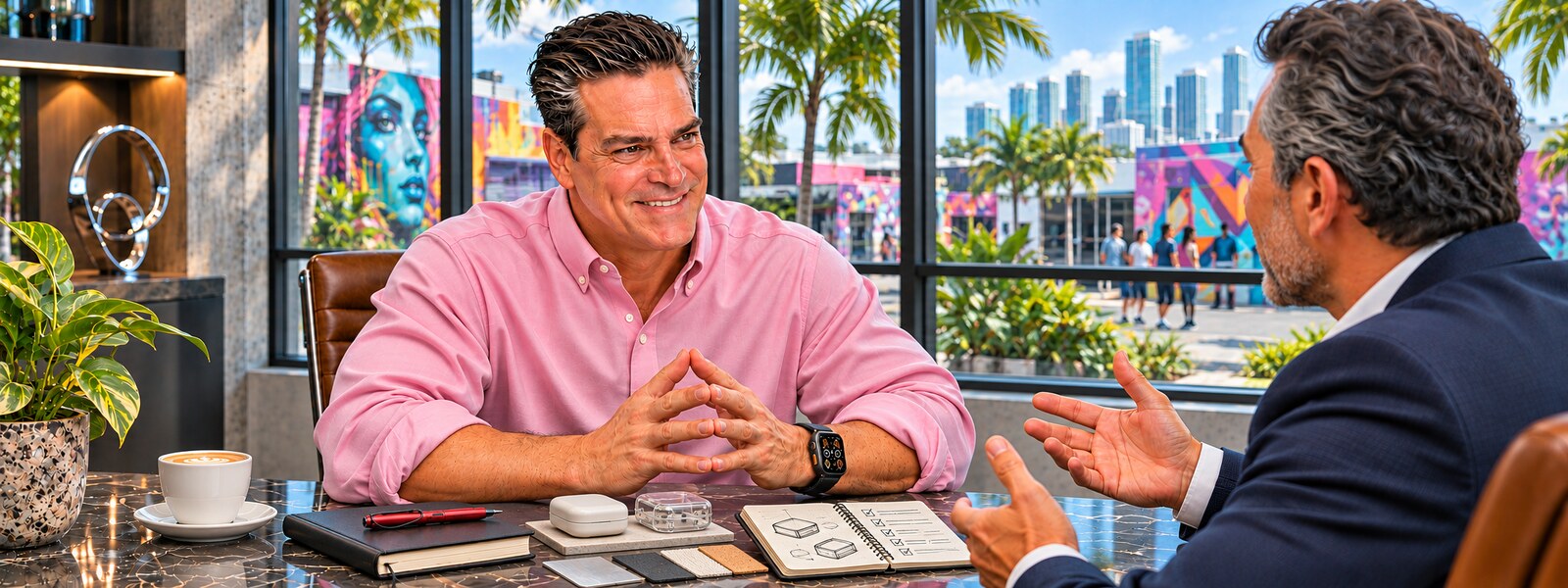
Wear a Jacket, Own the Room? What Presentation Really Does for Sales

“Wear a jacket, own the room—then earn the room through preparation, listening, and substance.”
By Wilson Alvarez
Quick answer: Dressing for a sales presentation can affect first impressions and your own sense of readiness, but a jacket does not create competence. Match the setting and audience, choose clothes that fit comfortably, and focus on the client’s priorities. Your preparation, questions, clarity, and follow-through determine whether the initial impression becomes trust.

“People buy into the leader before they buy into the vision.” — John C. Maxwell

Maxwell’s observation, discussed on his site, applies to a sales presentation with care. Before an executive accepts a plan, the executive evaluates the person explaining it. Appearance may help establish that first signal, but the real test is whether the presenter understands the business, handles hard questions honestly, and can deliver. A jacket can frame the meeting; it cannot carry the argument.
“Wear a jacket, own the room” is a useful prompt
I often say, “Wear a jacket, own the room.” I mean that presentation has an intentional component. Walking into an important meeting dressed with care can help you signal that you take the audience and occasion seriously. It may also put you in a focused frame of mind. But the phrase should not be mistaken for a universal rule or a promise that the most formally dressed person commands the decision.
In Miami, the right level of formality varies widely. A bank boardroom, a founder’s studio, a construction site, and an evening hospitality event are different settings. Learn the norms before the meeting. A well-chosen jacket can be effective in one room and unnecessarily distant in another. The objective is to look prepared and appropriate, not to prove status through clothing.
What the evidence can and cannot tell us
Research summarized by the Association for Psychological Science has explored how formal clothing may relate to more abstract thinking in experimental settings. The researchers also called for larger and more diverse samples. That is interesting context, not evidence that a jacket increases sales conversion in every industry. Other research on dress and impressions likewise depends on social norms and context.
Rather than treating clothing as a magic tactic, use it as one variable in your preparation. Consider the client’s culture, the purpose of the meeting, the venue, and whether you need to move around or demonstrate something. Comfort matters: a shirt that pulls, a jacket that restricts your gestures, or shoes that distract you can work against the confidence you hoped to project.
Preparation makes the visual signal credible
Before the presentation, know who will attend and why. Ask what decision the group hopes to make. Understand the client’s current situation and the cost of the unresolved issue. A beautiful deck without a clear decision path wastes attention. Write the one outcome the meeting needs to produce, then build the presentation around it.
Open with the client’s context, not your résumé. Confirm the problem in the client’s own language. Explain the options, trade-offs, proposed sequence, and measures of success. If there is uncertainty, label it. Senior decision makers are accustomed to complexity; they do not need a performance of certainty where none exists.
Bring the right materials and make the technology work. Test the display, links, video, and remote participation. Have a concise paper or PDF summary if the screen fails. Know the numbers well enough to discuss them without reading every slide. These details create the calm that audiences often interpret as authority.
Own the room by making space for others
A strong presenter is not the loudest speaker. Ask for the client’s reaction, invite a quieter stakeholder into the discussion, and listen to objections without becoming defensive. The person responsible for implementation may see a risk that the sponsor has missed. A good answer can be, “I don’t know yet; here is how I would find out.” That honesty can be more persuasive than an improvised claim.
Watch the balance of speaking time. If you spend most of the meeting describing features while the buyer has little chance to explain the business, you may leave with applause but no decision. Questions about priorities, constraints, and alternatives help both parties test whether the proposal fits.
Fit, grooming, and consistency
Choose clean, well-fitting clothes that allow you to move naturally. A jacket can elevate a solid shirt, but poor fit undermines the effect. Details such as a neat collar, appropriate shoes, and a working pen are simple signals of care. They should support your work rather than become the story. The same applies in video meetings: lighting, camera position, sound, and a calm background matter alongside clothing.
Consistency after the meeting is decisive. Send the promised summary, answer open questions, and confirm who owns each next step. If the executive who looked polished in the room disappears for a week afterward, the impression quickly changes. Your professional image is the cumulative experience of working with you.
Frequently asked questions
Should I always wear a jacket to a sales meeting?
No. Consider the audience, industry, venue, and meeting purpose. A jacket is a useful choice for many executive presentations, but fit and contextual judgment matter more than an absolute rule.
Can dressing well improve a sales outcome?
It may help with first impressions or personal readiness in some settings, but clothing alone does not prove expertise or cause a purchase. Evaluate the whole meeting: discovery, relevance, clarity, decision process, and follow-up.
What should I prepare besides clothing?
Know the stakeholders and desired decision, verify facts and numbers, rehearse a concise explanation, test the technology, and prepare thoughtful questions. See my guide to identifying the client’s real need before presenting.
Miami business owners who want to strengthen their leadership, visibility and growth strategy can connect with Wilson Alvarez at walvarez@miamibusiness.com or 305-386-6165.

Read More

Pilot Before You Commit: Test a Business Idea at Small Scale

“A small pilot can reveal whether an idea deserves a larger investment before momentum makes the decision emotional.”
By Wilson Alvarez
Quick answer: Test a new offer with a defined customer segment, limited budget, clear success measure and short decision date. Deliver enough of the real experience to learn whether customers value it, then expand, revise or stop based on evidence.

“You don’t have to be great to start, but you do have to start to be great.” — Zig Ziglar

Ziglar’s encouragement is useful for an owner tempted to wait until every detail is perfect. Starting, however, need not mean committing the whole company. A carefully designed pilot allows a Miami business to act, observe and improve while protecting its cash and reputation. The lesson is to begin with enough discipline to learn from what happens. Source: Ziglar Inc..
Why big launches hide weak assumptions
A Miami firm may see a promising opportunity: a new service for hospitality operators, a second location, a premium membership or a technology package. Enthusiasm can lead to a website, branding, hires and a lease before anyone has verified willingness to pay. The early work feels productive because it is visible. Yet the central assumptions remain untested: who needs the offer, what outcome they value, what they will pay and whether the company can deliver it profitably.
A pilot makes those assumptions explicit. It is not merely a smaller marketing campaign or a free sample. It is a bounded version of the real offer designed to answer a consequential business question. If the owner cannot say what decision the pilot will inform, the test may become an activity rather than evidence.
State the question before designing the test
Write one decision question. For example: “Will independent restaurants in Coral Gables pay for a monthly content package at a price that supports our delivery costs?” Or: “Can our existing operations team fulfill a 48-hour service promise for Doral customers without harming current clients?” Each question points to a different pilot. The first tests demand and pricing; the second tests capacity and reliability.
Define the customer segment narrowly enough to learn. A broad statement such as “Miami businesses” can conceal differences between a small owner-operated company and a regional chain. Choose a segment you can reach and serve, then record why it was selected. Later, expansion can test whether the result transfers to another market or client type.
Set boundaries and success criteria
Specify the number of customers, length of the test, spending ceiling, staff time and service terms. Decide what you will measure: paid conversion, contribution margin, completion time, repeat use, customer outcome or willingness to refer. Establish the threshold before seeing the results. Otherwise, a team may reinterpret a weak test as success because it invested effort and wants the idea to continue.
Include safeguards. A pilot should not promise a level of service the firm cannot sustain after launch. Be transparent with participating customers about the scope and timing. If a regulated professional service is involved, ensure the pilot respects applicable obligations. The test must create a real customer experience without placing the company or client in an avoidable bind.
Sell the real value, not only the discount
Free trials can produce interest without proving that a market will pay. If the business needs to learn price acceptance, charge a meaningful amount and explain the outcome. A reduced introductory fee can be reasonable when the client understands what is being tested, but record what the normal economics would be. A pilot that “works” only because the owner contributes unpaid hours or waives all costs does not yet prove a scalable offer.
Ask buyers why they agreed and nonbuyers why they declined. A customer may like the concept but object to the contract term, the timing or the proposed deliverables. A simple yes/no tally misses that distinction. Listen closely, then compare what people said with what they actually bought and used.
Review delivery as carefully as demand
A new offer can attract buyers while exhausting the team. Track setup effort, exceptions, revisions, customer support and collections. Did the existing workflow absorb the work? Did one person become the only one who could deliver it? Were customers satisfied with the result, or merely polite about the experiment? A pilot should expose operational friction before the company multiplies it.
For a hospitality-facing service in Miami Beach, a busy event period may test peak capacity. For a professional firm in Brickell, a quieter month may be a poor test of year-round demand. Note the context and avoid claiming that a small sample predicts an entire market. Evidence reduces uncertainty; it does not remove it.
Make a decision on the promised date
At the end, compare results with the criteria. Expand if the offer works and the firm can support it. Revise one assumption if a promising signal has a clear obstacle. Stop if customers do not value the outcome or the economics cannot work. Write what was learned and what investment, if any, follows. Do not leave the pilot running indefinitely because no one wants to declare a result.
Sometimes the best outcome is a narrower offer than the one originally imagined. A small group of clients may value a specific component enough to pay, while the broader package creates confusion. A disciplined pilot helps the owner see that distinction before building around the wrong idea.
Frequently asked questions
How long should a business pilot run?
Long enough to include a real buying and delivery cycle, but with a defined review date. The appropriate period depends on the service and customer decision process.
Is a free pilot useful?
It can test usability or delivery, but it provides limited evidence of willingness to pay. Match the price approach to the question being tested.
What if the sample is small?
Record the limitation. Use the test to identify promising signals and operational problems, then validate important conclusions with additional customers before a large commitment.
Miami business owners who want to strengthen their leadership, visibility and growth strategy can connect with Wilson Alvarez at walvarez@miamibusiness.com or 305-386-6165.

Read More

Hospital Safety in South Florida: Larkin Earns ‘A’ Grade

Hospital Safety in South Florida: Larkin Earns ‘A’ Grade
South Florida — Larkin Health System is proud to announce a major achievement in hospital safety in South Florida. Both Larkin Community Hospital in South Miami and Larkin Community Hospital Palm Springs Campus in Hialeah have received an “A” grade from The Leapfrog Group for Spring 2025.
This national recognition honors hospitals that prioritize patient safety and transparency. The Leapfrog Group is an independent watchdog known for its high standards in hospital safety evaluations.

What the Leapfrog “A” Grade Means
Leapfrog’s Hospital Safety Grade reviews nearly 3,000 general hospitals in the United States. Grades are based on more than 30 national performance measures. These include infection rates, error prevention, and safety protocols.
Receiving an “A” reflects a hospital’s ability to protect patients from harm. It also shows a commitment to continuous improvement. Notably, hospitals with this grade often see better patient outcomes.

South Miami Campus Reaches “Straight A” Status
The South Miami campus earned an additional honor: “Straight A” status. This rare distinction is given only to hospitals that receive five or more “A” grades in a row.

“This achievement reflects our unwavering dedication to our patients and our community,” said Nicholas Torres, CEO of Larkin Community Hospital South Miami.
“Reaching ‘Straight A’ status is a testament to our physicians, nurses, and staff. Every day, they live our mission of safe, high-quality care.”

Hialeah Campus Also Earns Top Grade
The Palm Springs Campus in Hialeah also received an “A” grade for patient safety.

“We are proud to receive another ‘A’ from Leapfrog,” said Yoely Hernandez, CEO of the Palm Springs Campus.
“It confirms the dedication and teamwork of our staff. We remain focused on delivering care with compassion, precision, and safety.”

Why Hospital Safety Matters
Hospital safety is more than a grade. It directly impacts patient care, trust, and outcomes. An “A” grade means fewer infections, fewer complications, and stronger procedures in emergencies.
When hospitals earn these scores, they also attract better staff. Additionally, they build stronger relationships with the communities they serve.

About Larkin Health System
Larkin Health System is a fully integrated healthcare network serving South Florida. It includes:

Larkin Community Hospital – South Miami

Larkin Community Hospital Palm Springs Campus – Hialeah

Larkin Behavioral Health Services – Hollywood

Miami Neuroscience Center at Larkin

Each facility is committed to delivering safe, high-quality, patient-centered care. Services range from emergency medicine to specialized behavioral and neurological care.
For more information, visit LarkinHealth.com.
For more information about patient safety programs or media inquiries, contact:📧 francesr@larkinhospital.com🌐 Visit: LarkinHealth.com

Read More

Mastering Leadership Presence with Sandra Peebles

Mastering Your Leadership Presence – Sandra Peebles

Have you ever walked into a room and immediately felt who was in charge—without anyone saying a word? That’s leadership presence. And according to Emmy-award-winning journalist and media strategist Sandra Peebles, it’s the silent superpower that defines who gets noticed and who gets left behind.
In her keynote “Mastering Your Leadership Presence,” delivered with the poise and conviction that only years of on-camera performance can bring, Sandra breaks down what it truly means to show up—not just physically, but powerfully.
What Is Leadership Presence?
It’s not about being the loudest in the room or dressing to impress. It’s about alignment.
Sandra defines leadership presence as a powerful combination of:

Gravitas – how you carry yourself and act under pressure

Communication – how clearly and intentionally you speak

Appearance – not about style, but how you visually support your message

When all three align with who you are, the room listens. And more importantly, they trust you.
Why Presence Is Everything
In today’s noisy, distracted world, perception shapes reality. People don’t promote résumés—they promote presence. You could be the most qualified person at the table, but if you don’t carry yourself with confidence and clarity, you may not be heard.
Presence influences hiring, promotions, collaboration, and culture. And in Miami’s competitive professional ecosystem, Sandra’s message rings loud: presence is performance.
Sandra’s Five Pillars of Presence
Sandra outlines five actionable steps to build a lasting leadership presence:

Self-AwarenessUnderstand your strengths and stay true to your values. Know what makes you… you.

AuthenticityAudiences connect with real people. Drop the mask—your flaws are part of your strength.

CommunicationSpeak with intention. Don’t just say something—say something that matters.

Non-Verbal CuesYour tone, body language, and posture speak before you do. Make sure they’re saying the right thing.

Emotional IntelligenceRead the room. Manage your emotions. Connect with empathy.

How to Build It (Yes, You Can!)
Leadership presence isn’t something you’re born with—it’s something you develop. Sandra encourages professionals to:

Ask for feedback

Practice on camera

Record and review their delivery

Refine their message, again and again

At Peebles Communications, Sandra works with professionals ready to own their voice and elevate their brand. Her approach is rooted in media strategy and grounded in human connection.
Final Words from Sandra
“Your presence speaks before you do,” she says. “Make sure it says, ‘I belong here. I am ready. Let’s lead.’”
Whether you’re running a business, leading a team, or launching a career, your presence is your most underused asset. It’s time to master it.

“People may forget what you said, but they will never forget how you made them feel.” – Maya Angelou

📌 Takeaway:
Your leadership presence is a daily decision. Build it with intention. Refine it with practice. And lead with purpose.

📍 Presented by: Sandra Peebles📢 Hosted by: Peebles Communications📅 Event Date: April 2025📌 Location: MiamiAirportChamber.com
📲 For personalized coaching or to book Sandra as a speaker, visit: PeeblesCommunications.com

Read More

HistoryMiami Museum Opens Its Newest Exhibition

istoryMiami Museum Opens Its Newest Exhibition:
“Waves of Style: Swimwear Through the Decades”
The 50-Swimsuit Collection Reflects Fashion Innovation, Textiles, Cultural Shifts, Pop Culture, and the Evolution of Miami’s “Sun, Sand and Style” Reputation;
Open to Public, May 10
**Press Preview Day:  May 7, 11 a.m. – 2 p.m.
Miami, FL – April 28, 2025 – HistoryMiami Museum is proud to announce the upcoming opening of its new exhibition, Waves of Style: Swimwear Through the Decades. This immersive, dynamic experience will allow visitors of all ages to explore the fascinating history and evolution of swimwear, showcasing 50 historic pieces that span over a century of fashion innovation. 
The celebration kicks off on May 9 with an Opening Night Celebration and Fundraiser featuring live music and models showcasing vintage swim fashions. The public is invited to RSVP here. Public festivities continue May 10, when the entire community is invited to a Free Family Fun Day and visitors of all ages can enjoy hands-on activities that bring swimwear history to life.  The museum is located at 101 W. Flagler in downtown Miami.
Waves of Style dives into the transformative journey of swimwear and various textiles, from the heavy wool suits of the past to today’s sleek, modern designs. The exhibition explores how swimwear has reflected and influenced societal changes, celebrating the artistry and creativity behind these iconic garments.
“Miami is the perfect backdrop for this exhibition, where the beach culture is not only a part of our lifestyle but also a key element of our identity,” said Christopher Barfield, HistoryMiami’s Director of Exhibitions. “We wanted to highlight the intersection of fashion, culture, and history while allowing visitors to explore how swimwear has evolved over time in a city known for its sun, sand, and style.”
Most swimsuits featured in Waves of Style are drawn from the museum’s permanent collection, with additional pieces generously loaned by prominent Miami-based designers, Rene Ruiz, Kené Kaya and Liliana Montoya. Through engaging visuals from HistoryMiami’s Special Collections Library and Miami Dade College’s Wolfson Archives, guests will enjoy interactive elements, layered storytelling, and artifacts that point to the cultural shifts shaping swimwear fashion throughout the years.
Key Stories Highlighted in Exhibition:

Learn the story of Jane Fisher, the wife of entrepreneur, Carl G. Fisher, who became a trendsetter in Miami’s swimwear scene in the 1910s.  Jane found her traditional bathing suit—complete with stockings, cap, and long skirt — too restrictive. She discovered the freedom she sought in one of Miami Beach’s earliest form-fitting swimsuits, which will be on display. Though initially shocking, Jane’s style quickly gained popularity, and within weeks, women across the beach were emulating her look. 
To promote his real estate development, Fisher – known as Mr. Miami Beach – mailed photos of women in daring bathing suits to investors across the country to promote Miami Beach as a glamorous destination. His famous “Bathing Beauty” parades became a staple of early Miami tourism.
Men’s bathing suits also get the spotlight in Waves of Style.  Olympic swimmer and actor best known for his role in Tarzan, popularized topless swimwear for men. Johnny Weissmuller appeared in 12 films between 1932 and 1948, often depicted topless at a time when men were expected to cover their chests.  

Waves of Style guests can learn about these stories and more at the exhibition’s VIP reception on May 8 from 7 p.m. to 10 p.m., in partnership with Ocean Drive Magazine and Bacardi. Guests will enjoy live music, models showcasing vintage swim fashions, and a first look at the exhibition. The event will also serve as a fundraiser for the museum’s education programs, ensuring that HistoryMiami Museum can continue to inspire and educate future generations. The evening is sponsored by the Greater Miami Convention Visitor’s Bureau, with support from the PARAISO Miami Swim Week, Ocean Drive Magazine, and Bacardi.
 Opening Weekend Schedule Summary:

May 7: Press Preview (11 a.m. – 2 p.m.)
May 8: Member Preview (11 a.m. – 1 p.m.)
May 9: Opening Night Celebration & Fundraiser (Ticketed VIP Event, 7 p.m. – 10 p.m.)
May 10: Free Family Fun Day – Open to all! Experience the exhibition and enjoy interactive, family-friendly activities. (10 a.m. – 5 p.m.)

 Waves of Style will be on view from May 10 through October 5, 2025.
Museum Hours are:

Monday and Tuesday: Closed
Wednesday – Saturday: 10am – 5pm
Sunday: 12pm – 5pm

###
Editor’s Note: 

Press Preview Day is May 7 from 11 a.m. – 2 p.m.
Models in vintage bathing suits highlight the VIP event, May 9.
Photo link with exhibition images and video is available upon request by emailing lisa@m.network.


Read More